
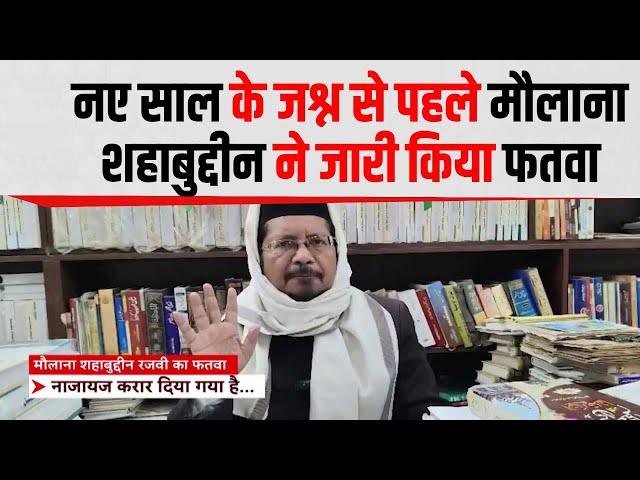
Maulana Shahabuddin Razvi Barelvi Issues Fatwa Against New Year Celebrations: Religious, Social, and Cultural Perspectives
Introduction
Maulana Shahabuddin Razvi statement, As the calendar turns and the world prepares to welcome a new year with celebrations, parties, fireworks, and public gatherings, a significant religious statement has emerged from within the Islamic scholarly community in India. Maulana Shahabuddin, a prominent Barelvi cleric and head of the All India Muslim Jamaat, has issued a fatwa declaring New Year celebrations as illegal (haram) under Islamic law. This statement has sparked debate, discussion, and reflection across religious, social, and media platforms.
The fatwa by Maulana Shahabuddin Razvi is not merely a reaction to a cultural event but is rooted in a broader theological framework that emphasizes the preservation of Islamic values, identity, and religious discipline. In this blog, we explore the background of the fatwa, the reasoning behind it, reactions from various sections of society, and the larger question of faith versus modern cultural practices.
Who Is Maulana Shahabuddin Razvi?
Maulana Shahabuddin Razvi is a well-known Islamic scholar associated with the Barelvi school of thought in Sunni Islam. Over the years, he has gained recognition for issuing religious opinions (fatwas) on matters concerning Muslim personal conduct, religious practices, and social issues. As the national president of the All India Muslim Jamaat, Maulana Shahabuddin Razvi often addresses contemporary challenges faced by Muslims in India while urging adherence to Islamic teachings.
His statements frequently draw attention due to their clarity and firm stance on religious matters. The latest fatwa regarding New Year celebrations is part of this broader pattern of guidance aimed at aligning everyday life with Islamic principles.
Understanding the Fatwa on New Year Celebrations
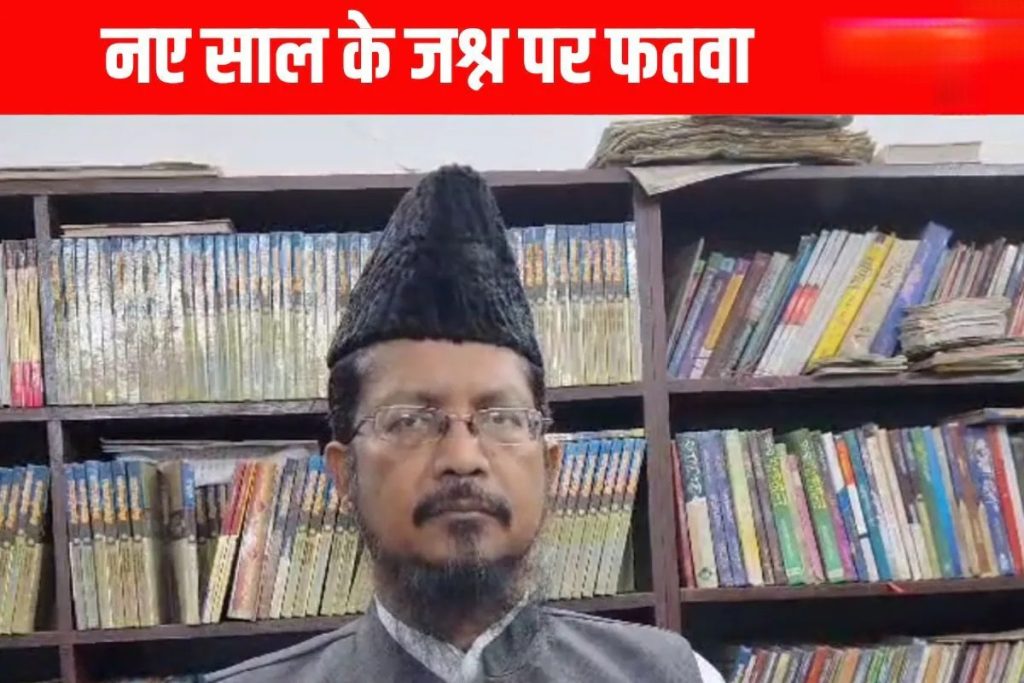
According to Maulana Shahabuddin Razvi, celebrating the New Year is un-Islamic because it originates from non-Islamic traditions and cultures. He stated that Muslims should avoid imitating practices that do not have roots in Islamic history or teachings. In Islamic jurisprudence, such imitation is often referred to as tashabbuh, which many scholars discourage.
Maulana Shahabuddin Razvi emphasized that Islam has its own calendar—the Hijri calendar—and its own significant dates, such as Eid-ul-Fitr, Eid-ul-Adha, and the Islamic New Year (1st Muharram). Therefore, celebrating January 1 as a New Year is seen as unnecessary and religiously inappropriate.
Religious Reasoning Behind the Fatwa
The fatwa issued by Maulana Shahabuddin Razvi is based on several religious arguments:
- Imitation of Non-Islamic Practices
Islam encourages Muslims to maintain a distinct religious and cultural identity. Maulana Shahabuddin Razvi argued that New Year celebrations stem from Western traditions, which are not part of Islamic teachings. - Activities Considered Un-Islamic
New Year celebrations often involve activities such as drinking alcohol, loud music, dancing, and late-night parties. According to Maulana Shahabuddin Razvi, these actions violate Islamic moral and ethical codes. - Neglect of Islamic Values
Maulana Shahabuddin Razvi pointed out that focusing on such celebrations can distract Muslims from prayers, remembrance of Allah, and moral discipline.
The Concept of Haram in Islam
To understand the impact of the statement made by Maulana Shahabuddin Razvi, it is important to understand what haram means in Islam. Haram refers to actions that are explicitly prohibited by Islamic law. When a respected scholar like Maulana Shahabuddin Razvi declares an act haram, many followers take it seriously and adjust their behavior accordingly.
However, it is also important to note that fatwas are religious opinions, not legally binding laws. Muslims may consult multiple scholars before forming a personal understanding.
Reactions from the Muslim Community
The response to the fatwa by Maulana Shahabuddin Razvi has been mixed. A section of the Muslim community welcomed the statement, viewing it as timely guidance to preserve religious values in an era of increasing cultural globalization.
Supporters argue that Maulana Shahabuddin Razvi is reminding Muslims of their religious responsibilities and encouraging them to prioritize faith over fleeting celebrations.
On the other hand, some Muslims believe that celebrating the New Year in a simple, non-religious way—such as family gatherings or reflecting on personal goals—does not necessarily contradict Islamic teachings. This difference of opinion highlights the diversity of thought within the Muslim community.

Wider Social and Political Reactions
Beyond the Muslim community, the statement by Maulana Shahabuddin Razvi has drawn reactions from social commentators, political figures, and secular thinkers. Critics argue that such fatwas may deepen cultural divides and restrict individual freedom.
Others defend Maulana Shahabuddin Razvi, stating that every religious group has the right to define its moral boundaries. In a pluralistic society like India, they argue, multiple viewpoints can coexist without conflict.
Islam and Cultural Celebrations: A Broader Debate
The fatwa by Maulana Shahabuddin Razvi has reignited a long-standing debate: how should Muslims engage with global cultural practices?
Islamic scholars across history have differed on this question. While some, like Maulana Shahabuddin Razvi, advocate strict adherence to traditional norms, others promote contextual understanding, allowing cultural participation as long as core Islamic principles are not violated.
This debate is not limited to New Year celebrations but extends to birthdays, national holidays, and international events.
Islamic Alternatives to New Year Celebrations
Instead of celebrating January 1, Maulana Shahabuddin encourages Muslims to focus on Islamic occasions and spiritually beneficial activities. These may include:
- Offering voluntary prayers
- Seeking forgiveness and self-reflection
- Studying the Quran and Hadith
- Observing Islamic historical events
According to Maulana Shahabuddin Razvi, true success lies in spiritual growth rather than participating in celebrations that lack religious significance.
Media Coverage and Public Discourse
The fatwa issued by Maulana Shahabuddin has received significant media attention. News outlets, social media platforms, and television debates have highlighted his statements, often framing them within broader discussions about religious conservatism and modern lifestyles.
While some headlines have been critical, others have presented Maulana Shahabuddin Razvi’s viewpoint as part of legitimate religious discourse in a democratic society.

Freedom of Religion and Personal Choice
One important aspect of the discussion surrounding Maulana Shahabuddin fatwa is the balance between religious freedom and personal choice. In India, the constitution guarantees freedom of religion, allowing individuals to practice and interpret their faith according to their beliefs.
While Maulana Shahabuddin Razvi has expressed his religious opinion, it remains up to individuals to decide how they incorporate such guidance into their personal lives.
Conclusion
The fatwa issued by Maulana Shahabuddin Razvi against New Year celebrations has opened up a wide-ranging conversation about faith, identity, and cultural influence. For his followers, the statement serves as a reminder to remain grounded in Islamic teachings and avoid practices deemed un-Islamic.
For others, it highlights the evolving nature of religious interpretation in a globalized world. Whether one agrees or disagrees with Maulana Shahabuddin Razvi, his statement underscores the continued relevance of religious voices in shaping moral and social debates.
As societies become more interconnected, such discussions are likely to continue, emphasizing the need for dialogue, mutual respect, and understanding among diverse viewpoints.
Read More latest news

