
Delhi Airport Drug Bust: Customs Officials Recover 2.5 kg Hydroponic Marijuana from Passenger Arriving from Bangkok
Introduction: A Major Drug Seizure at Delhi Airport
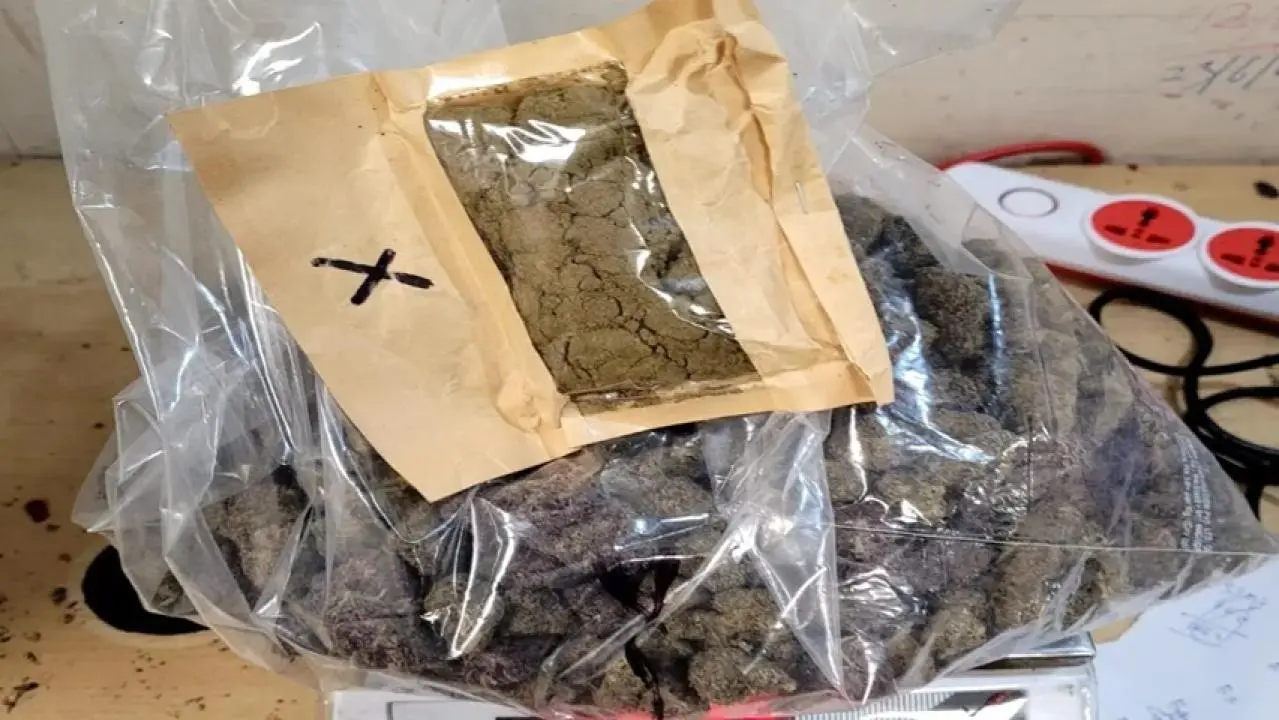
marijuana recovered from passenger arriving from Bangkok at Delhi In a major breakthrough for India’s airport security and anti-narcotics authorities, Delhi Customs officials have recovered 2.5 kilograms of hydroponic marijuana from an Indian passenger arriving from Bangkok. The passenger, who arrived on IndiGo flight number 6E-1054, was detained at Indira Gandhi International (IGI) Airport upon landing.
The incident marks one of the most significant seizures of hydroponically cultivated cannabis, a high-grade and potent form of marijuana, in recent times. Authorities have confirmed that the passenger had concealed the narcotics cleverly in his baggage to evade detection, but was caught during a routine intelligence-based interception.
As investigations deepen, the case sheds light on a growing trend of cross-border drug trafficking networks using air routes from Southeast Asia, particularly Thailand, to smuggle narcotics into India.
What Exactly Happened: The Sequence of Events
The incident occurred late at night when IndiGo flight 6E-1054 from Bangkok touched down at Delhi’s IGI Airport. Customs officers, acting on specific intelligence input, identified a particular passenger as suspicious during the baggage screening process.
Upon inspection of his checked-in luggage, officials discovered multiple vacuum-sealed pouches hidden within layers of clothing and personal items. The contents of these pouches were tested on the spot using narcotics detection kits, which confirmed the presence of hydroponic marijuana (cannabis) — a high-quality variant cultivated using advanced indoor hydroponic systems.
The total weight of the seized substance was 2.5 kilograms, valued at approximately ₹25–30 lakh in the Indian illicit drug market. The passenger, an Indian national in his late 20s, was detained immediately and handed over to the Narcotics Control Bureau (NCB) for further questioning.

Hydroponic Marijuana: What Makes It Different and Dangerous
Unlike traditional marijuana grown in open fields, hydroponic marijuana is cultivated in controlled indoor environments using nutrient-rich water instead of soil. This method allows cultivators to precisely control light, temperature, and humidity — resulting in cannabis with higher THC (tetrahydrocannabinol) levels, the psychoactive compound responsible for producing a “high.”
Because of its purity, potency, and high yield, hydroponic marijuana fetches significantly higher prices in the black market compared to regular marijuana. A kilogram of such marijuana can sell for ₹10–12 lakh in India, depending on its strain and quality.
Moreover, hydroponic cannabis is often smuggled from countries like Thailand, Canada, and the Netherlands, where it is legally cultivated for medical or recreational use. Smugglers take advantage of the availability of legal supplies abroad and weak border controls to traffic the drug into countries where it remains banned — like India.
The Role of Delhi Customs: Tight Security and Smart Surveillance
Delhi Customs officials have been at the forefront of combating smuggling at India’s busiest airport, the Indira Gandhi International Airport, which handles thousands of passengers daily from all over the world.
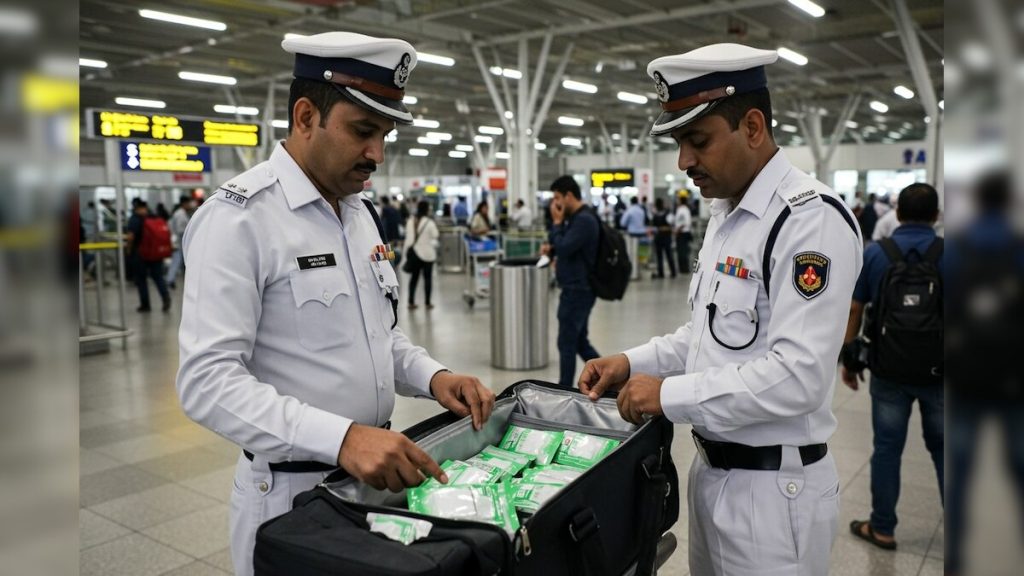
According to officials, the interception of the Bangkok passenger was the result of a combination of technology and intelligence inputs. The baggage was flagged during random X-ray screening, where officials noticed suspicious density variations in one of the bags.
Following the detection, a detailed manual inspection was carried out, revealing the concealed packages. Each package was tightly sealed to minimize odor and avoid detection by sniffer dogs, suggesting professional-level smuggling methods.
A senior Customs officer stated:
“We had received a tip-off about a possible attempt to smuggle contraband from Bangkok. Our team acted promptly, and the operation was successful. The seized substance was confirmed to be hydroponic cannabis. The passenger has been detained under the NDPS Act.”
Bangkok: A Growing Hub in Drug Trafficking Routes
Thailand’s capital, Bangkok, has increasingly become a transit hub for narcotics trafficking, especially after the partial legalization of cannabis in Thailand in 2022.
While the move was aimed at promoting medicinal cannabis and supporting the agricultural economy, it has inadvertently led to the diversion of high-grade marijuana into illegal international markets.
Smugglers have been exploiting the relatively relaxed cannabis laws in Thailand to source hydroponic cannabis legally and then smuggle it into neighboring countries where it remains banned.
India, due to its large consumer base and proximity, has seen a sharp increase in drug trafficking attempts from Bangkok, particularly through:
- Air passenger smuggling,
- Courier and postal services, and
- Air cargo consignments disguised as goods.
Customs officials at major Indian airports — Delhi, Mumbai, and Chennai — have intercepted several such cases over the past two years.
The Passenger: An Indian National Under Scrutiny
The detained passenger is believed to be a resident of Uttar Pradesh, who had traveled to Bangkok earlier this month, reportedly for “business purposes.” During interrogation, he initially claimed ignorance about the contents of his bag, stating that a “friend” had given him the parcel to deliver in Delhi.
However, inconsistencies in his statements and the sophisticated method of concealment have led investigators to suspect that he was part of a larger smuggling network operating between India and Thailand.
The Narcotics Control Bureau (NCB) and Delhi Police’s Crime Branch have been roped in to trace his contacts in India, especially to identify the intended recipients of the consignment.
Officials suspect that the consignment was meant for distribution in Delhi’s high-end party circuits and possibly exported further to other cities like Mumbai and Bengaluru.
Legal Proceedings Under the NDPS Act
The seizure has been registered under the Narcotic Drugs and Psychotropic Substances (NDPS) Act, 1985, which imposes stringent penalties for possession, smuggling, or trafficking of narcotic substances.
Under the NDPS Act:
- Possession of commercial quantities of drugs can lead to a minimum of 10 years of imprisonment, which can extend up to 20 years.
- A fine of ₹1 lakh or more can also be imposed.
Given that hydroponic marijuana is a controlled substance under the law, and considering the quantity involved (2.5 kg), the passenger is likely to face serious charges of drug trafficking.
The case will now be handled by the Delhi Customs (Preventive) Department in coordination with the NCB, which will carry out further investigation into the source, route, and potential network behind the operation.
A Pattern Emerges: Recent Similar Seizures
This is not an isolated case. Over the past few months, several similar incidents have been reported at Indian airports involving hydroponic marijuana and other narcotics.
Some notable seizures include:
- September 2024: Mumbai Airport Customs seized 1.8 kg of hydroponic marijuana from a passenger arriving from Phuket.
- July 2024: Bengaluru Customs intercepted 3 kg of cannabis edibles smuggled from Thailand disguised as chocolates.
- May 2024: Chennai Airport officials caught a traveler with 1.2 kg of synthetic drugs hidden in electronic equipment.
Authorities believe that Southeast Asian routes, especially from Bangkok, Kuala Lumpur, and Singapore, are increasingly being exploited by organized drug syndicates targeting Indian cities.
Inside the Smuggling Modus Operandi
The recovery of hydroponic marijuana from the Bangkok passenger has revealed the increasing sophistication of smuggling tactics.
Common methods include:
- Vacuum-sealed packaging to eliminate smell and reduce detectability.
- Double-layered concealment — drugs hidden inside clothing, food packets, or personal care products.
- Use of couriers — low-income individuals hired to transport small quantities for a fee, often unaware of the real contents.
- Digital coordination — smugglers using encrypted apps like Telegram and Signal to communicate with handlers.
Authorities suspect that the Bangkok passenger may have been part of a multi-country courier chain, where each link carries limited quantities to avoid major detection.
Customs and NCB: Strengthening Vigilance
In light of increasing smuggling attempts, Customs and NCB have stepped up surveillance at airports, deploying advanced AI-based baggage scanning systems, behavioral analytics, and drug-sniffing dogs.
The agencies have also been working in coordination with international counterparts under the Narcotics Control Board’s global intelligence-sharing initiative.
A senior NCB official remarked:
“Smugglers are constantly innovating, but so are we. From AI surveillance to pattern-based passenger profiling, we’re using data to stay ahead of traffickers. The Delhi seizure is another success of this new approach.”
The Growing Threat of Synthetic and Designer Drugs
While traditional marijuana remains a concern, authorities are also battling a surge in synthetic narcotics, including MDMA, LSD, and methamphetamine, often smuggled from Southeast Asia.
However, hydroponic marijuana remains a major threat due to its deceptive packaging and growing demand among urban youth. Its high THC content makes it more addictive and harmful than traditional strains.
Medical experts warn that regular consumption can lead to mental health issues, including anxiety, depression, and dependency.
Dr. Rajesh Sinha, a psychiatrist at AIIMS Delhi, said:
“Hydroponic marijuana may seem less dangerous than synthetic drugs, but its psychological impact can be just as severe. Young users underestimate its potency and long-term consequences.”
Impact on Society: A Wake-Up Call
The Delhi Airport seizure is not just a law enforcement story — it’s also a social warning. India’s youth, increasingly exposed to global trends, are becoming vulnerable to drug experimentation and addiction.
According to the National Drug Dependence Treatment Centre (NDDTC), cannabis is among the most abused substances in India after alcohol and tobacco. The easy availability of hydroponic marijuana through smuggling only worsens the problem.
Educational institutions and parents are being urged to raise awareness about the dangers of new-age drugs, especially those marketed as “natural” or “herbal.”
Government Response: Policy and Prevention
The Government of India has been taking a two-pronged approach — strict law enforcement and preventive education.
- Enforcement Measures:
- Strengthening airport security with advanced scanners and trained canine units.
- Increasing coordination between Customs, NCB, DRI, and Police Departments.
- Enhancing surveillance on high-risk flights and passengers from known drug-source countries.
- Preventive Measures:
- Nationwide awareness campaigns about the health and legal risks of drug abuse.
- Collaboration with schools and universities under the “Nasha Mukt Bharat Abhiyaan.”
- Promoting rehabilitation programs for addicts.
Public Reaction and Social Media Buzz
The news of the seizure has triggered widespread public discussion online. Social media users have praised the Customs department for their vigilance while expressing concern about the increasing use of airports for drug trafficking.
On X (formerly Twitter), hashtags like #DelhiAirportDrugBust and #CustomsHeroes trended briefly, with users calling for stricter airport checks and heavier penalties for traffickers.
One user wrote:
“Kudos to Delhi Customs! Great job protecting our borders from drug peddlers. But we need more awareness too — drugs are destroying young lives.”
Conclusion: Vigilance, Awareness, and Cooperation Are Key
The seizure of 2.5 kg of hydroponic marijuana from a Bangkok passenger at Delhi Airport is a stark reminder of the growing complexity of drug trafficking in modern times.
While enforcement agencies like Delhi Customs continue to excel in detecting and intercepting illegal shipments, the battle against narcotics also requires public cooperation, education, and global collaboration.
This case reinforces India’s strong stance under the NDPS Act — a zero-tolerance approach to drug trafficking — while highlighting the need for vigilance among travelers and citizens alike.
The investigation is ongoing, and more arrests may follow as authorities trace the network behind this operation. For now, the Delhi Customs team has once again proven that no smuggler can stay ahead of law enforcement for long.
read More latest news

