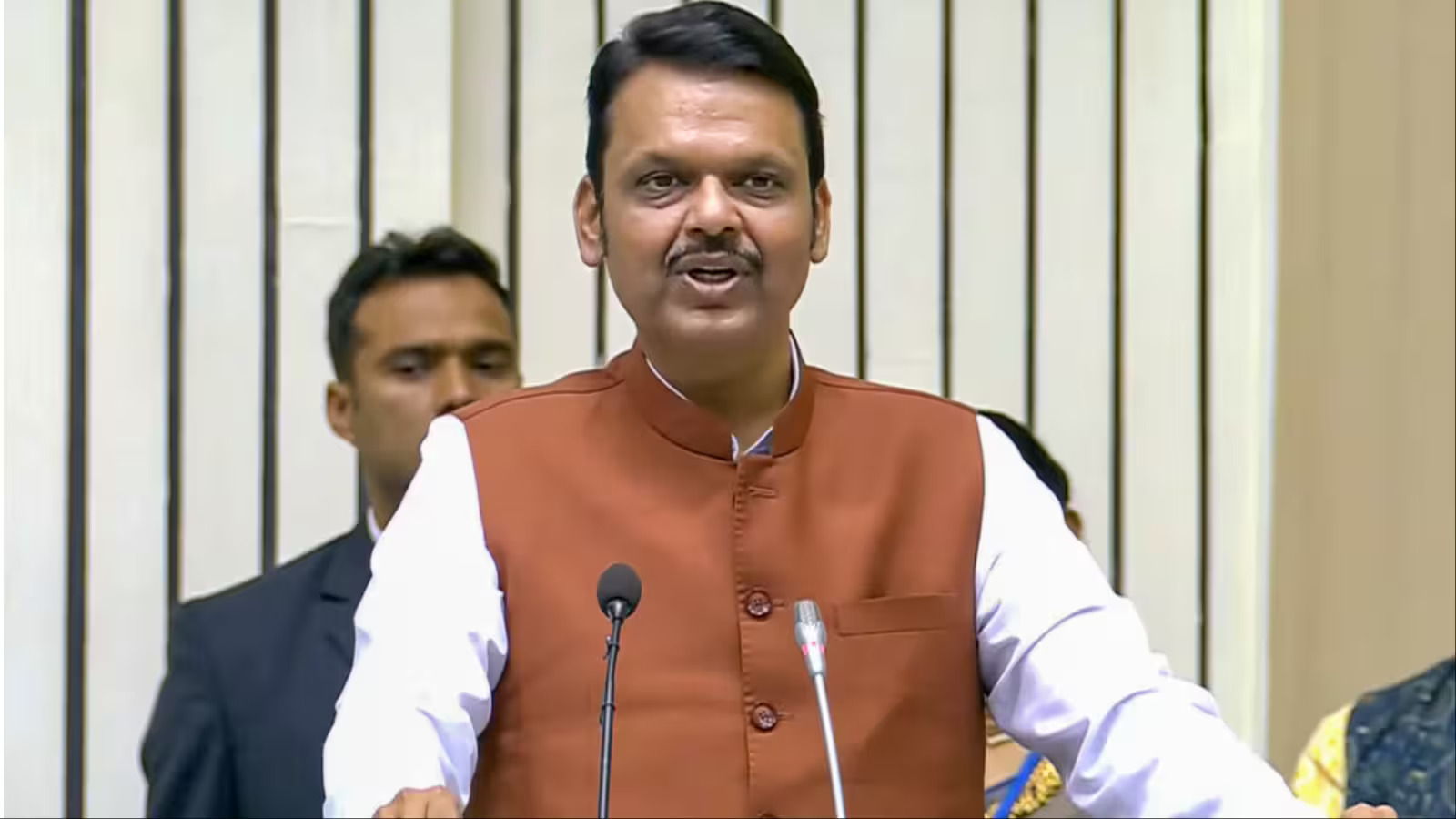
“Legal Action Will Be Taken”: Maharashtra CM Fadnavis’s First Reaction to Kunal Kamra Parody Row
Introduction
Maharashtra CM Fadnavis’s First Reaction In a country as diverse as India, where public figures often find themselves in the crosshairs of media, comedy, and political discourse, there are moments when the balance between humor, satire, and legality becomes murky. A recent controversy involving stand-up comedian Kunal Kamra has brought this issue to the forefront, especially with his controversial parody video involving Maharashtra Chief Minister (CM) Devendra Fadnavis. The incident quickly escalated from what some saw as a comedic critique to a legal and political maelstrom,
with both parties positioning themselves on opposite sides of the debate. The tension surrounding the parody video reached a peak when Fadnavis, reacting to the viral content, declared that “legal action will be taken.”
But what exactly led to this controversy? How did a simple parody become such a polarizing issue in Indian politics? In this blog, we will dissect the events that led to Fadnavis’s strong reaction, explore the legalities involved, and analyze the broader implications for the relationship between politics, humor, and the law in India. Through an examination of the incident,
we will also highlight the cultural and political nuances that make this case more than just a dispute over a comedy video—it’s a battle over the fundamental rights of free speech, the reach of social media, and the power dynamics at play when a political figure faces public ridicule.
The Parody Video: A Comedian’s Critique or Political Insult?
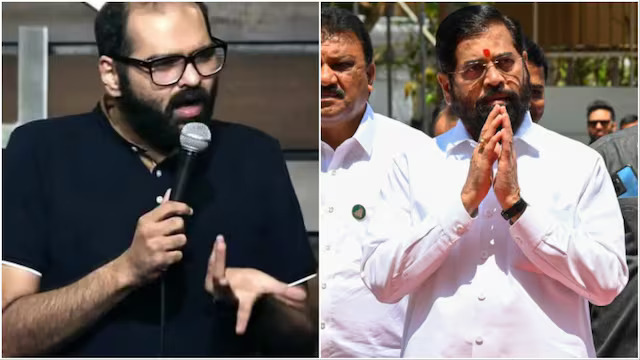
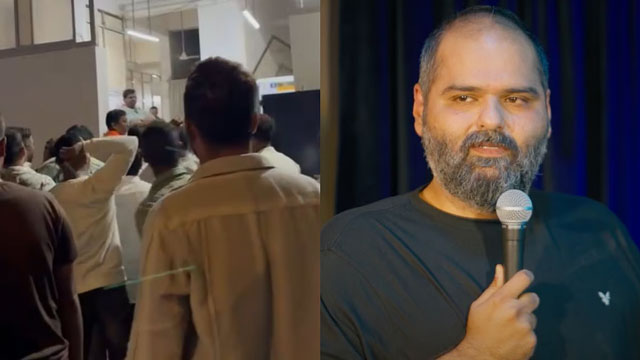
The controversy began with a parody video posted by Kunal Kamra, a stand-up comedian known for his sharp, often controversial commentary on political figures. Kamra has built a reputation for using humor as a tool to critique the political establishment, especially those in power. In the past, his stand-up shows and social media posts have focused on lampooning leaders and their policies, often through irreverent humor.
In early 2025, Kamra released a parody video mocking Maharashtra Chief Minister Devendra Fadnavis, which quickly went viral. The video was an exaggerated satire, intended to ridicule the CM’s policies and political decisions. Kamra’s parody was designed in the form of a skit, where he impersonated Fadnavis in a highly exaggerated manner, mimicking his speech, body language, and public persona.
The comedian’s intent, as he later claimed, was to use humor to critique Fadnavis’s leadership style and the governance issues that had been raised in the public discourse.
While Kamra intended the video to be a form of political satire, it quickly sparked outrage among political supporters of Fadnavis and the Bharatiya Janata Party (BJP). Critics of Kamra accused him of crossing the line between humor and outright disrespect, claiming that the video mocked not just Fadnavis but the dignity of his office as Chief Minister.
On the other hand, many of Kamra’s supporters argued that the video was no different from the political cartoons and satire that have long been a staple of Indian democracy, pointing out that humor has always been a way to critique those in power without fear of retribution.
Fadnavis’s Initial Reaction: A Call for Legal Action
Maharashtra CM Devendra Fadnavis, known for his calm and measured responses to political challenges, took a firm stance when the parody video began making waves. His first official response came via a statement, which was both a reaction to the video and a clear indication of the seriousness with which he would approach the matter. Fadnavis publicly declared that “legal action will be taken” against Kamra for his portrayal of the CM in the video.
This reaction set the stage for a heated debate on the limits of free speech and the role of political figures in regulating satire.
Fadnavis’s statement about legal action was grounded in the argument that Kamra’s parody was defamatory, aimed at tarnishing the reputation of the Chief Minister and potentially inciting hatred. He also cited concerns over the video’s impact on the public image of Maharashtra’s leadership.
According to Fadnavis’s supporters, the video was an intentional attack on Fadnavis’s character, designed to sow discord and mock his authority in a way that was unacceptable for a public figure of his stature.
Critics, however, viewed Fadnavis’s statement as an overreaction. Many pointed out that satire and political humor are protected forms of free speech under the Indian Constitution, and taking legal action against a comedian could set a dangerous precedent for curtailing artistic freedom.
They argued that political figures have long been targets of satire and comedy, and to label such content as defamatory was to undermine the very essence of democratic debate.
The Legal Aspect: Defamation and Free Speech in India
The issue of defamation and freedom of expression in India is a delicate one, particularly when it comes to public figures. Under Indian law, defamation is a criminal offense under Section 499 of the Indian Penal Code (IPC). However, this law has been widely debated, especially in the context of public figures.
The crux of the debate is whether satire or parody, which often involves exaggeration and distortion for comedic effect, can be considered defamatory or whether it falls under the ambit of free speech.
Legal experts weighed in on the matter following Fadnavis’s announcement. They pointed out that while defamation is a valid cause of action, it’s important to distinguish between personal attacks and political commentary. In India, political leaders are often subject to ridicule and satire, a long-standing tradition that has allowed comedians, cartoonists, and writers to critique and lampoon the government without fear of legal consequences.
According to some legal experts, Kamra’s video could be protected as a legitimate form of political speech, falling under the purview of Article 19(1)(a) of the Indian Constitution, which guarantees the fundamental right to freedom of speech and expression. Satire and parody, when done with the intent of commenting on public figures or public policies, have historically been given some leeway in India’s legal framework.
However, the line between political satire and personal defamation can sometimes be blurred, and that’s where the legal argument becomes complicated.
The Political Ramifications: A Confrontation Between Power and Public Discourse
Fadnavis’s decision to threaten legal action against Kamra also highlighted the growing tension between political figures and the media or entertainment industry in India. This incident follows a series of similar controversies where public figures—particularly those aligned with the ruling Bharatiya Janata Party (BJP)—have taken a more aggressive stance against comedians, journalists, and social media influencers whose content is seen as critical of the government.
For some, Fadnavis’s response was seen as an example of a larger trend toward authoritarianism, where those in power are increasingly using legal and institutional means to curb criticism. The fact that Kamra was the target of this response is significant, given his outspoken political commentary and willingness to challenge the status quo.
Kamra’s videos, often poking fun at political figures, had already drawn the ire of BJP supporters in the past, but this particular parody seemed to be the tipping point.
On the other hand, some political analysts argued that the rising tide of online criticism and parody in India is a sign of a healthy democracy, where leaders are held accountable through various forms of public scrutiny. Kamra’s video, in this view, was simply a reflection of public discontent with Fadnavis’s leadership and the broader political landscape in Maharashtra.
The Public Reaction: Supporters and Critics of Kamra
As Fadnavis’s legal warning gained traction, Kamra’s supporters rallied behind him, calling the potential legal action an attempt to stifle free expression. Social media was abuzz with hashtags such as #StandWithKamra and #FreeSpeechMatters, as online communities began to voice their support for the comedian.
For many, Kamra’s parody was a harmless piece of political satire that targeted a public figure, not the individual himself. It was seen as an exercise in comedy, not a deliberate attack on Fadnavis’s personal character.
Comedians, writers, and activists from across India weighed in on the issue, drawing comparisons between this case and previous instances of political leaders attempting to suppress freedom of speech. Some pointed out the hypocrisy of political leaders who publicly endorse free speech but are quick to use legal avenues to silence dissenting voices when it involves personal criticism.
However, Fadnavis’s supporters, including many BJP-affiliated individuals and groups, defended the decision to pursue legal action. They argued that public figures like Fadnavis, who hold positions of significant responsibility,
should not be subjected to personal mockery or parody that crosses the line into defamation. They also suggested that Kamra’s video was not just a critique but an orchestrated attack on the dignity of Maharashtra’s leadership.
The Future of Comedy and Satire in India
The controversy surrounding Kamra’s parody video and Fadnavis’s reaction raises broader questions about the future of comedy and satire in India. As the country becomes more politically charged and polarized, the role of humorists, comedians,
and satirists becomes even more significant. Comedy has long been a powerful tool for challenging authority, exposing societal flaws, and initiating public discourse on important political issues. However, as this incident shows, the growing political and legal pressure on comedians may pose significant challenges for the future of satire in India.
India’s legal landscape is evolving in response to these debates, with more and more cases challenging the boundaries of free speech. As more public figures react to satire and parody with legal threats, the question remains whether India can strike the right balance between protecting individual reputations and allowing the critical and comedic expression that has long been a hallmark of its democracy.
Conclusion
The Kunal Kamra parody row is not just about a comedian mocking a political leader; it is emblematic of the broader struggle between free speech and political power in India. Devendra Fadnavis’s declaration of legal action against Kamra has sparked intense debate about the limits of satire, the responsibility of public figures, and the fundamental rights of individuals in a democracy.
As the case unfolds, it will likely continue to serve as a touchstone for future discussions about the intersection of comedy, politics, and the law in India. Ultimately, the outcome will depend on how the legal system, political leaders, and society itself choose to navigate the delicate balance between humor and defamation, and between freedom of speech and the preservation of public dignity.
read more latest news