

Rahul Gandhi Targets Prime Minister Narendra Modi Over India US Trade Deal: Political Debate Intensifies in Parliament
Leader of Opposition Rahul Gandhi Indian politics has once again heated up as the debate over the proposed trade deal between India and the United States takes center stage. The discussion gained momentum after the Leader of Opposition in the Lok Sabha, Rahul Gandhi, launched a sharp attack on Prime Minister Narendra Modi, questioning the transparency, intent, and long-term impact of the agreement.
As India positions itself as a major global economic power, international trade agreements carry enormous significance. The remarks by the Leader of Opposition have not only sparked a war of words inside Parliament but have also triggered widespread public debate outside it. At the heart of the controversy lies a simple yet crucial question: does the India–US trade deal truly serve national interests, or does it favor select corporate entities?
Background of the India US Trade Deal
India and the United States have been negotiating various trade-related frameworks aimed at strengthening bilateral economic ties. These talks cover multiple sectors, including defense manufacturing, technology transfer, agriculture, pharmaceuticals, and digital services.
According to government sources, the deal is expected to boost exports, attract foreign investment, and enhance India’s role in global supply chains. However, the Leader of Opposition has raised concerns about whether the agreement safeguards domestic industries, farmers, and small businesses.
Rahul Gandhi has repeatedly emphasized that trade agreements should be debated openly in Parliament, rather than being finalized behind closed doors.
Rahul Gandhi’s Statement in Lok Sabha
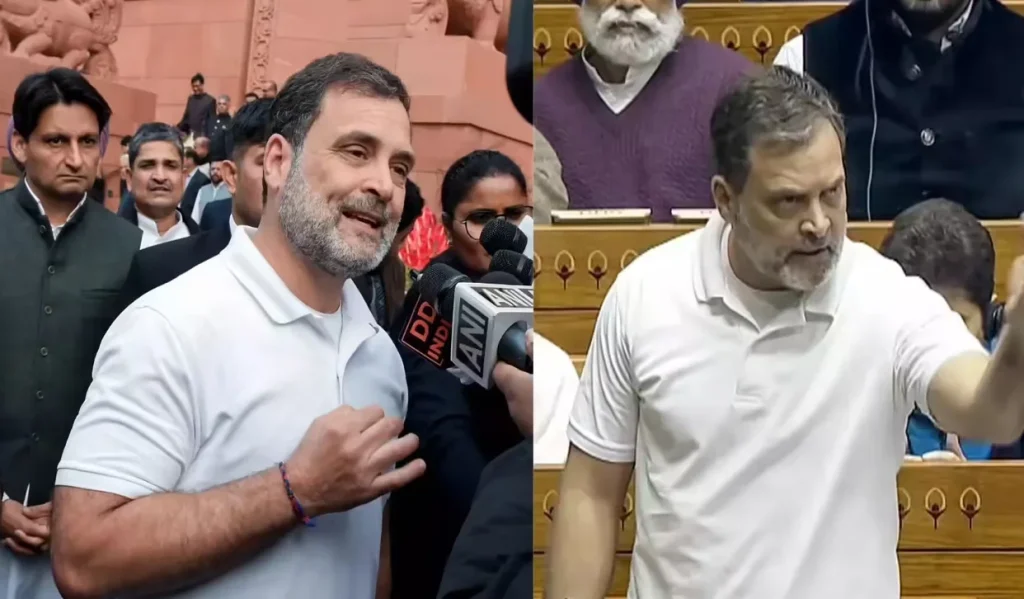
During a recent Lok Sabha session, the Leader of Opposition strongly criticized the government for what he described as a lack of transparency. He alleged that crucial details of the India–US trade deal were not shared with elected representatives or the public.
According to him, Parliament has the right to know how such agreements impact employment, pricing, and national sovereignty. The Leader of Opposition questioned whether Indian farmers and MSMEs would be able to compete with heavily subsidized American industries.

Questioning the Impact on Indian Farmers
One of the most prominent issues raised by the Leader Opposition was the potential impact of the trade deal on Indian farmers. Rahul Gandhi argued that opening Indian markets to American agricultural products could harm local farmers, who already face challenges such as rising input costs and climate uncertainty.
He warned that without adequate safeguards, Indian agriculture could suffer long-term damage. The Leader of Opposition urged the government to clearly explain how farmers’ interests would be protected under the agreement.
Concerns Over MSMEs and Small Businesses
India’s economy is heavily dependent on micro, small, and medium enterprises. The Leader Opposition highlighted that these businesses often struggle to compete with multinational corporations that enjoy scale, technology, and financial advantages.
Rahul Gandhi questioned whether the trade deal includes protective clauses for Indian MSMEs. According to the Leader of Opposition, unchecked market access for foreign corporations could lead to job losses and the weakening of local industries.
Transparency and Parliamentary Oversight
A recurring theme in the Leader Opposition’s criticism was the lack of parliamentary scrutiny. Rahul Gandhi stated that major economic decisions should not bypass democratic institutions.
He argued that Parliament must debate, review, and approve agreements of such magnitude. The Leader of Opposition stressed that transparency is essential for maintaining public trust and democratic accountability.
Government’s Response to the Allegations
The central government, responding to the attack by the Leader of Opposition, defended its approach to the trade negotiations. Union ministers asserted that India’s interests remain paramount and that no agreement would be signed without adequate safeguards.
They accused the Leader of Opposition of spreading unnecessary fear and undermining India’s global image. According to the government, the deal aims to enhance India’s competitiveness and create new economic opportunities.
Political Dimensions of the Trade Debate
Political analysts believe that the confrontation between the Prime Minister and the Leader of Opposition reflects broader ideological differences. While the government emphasizes liberalization and global integration, the opposition stresses social equity and domestic protection.
This clash of perspectives has turned the trade deal into a politically charged issue, especially with upcoming elections in mind. The Leader of Opposition has positioned himself as a defender of farmers, workers, and small entrepreneurs.
Historical Context of Trade Agreements in India
India’s experience with international trade agreements has been mixed. Past deals have delivered growth in certain sectors while causing distress in others. The Leader of Opposition referenced these experiences to argue for caution and careful evaluation.
He reminded Parliament that policy decisions made today will shape India’s economic future for decades. According to the Leader of Opposition, learning from past mistakes is crucial before committing to new agreements.
Corporate Influence Allegations
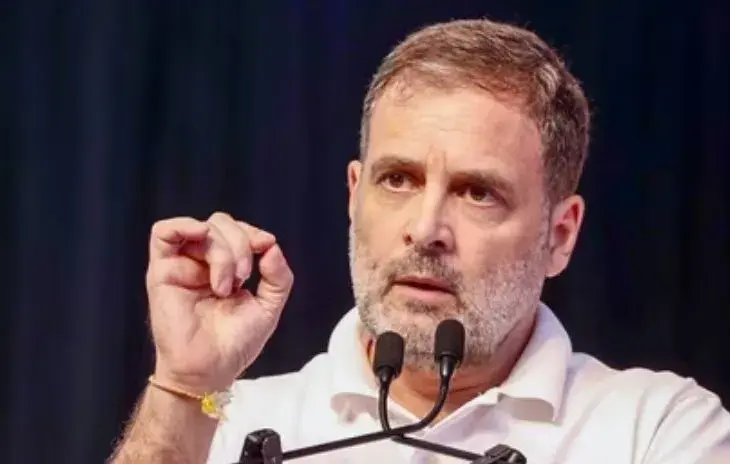
Another sharp allegation made by the Leader of Opposition was regarding corporate influence. Rahul Gandhi questioned whether the trade deal was designed to benefit a few large corporations at the expense of ordinary citizens.
Although he did not name specific companies, the Leader of Opposition called for full disclosure of stakeholder consultations involved in the negotiation process.
Strategic Importance of India–US Relations
Despite his criticism, the Leader of Opposition acknowledged the strategic importance of strong India–US relations. He clarified that his objections were not against engagement with the United States, but against agreements that lack transparency and fairness.
This distinction is important, as the Leader of Opposition sought to counter accusations that the opposition is anti-development or anti-globalization.
Reactions from Other Opposition Parties
Several opposition parties echoed the concerns raised by the Leader of Opposition. They demanded a detailed statement from the government and insisted on a parliamentary committee review of the trade deal.
This collective opposition pressure has increased scrutiny on the government’s negotiation strategy and strengthened the Leader of Opposition’s position within Parliament.
Public Reaction and Media Debate
The remarks by the Leader of Opposition quickly became a trending topic across media platforms. Supporters praised Rahul Gandhi for raising issues of transparency and social justice, while critics accused him of politicizing economic policy.
The debate highlights the growing public interest in how international agreements affect everyday life, a concern consistently emphasized by the Leader of Opposition.
Economic Experts Weigh In
Economists and trade experts have offered mixed opinions. Some agree with the Leader of Opposition that safeguards are essential, while others argue that India must take bold steps to remain competitive globally.
This diversity of opinion reflects the complexity of trade negotiations and underscores why the Leader of Opposition is demanding open discussion rather than unilateral decision-making.
The Role of Parliament in Trade Policy
Under India’s democratic framework, Parliament plays a vital role in shaping policy. The Leader of Opposition has repeatedly asserted that sidelining Parliament weakens democracy.
He urged the government to treat Parliament not as an obstacle but as a platform for constructive debate. According to the Leader of Opposition, inclusive policymaking leads to more sustainable outcomes.
Electoral Implications of the Trade Debate
Political observers note that the trade deal controversy could influence voter sentiment. By positioning himself as a critic of opaque policymaking, the Leader of Opposition aims to connect with economically vulnerable sections of society.
The government, on the other hand, projects the deal as a symbol of India’s rising global stature. This narrative clash is likely to intensify as elections approach.
Rahul Gandhi’s Broader Economic Vision
Beyond this specific issue, the Leader of Opposition has outlined a broader economic vision centered on inclusive growth. He advocates policies that prioritize employment, social security, and equitable development.
His critique of the trade deal fits within this larger framework, reinforcing his image as a leader focused on grassroots concerns.
Government’s Strategic Messaging
The ruling party has countered by emphasizing national interest and long-term benefits. Ministers argue that global partnerships are essential for India’s economic transformation.
They accuse the Leader of Opposition of underestimating India’s negotiating strength and adaptability in global markets.
What Happens Next?
As discussions continue, the government may be compelled to provide greater clarity on the trade deal’s provisions. The persistent pressure from the Leader of Opposition ensures that the issue remains under public and parliamentary scrutiny.
Whether this results in modifications to the agreement or simply greater transparency remains to be seen.
Conclusion: A Debate That Shapes India’s Economic Future
The confrontation between Prime Minister Narendra Modi and Rahul Gandhi over the India–US trade deal reflects deeper questions about governance, transparency, and economic priorities. The Leader of Opposition has successfully brought the issue into the national spotlight, ensuring that it is debated beyond closed negotiation rooms.
As India navigates a complex global economy, such debates are essential. They not only hold the government accountable but also encourage informed public discourse. Regardless of political affiliations, the outcome of this discussion will have lasting implications for India’s economic direction.
Read More latest news

