
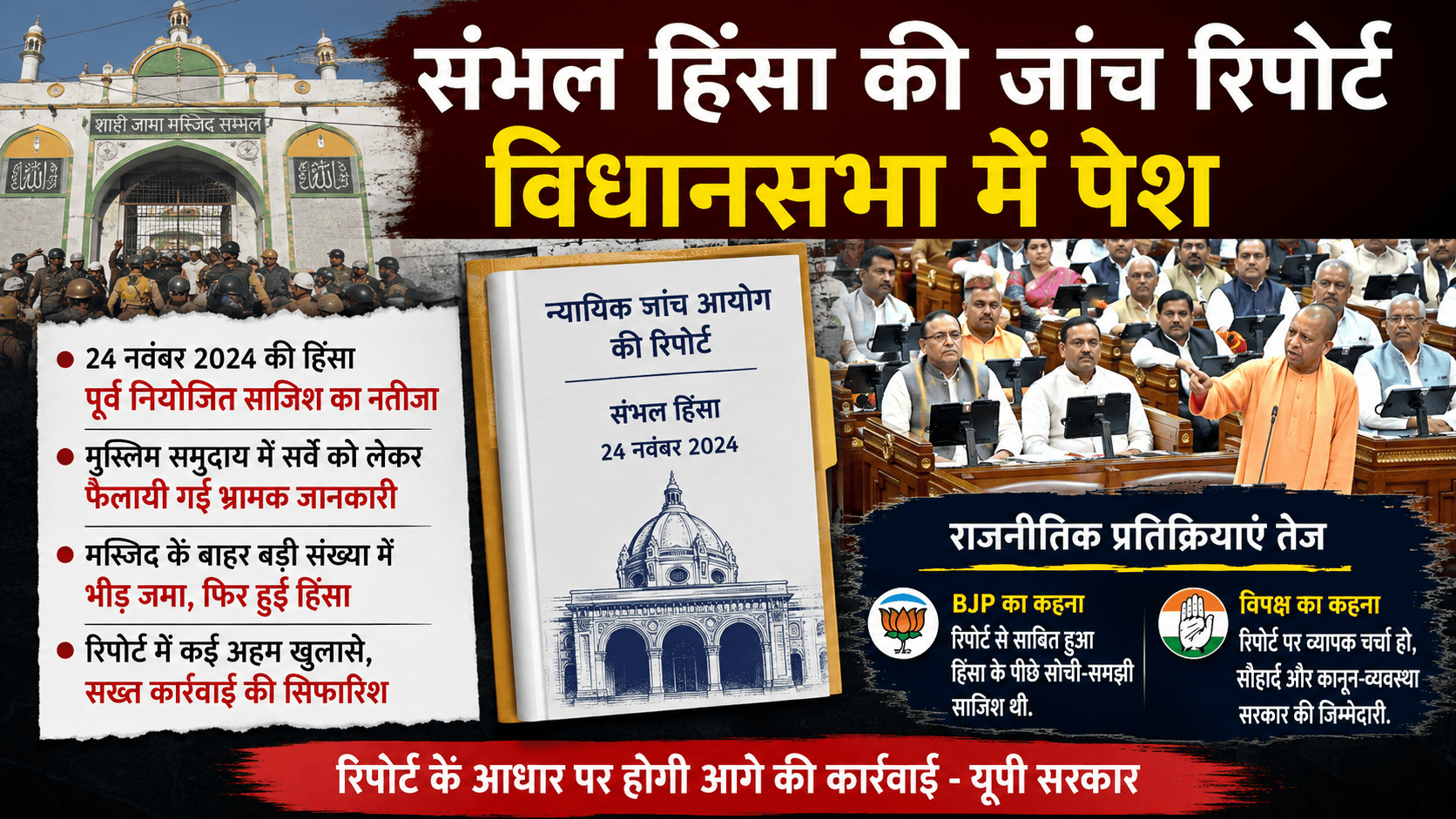
Judicial Inquiry Commission Report on Sambhal Violence Tabled in Uttar Pradesh Assembly; Political Reactions Intensify
The report of the judicial inquiry commission constituted to investigate the violence that erupted during the survey of the Jama Masjid in Sambhal on November 24, 2024, has been tabled in the Uttar Pradesh Legislative Assembly. The report has sparked fresh political debate, with the ruling Bharatiya Janata Party (BJP) and opposition parties presenting sharply contrasting interpretations of its findings. While the state government has described the report as evidence of a planned conspiracy behind the violence, opposition leaders have demanded a broader discussion on law and order, communal harmony, and administrative accountability.
According to the judicial inquiry commission, the violence that occurred during the survey was not spontaneous but the result of a pre-planned conspiracy. The commission stated that misinformation regarding the purpose and nature of the survey was deliberately circulated among members of the Muslim community. This misinformation allegedly created fear and confusion, eventually leading to the gathering of a large crowd outside the mosque, where clashes later broke out.
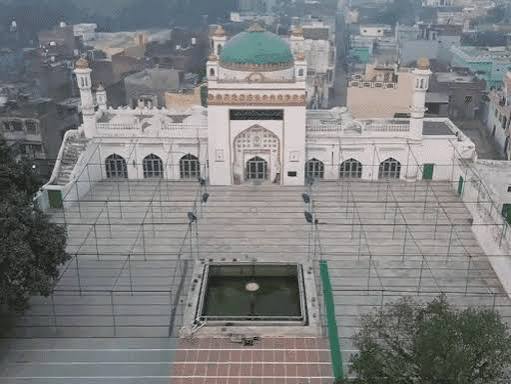
judicial inquiry commission report on Sambhal violence
The judicial inquiry commission examined witness statements, police records, video footage, and other documentary evidence collected during the course of its investigation. Based on its findings, the commission concluded that the unrest was triggered after rumors spread that the survey was intended to alter the status of the religious structure. The report maintained that these claims were false and contributed significantly to escalating tensions.
The Sambhal violence of November 24, 2024, drew nationwide attention after clashes between protesters and security personnel resulted in injuries, property damage, and heightened communal tensions in the region. Following the incident, the Uttar Pradesh government constituted the judicial inquiry commission to establish the sequence of events, identify those responsible, and recommend measures to prevent similar incidents in the future.
The report submitted by the judicial inquiry commission reportedly states that organized efforts were made to mobilize people through misleading messages. According to the findings, misinformation spread rapidly before and during the survey, resulting in a large gathering outside the Jama Masjid. The commission observed that the situation deteriorated when sections of the crowd became confrontational, eventually leading to violence.
pre-planned conspiracy behind Sambhal violence
After the report was tabled in the Assembly, Uttar Pradesh government representatives said that the findings vindicate the administration’s position that the violence had been orchestrated rather than arising spontaneously. Ministers argued that the judicial inquiry commission had conducted a detailed examination of the available evidence before reaching its conclusions. They stated that strict action would continue against individuals found responsible for inciting or participating in the violence.
The opposition, however, questioned several aspects surrounding the incident and the subsequent investigation. Leaders from opposition parties demanded a comprehensive discussion in the Assembly, arguing that maintaining communal harmony should remain the government’s primary responsibility. They also sought greater transparency regarding the implementation of the commission’s recommendations and the measures proposed to avoid similar incidents in the future.
Political reactions intensified after the report became public. BJP leaders cited the judicial inquiry commission findings as proof that misinformation and deliberate planning were central factors behind the violence. They argued that the report demonstrated the importance of preventing the spread of false information, particularly during sensitive administrative or judicial processes involving religious sites.
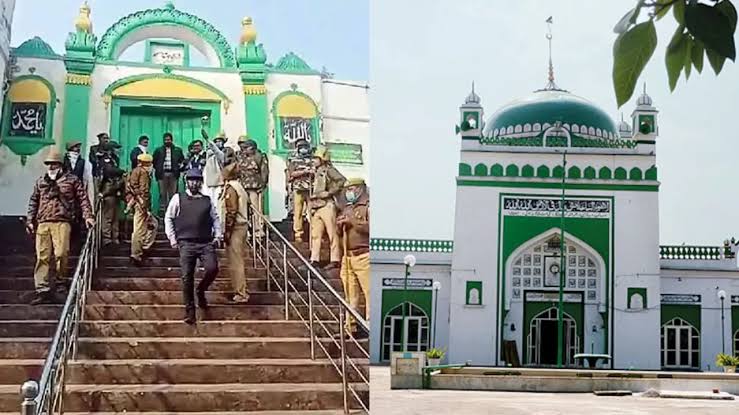
Sambhal Jama Masjid survey latest updates
On the other hand, opposition parties maintained that while accountability is essential, equal emphasis should be placed on ensuring that administrative decisions are communicated effectively to avoid misunderstandings. Several opposition leaders stressed that public confidence can be strengthened through timely information, dialogue with local communities, and transparent governance.
The judicial inquiry commission also emphasized the role of misinformation in influencing public perception. According to the report, inaccurate narratives circulated through various channels contributed significantly to confusion among local residents. The commission recommended strengthening communication mechanisms during sensitive operations so that verified information reaches the public quickly and effectively.
Another important observation made by the judicial inquiry commission relates to crowd management. The report reportedly recommends enhanced coordination between district administration, police, and intelligence agencies before conducting sensitive surveys or official activities involving disputed or historically significant religious locations. Such coordination, the commission believes, can help identify emerging risks and reduce the possibility of violence.
Legal experts have observed that reports submitted by inquiry commissions often influence future administrative practices even though the implementation of recommendations depends on government decisions. The judicial inquiry commission report may therefore serve as an important reference for future policy discussions on law and order, crisis communication, and communal harmony in Uttar Pradesh.
The Assembly witnessed heated exchanges after the report was presented. Members from both the treasury benches and the opposition debated the conclusions of the judicial inquiry commission, with each side interpreting the findings according to its political perspective. While the ruling party highlighted the conspiracy angle described in the report, opposition members focused on broader governance issues and demanded detailed discussion on the government’s handling of the situation.
Observers believe that the political impact of the report could continue in the coming weeks. The findings of the judicial inquiry commission are likely to remain a subject of debate both inside and outside the Assembly as political parties seek to present their respective narratives before the public.
Sambhal violence report political debate
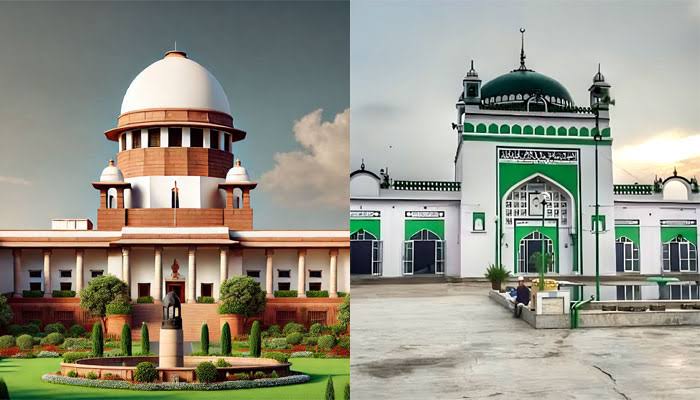
Beyond the political reactions, the report also raises broader questions about the dangers of misinformation during sensitive events. Experts have repeatedly emphasized that accurate public communication, responsible use of social media, and prompt clarification by authorities are essential to preventing misunderstandings that can escalate into law-and-order challenges.
The judicial inquiry commission has also underlined the importance of intelligence gathering and preventive measures before conducting official surveys in communally sensitive areas. Better planning, stronger coordination among agencies, and continuous monitoring of misinformation campaigns have been recommended to minimize the risk of similar incidents in the future.
As discussions continue, the report submitted by the judicial inquiry commission is expected to remain an important document in understanding the circumstances surrounding the Sambhal violence. The state government is likely to examine the recommendations carefully before deciding on further administrative and legal measures.
In conclusion, the tabling of the judicial inquiry commission report has added a significant dimension to the political and administrative discourse in Uttar Pradesh. While the report characterizes the November 24, 2024, violence as the outcome of a pre-planned conspiracy fueled by misinformation, political parties continue to debate its implications. As the Assembly deliberates on the findings and recommendations, attention will remain focused on how the government implements the report and what steps are taken to strengthen communal harmony, improve communication, and prevent similar incidents in the future.
Read more latest news

