
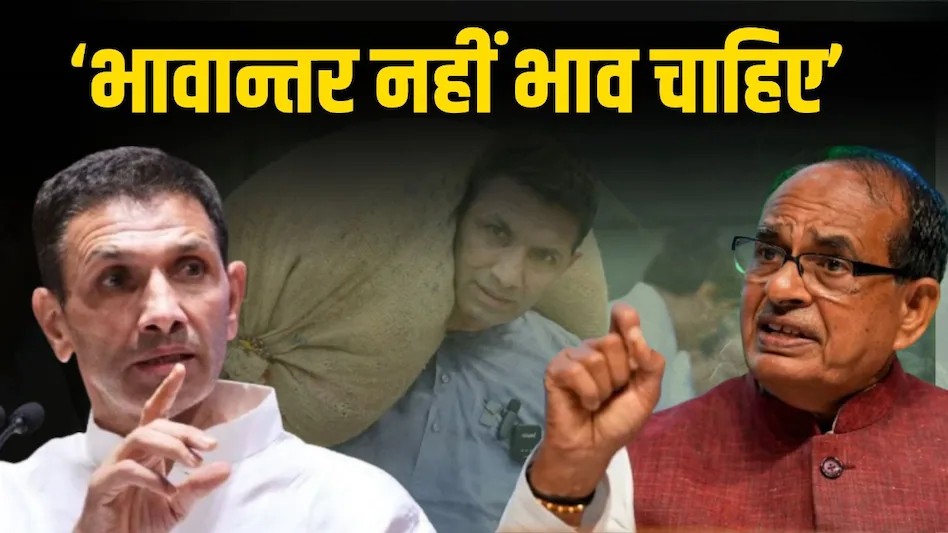
Jitu Patwari’s Sack Protest: A Powerful Message to Shivraj Singh Chouhan on the Pain of Madhya Pradesh’s Farmers
Introduction
In a symbolic yet striking act of protest, Madhya Pradesh Congress President Jitu Patwari presented a sack to Agriculture Minister Shivraj Singh Chouhan, calling attention to the plight of farmers across the state. This gesture, while simple in appearance, carried deep political and emotional weight. The sack—an everyday object for farmers—became a symbol of unfulfilled promises, falling crop prices, and the burden of debt that continues to haunt rural Madhya Pradesh.
Jitu Patwari protest was not merely a political stunt; it was an emotive appeal to the conscience of the government. With thousands of farmers struggling under financial pressure, rising input costs, and limited access to markets, his message struck a chord across political lines. He expressed anguish over unfair crop prices, delayed procurement payments, and the alarming rise in farmer suicides, demanding immediate intervention and accountability from the ruling administration.
This blog delves into the details of Jitu Patwari protest, the symbolism of his gesture, the current condition of farmers in Madhya Pradesh, and the political storm that his act has ignited in the state.
The Incident: A Sack Full of Meaning
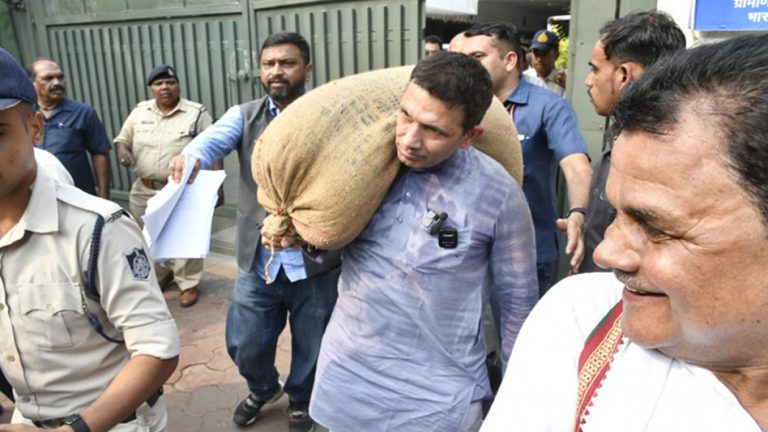
The protest took place during a public meeting in Bhopal, where Jitu Patwari arrived carrying a large jute sack—the kind typically used by farmers to store grains. As cameras flashed and journalists gathered, Jitu Patwari walked up to the dais and handed the sack to Chief Minister and Agriculture Minister Shivraj Singh Chouhan, saying:
“This is not just a sack—it’s the weight of every farmer in Madhya Pradesh who feels cheated and helpless. The sack is empty, just like the promises made to farmers by your government.”
His words reverberated through the audience and quickly spread across media platforms. The gesture was a vivid metaphor: an empty sack representing the emptiness of the government’s commitments to farmers who toil day and night to feed the nation.
Jitu Patwari later explained to reporters that the act was meant to wake up the government from its complacency. He accused the state of failing to ensure fair procurement prices, delaying payments to farmers for months, and ignoring the growing despair in rural areas.
Why a Sack? The Symbolism Behind the Gesture
In Indian agrarian culture, the sack—or “bori”—is not merely an object; it’s an emblem of livelihood. It carries the fruits of labor, the sweat of months, and the hope of sustenance for families. By presenting an empty sack, Jitu Patwari sought to expose a painful reality: despite bumper harvests, many farmers end up with empty pockets.
The symbolism extended beyond economics—it was also a critique of systemic neglect:
- An empty sack reflected empty policies, devoid of empathy or practicality.
- It represented storage centers without payment, warehouses without buyers, and fields without hope.
- It embodied the emptiness of promises made during election campaigns.
In this one act, Jitu Patwari transformed a common farming item into a political statement, one that resonated deeply across the heartland of Madhya Pradesh.
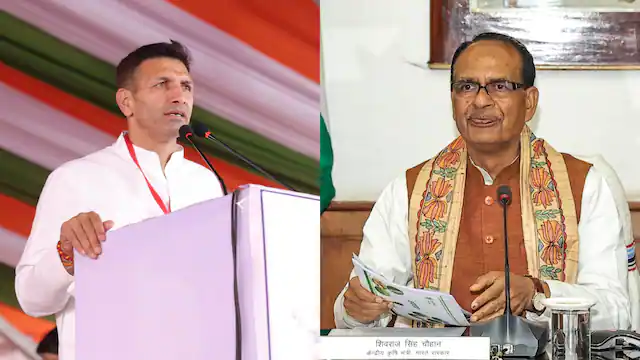
The Core Issues: What Jitu Patwari Highlighted
Jitu Patwari’s protest focused on several key grievances that have long plagued the state’s farmers:
1. Unfair Crop Prices
Despite assurances of Minimum Support Prices (MSP), many farmers in Madhya Pradesh have been forced to sell their crops below market value. According to local reports, procurement centers are either insufficient or mismanaged, compelling small farmers to turn to private traders who exploit their desperation.
Jitu Patwari criticized the state government for failing to ensure that MSP reaches every farmer, especially for major crops like wheat, soybean, and pulses.
2. Delayed Procurement Payments
In many districts, farmers have reported waiting months for payments after selling their produce at government mandis. Such delays push them into further debt, as they struggle to repay loans or buy seeds for the next sowing season.
Jitu Patwari claimed that this administrative inefficiency is driving many farmers toward despair and, tragically, suicide.
3. Rising Farmer Suicides
One of the most distressing points raised by Jitu Patwari was the increasing number of farmer suicides in Madhya Pradesh. The state, once known as the “food bowl” of India, has seen hundreds of suicides in the past few years due to mounting debt, erratic rainfall, and lack of institutional support.
Citing figures from independent surveys and local organizations, Jitu Patwari urged the government to acknowledge the crisis and take concrete measures instead of denying the statistics.
4. Inflation and Input Costs
He also pointed out that rising fertilizer prices, high electricity costs, and expensive seeds have made farming unsustainable for small landholders. The profits, if any, are often too meager to sustain a family.
5. Inadequate Insurance Coverage
The Pradhan Mantri Fasal Bima Yojana, which was intended to provide relief during crop loss, has also come under fire. Many farmers in Madhya Pradesh have complained about insurance companies denying claims, leaving them with no safety net.
Political Context: Congress vs. BJP in Madhya Pradesh
This incident comes at a time when Madhya Pradesh’s political landscape is intensely polarized. The BJP, led by Shivraj Singh Chouhan, has been in power for most of the last two decades. The Congress, under Jitu Patwari’s leadership in the state, is seeking to re-establish its grassroots connection, especially among rural and agrarian communities.
Patwari’s “sack protest” is part of a broader strategy to position the Congress as the voice of the farmer—a mantle it once held during the days of leaders like Digvijaya Singh.
The BJP, however, dismissed the protest as political theater. State spokespersons claimed that the government has implemented numerous farmer-friendly schemes, including Kisan Samman Nidhi, interest-free loans, and irrigation projects. They accused Patwari of trying to “mislead farmers for political gain.”
But what makes Patwari’s protest significant is its emotional resonance. Instead of dry statistics, he used a visual symbol—one that every farmer in Madhya Pradesh can relate to.
Farmers’ Voices: Ground Reality Beyond Politics
To understand the impact of Patwari’s protest, one must look at the voices from the ground. In villages across Sehore, Mandsaur, Vidisha, and Hoshangabad, farmers expressed frustration with delayed payments and unpredictable procurement systems.
A farmer from Sehore said,
“We produce wheat and soyabean every year, but the payment comes after two or three months. How can we survive without money? We take loans and pay interest while waiting for our own earnings.”
Another farmer from Mandsaur added,
“During elections, they talk about MSP and support. After that, no one comes to see our condition.”
Such testimonies underline the disconnect between policy announcements and ground implementation—something that Patwari’s symbolic act sought to highlight.
Historical Echo: Protests for Agrarian Justice
Patwari’s act of symbolism is not without precedent. Indian politics has a long tradition of symbolic protests to highlight agrarian distress. From Mahatma Gandhi’s use of salt as a symbol of oppression to Sharad Joshi’s milk strikes in the 1980s, leaders have often used ordinary objects to express extraordinary pain.
The “sack” joins this lineage as a powerful metaphor of rural suffering and political accountability.
The Government’s Response
Following the protest, Shivraj Singh Chouhan responded diplomatically, saying:
“We are aware of the challenges faced by our farmers. Our government is working day and night to ensure that every farmer receives due payment and that no one suffers.”
However, Congress leaders quickly countered, arguing that words are not enough. They demanded:
- A state-level inquiry into delayed payments.
- Compensation for families of farmers who died by suicide.
- An increase in procurement centers and transparency in pricing.
- A review of crop insurance claim processes.
While the BJP attempted to downplay the incident, the “sack protest” became a headline across local and national media, reigniting debate about rural distress.
Political Impact: A Clever Move by Jitu Patwari
Strategically, Patwari’s gesture achieved multiple objectives:
- Reviving the farmer issue at a time when other narratives dominated headlines.
- Forcing the BJP to respond publicly on an issue they had been avoiding.
- Positioning Congress as the empathetic, ground-connected party.
- Elevating Patwari’s profile as a dynamic leader capable of combining symbolism with substance.
Political analysts believe that this move has reinvigorated Congress’s rural outreach, particularly among younger voters and agrarian communities who feel disillusioned.
A Call for Change: Beyond Politics
While the event has political undertones, at its heart lies a human crisis. Madhya Pradesh’s agrarian backbone is under immense stress. Climate change, poor irrigation, and inadequate state support have made farming increasingly risky.
Patwari’s act, in essence, is a plea for empathy and reform. It calls for:
- A realistic MSP policy tied to inflation.
- Faster payment systems for procurement.
- A revamped insurance mechanism with farmer-friendly procedures.
- Counseling and credit relief programs for distressed farmers.
Unless these systemic issues are addressed, symbolic protests will continue to highlight the cracks in the system.
Media and Public Reaction
News outlets across India covered Patwari’s gesture extensively. Visuals of him handing the sack to Shivraj Chouhan went viral on social media, with hashtags like #SackOfTruth and #FarmersPlightMP trending.
Supporters praised Patwari for his creativity and courage, calling it a “sack full of reality.”
Critics, mostly from the ruling party, dismissed it as a “drama to stay in the headlines.”
However, what stood out was the emotional resonance of the act. Even those critical of Congress acknowledged that the protest had brought much-needed attention back to farmer welfare.
Conclusion: A Sack That Spoke Louder Than Words
Jitu Patwari’s act of handing over a sack to Shivraj Singh Chouhan was more than just a political stunt—it was a symbol of India’s agrarian anguish. It reminded both the government and the public that behind every statistic lies a story of human struggle.
The sack, empty yet heavy with meaning, became a metaphor for the emptiness of policy promises and the burden on India’s farmers. Whether it leads to real policy reform or fades as a media moment remains to be seen.
But one thing is certain—Patwari’s message has resonated, reigniting conversations about farmer welfare, accountability, and the true meaning of governance in a state that calls itself the “heart of India.”
As the political drama continues, one can only hope that the sack handed over in protest becomes the seed of change for millions who till the land yet struggle to reap the rewards.
Read more latest News

