
ISI’s New Conspiracy in Kashmir: How Pakistan Is Destroying Youth with a New Weapon Alongside Terrorism
Introduction
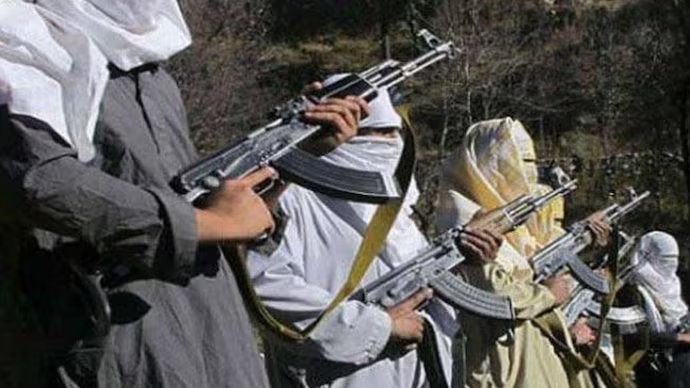
For decades, Kashmir has been at the epicenter of a geopolitical tug-of-war, with terrorism and cross-border tensions often dominating headlines. However, beneath the violent conflicts lies a subtler, deeper game — a strategic, systemic influence campaign targeting the hearts and minds of the youth. The ISI (Inter-Services Intelligence of Pakistan) appears to be deploying what can only be described as a “new weapon”: an ideological, psychological, and digital apparatus aimed at destabilizing younger generations just as effectively as conventional terrorism.
In this blog, we will explore how this new weapon operates, why it’s particularly dangerous, how it complements traditional terror tactics, and what can be done to counter it—with a single objective: to raise awareness and build resilience among those most at risk.
1. The Changing Face of Warfare: From Gunfire to Mind Games
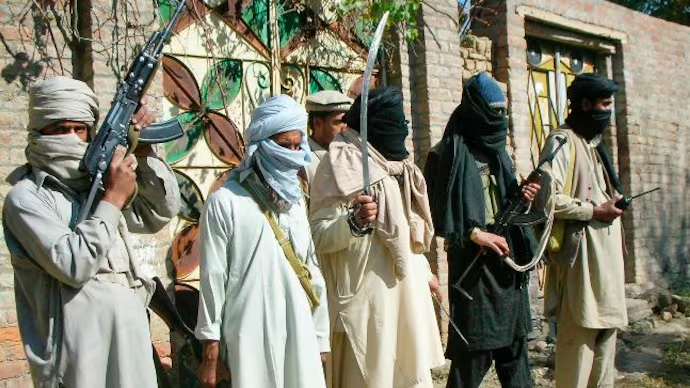
Traditional conflict in Kashmir has long relied upon armed militancy, cross-border infiltration, bombings, and direct attacks on civilians and security personnel. These methods are brutal and visible—designed to disrupt society through fear.
But today’s battlefield is less overt. It’s psychological. It’s informational. It’s digital. ISI’s “new weapon” doesn’t fire bullets—but ideas. This weapon is:
- Soft but lethal: It seeps into consciousness, seldom seen until damage appears.
- Indistinguishable: It doesn’t announce itself; it masquerades through friendly services—social media, gaming, literature.
- Synergistic: It undermines mental health, identity, and communal relationships while terrorism mercilessly attacks with bombs and bullets.
Just as conventional terrorists aim to destabilize society physically, this new apparatus aims to destabilize youth psychologically, making them fertile grounds for radicalization or recruitment.
2. The Historical Roots: ISI’s Long Game in Kashmir
To understand the present, we must look at the past:
- Operation Tupac (1988): The ISI’s long-standing strategy to fund, train, and launch insurgency in Kashmir. Multiple militant groups blossomed under this guise.
- Proxy Warfare: ISI has historically supported militant groups like Lashkar-e-Taiba and Hizbul Mujahideen, fueling violence under layers of plausible deniability.
- Propaganda: Grassroots narratives—stories of oppression, sacrifice, heroism—have been crafted to groom young Kashmiri minds for decades.
Today’s extension of these strategies applies the same goals but through new tools—digital messaging, curated content, ideology, and cultural disruption, rather than direct gunfire.
3. What Is the ‘New Weapon’? A Multifaceted Strategy
Below, we dissect the main vectors of this new, insidious weapon:
a) Ideological Infiltration via Literature and Educational Material
Books, essays, and media campaigns that emphasize historical grievances or glorify resistance can draft a psychological template for youth identity. When youth constantly consume content that frames resistance or martyrdom as noble, their moral compasses shift.
— Example: Bookstore raids in Srinagar and seized volumes that allegedly glorified separatism illustrate attempts to regulate these narrative streams.
b) Digital Platforms: Games, Chats, and Social Media
Imagine an online multiplayer game where camaraderie, identity, and belonging are built—then watch as radical ideology slips into private chats or hidden channels. Platforms originally meant for recreation become conduits for recruitment and manipulation.
— Indeed, multiple reports point to gaming and chat apps being used as recruitment pipelines, where vulnerable youth are socially groomed into extremist thinking under the guise of friendship or ideological mentorship.
c) Targeted Online Messaging and Propaganda
Quick, emotionally charged content—memes, short videos, sensational posts—designed to alienate, agitate, or glorify violence can spread like wildfire among youth who distrust mainstream institutions. These micro-propaganda campaigns are laser-focused and psychologically potent.
d) Exploiting Social Isolation and Unemployment
Kashmir has a high unemployment rate, especially among educated youth. Coupled with limited prospects and social unrest, this creates a vacuum of purpose. External narratives sense this void and fill it with calls to action—sometimes orchestrated and fanatical.
e) Institutional Complicity or Infiltration
The recent case involving the detention of a DRDO guesthouse manager on espionage suspicions illustrates the continuing threat of entrenched insider influence channels. Though not directly youth-targeted, it shows the systems being compromised to assist broader agendas.
4. The Intersection: How This Weapon Amplifies Terrorism
This newer ideological weapon and traditional terrorism reinforce each other:
- Youth exposed to radical ideology become easier recruits for violent operations or support networks.
- Psychological destabilization lowers resistance to terrorist narratives—creating an acceptance of violence as justified means.
- Digital radicalization precedes violent deployment. Terrorist groups can leverage online groomed recruits for in-person action, and vice versa.
Together, they form a dangerous cycle: ideological subversion births violent action, which is validated by terror, deepening alienation and fueling more radicalization.
5. The Human Cost: Youth on the Edge
The casualties are intangible: fractured identities, distrust of institutions, chronic anxiety, and radical allegiance.
- Psychological Toll: Youth losing faith in society, families, and the future—vulnerable to extremist narratives.
- Social Disconnect: Radical communities and peers create alternate loyalty structures.
- Lost Opportunity: Talent wasted as promising individuals vanish into propaganda, militancy, or depression.
These are lives diverted, potential shattered—not with a bullet, but with coercive narratives warped to feel like purpose.
6. Countermeasures: Building Resilience
Defeating this multifaceted threat requires more than policing:
- Digital Education & Media Literacy
Teach youth how to spot manipulative content, verify sources, and discern propaganda. - Mental Health & Counseling Services
Provide accessible services and safe spaces for emotional support before disillusionment takes root. - Positive Identity and Civic Engagement
Encourage youth-led cultural, educational, and social projects that channel passion toward constructive ends. - Community Awareness & Dialogue
Parents, teachers, and influencers must monitor behavior changes and facilitate open communication. - Secure Institutional Ecosystem
Enforce strict audits and counter-espionage norms in sensitive institutions to block infiltration or leaks.
Policy responses should be dual-objective: clamp down on malign narratives while simultaneously offering regenerative alternatives.
7. What Journalists and Opinion Makers Must Do
Journalism plays a critical role:
- Fact-based Reporting: Avoid sensationalism. State allegations must be balanced with evidence or skepticism.
- Narrative Disruption: Prioritize stories of peace-building, reconciliation, and youth-led innovation over violence tales.
- Platform Governance: Demand transparency from social media companies about radical content and enforce removal processes.
Media must evolve past ‘fear storytelling’ and become a source of community reinforcement.
8. One Step at a Time: Practical Interventions
For Families:
- Maintain open communication. Don’t wait for drastic changes—spot subtle shifts in mood, social circles, or online habits.
For Educators:
- Convert class discussions into forums on critical thinking, media literacy, and peer support systems.
For Civil Society:
- Fund and promote youth mentorship, sports, arts, and purpose-driven collectives to offer positive belonging.
For Governments:
- Form multi-disciplinary task forces involving mental health professionals, educators, security officials, and tech experts to tackle the new threat holistically.
9. Conclusion: The Real Fight Is for the Mind
If terrorism is a physical assault on society, this “new weapon” is a spiritual and psychological one. It seeks to erode the foundations of identity, purpose, and hope.
But these intangible things are also our greatest strength. A truly resilient society is one that nurtures its youth with education, empathy, opportunity, and critical thinking.
Whether through peaceful education or governmental reform, rebuilding strength among youth is the surest way to render both traditional terror and ideological manipulation ineffective.
Now is the time to reclaim that narrative—not with force, but with understanding, solidarity, and purpose.
Read more latest news

