
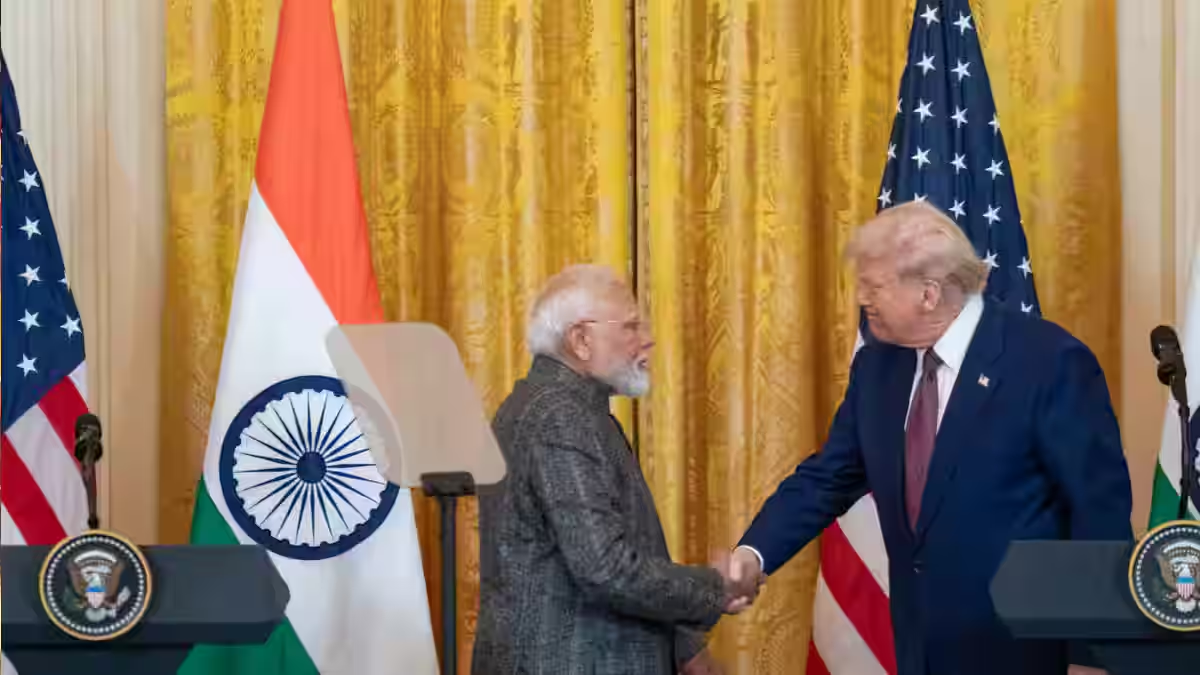
Government Statement on India US Trade Deal
Farmers and Dairy Sector Fully Protected, 18% Tariff in Effect, $500 Billion Trade Vision
The Government of India today reaffirmed its firm and transparent position on the India US trade deal, highlighting that national interests remain paramount in all economic negotiations. The India US trade deal has been framed to ensure economic growth, strategic cooperation, and long-term stability, while completely safeguarding the interests of farmers and the dairy sector.
This India US trade deal represents a carefully negotiated understanding between two of the world’s largest democracies. It reflects India’s growing global stature and its ability to engage with major economies on equal terms. The government has clarified that there has been no compromise whatsoever on agriculture, dairy, or rural livelihoods under the India US trade deal.
India US Trade Deal A Balanced and Sovereign Agreement
The India US trade deal has been finalised after extensive consultations across ministries, industry stakeholders, and policy experts. The guiding principle throughout the negotiations was simple and firm: India will not accept any agreement that weakens its farmers, undermines food security, or damages domestic production systems.
India’s negotiating team made it clear that the India US trade deal must deliver mutual benefits while preserving India’s sovereign right to protect sensitive sectors. This position was accepted, and as a result, agriculture and dairy remain fully protected.
The India US trade deal is therefore not a one-sided arrangement. It is a structured framework aimed at expanding trade volumes, reducing uncertainty, and strengthening supply chains without forcing India into unfair market concessions.
Complete Protection for Farmers and the Dairy Sector
One of the most important aspects of the India US trade deal is the complete protection provided to Indian farmers and the dairy sector. These sectors support millions of livelihoods and form the backbone of rural India.
The government has categorically stated that:
- There is no opening of the dairy sector under the India US trade deal
- There are no compulsory agricultural imports
- There is no dilution of minimum support mechanisms
- There is no exposure to subsidised foreign farm products
The India US trade deal ensures that Indian farmers will not face unfair competition from heavily subsidised imports. This approach reflects the government’s long-standing commitment to rural prosperity and food security.
By protecting agriculture and dairy, the India US trade deal maintains social stability while allowing growth in other sectors such as manufacturing, services, and technology.
18% Tariff Framework Explained
A key commercial feature of the India US trade deal is the establishment of an 18% tariff framework on Indian exports to the United States. This move brings clarity and predictability to exporters who previously faced higher and uncertain tariff regimes.
The 18% tariff under the India US trade deal applies across a broad range of goods and is expected to:
- Improve price competitiveness of Indian products
- Encourage long-term export contracts
- Boost manufacturing and MSME participation
- Strengthen India’s position in global value chains
Importantly, the government has clarified that this tariff arrangement does not compromise India’s domestic policy space. The India US trade deal balances export growth with internal economic priorities.
Boost to Indian Manufacturing and Exports
The India US trade deal is expected to significantly benefit Indian manufacturing sectors such as:
- Textiles and garments
- Engineering goods
- Auto components
- Leather and footwear
- Gems and jewellery
- Electronics and industrial machinery
With predictable tariffs and improved market access, the India US trade deal provides Indian exporters with a stable platform to scale operations and invest in capacity expansion.
This aligns with India’s broader vision of becoming a global manufacturing hub. The India US trade deal complements national initiatives focused on industrial growth, employment generation, and export diversification.
Energy Security and Venezuela Oil Purchases
Addressing questions on energy policy, the government clarified that decisions regarding crude oil imports are driven by economic logic and national interest, not by external pressure.
Under the India US trade deal, India retains full autonomy over its energy procurement strategies. The government has confirmed that India may continue purchasing oil from Venezuela and other sources if it is economically viable and strategically beneficial.
This flexibility under the India US trade deal ensures:
- Energy security
- Competitive pricing
- Supply diversification
- Protection from geopolitical disruptions
The government reiterated that the India US trade deal does not restrict India’s ability to make independent decisions in the energy sector.
$500 Billion Trade Vision
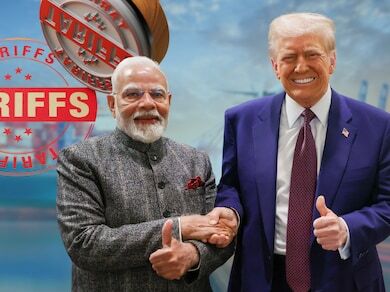
One of the most discussed aspects of the India US trade deal is the projected $500 billion trade potential between India and the United States. This figure represents a long-term vision rather than a fixed obligation.
The India US trade deal creates conditions that could enable bilateral trade to expand significantly across:
- Goods and commodities
- Energy and resources
- Technology and innovation
- Defence and aerospace
- Digital services and infrastructure
The government clarified that the $500 billion trade projection is aspirational and market-driven. It reflects confidence in the economic complementarities between the two nations.
Strategic and Geopolitical Importance
Beyond economics, the India US trade deal strengthens strategic ties between India and the United States. It reinforces cooperation in areas such as:
- Supply chain resilience
- Technology partnerships
- Critical minerals
- Defence manufacturing
- Digital economy
The India US trade deal positions India as a reliable global partner while maintaining strategic autonomy. It also enhances India’s leverage in international trade negotiations with other major economies.
Addressing Public Concerns
The government acknowledges that the India-US trade deal has generated debate and scrutiny. Such discussion is healthy in a democracy. However, misinformation and speculation must be addressed with facts.
Key clarifications include:
- Farmers and dairy are fully protected
- No forced imports under the India-US trade deal
- Tariff reductions benefit exports, not foreign dominance
- Energy decisions remain sovereign
- Trade projections are not binding commitments
The government remains committed to transparency and stakeholder engagement as the India-US trade deal is implemented.
Expected Economic Impact
The India-US trade deal is expected to:
- Increase export earnings
- Create employment across manufacturing and logistics
- Encourage foreign and domestic investment
- Strengthen MSMEs
- Improve India’s global trade ranking
By combining protection with opportunity, the India-US trade deal demonstrates India’s ability to negotiate smart, future-ready agreements.
Conclusion: A Deal That Protects and Progresses
The India-US trade deal stands as a testament to India’s evolving trade diplomacy. It protects the vulnerable, empowers businesses, and strengthens strategic partnerships.
With farmers and the dairy sector completely protected, a clear 18% tariff framework, flexibility in energy sourcing including Venezuela oil purchases, and a long-term $500 billion trade vision, the India-US trade deal reflects balance, confidence, and national interest.
The Government of India reiterates that this agreement serves India’s economic future while safeguarding its social foundations. The India-US trade deal is not just about trade—it is about trust, stability, and sustainable growth.
Read more latest news

