
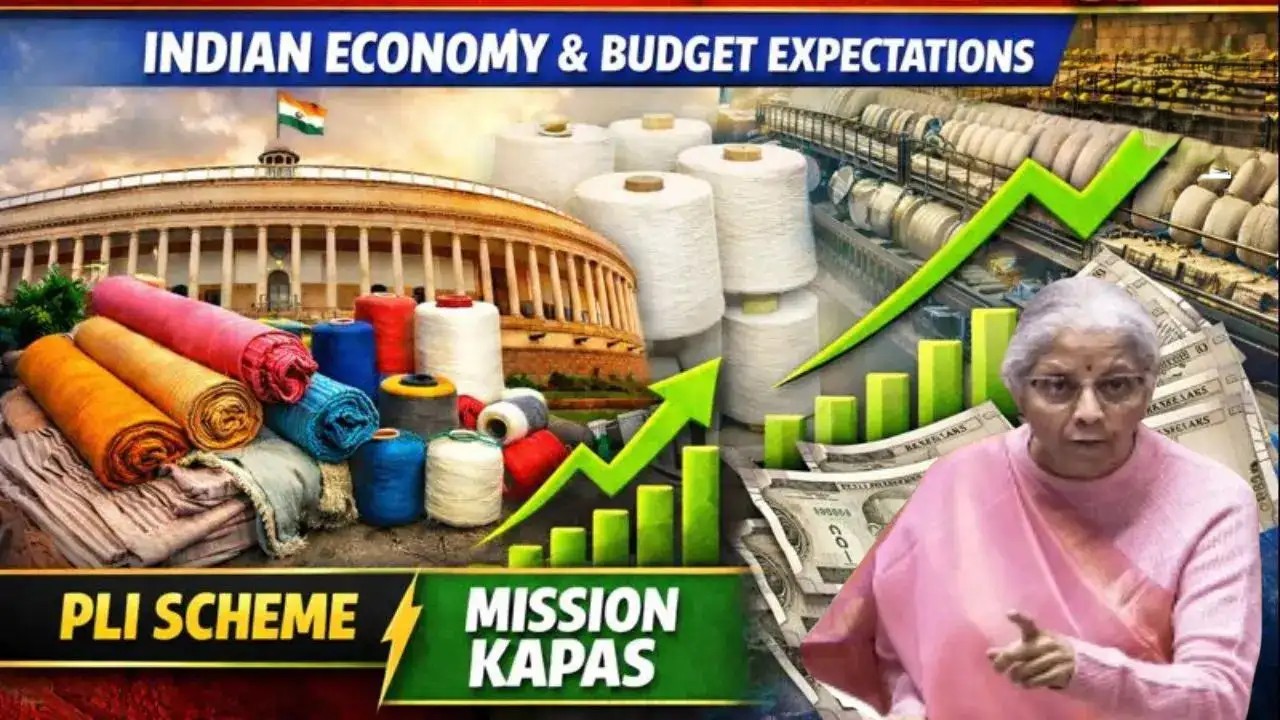
Budget 2026: India’s Textile Push vs Bangladesh – A Big Bet on the Textile Industry
Introduction: Budget 2026 Signals a Strategic Shift
Nirmala sitaraman Union Budget 2026 has sent a clear and powerful message to India Textile Push global markets: India is ready to emerge as a dominant force in the global textile and apparel industry. With a series of targeted policy measures, infrastructure investments, and skill-development initiatives, the government has placed textiles at the centre of its manufacturing and export strategy. This India Textile Push is not just about boosting domestic production but about reshaping global supply chains that have long been dominated by countries like Bangladesh, Vietnam, and China.
For decades, Bangladesh has been one of the biggest beneficiaries of global garment outsourcing, thanks to low labour costs and duty-free access to Western markets. However, Budget 2026 marks a turning point. India’s renewed focus on scale, technology, sustainability, and skilled manpower could significantly alter competitive dynamics in South Asia.
This blog takes an in-depth look at how Budget 2026 strengthens India’s textile ecosystem, what it means for Bangladesh’s garment industry, and why the India Textile Push could redefine the future of global apparel manufacturing.
Why Textiles Matter to India Economy
The textile and apparel sector is one of India’s oldest industries and a major pillar of the economy. It contributes nearly 2% to GDP, around 12% to exports, and employs over 45 million people directly, with millions more dependent indirectly. From cotton farmers to garment exporters, textiles touch every layer of India’s socio-economic structure.
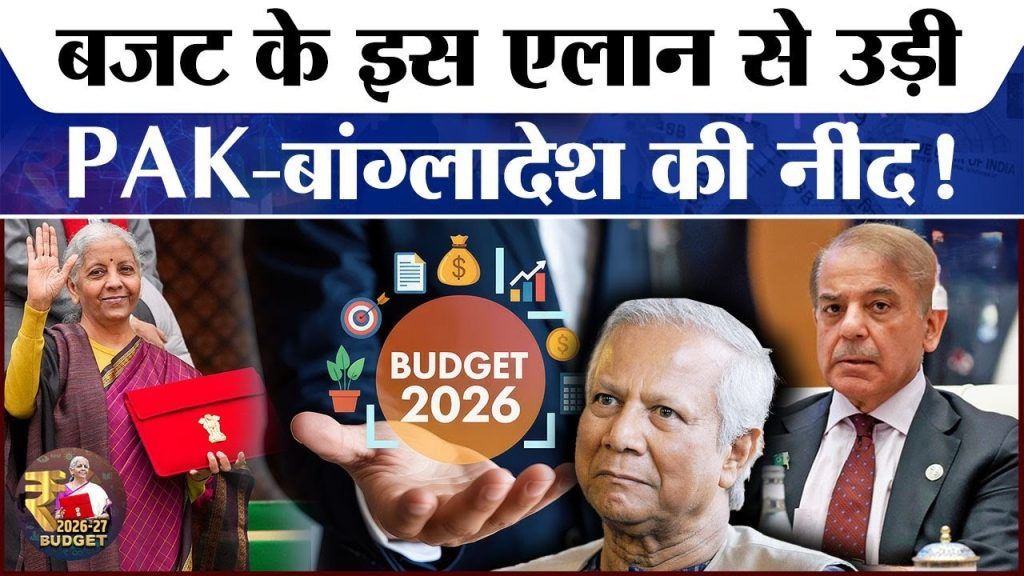
Recognising this potential, the government has used Budget 2026 to accelerate reforms and investments. The India Textile Push aims to move the industry from being labour-intensive and fragmented to being technology-driven, globally competitive, and environmentally sustainable.
Mega Textile Parks Scaling Up Like Never Before
One of the most significant announcements in Budget 2026 is the expansion of mega textile parks under the PM MITRA (Mega Integrated Textile Region and Apparel) scheme. These parks are designed to offer a plug-and-play ecosystem with world-class infrastructure, including:
- Integrated spinning, weaving, processing, and garmenting units
- Common effluent treatment plants
- Logistics hubs and testing labs
- Worker housing and training centres
By reducing logistics costs and improving efficiency, these parks strengthen the India Textile Push and help Indian manufacturers compete with large-scale factories in Bangladesh.
Unlike Bangladesh’s industry, which grew organically around a few urban clusters, India’s new parks are being planned with sustainability and compliance at their core. This gives India an edge as global brands increasingly demand traceability and ESG compliance.
National Fiber Policy: Redefining the Raw Material Strategy
Budget 2026 also announced a comprehensive National Fiber Policy, a long-awaited reform aimed at aligning India’s raw material strategy with global trends. Traditionally, India’s textile sector has been cotton-centric. While cotton remains crucial, global demand is shifting towards man-made fibres (MMF), technical textiles, and blended fabrics.
The National Fiber Policy focuses on:
- Encouraging MMF production
- Reducing import dependence on specialty fibres
- Supporting innovation in recycled and bio-based fibres
- Creating uniform taxation across fibre categories
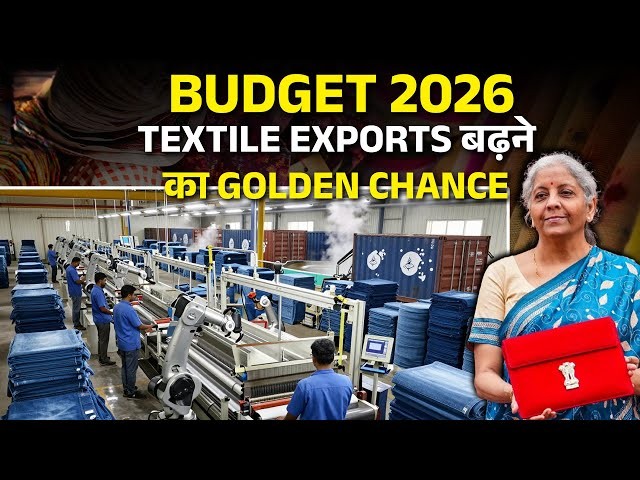
This policy is a cornerstone of the India Textile Push, allowing India to compete more effectively with Bangladesh, which heavily depends on imported fabrics and raw materials, especially from China.
Skill Development: Building a Future-Ready Workforce
A major challenge for India’s textile industry has been skill gaps and productivity issues. Budget 2026 addresses this head-on with a massive skill upgradation drive. The government has announced:
- New textile-focused skill universities
- Industry-linked training programs
- Incentives for companies investing in worker upskilling
- Digital training platforms for MSMEs
This investment in human capital is a critical part of the India Textile Push. While Bangladesh has a cost advantage due to low wages, India aims to offset this through higher productivity, better quality, and advanced manufacturing techniques.
Technology and Automation: Moving Beyond Cheap Labour
Global apparel sourcing is changing rapidly. Brands are no longer looking only for the cheapest supplier; they want speed, flexibility, quality, and compliance. Budget 2026 encourages adoption of:
- Industry 4.0 technologies
- AI-driven quality control
- Automation in cutting and stitching
- Smart inventory and supply-chain systems
This technological transformation strengthens the India Textile Push and positions India as a reliable alternative to Bangladesh, especially for high-value and fast-fashion segments.
Export Incentives and Global Market Access
To boost exports, Budget 2026 has extended and refined incentive schemes for textile exporters. These include:
- Enhanced duty remission benefits
- Faster GST refunds
- Export credit at lower interest rates
- Support for participation in global trade fairs
These measures are designed to complement the India Textile Push and help Indian exporters gain market share in the US, EU, and emerging markets.
Bangladesh has long benefited from duty-free access to the EU under the Least Developed Country (LDC) framework. However, as Bangladesh prepares to graduate from LDC status, its preferential access will reduce. India’s strategic timing with Budget 2026 could help it capitalise on this shift.
Sustainability at the Core of Textile Growth
Sustainability is no longer optional in the global textile trade. Budget 2026 integrates green manufacturing into the India Textile Push through:
- Incentives for water-efficient processing
- Support for renewable energy adoption
- Promotion of recycled textiles
- Stricter environmental compliance norms
These steps align India’s textile sector with global ESG standards, something Bangladesh’s industry has struggled with due to environmental and labour compliance concerns.
Impact on Bangladesh’s Garment Industry
Bangladesh’s garment industry has been the backbone of its economy, accounting for over 80% of export earnings. However, the India Textile Push presents serious challenges:
- Rising Competition: India’s integrated supply chain reduces dependence on imports, lowering costs and lead times.
- Compliance Pressure: Global buyers may shift orders to India due to better ESG compliance.
- Skill and Technology Gap: India’s focus on automation and skills could erode Bangladesh’s labour-cost advantage.
- Market Diversification: India’s strong domestic market offers scale that Bangladesh lacks.
While Bangladesh will remain a major player, it can no longer rely solely on low-cost manufacturing.
Domestic Market Advantage: India’s Hidden Strength
One of the biggest advantages of the India Textile Push is India’s massive domestic market. Rising incomes, urbanisation, and a young population are driving demand for branded apparel, technical textiles, and home furnishings.
This domestic demand provides stability to Indian manufacturers, allowing them to scale operations and invest in innovation without relying entirely on exports. Bangladesh, in contrast, remains heavily dependent on external markets.
MSMEs and the Textile Value Chain
Budget 2026 also focuses on strengthening textile MSMEs, which form the backbone of India’s industry. Measures include:
- Easier access to credit
- Technology upgradation funds
- Cluster-based development programs
- Digital platforms for market access
By empowering MSMEs, the India Textile Push ensures inclusive growth and deeper integration across the value chain.
Geopolitical and Supply Chain Realignment
Global supply chains are undergoing realignment due to geopolitical tensions, trade wars, and the search for China-plus-one strategies. India is emerging as a preferred destination, and the India Textile Push aligns perfectly with this global trend.
As brands diversify sourcing away from a single country, India’s scale, democratic stability, and policy support make it an attractive alternative to Bangladesh.
Challenges India Must Still Address
Despite strong momentum, the India Textile Push is not without challenges:
- Higher labour costs compared to Bangladesh
- Infrastructure gaps in some regions
- Complex labour laws at the state level
- Need for faster policy implementation
Addressing these issues will be crucial to fully realise the potential outlined in Budget 2026.
What Lies Ahead: A New Textile Power Balance
Budget 2026 marks a decisive moment for India’s textile ambitions. With mega parks, a National Fiber Policy, skill development, and sustainability at its core, the India Textile Push has the potential to reshape regional and global textile dynamics.
Bangladesh will continue to be a strong competitor, but the gap is narrowing. Over the next decade, global buyers may increasingly look at India not just as an alternative, but as a preferred sourcing hub.
Conclusion: Budget 2026 and the Future of Textiles
The India Textile Push in Budget 2026 is more than a set of policy announcements; it is a strategic vision for long-term industrial transformation. By focusing on scale, skills, sustainability, and technology, India is positioning itself as a global textile powerhouse.
As competition intensifies, especially with Bangladesh, the success of this strategy will depend on effective execution and continuous reforms. If implemented well, Budget 2026 could mark the beginning of a new era—one where India leads the global textile value chain with confidence and credibility.
Read More Latest news

