
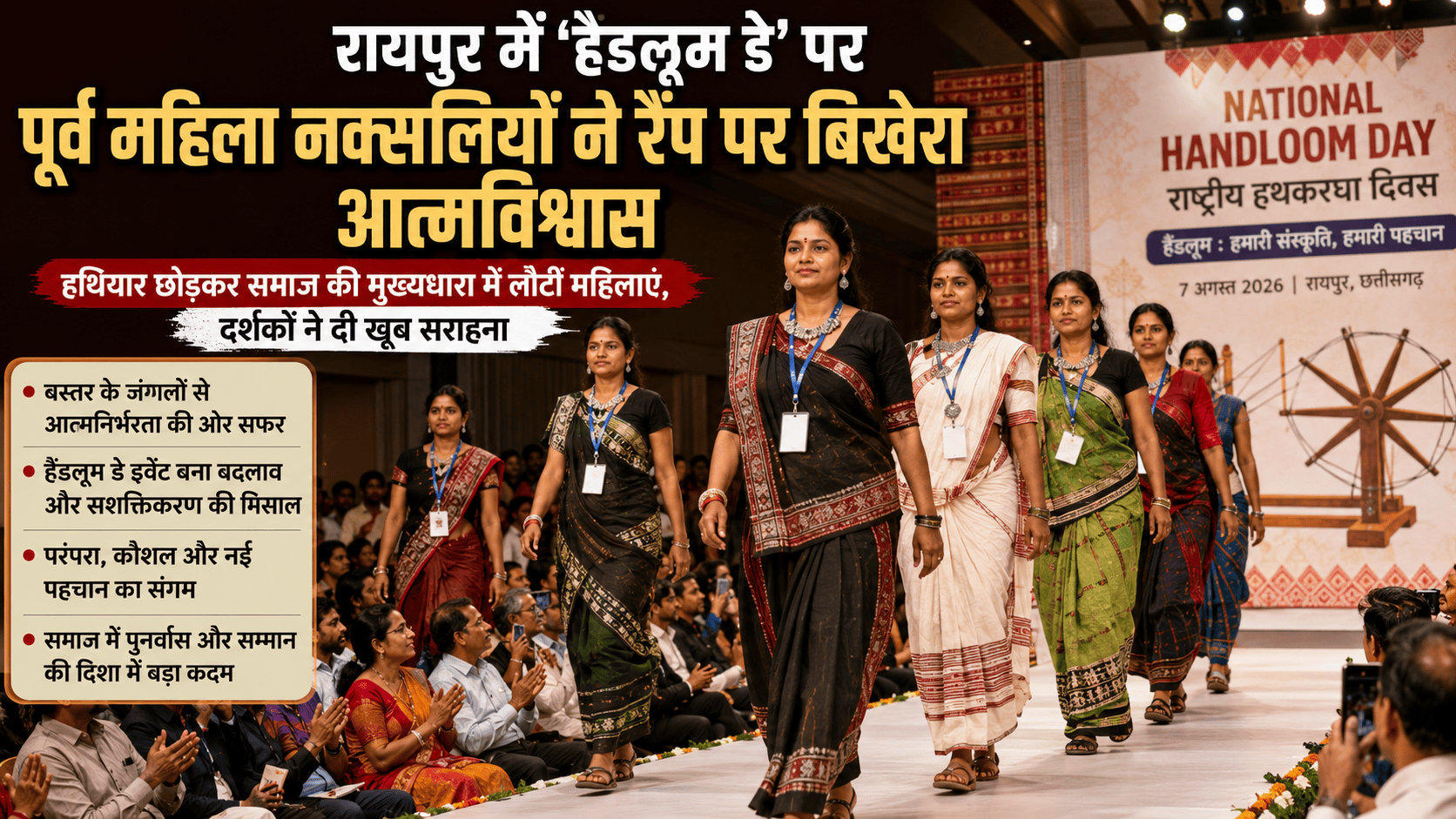
Handloom Day event in Raipur: Former Female Naxalites Walk the Ramp, Showcasing a New Journey
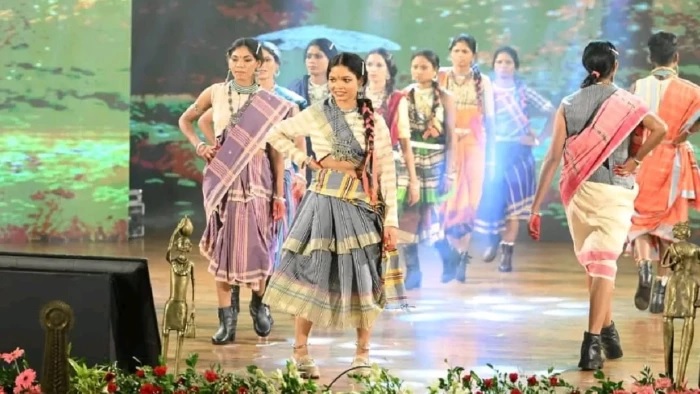
The Handloom Day event in Raipur witnessed an inspiring and unusual presentation of courage, transformation and social reintegration when former female Naxalites, who once lived with weapons in the dense forests of Bastar, walked the ramp with confidence. Their participation became one of the most talked-about moments of the programme, as the women who had once been associated with violence and conflict appeared in a completely different role.
The Handloom Day event in Raipur provided these women an opportunity to present themselves before the public in a new identity. Instead of carrying the burden of their past, they stepped forward confidently and participated in an event celebrating India’s traditional handloom heritage.
From Bastar Forests to the Ramp
The story of these women is significant because it represents a major change in their lives. For years, the Bastar region has remained associated with Left Wing Extremism and armed conflict. Many people living in remote forest areas have faced difficult social and economic circumstances.
At the Handloom Day event in Raipur, former female Naxalites demonstrated that a person’s past does not necessarily have to determine their future. Their appearance on the ramp reflected their journey from conflict toward a more peaceful and constructive life.
The audience responded positively to their participation. Their confidence while walking the ramp attracted appreciation and created an emotional moment during the programme.
A Symbol of Reintegration
The Handloom Day event in Raipur was not simply a celebration of handloom products and traditional craftsmanship. The participation of former female Naxalites gave the programme a wider social meaning.
Their presence highlighted the importance of rehabilitation and reintegration. Returning to mainstream society can be challenging for people who have spent years away from ordinary social and economic life. Opportunities that help them regain confidence can play an important role in their transformation.
Walking on a public stage in front of an audience represented more than a fashion presentation. It showed their willingness to embrace a different future.
Handloom as a Medium of Change
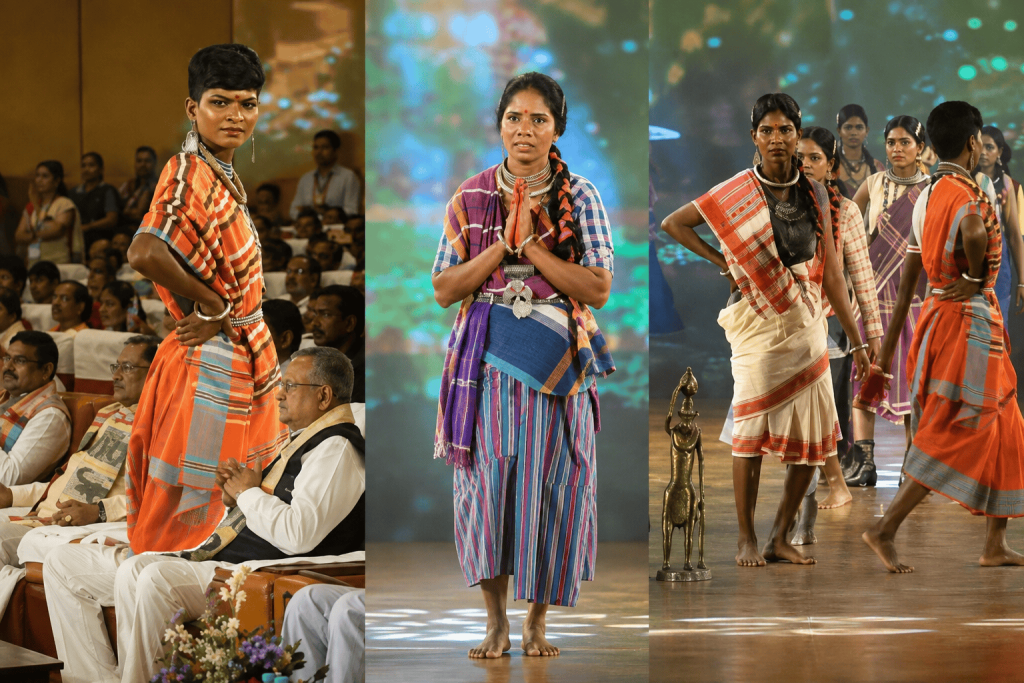
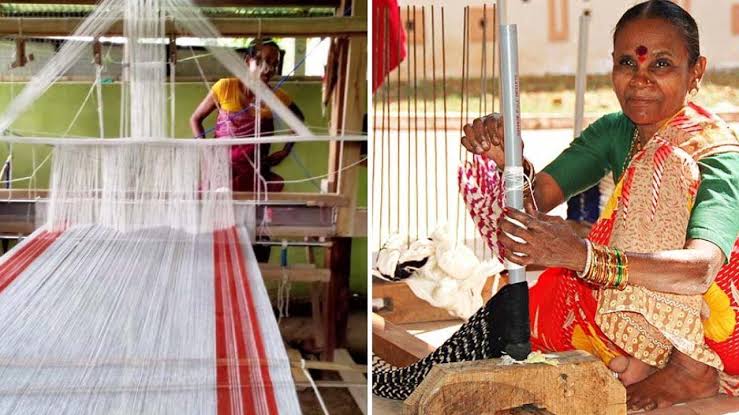
The Handloom Day event in Raipur also highlighted the cultural importance of India’s handloom traditions. Handloom is deeply connected with India’s heritage, rural economy and generations of skilled artisans.
For communities in regions such as Bastar, traditional crafts can also become an avenue for economic opportunities. Local skills, textiles and handicrafts have the potential to create livelihoods while preserving cultural traditions.
The participation of former female Naxalites in such a programme therefore carried an additional message. Economic empowerment and social acceptance can help people rebuild their lives after leaving conflict behind.
Confidence on the Ramp
One of the most striking aspects of the Handloom Day event in Raipur was the confidence displayed by the women while walking the ramp.
For someone who has spent years in difficult circumstances, appearing before a large audience can itself be a significant challenge. Their confident participation showed a visible change in their outlook.
The applause and appreciation from the audience added to the significance of the moment. Instead of being viewed through the lens of their past, the women were being recognized for their present participation and their willingness to move forward.
A Different Image of Bastar
The Handloom Day event in Raipur also brought attention to another side of Bastar.
Bastar is known for its forests, tribal traditions, handicrafts and rich cultural heritage. However, the region has frequently been discussed primarily in the context of conflict and Naxal violence.
The appearance of former female Naxalites on a handloom-related platform offered a different narrative. It showed individuals associated with the conflict period participating in a cultural and social event connected with India’s traditional heritage.
Such moments can contribute to changing perceptions about communities and individuals affected by conflict.
The Importance of Mainstream Participation
The Handloom Day event in Raipur demonstrated why mainstream participation matters for people who have chosen to leave armed movements behind.
Reintegration is not limited to leaving weapons or conflict. It also involves rebuilding social relationships, developing confidence and finding opportunities to participate in ordinary community life.
Public events can provide a platform where such individuals are able to demonstrate their abilities and receive recognition from society.
The appreciation received by the former female Naxalites during the programme indicated that the audience was willing to acknowledge their new journey.
A Message Beyond Fashion
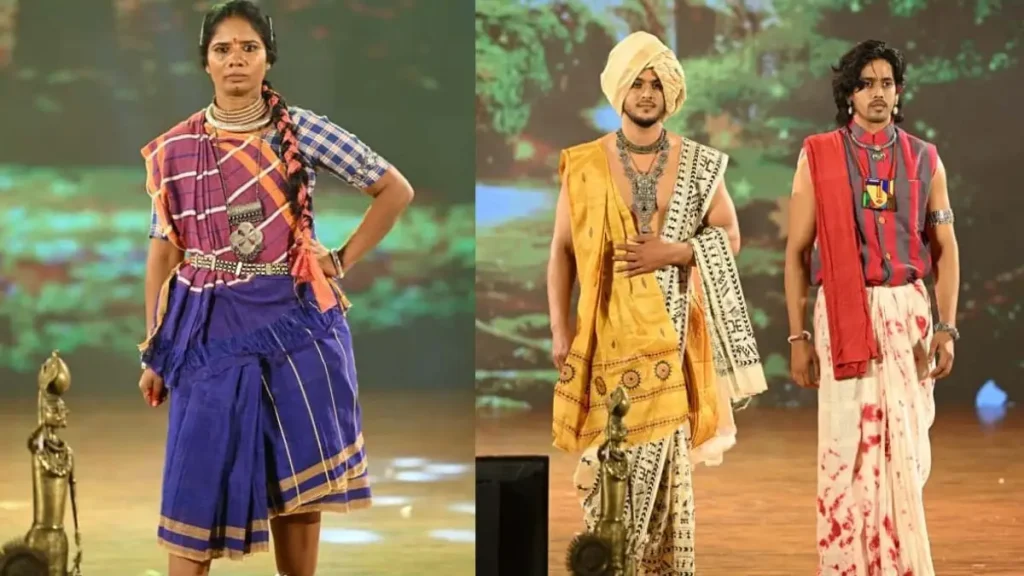
Although the women walked the ramp as part of a handloom presentation, the Handloom Day event in Raipur carried a message that went beyond fashion.
Their appearance represented transformation. It showed how individuals can move from a troubled past toward a more peaceful and socially productive future.
The ramp became a symbolic platform where their identities were not defined solely by their previous association with armed activities. Instead, they appeared as participants in a cultural programme and as individuals attempting to reconnect with mainstream society.
Women and the Journey Back to Society
The participation of women makes the Handloom Day event in Raipur particularly noteworthy. Women affected by conflict often face unique social and economic challenges when attempting to rebuild their lives.
Their public participation can help create confidence and demonstrate that rehabilitation can include meaningful involvement in cultural and community activities.
The women walking the ramp also provided a powerful visual representation of change. Their confidence before the audience reflected a journey that had taken them far away from the circumstances in which they once lived.
Handloom Day and Social Empowerment
The Handloom Day event in Raipur connected two important themes: India’s traditional handloom heritage and social empowerment.
Handloom represents the hard work of artisans and the preservation of traditional knowledge. At the same time, programmes that provide opportunities to marginalized or rehabilitated individuals can contribute to broader social inclusion.
The combination created a meaningful setting for the former female Naxalites. Their participation demonstrated how cultural programmes can become platforms for recognition, confidence and reintegration.
A Hopeful New Beginning
The Handloom Day event in Raipur ultimately became a story about new beginnings.
The women who once walked through the dense forests of Bastar as members of an armed movement were now walking confidently on a public ramp. Their journey reflects the possibility of change when individuals leave conflict behind and seek a place in mainstream society.
Their participation was appreciated by the audience, making the moment memorable for everyone present.
The Handloom Day event in Raipur therefore offered more than a celebration of traditional textiles. It presented a powerful image of transformation and resilience.
Conclusion
The participation of former female Naxalites at the Handloom Day event in Raipur stands out as a remarkable example of social reintegration. Their journey from the forests of Bastar to the public stage represents a significant personal transformation.
Their confident walk on the ramp showed that a difficult past can be followed by a new chapter. The appreciation from the audience further reinforced the importance of acceptance and opportunities for people returning to mainstream life.
The Handloom Day event in Raipur thus became a platform where handloom, culture, empowerment and social transformation came together. The women’s participation sent a hopeful message: with the right opportunities and support, people who have experienced conflict can begin rebuilding their lives and contribute positively to society.
The Handloom Day event in Raipur will remain significant not only for the celebration of India’s handloom traditions but also for the inspiring story of women who chose a different path and confidently stepped into a new future.
Read more latest news

