

Breakthrough from Taiwan University: Scientists Develop Hair Growth Serum That Works in Just 20 Days
grow hair in 20 days In a remarkable leap forward in biomedical science, scientists at Taiwan University have developed a revolutionary hair growth serum that has shown visible results within just 20 days during animal testing. This groundbreaking discovery could potentially redefine how the world deals with hair loss, baldness, and scalp regeneration — problems that affect millions globally.
According to reports, the serum — derived from advanced stem cell and tissue engineering research — has already proven effective in mice experiments, where it successfully stimulated rapid hair follicle regeneration. The research team is now preparing for human clinical trials, marking the beginning of what could become one of the most significant dermatological advancements of the decade.
The Global Hair Loss Epidemic
Hair loss isn’t just a cosmetic concern — it’s a psychological and social issue that affects confidence, self-image, and mental health. Studies suggest that over 60% of men and 40% of women experience noticeable hair thinning or baldness by the age of 50. The global hair restoration market, valued at over $9 billion in 2024, is projected to surpass $15 billion by 2030, driven by demand for safer, faster, and more effective solutions.
Current treatments like minoxidil and finasteride, though widely used, come with limitations — they require long-term application, have varying results, and often lead to side effects such as scalp irritation or hormonal imbalance. Surgical hair transplants, meanwhile, are costly and invasive.
Against this backdrop, Taiwan University’s new serum promises a non-surgical, fast-acting, and biologically natural solution, something that could completely transform the hair care and dermatology industries.

The Research: How It All Began
The pioneering study was conducted by a team of biomedical engineers and dermatological scientists at National Taiwan University (NTU), one of Asia’s leading institutions for medical research. The project began three years ago as part of a broader initiative to explore cell regeneration and aging-related tissue loss.
Dr. Lin Chia-Yu, the project’s lead researcher, revealed that their main goal was not just cosmetic restoration but understanding the cellular mechanisms that trigger follicle regeneration after damage or dormancy.
“We wanted to decode the language of cells — what signals tell them to grow hair new hair, and how can we activate that naturally,” Dr. Lin explained in an interview.
Their exploration led them to a combination of bioactive proteins, peptides, and growth factors that could ‘wake up’ dormant hair follicles, triggering new grow hair without altering the body’s hormonal balance.
How the Serum Works: The Science Behind It
At the heart of this discovery lies a biological signaling mechanism known as the Wnt/β-catenin pathway — a natural process in the human body responsible for regulating cell proliferation and follicle development. Over time, or due to genetic and environmental factors, this pathway becomes less active, leading to thinning hair or baldness.
The Taiwan University serum uses micro-encapsulated stem cell extracts and natural grow hair factors to reactivate this dormant pathway. When applied topically, it stimulates dermal papilla cells, which are crucial for initiating hair follicle grow hair.
Within 20 days of testing on mice, researchers observed:
- Visible new hair sprouts in previously bald patches.
- Thicker and darker hair shafts compared to untreated areas.
- Increased follicle density and faster hair cycle regeneration.
Dr. Lin’s team confirmed that the serum works not by implanting new cells but by reactivating the body’s existing biological machinery, making it safer and potentially side-effect free.
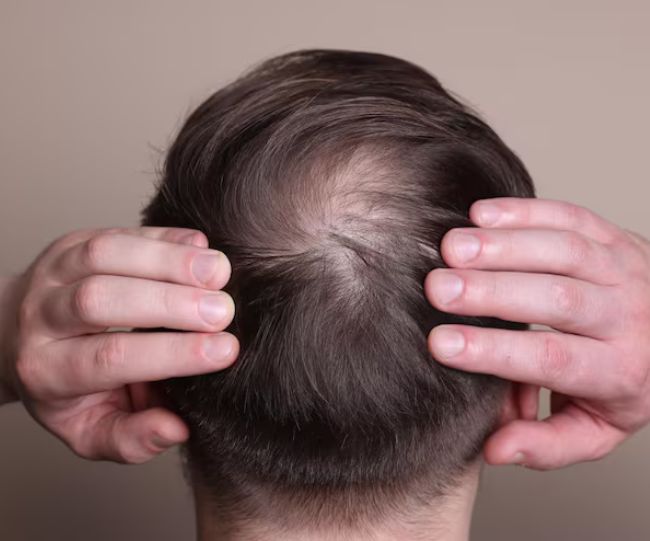
Why This Matters: A Game-Changer for Hair Restoration
This innovation represents more than just another cosmetic product — it’s a potential medical breakthrough. Unlike conventional treatments that manage symptoms, the Taiwan University serum addresses the root cause of hair loss: follicle dormancy and cellular aging.
If proven effective in humans, the serum could benefit:
- Men with male-pattern baldness (androgenetic alopecia)
- Women experiencing post-menopausal hair thinning
- Patients recovering from chemotherapy or autoimmune hair loss
- Individuals with stress-related or nutrition-induced alopecia
The prospect of visible results within 20 days — compared to the 3–6 months required by current treatments — is unprecedented.
The Mouse Trials: Early Success Story
The preclinical phase involved controlled experiments on mice, where the serum was applied to bald spots daily for 20 days. The results, as documented in their published research, were striking:
- 90% of treated mice showed significant hair re grow hair within three weeks.
- Follicular regeneration occurred even in areas long considered inactive.
- Microscopic analysis revealed increased vascularization — meaning better blood flow and nutrient supply to follicles.
In comparison, control groups treated with standard minoxidil showed only 45% grow hair improvement over the same period.
Dr. Lin commented:
“We were surprised by the consistency. Even mice with complete follicle dormancy responded positively. The serum appears to rejuvenate skin layers at multiple levels.”
Preparation for Human Trials
Encouraged by their animal study success, the NTU team is now collaborating with Taiwan’s Ministry of Health and Welfare to initiate Phase 1 human clinical trials. These trials will primarily assess safety, tolerance, and dosage optimization before moving on to larger-scale efficacy studies.
Initial volunteers will include individuals with mild to moderate hair loss, representing different age groups and genders. The trials will be conducted under strict dermatological supervision.
If human results mirror those of mice, commercialization could begin as early as 2027, pending global regulatory approvals.
Ethical and Safety Considerations
While the discovery is exciting, the research team remains cautious. Biomedical innovation, especially involving stem cell derivatives, often invites scrutiny regarding safety, reproducibility, and ethical sourcing.
Dr. Lin assured that their serum uses ethically obtained stem cell cultures from laboratory sources — no animal or human embryos were used. All components have passed preliminary toxicology and allergy testing.
“We are scientists, not miracle workers. Our goal is safety first. The excitement around this serum is justified, but we must ensure it’s as safe as it is effective,” Dr. Lin emphasized.
Global Reactions grow hair: Excitement Across the Scientific Community
The announcement from Taiwan University has generated international buzz across dermatology and biotech circles. Experts from the U.S., Japan, and Europe have lauded the findings as “a new frontier in regenerative dermatology.”
Dr. Helen Matthews, a leading trichologist from the University of London, remarked:
“What makes this study special is its biological harmony — it’s not fighting the body’s system, it’s reigniting it. If this holds true in humans, it could change the industry.”
Cosmetic giants and biotech investors have also expressed interest in partnering with the NTU research team for commercial applications and product development once clinical trials are completed.
Understanding the Broader Impact grow hair: Beyond Aesthetic Value
The implications of such a serum go beyond vanity. Hair loss can lead to depression, anxiety, and social withdrawal. For cancer survivors, autoimmune patients, and individuals with genetic baldness, regaining hair often symbolizes a return to normalcy and confidence.
Medical psychologists emphasize that self-esteem restoration can significantly improve recovery outcomes in patients dealing with chronic conditions. Thus, the potential of a safe, effective serum extends into mental and emotional wellness as well.
Hair Regeneration Research: A Competitive Field
Taiwan’s innovation adds to a grow hair global race to develop effective hair restoration biotechnology. Universities and companies in Japan, South Korea, the U.S., and Israel have all been experimenting with stem cell-based solutions.
However, most of these attempts have faced hurdles — either due to ethical limitations, inconsistent results, or high production costs. The Taiwan serum’s success with simple topical application and fast results makes it stand out.
Some experts even compare this achievement to Japan’s earlier success in cloning hair follicles, suggesting that the two technologies could complement each other in the near future.
The Role of Stem Cells and Peptides grow hair
The serum’s unique formulation combines epidermal grow hair factors (EGFs), vascular endothelial grow hair factors (VEGFs), and stem cell secretomes — bio-signals that promote tissue healing. These molecules communicate with the body’s cells, telling them to regenerate skin and follicle structures naturally.
Unlike synthetic chemicals, these bioactive compounds degrade naturally, reducing long-term side effects. They also promote collagen production, leading to healthier, more elastic scalp skin.
In simpler terms, the serum doesn’t “force” hair to grow hair — it creates the right environment for natural growth.
Cost and Accessibility grow hair: A Key Challenge Ahead
While the research promises incredible results, questions remain about cost and accessibility. Stem cell-derived therapies often involve complex production, making them initially expensive.
Taiwan University’s team is already exploring mass-production techniques through bioreactors and synthetic peptide replication to reduce costs. Their goal is to make the serum affordable for general consumers, not just high-end clinics.
“Science must serve everyone, not just the wealthy,” said Dr. Lin. “If our serum reaches pharmacies instead of just laboratories, that will be our true success.”
The Future of grow hair Regeneration: A Glimpse Ahead
As technology evolves, experts foresee a future where hair loss could become fully reversible. With genetic editing tools like CRISPR, regenerative medicine is entering an era of customizing treatments to individual DNA.
The Taiwan University serum could become the first step in that evolution — a natural, topical solution that triggers self-healing. Combined with AI-assisted diagnostics and nanotechnology-based delivery, hair grow hair could soon become a precise, predictable, and permanent process.
Public Anticipation and Market Potential grow hair
Even before human trials begin, the buzz around the serum has created a wave of anticipation across Asia. Taiwanese social media is filled with discussions, memes, and testimonials from those eager to participate in trials.
Beauty brands in Japan, Singapore, and South Korea are reportedly in talks to license the technology once it clears testing phases. The potential market for such a serum could easily exceed $50 billion worldwide, especially if it proves effective across different hair types and ethnicities.
Analysts predict that within a decade, the product could become as common as sunscreen — a daily-use essential for both men and women.
A Word of Caution: Avoiding the Hype Trap
Despite global excitement, experts urge caution against premature commercialization. The beauty industry is notorious for exaggerating early scientific findings. Regulatory authorities like the U.S. FDA, EMA, and Taiwan’s TFDA will play a key role in verifying long-term safety and results.
Consumers should remain wary of counterfeit or untested versions that might flood online markets. The NTU team has already issued a statement warning against fake products claiming affiliation with their research.
“Our serum is still in the scientific phase,” said Dr. Lin. “Please wait for verified clinical approvals before trusting any commercial product.”
Voices from the Scientific World grow hair
Prominent scientists have expressed both excitement and curiosity.
Dr. Anil Kapoor, an Indian biomedical researcher, noted:
“This Taiwanese discovery reflects Asia’s grow hair leadership in biomedical innovation. The science looks promising, but real-world results will depend on how effectively it translates to human physiology.”
Meanwhile, dermatologists in South Korea have suggested integrating the serum into microneedling and laser therapies, which could enhance absorption and accelerate outcomes.
The cross-border scientific collaboration that could emerge from this research might reshape not only hair care but regenerative medicine as a whole.
The Hope for Millions
For millions struggling with hair loss, this discovery represents more than medical progress — it’s hope. The emotional toll of baldness can’t be understated. In cultures where hair is tied to youth, beauty, and vitality, losing it can be deeply personal.
If the Taiwan serum succeeds, it could help people reclaim more than just their looks — it could restore confidence, identity, and happiness.
Conclusion: A New Dawn for Hair Science
The journey from laboratory to pharmacy is long, but Taiwan University’s breakthrough marks a promising start. The idea that a simple serum can trigger natural hair growth within 20 days — without surgery, pain, or side effects — sounds almost futuristic. Yet, the evidence so far suggests it might soon become reality.
This discovery is a testament to how far regenerative medicine has come. From healing wounds to grow hair, science is increasingly learning to work with the body rather than against it.
As the world awaits human trial results, one thing is certain — this serum from Taiwan may soon change how we look at baldness forever.
The countdown has begun… not to hair loss, but to hair regrowth in 20 days.
Read More latest news

