
Honoring the Fallen: A Wedding Marked by the Presence of Army Personnel in Memory of Martyr Ashish Kumar
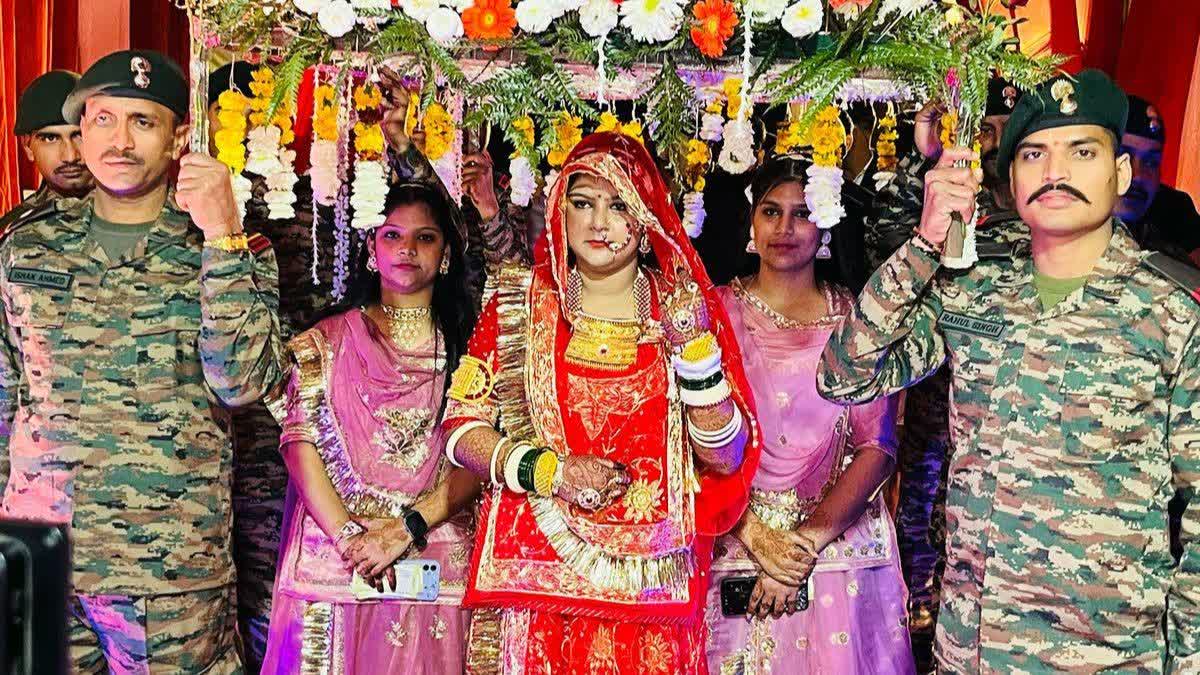
Serving and former Army personnel attended the wedding of a girl. Weddings in India are not merely ceremonies; they are occasions that weave together emotions, traditions, and the essence of family bonds. But when one member of the family is missing—especially someone whose absence is a sacrifice for the nation—the entire celebration takes on a profound meaning. This was the case when serving and former Army personnel attended the wedding of a young girl whose brother, Ashish Kumar, had laid down his life during Operation Alert 2024 in Arunachal Pradesh. Though the brother could not be present physically, his spirit lived on in every ritual, every blessing, and every tear shed on that auspicious day.
This blog takes you through the journey of that unforgettable wedding, the life of martyr Ashish Kumar, and the way the Indian Army family stood as a pillar of strength to honor his sacrifice.
1. The Context: Operation Alert 2024 in Arunachal Pradesh
Operation Alert 2024 was one of the most crucial military operations carried out by the Indian Army in Arunachal Pradesh. The region, which often witnesses heightened tensions along the Line of Actual Control (LAC), had been seeing unusual activities, prompting the Army to launch pre-emptive measures.
During this operation, several brave soldiers put their lives on the line to ensure that Indian territory remained secure. Among them was Ashish Kumar, a young and courageous jawan who had always dreamt of serving the nation. His sacrifice not only safeguarded the borders but also became a symbol of patriotism for his family and community.
2. A Wedding Without a Brother
In Indian tradition, the role of a brother in his sister’s wedding is deeply significant. From standing as her protector during ceremonies to performing rituals like the kanyadaan, the brother’s presence is seen as essential. For this young bride, however, that presence was a painful absence.
Her brother, Ashish Kumar, was supposed to be by her side. He would have led the rituals, teased her about leaving home, and offered the emotional reassurance that only a brother can. Instead, his memory filled the air. His picture was placed near the wedding mandap, garlanded, and every guest who arrived first bowed before it as a mark of respect.
This gesture set the tone for the wedding: it was not only about union but also about remembrance.
3. Army Brotherhood: Serving and Retired Soldiers Fill the Void
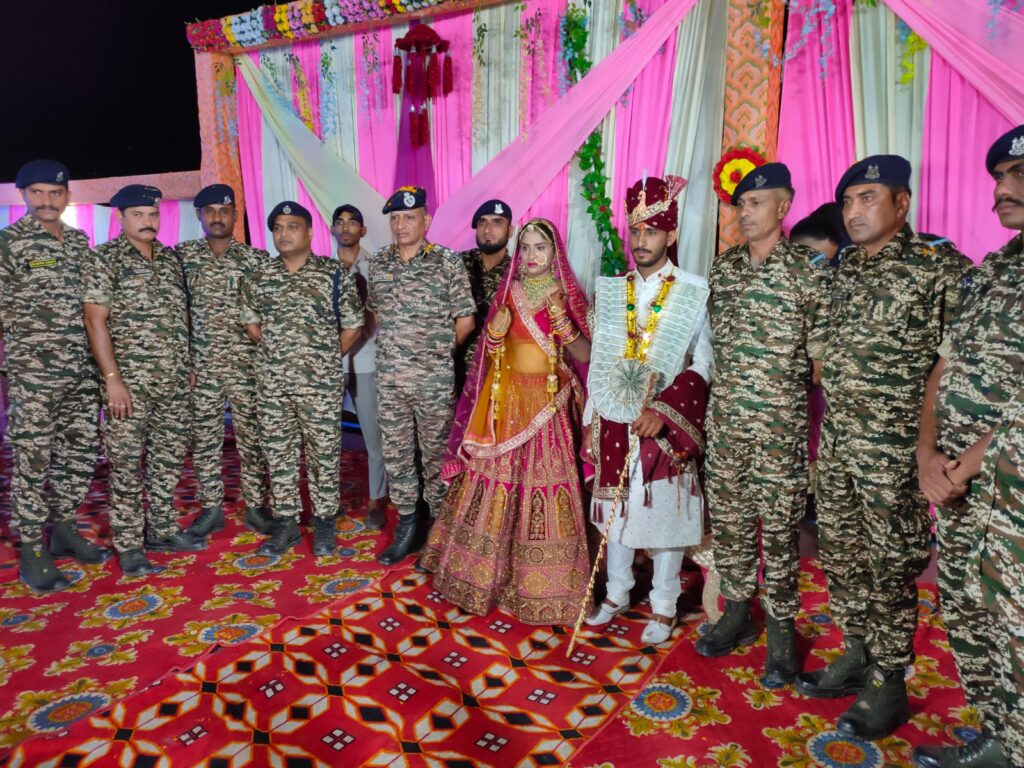
Recognizing the sacrifice of Ashish Kumar, a large number of serving and retired Army personnel came together to attend the wedding. Clad in their uniforms, medals adorning their chests, they brought with them a sense of pride and solidarity.
It was as though the Indian Army had collectively declared: “If Ashish cannot be here for his sister, we will stand in his place.”
- Guard of Honor at the Venue: Before the bride entered the wedding hall, a small guard of honor was performed by the Army men present. It wasn’t a formal military parade, but a heartfelt tribute—swords and rifles raised high in respect.
- Blessings as Brothers: Many soldiers walked up to the bride during the rituals and blessed her, saying, “We are all your brothers. You are never alone.”
- Representation of Ashish’s Spirit: An Army cap, symbolizing Ashish’s service, was placed on a decorated chair during the wedding. Soldiers took turns saluting it, acknowledging that while the martyr was not physically present, his spirit was undeniably there.
4. Family’s Mixed Emotions
For the family, it was a day of contrasting emotions. On one hand, the joy of seeing their daughter’s wedding brought smiles, laughter, and celebration. On the other hand, the thought that Ashish Kumar was not present pierced their hearts repeatedly.
- The Father’s Perspective: Ashish’s father, himself visibly emotional, welcomed every Army officer as though welcoming his son’s extended family. In interviews, he mentioned, “Ashish lived for the nation, and though he is not here, today I feel his presence through all these soldiers.”
- The Mother’s Tears: The mother’s eyes welled up as she saw the soldiers saluting Ashish’s photograph. She tied a rakhi on the wrist of one soldier, whispering that it was for Ashish, who could not be there to protect his sister anymore.
- The Bride’s Strength: Despite her grief, the bride maintained courage. Dressed in traditional attire, she said during the ceremony, “My brother is not absent; he is watching over me. His sacrifice gives me strength to walk ahead in life.”
5. The Community’s Role
The wedding became a community event that went beyond personal celebrations. Villagers and townspeople came in large numbers, not just to attend the marriage but also to pay homage to Ashish Kumar.
- Posters and Banners: The entrance to the venue carried large posters of Ashish in uniform with the words “Shaheed Ashish Kumar Amar Rahe” (Martyr Ashish Kumar lives forever).
- School Children’s Tribute: Children from local schools lined up outside the venue with the tricolor in their hands. They sang patriotic songs as the baraat arrived, symbolizing that the nation would always remember its martyrs.
- Cultural Programs: Before the main wedding rituals began, local cultural groups performed folk songs and patriotic numbers that told stories of bravery and sacrifice.
6. Weddings as a Platform for Patriotism
This wedding was not just a family affair—it became a platform for the larger society to reflect on the price of freedom. In recent years, many families of martyrs have found ways to integrate their loved one’s memory into significant family events.
By inviting Army personnel and making the martyr’s presence visible in every part of the wedding, this family reminded everyone that while sacrifices may belong to one family, the pride belongs to the nation.
7. Messages from Senior Army Officials
Though not all could attend in person, several senior Army officials sent messages of support and respect. One letter from a commanding officer read:
“Ashish Kumar will forever be remembered for his dedication and valor. On this joyous occasion, may the family find strength in knowing that Ashish is a hero not just for you, but for all of us. His spirit will always live in the Indian Army.”
Such words resonated deeply with the family, offering both solace and pride.
8. Symbolism of Army Presence in Civilian Life
The presence of Army personnel at the wedding reflected an important aspect of Indian society—the inseparable bond between civilians and soldiers. Soldiers do not only protect the borders; they become symbols of resilience, pride, and identity for the community.
By attending this wedding, Army personnel showed that their duty extends beyond the battlefield. They are there to protect, to comfort, and to stand with families who have given their dearest for the nation.
9. Rituals with a Difference
Several wedding rituals carried an added symbolic meaning due to Ashish’s absence:
- Kanyadaan: Traditionally performed by the father, but often supported by the brother, was carried out with soldiers standing beside the father, symbolically representing Ashish’s protective role.
- Phere: As the bride took her vows, she held the tricolor in her hands for one round, dedicating her marriage to the values her brother stood for.
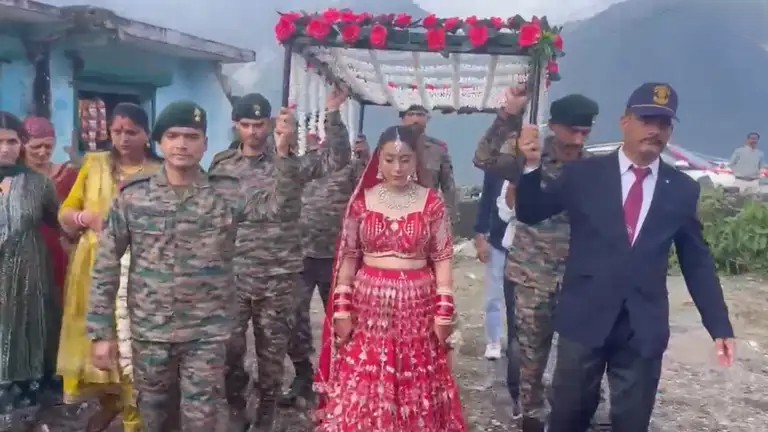
- Bidai (Farewell): The most emotional part of the wedding was when the bride left her parental home. A group of soldiers saluted her as she departed, ensuring that her brother’s spirit escorted her to her new life.
10. Reflections on Sacrifice and Continuity
This wedding highlighted the reality faced by many martyr families: life must go on, but the void remains eternal. Yet, continuity does not mean forgetting. Instead, it means carrying forward the values of the martyr.
Ashish Kumar may not have been there in person, but his values of courage, honor, and love for the nation were deeply present. His sister’s wedding became not only a personal milestone but also a public reminder of the sacrifices that ensure India’s safety.
11. Broader Impact on Society
Events like these shape collective memory. When a martyr’s family integrates his presence into their celebrations, it teaches the community to value sacrifice, to remain patriotic, and to ensure that the fallen are never forgotten.
It also strengthens the relationship between the Army and civilians. For the younger generation present at the wedding, the sight of Army officers honoring their fallen comrade served as inspiration. Some expressed their desire to join the Army one day, proving that sacrifices like Ashish’s create ripples that shape future defenders of the nation.
12. Conclusion: A Celebration of Love and Patriotism
The wedding of Ashish Kumar’s sister was more than a union of two individuals; it was a celebration of love, family, sacrifice, and national pride. Though Ashish could not be there to fulfill his duties as a brother, the Indian Army family ensured his absence was filled with dignity and honor.
For the bride, the memory of her brother will remain forever etched in her heart. For the family, the presence of Army personnel was a reminder that they are never alone. For society, it was a lesson in patriotism—that the sacrifices of soldiers do not end at the battlefield, but continue to inspire generations.
As the bride left her home with the blessings of hundreds, one could almost hear Ashish’s unspoken words carried by the wind: “I may not be there, but I am always with you. And for you, I gave my life to the nation we both love.”
Read more latest news

