Watch the First Glimpse of ‘Ram Darbar‘ from Ayodhya: A Spiritual Spectacle That Captivates the Nation
Ayodhya, the sacred birthplace of Lord Rama, once again captured the imagination of the nation as the first official glimpse of the ‘Ram Darbar’ was unveiled. This momentous occasion marks not only a spiritual milestone but also a significant cultural revival. The first look of Ram Darbar, installed inside the Shri Ram Janmabhoomi Mandir, comes months after the historic Pran Pratishtha ceremony conducted on January 22, 2024, in the presence of Prime Minister Narendra Modi and revered saints from across India.
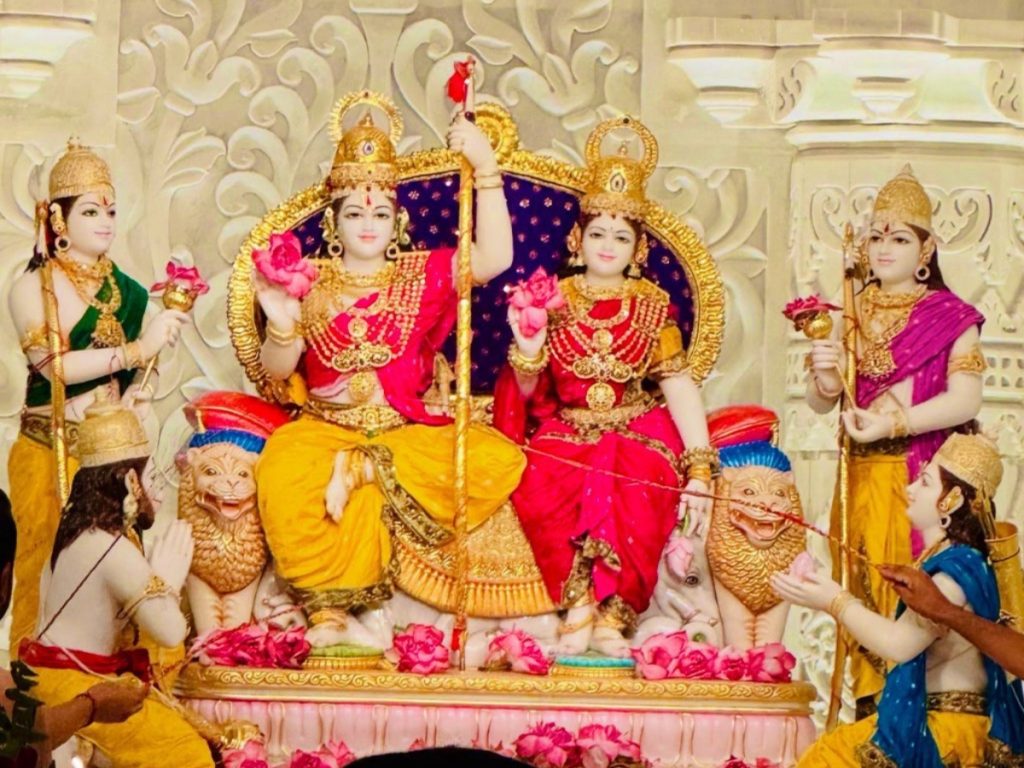
With hearts full of devotion and eyes brimming with tears of joy, devotees across the country and abroad witnessed this sacred spectacle — a symbol of faith, unity, and national pride. The first glimpse of Ram Lalla seated on the throne alongside Sita, Lakshman, and Hanuman in divine glory is now etched into the spiritual consciousness of millions.
In this blog, we’ll explore the entire story — from the grand unveiling of Ram Darbar to its architectural beauty, cultural importance, political impact, and its emotional resonance with devotees.
What is ‘Ram Darbar’?
Ram Darbar is the sacred ensemble of deities centered around Lord Rama, symbolizing his role as Maryada Purushottam (the ideal man and king). Traditionally, the Darbar includes:
- Shri Ram seated on a throne, the embodiment of righteousness and dharma
- Mata Sita, his consort and the symbol of purity and devotion
- Lakshman, his loyal brother, who represents duty and brotherly love
- Hanuman, the devoted servant of Rama and an epitome of strength, courage, and selfless service
This divine arrangement is not just an idol set — it’s a living narrative of the Ramayana, deeply revered in Hindu households.
The Historic Unveiling: First Glimpse of Ram Darbar
The unveiling of the Ram Darbar was streamed live on national and spiritual TV channels and displayed on LED screens across Ayodhya and major cities. The serene image of Ram Lalla, carved with divine precision and adorned in regal attire, was the center of attraction.
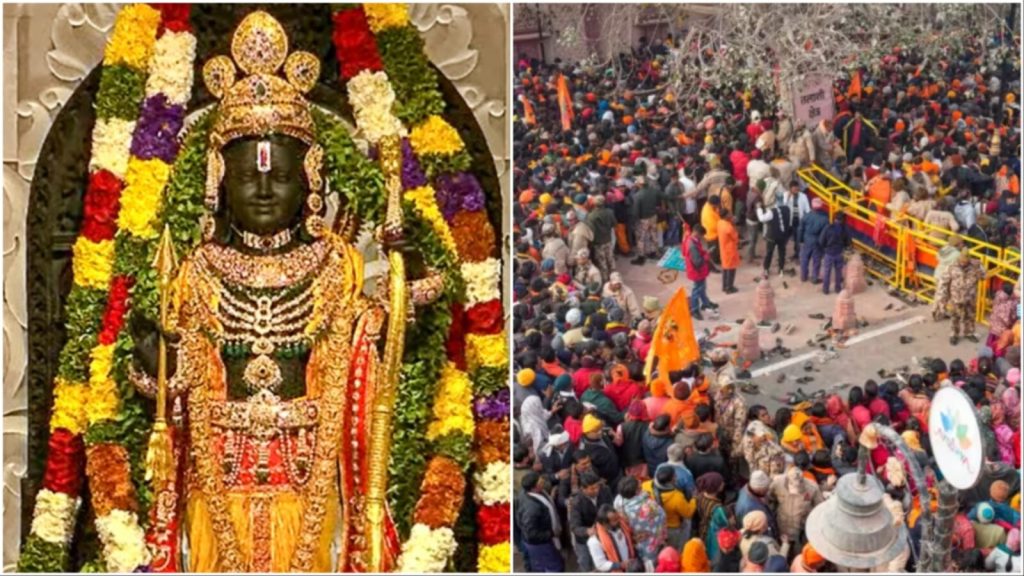
Thousands of devotees were present inside the complex, chanting “Jai Shri Ram” as the veils were lifted. The atmosphere was one of celestial reverence, amplified by Vedic chants, blowing of conches, mridangams, and flowers raining from the sky via helicopters.
Artist Behind the Masterpiece: Arun Yogiraj’s Magnificence
The idol of Lord Ram was crafted by Arun Yogiraj, a renowned sculptor from Mysuru, Karnataka, who also carved the Netaji Subhash Chandra Bose statue near India Gate.
- The idol is 51 inches tall, carved from Krishna Shila (black schist stone).
- Lord Ram is shown as a five-year-old child, standing gracefully, holding a bow and arrow.
- His smile exudes divinity and assurance, instilling peace in the minds of the devotees.
The rest of the Darbar features life-size idols of Sita, Lakshman, and Hanuman — all exquisitely sculpted by a team of artisans over the past two years.
Architectural Beauty of the Ram Mandir: A Living Temple
The Ram Darbar is housed within the newly built Sanctum Sanctorum (Garbhagriha) of the Shri Ram Janmabhoomi Mandir, which reflects the glory of Nagara style temple architecture.
Key highlights include:
- Total Height: 161 feet
- Pillars: 392 intricately carved pillars depicting stories from Ramayana
- Design: 3-storey structure made with Rajasthani sandstone
- Materials: No steel or concrete — only stone and copper
Every corner of the temple tells a story — of Ram Rajya, of Sita’s resilience, of Hanuman’s devotion, and of Bharata’s sacrifice. The Ram Darbar is the spiritual crown jewel of this edifice.
Cultural and National Significance
Symbol of Civilisational Pride
The unveiling of Ram Darbar in Ayodhya is not just a religious event; it is a civilizational assertion. For millions, it reaffirms the legacy of Sanatan Dharma and the cultural heritage that stretches back thousands of years.
Healing a Historical Wound
The construction of Ram Mandir on the site where Babri Masjid once stood is a complex and emotional issue. The Supreme Court’s 2019 verdict put an end to decades of legal and communal conflict. The installation of Ram Darbar brings a sense of closure, healing, and justice to those who fought peacefully for decades.
Pilgrimage and Spiritual Impact
With the first glimpse of Ram Darbar, Ayodhya has become the spiritual capital of India. Daily footfall exceeds 1 lakh visitors, and the number is expected to rise as Ram Navami, Diwali, and other festivals approach.
Pilgrims describe the Darbar as:
“Alive. You don’t just see Ram Lalla. You feel His presence.”
Many break down in tears, overwhelmed by divine emotion, as they bow before the deities.
Digital Revolution: Darshan Goes Global
In an effort to reach Ram bhakts across the world, the government and temple trust launched:
- Live streaming platforms
- Mobile apps for virtual darshan
- 360-degree panoramic temple tours
- Online puja booking and prasad delivery
The global Indian diaspora is engaging like never before — with temples in the US, UK, and Australia hosting mass screenings of the Ram Darbar unveiling.
Political Reverberations: A Cultural Power Statement
The first glimpse of Ram Darbar is not just spiritual—it is deeply political, especially ahead of national elections.
BJP’s Role and Symbolism
The Ram Mandir is seen as Prime Minister Narendra Modi’s most iconic cultural achievement. His leadership during the Pran Pratishtha, his emotional speech during the unveiling, and his portrayal as a devotee, not a ruler, cemented his image as a Hindu icon.
Opposition Reactions
While most parties maintained respectful silence, some questioned the mixing of religion and politics. However, the overwhelming public sentiment clearly favors the temple as a people’s movement, not a political stunt.
Ayodhya’s Transformation: From Dust to Divinity
Ayodhya has undergone an unprecedented makeover. From narrow dusty lanes to four-lane highways, riverfront promenades, and new international airport, the city is being developed as a global pilgrimage center.
Highlights include:
- Ayodhya Airport named after Maharishi Valmiki
- Ram Path: A 13-km beautifully landscaped road leading to the temple
- Hotels, dharamshalas, public amenities upgraded
- Ramayana Museum, light shows, and sound & laser projection events planned daily
The first glimpse of Ram Darbar was timed to perfection to showcase the spiritual and infrastructural rebirth of Ayodhya.
Emotional Connect: Devotees Share Their Feelings
Rekha Sharma, 65, Delhi:
“I waited my entire life for this day. Ram Lalla is home, and the Darbar looks like heaven itself.”
Arjun Jadhav, a 22-year-old techie from Mumbai:
“I saw the live stream on YouTube with my family. We cried. We prayed. It felt as if the soul of Bharat had returned.”
Symbol of Unity and Dharma
The image of Ram Darbar, especially with Hanuman standing in humility beside Ram, teaches valuable lessons:
- Power with restraint
- Devotion without ego
- Justice with compassion
- Rule of law and morality (Ram Rajya)
As people gaze upon the first glimpse, they aren’t just worshipping a deity—they’re connecting with an ideal way of life.
Global Response: Reverberations Across the World
The unveiling of Ram Darbar sparked celebrations in over 50 countries:
- Processions in Times Square, New York
- Deepotsav events in London
- Chanting of Ram bhajans in Sydney temples
Global leaders, spiritual organizations, and Indian diaspora groups hailed the event as a moment of pride for Bharatiya Sanskriti.
Artistic and Cultural Programs
Following the first glimpse, Ayodhya hosted dance-dramas, Ramleela performances, musical renditions, and spiritual discourses by saints such as:
- Yogi Adityanath
- Sadhvi Ritambhara
- Jagadguru Rambhadracharya
The evening culminated in a grand aarti on the banks of the Sarayu river, attended by over 2 lakh people.
Conclusion: A New Chapter in India’s Spiritual History
The first glimpse of Ram Darbar is not merely a religious moment — it is a rebirth of Indian spiritual identity. It brings together devotion, architecture, culture, politics, and national pride in one sacred frame.
Ayodhya is no longer just a temple town — it is a symbol of civilisational resilience, an epicenter of global Hindu consciousness, and a lighthouse of dharma for generations to come.
As millions continue to chant “Jai Shri Ram” and stand in long queues for darshan, one truth echoes loudly across the nation — Ram has returned home.