

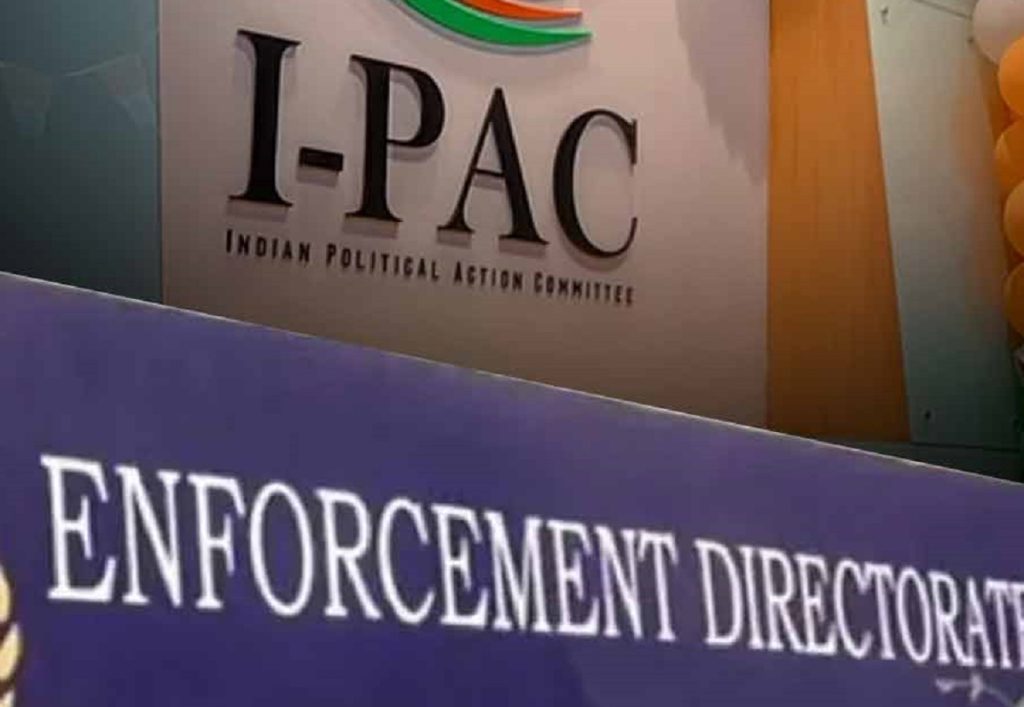
The recent Raid in Kolkata carried out by the Enforcement Directorate (ED) on the offices of the Indian Political Action Committee (I-PAC) and the premises of its chief Pratik Jain has sent shockwaves across India’s political and strategic circles. Known for shaping high-profile political campaigns, I-PAC has long been an influential but controversial player in electoral politics. The sudden move by the ED has raised serious questions: why did this action take place, what exactly is being investigated, and what could it mean for the future of political consulting in India?
This blog takes a deep dive into the background, reasons, legal framework, political reactions, and broader implications surrounding this high-profile development.
What Is I-PAC and Why Is It Influential?
The Indian Political Action Committee, popularly known as I-PAC, is a political consulting firm that has worked with several major political parties and leaders across India. From election strategy and voter outreach to data-driven campaigning, I-PAC has redefined how modern Indian elections are fought.
Given its reach and access to sensitive political data, any Raid in Kolkata involving I-PAC naturally attracts attention. The organization’s role has often blurred the lines between political consulting, advocacy, and organizational management, making it both powerful and vulnerable to scrutiny.
The Immediate Trigger Behind the ED Action
According to sources familiar with the matter, the Raid in Kolkata was conducted as part of an ongoing investigation into alleged financial irregularities. The ED, which probes cases related to money laundering and violations of foreign exchange laws, reportedly acted on specific inputs related to fund flows and financial transactions.
While the agency has not disclosed every detail publicly, officials indicated that the search was connected to suspected violations under the Prevention of Money Laundering Act (PMLA). This has fueled intense speculation about whether the case is purely financial or has wider political implications.
Legal Basis for the Investigation
Every Raid in Kolkata by the ED must be backed by legal authorization. In this case, officials stated that the action followed preliminary investigations and analysis of financial records. The ED typically steps in when there are red flags such as unexplained fund transfers, shell entities, or possible foreign funding violations.
Legal experts point out that the ED’s mandate allows it to summon individuals, seize documents, and conduct searches if it believes that proceeds of crime are involved. However, critics argue that such powers must be exercised with extreme caution, especially when politically sensitive organizations are involved.
I-PAC’s Response to the Raid
Following the Raid in Kolkata, I-PAC released a statement asserting that it is a professional organization that operates within the framework of Indian law. The organization claimed it has cooperated fully with authorities and has nothing to hide.
I-PAC also emphasized that political consulting is a legitimate profession and warned against equating strategic advisory services with political wrongdoing. The statement aimed to reassure clients and supporters that the organization’s work remains transparent and lawful.

Who Is Pratik Jain?
Pratik Jain, whose premises were searched during the Raid in Kolkata, is a key figure in I-PAC’s leadership. Known for his behind-the-scenes role in shaping political strategies, Jain has maintained a relatively low public profile compared to some of his colleagues.
The ED’s interest in his personal premises suggests that investigators are looking closely at decision-making structures, financial authorizations, and internal operations within I-PAC. Supporters argue that targeting individuals can create a chilling effect on professionals working in political consulting.
Political Reactions Across the Spectrum
Unsurprisingly, the Raid in Kolkata sparked sharp reactions from political parties. Leaders associated with parties that have previously worked with I-PAC termed the action “selective” and “intimidatory.” They alleged that investigative agencies are being used to send a message to organizations involved in election strategy.
On the other hand, ruling party leaders defended the ED, stating that no one should be above the law and that investigations should be allowed to proceed without political pressure.
Opposition’s Standpoint
For the opposition, the Raid in Kolkata became a rallying point to criticize what they describe as the misuse of central agencies. Several leaders claimed that such actions are timed to create fear among political strategists and consultants ahead of key elections.
They also questioned why similar scrutiny is not applied uniformly across all consulting firms and political organizations, calling for greater transparency in the ED’s functioning.
Government’s Official Position
Responding to questions in the media, government spokespersons reiterated that the Raid in Kolkata was a routine enforcement action based on credible information. They stressed that the ED functions independently and that political considerations do not influence its investigations.
The government urged commentators and political parties to wait for the investigation’s outcome instead of jumping to conclusions.
Media Debate and Public Discourse
The Raid in Kolkata dominated television debates and social media trends for days. Supporters of the action viewed it as a necessary step to clean up opaque financial practices in political consulting. Critics, however, saw it as part of a broader pattern of pressure on entities perceived to be politically influential.
Hashtags, opinion columns, and panel discussions reflected a deeply divided public opinion on the role of investigative agencies in a democracy.
What Legal Experts Are Saying
Legal analysts observing the Raid in Kolkata point out that while the ED has wide powers, the burden of proof ultimately lies with the agency. Any case built on circumstantial evidence or incomplete financial trails may struggle in court.
Experts also stress the importance of due process, noting that raids should not be treated as proof of guilt but as a step in investigation.
Understanding the ED’s Powers
The Raid in Kolkata has renewed focus on the scope of the ED’s authority. Under PMLA, the agency can provisionally attach properties, seize documents, and arrest individuals if sufficient grounds exist.
Civil liberties advocates argue that these powers, while essential for combating financial crime, must be balanced with safeguards to prevent misuse.

Timeline of Events
From the initial intelligence inputs to the execution of the Raid in Kolkata, sources suggest that the investigation had been underway for several months. Financial records, transaction histories, and corporate filings were reportedly examined before the search operations were authorized.
This indicates that the raid was not a sudden or impulsive move but part of a longer investigative process.
What Was Seized?
During the Raid in Kolkata, officials reportedly examined electronic devices, financial documents, and internal records. While no official list has been made public, such materials typically help investigators trace money flows and establish links between entities.
The outcome of forensic analysis of seized data will likely determine the future direction of the case.
Allegations Related to Funding
At the heart of the Raid in Kolkata are allegations related to funding sources and expenditure patterns. Investigators are reportedly examining whether any funds received or utilized violated Indian financial laws or disclosure norms.
I-PAC has denied any wrongdoing and maintains that all funds are properly accounted for and audited.
Compliance and Regulatory Oversight
The Raid in Kolkata also highlights the need for clearer regulatory frameworks governing political consulting firms. Unlike political parties, such organizations often operate in a gray area with limited oversight.
Policy experts argue that clearer rules could prevent controversies and ensure transparency without stifling innovation in political campaigning.
Public Perception and Trust
For the general public, the Raid in Kolkata raises broader questions about trust in political processes. While some see it as accountability in action, others fear it could discourage independent professionals from engaging in political work.
Public confidence will depend largely on how transparently the investigation is conducted and concluded.
Possible Future Implications
The long-term impact of the Raid in Kolkata could be significant. Political consulting firms may adopt more cautious approaches, increase compliance checks, and limit certain activities to avoid scrutiny.
It could also lead to greater demand for regulatory clarity in this rapidly growing sector.
Democracy and Investigative Agencies
The Raid in Kolkata has reignited the debate on the balance between enforcement and democratic freedoms. Investigative agencies play a crucial role in upholding the law, but their actions must inspire confidence rather than fear.
A healthy democracy requires both accountability and the protection of legitimate political activity.
Conclusion
In conclusion, the Raid in Kolkata on I-PAC and Pratik Jain is more than just an enforcement action—it is a moment that forces India to reflect on the intersection of politics, money, and law. Whether this investigation ultimately proves wrongdoing or not, it has already triggered an important national conversation.
As the probe continues, all eyes will be on the ED to ensure that due process is followed, facts are established, and justice—free from political bias—is delivered.
Read More latest news

