
Maharashtra election Local Body Elections 2025: NCP’s Dilip Walse Patil Reveals Tentative Dates — Zilla Parishad Polls on December 15, Municipal Elections on January 15
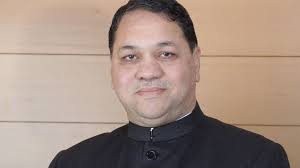
maharashtra election inches closer to one of its most politically significant local body elections, the political atmosphere across the state is heating up once again. After months of speculation, senior Nationalist Congress Party (NCP) leader Dilip Walse Patil has broken the silence and revealed the likely dates for the upcoming polls.
In a crucial statement that has stirred intense political discussions, Walse Patil said,
“Zilla Parishad elections could be held around December 15, while the Municipal Corporation elections are likely to take place around January 15, 2026.”
His remarks come at a time when the Supreme Court of India has issued clear directions to the Election Commission (EC) to conduct all pending local body elections in Maharashtra election no later than January 31, 2026.
This announcement signals the beginning of a politically charged winter, as Maharashtra election urban and rural political equations will once again be tested through these elections — seen as a mini-referendum on the ruling alliance and opposition parties alike.
Background: The Long Delay in Maharashtra election Local Body Elections
Maharashtra election local body elections — including Zilla Parishads, Panchayat Samitis, Municipal Corporations, and Municipal Councils — have been delayed for several years due to a combination of legal challenges, administrative restructuring, and political disputes over reservation policies.
After the 2017–2018 local polls, many bodies have been functioning under administrators rather than elected representatives. This has been a major point of contention, as opposition parties have accused the government of deliberate delay to avoid accountability at the grassroots level.
The delay primarily stemmed from the controversy over OBC (Other Backward Classes) political reservation, which was struck down by the courts due to lack of empirical data. However, after the Supreme Court allowed elections to proceed with an interim arrangement, the path was finally cleared for the Election Commission to announce the schedule.
Now, with Dilip Walse Patil’s disclosure, it appears the Election Commission is preparing for a two-phase schedule — Zilla Parishad and Panchayat Samiti polls first, followed by Municipal Corporation elections.

Dilip Walse Patil’s Statement: A Political Bombshell
NCP leader and former Home Minister Dilip Walse Patil is a senior and seasoned politician known for his administrative acumen. His revelation regarding the election schedule carries political weight — especially because the official Election Commission notification is still pending.
Speaking to reporters, he said:
“The Election Commission has been asked by the Supreme Court to complete all pending local body elections before January 31, 2026. As per my information, Zilla Parishad elections may take place around December 15, and Municipal Corporation elections may follow on January 15.”
Though he emphasized that the final decision rests with the State Election Commission (SEC), his comments indicate that the government and the commission have already reached an advanced stage of planning.
His words have triggered immediate political reactions, with leaders across parties beginning to recalibrate their campaign strategies.
Supreme Court’s Directive: A Deadline for Democracy
The Supreme Court’s directive is at the heart of this political timeline. In a recent hearing, the apex court made it clear that no further delay in local body elections would be tolerated. The bench observed that democratic representation at the grassroots level is a constitutional right of citizens and cannot be indefinitely postponed.
The Court said:
“The State Election Commission must ensure that all local body elections in Maharashtra election are conducted by January 31, 2026, without fail.”
This direction applies to nearly 27 Zilla Parishads, 284 Panchayat Samitis, and 20 major Municipal Corporations, including Mumbai, Pune, Nagpur, Nashik, Thane, and Pimpri-Chinchwad.
For a state as politically vibrant as Maharashtra election, these elections are not merely administrative formalities — they are the foundation of political legitimacy at the local level.
Why These Elections Matter: The Battle for the Grassroots
Local body elections in Maharashtra election are not just about panchayat or municipal issues — they are a mirror of the state’s political mood. The outcomes of these polls often set the tone for assembly and parliamentary elections.
- For the ruling Eknath Shinde–BJP alliance, these elections are an opportunity to consolidate power and silence critics who accuse them of forming the government through “political engineering.”
- For the Sharad Pawar-led NCP faction and the Uddhav Thackeray-led Shiv Sena (UBT), it’s a chance to prove that their grassroots base remains intact despite defections.
- For Congress, these elections are about survival and relevance in Maharashtra election changing political arithmetic.
- And for Raj Thackeray’s MNS, Prakash Ambedkar’s VBA, and other regional players, these elections offer a platform to test their urban and caste-based support bases.
Thus, the December 15 and January 15 timelines set the stage for a multi-cornered political war that will stretch from Mumbai’s municipal wards to the remotest Zilla Parishads.
Zilla Parishad Elections: Rural Pulse of Maharashtra election
The Zilla Parishad elections, likely on December 15, will be the first major test of rural Maharashtra election political sentiment.
Zilla Parishads and Panchayat Samitis play a crucial role in rural governance — overseeing development schemes, infrastructure, education, and health projects. The performance of the state government in areas like agriculture, drought management, rural employment, and irrigation will largely determine the outcome.
The BJP-Shinde government has claimed credit for expanding PM Awas Yojana, improving road connectivity, and launching new schemes for farmers. However, opposition parties accuse the government of failing to deliver compensation for crop losses and cutting funds to local bodies.
If the rural electorate swings towards the opposition, it could signal early warning signs for the ruling alliance ahead of the 2029 Assembly elections.
Municipal Elections: The Urban Power Game
The second phase — Municipal Corporation elections around January 15, 2026 — will be the real battleground, especially in major cities like Mumbai, Pune, Nagpur, and Thane.
These elections are crucial because they control massive municipal budgets, real estate permissions, urban infrastructure, and contracts worth thousands of crores. For decades, Mumbai’s Brihanmumbai Municipal Corporation (BMC) — Asia’s richest civic body — has been the crown jewel of Maharashtra election politics.
Mumbai: The Heart of the Battle
For over 25 years, the Shiv Sena (Uddhav Thackeray faction) ruled the BMC. But after the 2022 political split, both factions — Eknath Shinde’s Shiv Sena and Uddhav Thackeray’s Sena (UBT) — are claiming to be the “real Sena.”
The BJP, which has long been trying to wrest control of the BMC, now sees a golden opportunity. With Shinde’s support and administrative power, the BJP aims to end the Sena’s decades-long dominance in Mumbai.
For Uddhav Thackeray, however, the BMC election is about political survival. Retaining Mumbai would prove that his faction remains the emotional favorite among Mumbaikars and Marathi voters.
Pune, Thane, and Nagpur: High-Stakes Urban Arenas
- Pune: Once a Congress bastion, now a BJP stronghold, Pune’s municipal polls will test the city’s middle-class and IT professionals’ trust in the BJP’s urban governance.
- Thane: Eknath Shinde’s political home turf. Losing here would be a major embarrassment for him personally.
- Nagpur: BJP’s ideological heartland, where the RSS headquarters is located. Any setback here could have symbolic consequences.
Thus, the Municipal Corporation elections are not just about urban development — they are about control, legitimacy, and political narratives.
Election Commission’s Preparation
The State Election Commission (SEC) is already in high gear to meet the Supreme Court’s January 31 deadline. Sources indicate that preliminary work such as ward delimitations, voter list revisions, and reservation calculations are nearly complete.
The SEC has also been coordinating with district collectors and municipal commissioners to ensure that the code of conduct can be enforced swiftly once the official schedule is announced.
Given that December and January will see back-to-back polls, security arrangements, EVM logistics, and counting center setups are being prioritized.
Political Equations and Alliances
With dates now virtually confirmed, Maharashtra election political landscape is buzzing with alliance talks and candidate scouting.
BJP–Shinde Sena Alliance: Power and Pressure
The BJP-Shinde coalition, ruling the state since 2022, is confident but cautious. While they control the government machinery, there are signs of internal friction — especially in seat-sharing talks. Shinde’s faction wants to contest in traditional Sena-dominated wards, while BJP leaders demand a larger share, citing their stronger organizational presence.
Amit Shah and Devendra Fadnavis have reportedly instructed party cadres to treat the Municipal elections as a “mission Mumbai” operation.
Opposition Bloc: Maha Vikas Aghadi’s Revival Attempt
The Maha Vikas Aghadi (MVA) — comprising Uddhav Thackeray’s Sena (UBT), Sharad Pawar’s NCP, and Congress — plans to contest jointly in most areas. After the split in both Sena and NCP, these elections will determine which faction retains grassroots loyalty.
In Mumbai, the MVA is campaigning aggressively with slogans like “Mumbai Mumbaikaranchi, Naahi Sarkarichi” (Mumbai belongs to Mumbaikars, not the government).
Meanwhile, Sharad Pawar’s NCP faction aims to reclaim its lost rural base, especially in Western Maharashtra election — a region once known as the “sugar belt” and NCP’s traditional stronghold.
Public Issues Likely to Dominate the Campaign
Elections at the local level often revolve around daily-life issues rather than big political ideologies. Based on early indications, these are the key themes likely to dominate campaigns:
- Infrastructure and Water Supply – Poor road maintenance, water shortages, and urban flooding have angered citizens in cities like Mumbai and Thane.
- Housing and Slum Redevelopment – A major concern, especially in Mumbai, where lakhs of residents live in informal settlements.
- Job Opportunities – With rising unemployment among youth, opposition parties are framing it as a failure of both state and central governments.
- Agriculture and Drought Relief – In rural areas, erratic rainfall and delayed compensation are major election issues.
- Corruption and Transparency – The opposition is accusing municipal administrators of misusing funds and awarding tenders without oversight.
In short, while the BJP and its allies will campaign on development and stability, the opposition will push accountability and people’s welfare.
Impact of Reservation and Caste Equations
The role of caste reservation in local body elections cannot be overstated. After the Supreme Court verdict restoring OBC reservation (based on empirical data collection by the State Backward Commission), political parties are now recalculating their candidate lists.
OBC, SC/ST, and women’s reservations have been notified afresh, creating new power equations in several districts. The OBC vote, in particular, will be crucial for both BJP and NCP factions.
What This Means for Maharashtra election Political Future
The December–January local body elections are not just routine polls — they are a political semi-final before the 2029 Assembly and 2030 Lok Sabha elections.
If the BJP-Shinde alliance wins big, it will solidify their control over the state and silence critics questioning the legitimacy of their coalition. But if the opposition manages to perform well, especially in Mumbai and Western Maharashtra election, it could spark a resurgence of the MVA and shift the momentum ahead of national elections.
Moreover, these elections will reveal whether Uddhav Thackeray or Eknath Shinde commands real loyalty among traditional Shiv Sainiks — a question that has remained unresolved since the 2022 split.
Analyst’s View: A Winter of Political Reckoning
Political analysts believe that the next few months will reshape Maharashtra election political map.
Senior political commentator Abhay Deshpande notes:
“Dilip Walse Patil’s statement is more than a date announcement — it’s the beginning of a long political battle. Every party knows that controlling local bodies means controlling resources and narratives. The next three months will be a test of strategy, unity, and ground connect.”
He adds that the BJP is better organized, but the emotional loyalty among voters — especially toward Uddhav Thackeray and Sharad Pawar — could make the contest unpredictable.
Conclusion: Countdown to a Crucial Democratic Test
With NCP leader Dilip Walse Patil’s revelation and the Supreme Court’s directive, the countdown for Maharashtra election local body elections has officially begun.
The state now stands on the threshold of a massive democratic exercise — one that will determine not just who governs its villages and cities, but also who commands the political heart of Maharashtra election.
Whether it’s the December 15 Zilla Parishad polls or the January 15 Municipal Corporation elections, every result will carry symbolic weight and shape the larger political narrative leading into the next decade.
As Maharashtra election prepares for a politically charged winter, one thing is certain — democracy in the state is about to take center stage again, and the people’s verdict will echo far beyond local governance.
Read More latest news

