
Stalling Delhi Growth: Using the City as Its ‘Political ATM’, Says PM Modi
Introduction
Delhi Growth In a sharp attack on the Aam Aadmi Party (AAP) government, Prime Minister Narendra Modi has accused the party of stalling Delhi’s growth and using the city as its ‘political ATM’. The Prime Minister’s remarks have ignited a fresh debate over governance, accountability, and the future of Delhi’s development.
Delhi Growth AAP, which came to power in Delhi promising transparency, education reforms, and better governance, now finds itself facing serious allegations of corruption, mismanagement, and prioritizing political gains over public welfare. The question that looms large is whether the promises of development made by the AAP government have been fulfilled or if the city’s progress has been sacrificed for political motives.
This blog takes an in-depth look at PM Modi’s allegations, the realities of Delhi’s governance, and the larger implications of AAP’s rule in the capital.
The Allegations: PM Modi’s Attack on AAP
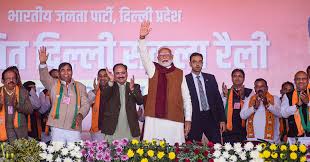
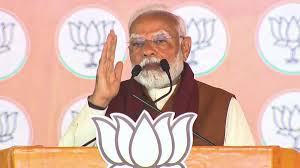
Delhi Growth Addressing a public gathering, PM Modi did not hold back in his criticism of the AAP government, stating that it has deliberately stalled Delhi’s growth. He accused AAP of treating Delhi as a personal ‘political ATM’—a reference to the alleged misuse of state resources for party benefits rather than public welfare. According to the Prime Minister, AAP leaders have focused more on expanding their political ambitions in other states than on delivering on their promises in Delhi.
Some of the key accusations leveled by the Prime Minister include:
- Financial Mismanagement: PM Modi alleged that AAP has diverted taxpayer money meant for Delhi’s development towards party campaigns and political expansion.
- Neglect of Infrastructure Development: The Prime Minister pointed out that critical infrastructure projects, including roads, bridges, and sanitation improvements, have been delayed or ignored.
- Education and Healthcare Failures: While AAP has boasted about its education and healthcare reforms, PM Modi suggested that these claims are exaggerated, and the ground reality does not match the narrative projected.
- Corruption Charges: The allegations of corruption, especially related to liquor policy and other financial irregularities, have dented AAP’s image.
- Obstruction of Central Schemes: PM Modi also criticized AAP for not cooperating with central government initiatives meant for Delhi’s development.
These allegations paint a picture of a government that is more focused on its political survival and expansion rather than the well-being of Delhi’s citizens.
AAP’s Response: Counter-Allegations and Justifications
Delhi Growth AAP leaders have strongly denied PM Modi’s allegations, dismissing them as politically motivated attacks aimed at discrediting their governance model. In response to the accusations, AAP has put forth several counterarguments:
- Education and Healthcare Achievements: AAP claims that it has revolutionized Delhi’s education system by building new schools, hiring better teachers, and improving facilities. Similarly, they point to the success of Mohalla Clinics as a model for accessible healthcare.
- Budget Transparency: The Delhi government has argued that its budget allocation is transparent and focused on public welfare. They assert that they have not diverted funds for political expansion.
- Obstruction from the Centre: AAP has accused the central government of deliberately blocking funds, refusing approvals for projects, and using the Lieutenant Governor (LG) to interfere in Delhi’s governance.
- Political Vendetta: The party alleges that corruption investigations against its leaders are politically motivated and part of a larger strategy to weaken AAP.
AAP leaders have repeatedly pointed out that their governance model has been appreciated by people, and they see PM Modi’s criticism as an attempt to undermine their achievements ahead of elections.
Delhi’s Development: Fact vs. Fiction
To understand the real picture of Delhi’s development under AAP, let’s analyze key sectors:
1. Education
Delhi Growth AAP’s claim of transforming Delhi’s education sector holds some merit. Reports indicate improvements in government schools, better infrastructure, and better academic performance. However, critics argue that while some schools have seen improvements, the overall system still faces challenges such as overcrowding and lack of adequate staff.
2. Healthcare
Mohalla Clinics have been one of AAP’s flagship projects, providing free healthcare to thousands of people. However, there are concerns about the quality and efficiency of these clinics, with reports of shortages of doctors and medical supplies. Large-scale hospitals still face operational challenges.
3. Infrastructure
While AAP has worked on some road and transport projects, many large-scale infrastructure projects have seen delays. Critics argue that compared to other metropolitan cities, Delhi’s development has slowed down significantly.
4. Water and Electricity
AAP has taken credit for providing free water and electricity subsidies, but opponents argue that this has placed a huge financial burden on the government, leading to fiscal stress.
5. Corruption Allegations
The liquor policy scam, which led to the resignation of key AAP ministers, has raised serious questions about corruption. Investigations are still ongoing, but the controversy has dented AAP’s anti-corruption image.

The Political Motive: Is Delhi Just a Stepping Stone for AAP?
Delhi Growth One of the biggest criticisms against AAP is that instead of focusing on Delhi’s governance, the party has been more interested in expanding its presence in other states like Punjab, Gujarat, and Haryana.
AAP’s aggressive political campaigns outside Delhi have led to speculation that the party is using Delhi’s resources to fund its national ambitions. The lack of focus on pressing issues in Delhi, while dedicating significant efforts to elections in other states, strengthens this argument Delhi Growth.
PM Modi’s statement that AAP treats Delhi as a ‘political ATM’ suggests that the party prioritizes political gains over governance. Whether this is entirely true remains a matter of debate, but the perception of neglecting Delhi for national ambitions could impact AAP’s credibility among voters Delhi Growth.
The Role of the Centre: Are the Allegations One-Sided?
Delhi Growth While AAP faces criticism for its governance failures, it is also important to analyze whether the central government has played a role in stalling Delhi’s development.
Several projects have been delayed due to conflicts between the Delhi government and the Lieutenant Governor (LG), who represents the central government. The frequent power struggles between AAP and the Centre have led to governance paralysis in several instances.
PM Modi’s government has been accused of using central agencies like the Enforcement Directorate (ED) and the Central Bureau of Investigation (CBI) to target AAP leaders. Whether these actions are justified or politically motivated remains a matter of debate.
Conclusion: The Future of Delhi’s Governance
Delhi Growth The political battle between AAP and the BJP has put Delhi in the crossfire, affecting its governance and progress. PM Modi’s accusations that AAP is using Delhi as a ‘political ATM’ raise serious concerns about accountability and priorities. At the same time, AAP’s counterarguments suggest that the Centre has been obstructing its work.
Delhi Growth As Delhi’s voters prepare for upcoming elections, the key question remains: Who is truly working for Delhi’s progress? Will AAP be able to regain the trust of the people, or will PM Modi’s allegations impact its political future? Only time will tell, but one thing is clear—Delhi deserves a government that puts its development first.
Read More Latest News

