
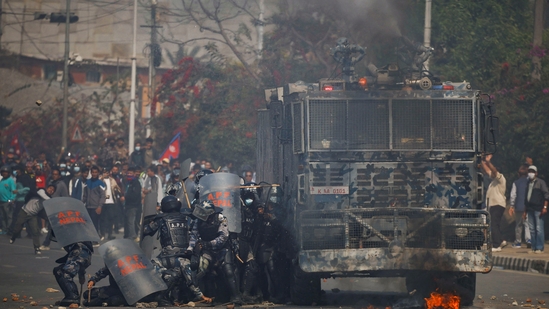
In a nation that has long navigated the complicated waters of monarchy, democracy, and secularism, the latest developments in Nepal Kathmandu have once again brought the country’s political and religious future to the forefront of national discourse. On March 27, 2025, Kathmandu, the capital city of Nepal, was placed under curfew as violent clashes erupted between pro-monarchy protesters and the Nepalese police. The protests, which demanded the restoration of the Hindu monarchy and the reinstatement of Nepal as a Hindu Kingdom, marked a significant moment in the country’s ongoing struggle over its identity, governance, and relationship with its historical monarchical traditions.
Kathmandu These protests were not just another political movement but a powerful resurgence of an older, deeply ingrained sentiment that has been simmering beneath the surface of Nepalese politics since the monarchy was formally abolished in 2008. The marchers, many of whom are loyalists of the former royal family and supporters of Nepal’s monarchical past, are calling for the restoration of a Hindu kingdom, a return to traditional values, and a reconsideration of the country’s secular constitution.
This blog explores the complex political, historical, and cultural context that has led to the protests, the reasons behind the clashes between the protesters and police, the implications of such protests on Nepal’s political landscape, and the broader discourse on religion, monarchy, and secularism in Nepal.
Nepal’s Kathmandu Shift from Monarchy to Secular Republic
Before understanding the recent protests in Kathmandu, it is crucial to comprehend the historical backdrop of Nepal’s transition from a monarchy to a secular republic. For centuries, Nepal was a Hindu kingdom, with the Shah dynasty at its helm. The monarchy was seen not only as a political institution but as a symbol of divine authority, with the king regarded as a living god in the Hindu tradition. This tradition was deeply rooted in the fabric of Nepalese society and culture, influencing everything from Kathmandu governance to national identity.
However, the trajectory of Nepalese politics took a dramatic turn in 2008, when the monarchy was officially abolished. The end of the Shah dynasty came after years of political instability, mass protests, and a decade-long Maoist insurgency that eventually led to the overthrow of the monarchy. The abolition of the monarchy in 2008 marked the beginning of Nepal’s transition to a federal democratic republic, with a new secular constitution adopted in 2015.
The secularization of Nepal, as enshrined in its constitution, was a direct challenge to its centuries-old Hindu monarchy. The constitution declared Nepal a secular state, and religious freedom was made a fundamental right for all citizens. The new political setup also guaranteed the rights of minorities, including Buddhists, Christians, and Muslims, ensuring that Nepal would no longer be exclusively identified as a Hindu kingdom Kathmandu.
For many in Nepal, especially those loyal to the monarchy, this transition has been met with resistance and discontent. The pro-monarchy protests, which are currently taking place in Kathmandu, are the latest manifestation of this opposition. For these groups, the secularization of Nepal represents a loss of their cultural and religious heritage, and the call for the restoration of the Hindu kingdom is about reclaiming what they view as a vital part of their identity and history Kathmandu.
The Emergence of Pro-Monarchy Protests in Kathmandu
The pro-monarchy protests that erupted in Kathmandu on March 27, 2025, have their roots in this broader discontent. These protests were organized by groups loyal to the former monarchy, with the primary demand being the restoration of the Hindu Kingdom. The protesters believe that the secular constitution has led to the marginalization of the Hindu religion in Nepal, and they want to reinstate the monarchy as both a political and Kathmandu religious institution.
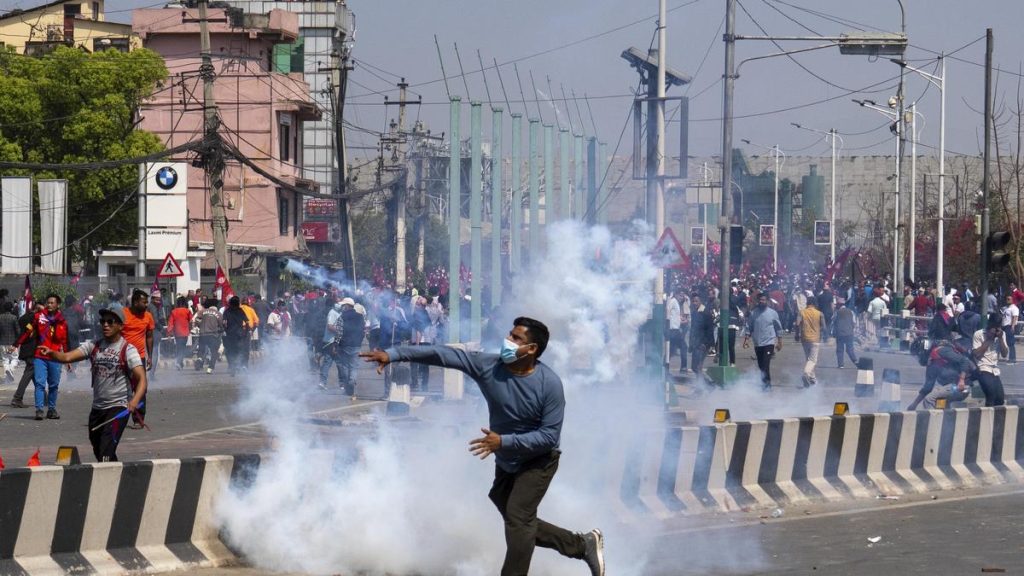
The protests began peacefully, with thousands of people marching through the streets of Kathmandu, waving flags, chanting slogans, and calling for the return of the monarchy. The protesters, many of whom are older individuals who lived through the era of the monarchy, have emphasized their desire to see Nepal regain its status as a Hindu kingdom.
The protests also come at a time when political instability is once again on the rise in Nepal. The country has faced numerous challenges, including economic difficulties, political infighting, and ongoing disputes between the ruling parties and opposition groups. These frustrations, combined with the growing sense of nostalgia for the monarchy, have fueled the calls for a return to a more traditional form of governance.
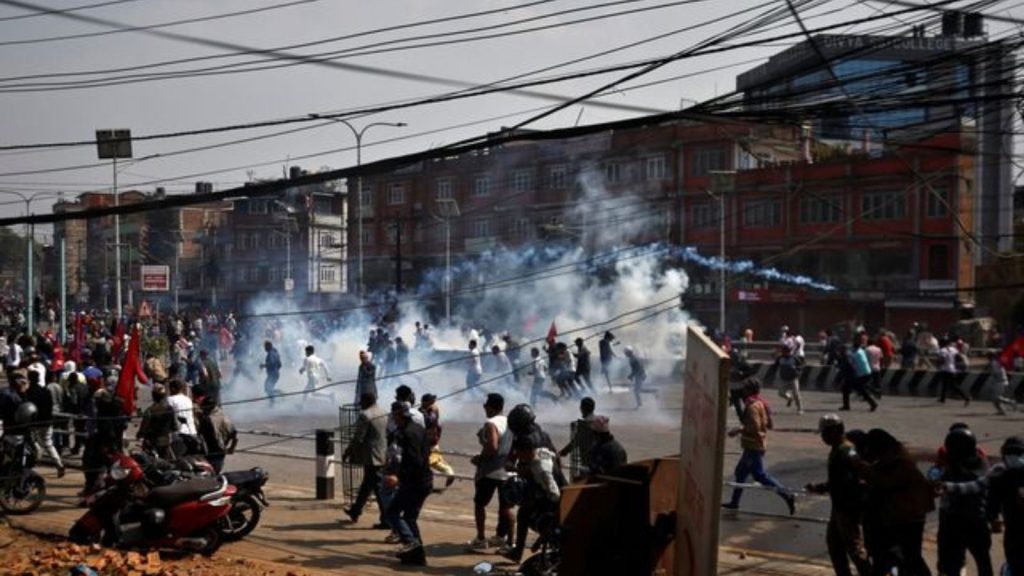
However, the peaceful protests quickly turned violent when clashes erupted between protesters and police forces. The police, in an effort to maintain order and prevent the protests from escalating, used force to disperse the crowds. Reports of injuries and arrests began to flood the media, and the situation quickly deteriorated, prompting the government to impose a curfew in Kathmandu to restore peace and prevent further violence.
The Role of the Former Royal Family
At the heart of the pro-monarchy movement are loyalists to the former Shah dynasty. Although the monarchy was abolished in 2008, the former royal family continues to hold significant influence, particularly among those who are nostalgic for Nepal’s monarchical past. The former king, Gyanendra Shah, and his family have remained symbolic figures for the pro-monarchy camp, even though they no longer hold any official political power.
Gyanendra Shah, who served as the last king of Nepal, has been a vocal critic of Nepal’s transition to a republic. In several public speeches, he has lamented the loss of the monarchy and the secularization of the country. His supporters view the monarchy as a unifying force for the nation and a symbol of Nepal’s unique cultural and religious identity. They argue that the monarchy not only provided stability but also represented the nation’s Hindu heritage, which they believe should not be sidelined in favor of secularism.
Despite the monarchy’s official abolition, Gyanendra Shah and other members of the royal family have maintained a significant following, especially among the older generation who remember the days when the monarchy was at the center of Nepalese life. For many of these individuals, the return of the monarchy is seen as a way to restore the country’s traditional values, including its status as a Hindu kingdom.
While Gyanendra Shah has not openly endorsed the recent protests, his name and image have been prominently featured in the demonstrations. His presence, even if only symbolic, continues to be a rallying point for those who wish to see the monarchy restored. The former king’s continued influence is a testament to the enduring appeal of the monarchy for certain segments of the population.
The Government’s Response and the Imposition of Curfew
In response to the escalating violence and the growing scale of the protests, the Nepalese government was forced to impose a curfew in Kathmandu. The decision was made in an effort to restore order and prevent further unrest. The curfew, which lasted for several days, restricted the movement of citizens and imposed a heavy police presence in the capital city.
The government’s decision to enforce a curfew was a controversial one, as it raised concerns about the suppression of political dissent and the right to protest. While the government defended the curfew as a necessary measure to maintain peace and security, critics argued that it was a heavy-handed approach that undermined democratic freedoms.
The clashes between protesters and the police have intensified debates about the nature of Nepal’s political system. The imposition of a curfew highlights the government’s struggle to control the growing discontent among those who feel disenfranchised by the country’s transition to a republic. For many of the pro-monarchy protesters, the curfew symbolizes the government’s refusal to acknowledge their demands and their frustration with the current political establishment.
Moreover, the government’s response to the protests has raised questions about the future of Nepal’s democracy. With the rise of populist and nationalist movements across the world, the pro-monarchy protests in Nepal are part of a larger trend of political polarization and ideological division. As the protests continue, it remains to be seen whether the government will be able to address the concerns of the monarchy loyalists or whether the situation will further deteriorate.
Implications of the Protests on Nepal’s Political Landscape
The pro-monarchy protests in Kathmandu are more than just a clash between protesters and the police. They represent a deeper ideological divide in Nepal’s political landscape. On one side are those who support the secular republic and its democratic institutions, while on the other side are those who want to see the restoration of the Hindu monarchy and the country’s return to its traditional values.
The protests have rekindled debates about Nepal’s national identity and its future direction. The growing sense of nostalgia for the monarchy reflects a longing for a time when Nepal was perceived as more unified, stable, and culturally distinct. For many of the protesters, the abolition of the monarchy represents a loss of Nepal’s Hindu identity and a departure from its cultural roots.
On the other hand, those who support the secular republic argue that the country’s future lies in embracing religious pluralism and democratic governance. They view the monarchy as an outdated institution that no longer serves the needs of modern Nepal. The secularization of Nepal, they argue, is necessary for ensuring the rights of all citizens, regardless of their religious beliefs.
The protests also come at a time when Nepal is facing significant economic and political challenges. The country is still recovering from the devastating earthquake of 2015, and the ongoing political instability has hindered its development. In such a context, the protests reflect a broader frustration with the current political establishment and its inability to address the needs of the people.
The Future of Nepal’s Secular Identity
The pro-monarchy protests in Kathmandu are part of a larger debate about the role of religion in politics and the future of Nepal’s secular identity. While the 2015 constitution enshrines secularism as a core principle, the protests suggest that many Nepalese citizens continue to see the monarchy and Hinduism as integral to the nation’s identity.
As the country grapples with these tensions, it will need to find a way to balance its rich cultural heritage with the demands of a modern, democratic society. The ongoing protests serve as a reminder that Nepal’s political journey is far from over and that the road ahead may be fraught with challenges as the country seeks to define its future.
In conclusion, the recent curfew in Kathmandu, imposed in response to violent pro-monarchy protests, marks a significant moment in Nepal’s political history. It reflects the deep ideological divisions within the country and underscores the ongoing debate over the role of monarchy, religion, and secularism in shaping Nepal’s future. Whether these protests will lead to meaningful political change or further deepen the divisions within the nation remains to be seen. However, one thing is clear: Nepal’s struggle with its identity is far from resolved, and the outcome of this political struggle will likely have far-reaching consequences for the nation’s future.
read more latest news

