

Controversy Erupts in Israel Over PM Modi’s Visit: Why Has the Opposition Leader Threatened to Boycott Parliament?
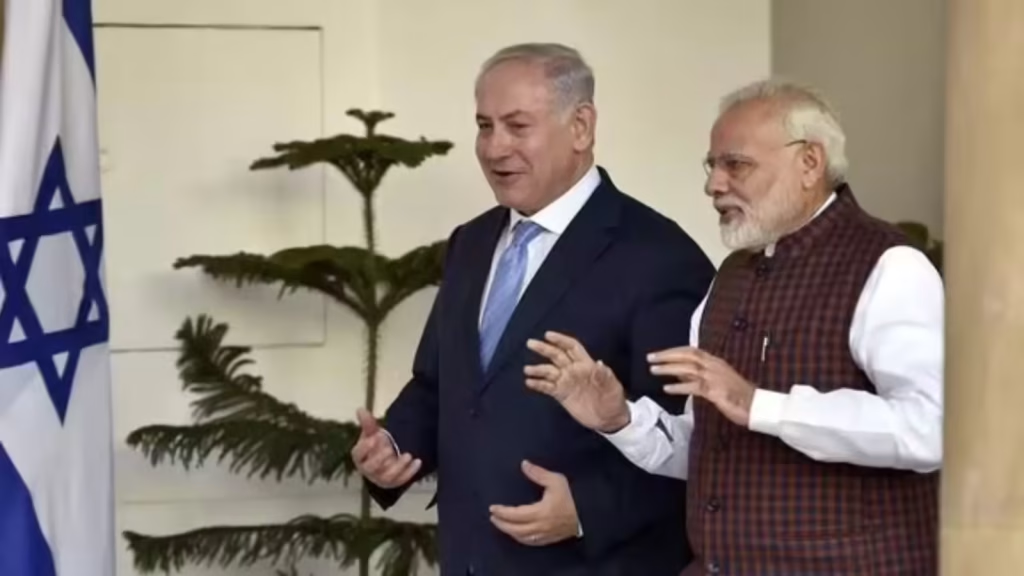
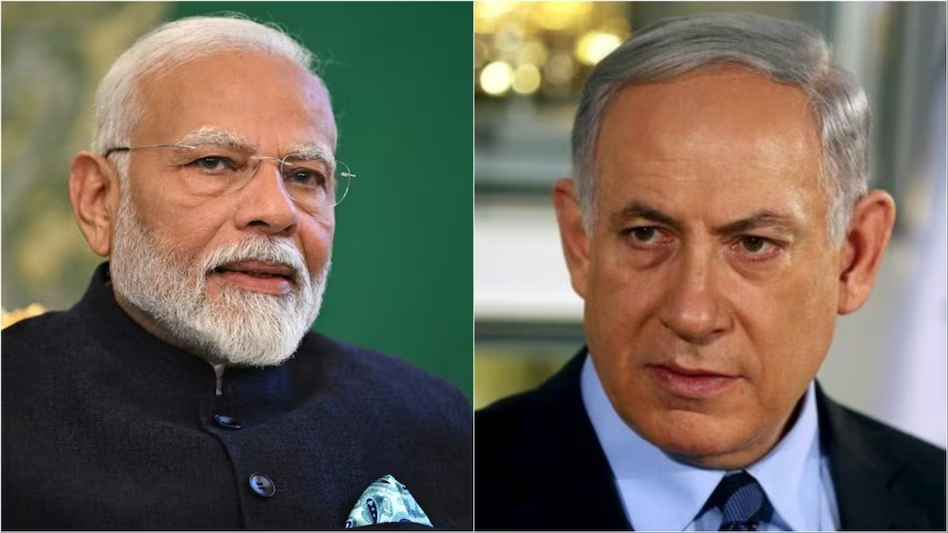
Controversy erupts in Israel as Indian Prime Minister Narendra Modi’s upcoming visit to the country becomes the center of an unexpected political storm. What was expected to be a landmark diplomatic moment between India and Israel has now turned into a flashpoint in Israeli domestic politics. The situation has intensified after Israeli opposition leader Yair Lapid warned Prime Minister Benjamin Netanyahu that he would boycott the special parliamentary session scheduled for Modi’s address.
At the heart of the controversy lies the question of protocol and institutional respect. Lapid has threatened not to attend Indian Prime Minister Narendra Modi’s address in the Knesset if Supreme Court President Isaac Amit is not invited, as is customary during such high-profile state visits. The dispute has triggered a heated debate over judicial independence, democratic traditions, and the balance of power in Israel.
This is why Controversy erupts in Israel at a time when diplomatic optics matter the most.
Background: PM Modi Visit to Israel
Prime Minister Narendra Modi’s visit to Israel is being projected as a significant milestone in India-Israel relations. Over the last decade, bilateral ties between the two countries have strengthened dramatically, especially in defense cooperation, technology, agriculture, and cybersecurity.
India and Israel have built a strategic partnership that extends far beyond traditional diplomacy. From defense equipment procurement to joint innovation projects, both nations see each other as reliable partners. Therefore, Modi’s address to the Knesset was expected to symbolize the deepening of democratic and strategic bonds.
However, Controversy erupts in Israel as domestic political tensions overshadow the diplomatic narrative.

The Core Issue Invitation to the Supreme Court President
The immediate trigger for the political dispute is the alleged omission of Supreme Court President Justice Isaac Amit from the guest list for the special parliamentary session.
Traditionally, during important state visits and special addresses by foreign leaders, the head of the judiciary is invited as a mark of institutional respect and democratic tradition. According to Lapid, failing to invite Justice Amit would break precedent and signal a troubling message regarding the government’s relationship with the judiciary.
Lapid’s warning has made headlines across Israeli media. He stated clearly that if Justice Amit is not invited, he will boycott the address.
Thus, Controversy erupts in Israel not because of Modi’s presence, but because of the symbolism surrounding institutional protocol.
Yair Lapid Stand A Political Message
Yair Lapid has positioned himself as a defender of democratic institutions, particularly amid ongoing tensions between Netanyahu’s government and Israel’s judiciary. Over the past few years, judicial reforms proposed by Netanyahu’s administration have sparked nationwide protests and political polarization.
Lapid’s stance regarding the invitation is not merely procedural—it is political.
By threatening to boycott the session, he is sending a clear message:
- The judiciary must be respected.
- Democratic traditions must not be undermined.
- State protocol should not be manipulated for political reasons.
In this context, Controversy erupts in Israel as the debate shifts from a diplomatic event to a broader institutional crisis.
Netanyahu’s Government and Judicial Tensions
To understand why Controversy erupts in Israel, one must examine the broader context. Netanyahu’s government has faced criticism over its judicial reform agenda, which opponents argue weakens the independence of the Supreme Court.
The proposed reforms aimed to limit the Supreme Court’s power to overturn parliamentary decisions and increase political influence over judicial appointments. Critics, including Lapid, claim that such reforms threaten Israel’s democratic checks and balances.
Against this backdrop, the possible exclusion of Justice Isaac Amit from a high-profile event involving a foreign leader becomes highly symbolic. It fuels suspicion that the government is sidelining the judiciary even in ceremonial matters.
Impact on India-Israel Relations
Despite the domestic political clash, there is no indication that bilateral relations between India and Israel will suffer. Prime Minister Narendra Modi’s visit is focused on strengthening economic, defense, and technological cooperation.
India has become one of Israel’s largest defense partners. Additionally, collaboration in agriculture—especially water management technologies—has significantly benefited Indian states.
However, Controversy erupts in Israel because the optics of the situation may overshadow the diplomatic substance.
For India, the visit remains a strategic opportunity. For Israel, it has unexpectedly become a domestic political battleground.
Why Is the Opposition Threatening a Boycott?
The boycott threat stems from three major concerns:
1. Institutional Respect
Lapid argues that excluding the Supreme Court President would signal disrespect toward the judiciary.
2. Democratic Tradition
It is customary to invite top institutional heads during such events.
3. Political Signaling
In a politically polarized environment, symbolism matters. Any deviation from tradition can be interpreted as deliberate.
Thus, Controversy erupts in Israel because what appears to be a procedural matter has evolved into a test of democratic norms.
Public Reaction in Israel
Israeli citizens are divided. Supporters of Netanyahu argue that the government has discretion over invitations. They see the opposition’s boycott threat as politicizing an important diplomatic event.
On the other hand, critics view the issue as part of a larger pattern of undermining judicial authority.
Social media debates, televised discussions, and editorials reflect how deeply polarized Israeli politics has become.
Once again, Controversy erupts in Israel, demonstrating how domestic divisions can spill over into international events.
Diplomatic Sensitivity: A Delicate Balance
Foreign leaders typically avoid involvement in domestic political controversies of host countries. Narendra Modi’s address is intended to focus on bilateral cooperation and shared democratic values.
India has maintained a carefully balanced approach in its Middle East diplomacy, maintaining strong relations with Israel while also supporting Palestine.
However, Controversy erupts in Israel because domestic tensions threaten to divert attention from the diplomatic agenda.
Symbolism of the Knesset Address
An address to the Knesset carries symbolic weight. It reflects mutual respect between democratic nations. Modi’s speech is expected to highlight:
- Strategic partnership
- Counter-terrorism cooperation
- Innovation and technology
- Cultural ties
Yet the political storm ensures that headlines may focus more on internal disputes than on policy outcomes.
This is precisely why Controversy erupts in Israel at a sensitive moment.
The Bigger Political Picture
The dispute over the invitation is not an isolated incident. It reflects deeper ideological divisions within Israeli politics:
- Executive vs Judiciary
- Reform vs Institutional Stability
- Coalition vs Opposition
Lapid’s boycott threat aligns with broader opposition efforts to challenge Netanyahu’s leadership and policies.
Hence, Controversy erupts in Israel as a diplomatic event becomes entangled in a larger political struggle.
Possible Outcomes
Several scenarios could unfold:
- Justice Amit Is Invited – The controversy may subside, and Lapid may attend.
- Justice Amit Is Not Invited – Lapid and possibly other opposition members boycott the session.
- Compromise Solution – A last-minute diplomatic resolution avoids embarrassment.
Whatever the outcome, Controversy erupts in Israel has already shaped the narrative.
Conclusion: Politics Meets Diplomacy
Prime Minister Narendra Modi’s visit to Israel was designed to strengthen ties between two dynamic democracies. Instead, it has inadvertently become a focal point of Israeli domestic politics.
The dispute over inviting Supreme Court President Isaac Amit has exposed deeper tensions between the Netanyahu government and the opposition. Yair Lapid’s boycott threat underscores how sensitive issues of institutional respect have become.
Ultimately, Controversy erupts in Israel not because of Modi’s diplomacy, but because of Israel’s internal political climate. The episode serves as a reminder that international events often intersect with domestic political realities.
As the visit approaches, all eyes remain on whether a resolution will be found—or whether the controversy will continue to dominate headlines.
Read More latest news

