
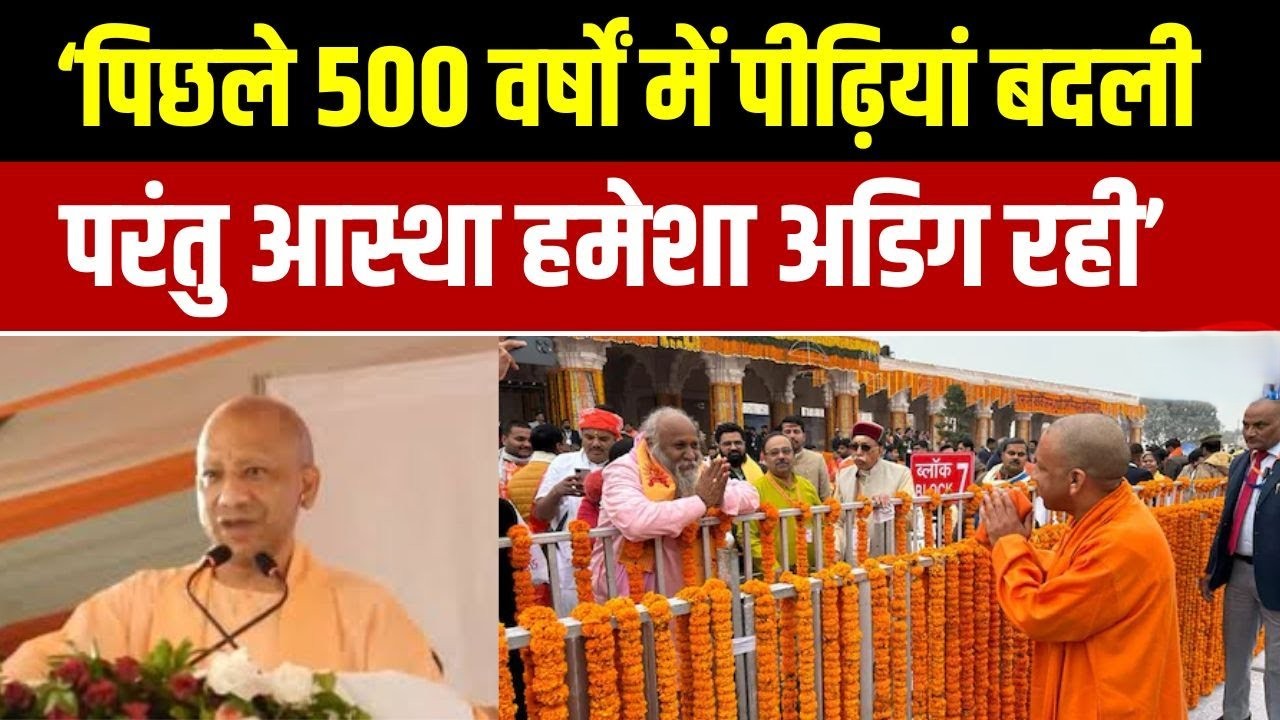
Empires changed in 500 years, but faith always remained steadfast: CM Yogi
CM Yogi says, History has witnessed the rise and fall of countless empires. Kingdoms expanded, dynasties collapsed, foreign rulers invaded, and political landscapes transformed. Yet, through every era of turbulence and every shift of power, one element remained unshaken — faith. This is the message that CM Yogi delivered with remarkable conviction, reminding people that while worldly forces are temporary, spiritual belief has been the backbone of India’s identity for centuries.
The statement by CM Yogi is not just historical reflection. It is a cultural assertion, a philosophical reminder, and a political message woven together. It highlights India’s extraordinary capacity to preserve heritage despite invasions, colonisation, and ideological conflicts. In this 3000-word blog, we explore the significance of CM Yogi’s statement, its historical context, its impact on today’s socio-cultural ecosystem, and why his remarks resonate so deeply with millions.
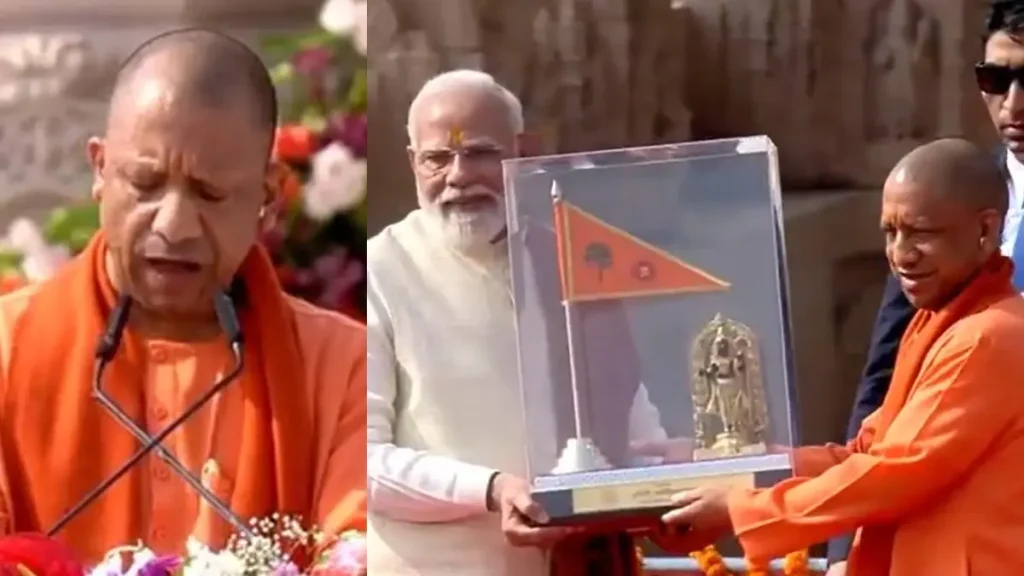
A Message Rooted in History and Heritage
When CM Yogi said, “Empires changed in 500 years, but faith always remained steadfast,” he was referring to the long timeline of Indian civilisation. Over the last five centuries, India witnessed:
- The decline of medieval kingdoms
- The rise of Mughal rule
- The arrival of European powers
- The establishment of British colonial rule
- The birth of the modern Indian Republic
Despite these tremendous shifts, the cultural foundations remained strong. Traditions, festivals, temples, and spiritual values continued to guide society.
This resilience is what CM Yogi celebrated. In his view, it is not political power but cultural continuity that defines India.
CM Yogi’s Message: A Voice of Cultural Confidence
Throughout his public life, CM Yogi has repeatedly emphasised the importance of cultural revival, temple restoration, and preservation of India’s spiritual legacy. His message symbolizes a rising confidence in reclaiming heritage spaces, whether through the renovation of ancient temples or the reinvigoration of traditional rituals.
The phrase he used connects the past to the present, creating a sense of historical continuity that resonates with millions.
The Changing Empires: A 500-Year Journey
To understand the depth of CM Yogi’s statement, one must look at the dramatic transitions India went through in the last 500 years.
1. The Late Medieval Period
This era saw powerful kingdoms but also witnessed fragmentation. Regional rulers fought for control, shaping the socio-political landscape.
2. The Mughal Period
A massive empire rose to unite vast territories under one administration. Art, architecture, and culture flourished, but conflicts also emerged.
3. European Influence and British Rule
The arrival of the Portuguese, Dutch, French, and finally the British changed India’s political and economic structure. Despite attempts to impose foreign ideologies, the Indian spiritual system remained undisturbed.
4. The Freedom Movement and Modern India
India’s cultural values inspired the freedom struggle. Leaders like Gandhi, Vivekananda, and Tilak rooted the movement in faith, morality, and civilizational pride.
Throughout all of this, faith never collapsed. This is what CM Yogi highlights — the unbreakable thread that carried India through centuries.

Spiritual Resilience: The Core of CM Yogi’s Message
CM Yogi is well known for grounding his political ideology in spirituality. His own life as a monk symbolizes devotion, discipline, and cultural responsibility. When he speaks about faith remaining steadfast, he is emphasizing:
- The unwavering belief of people in their gods
- The survival of temples despite being destroyed or neglected
- The revival of ancient pilgrimage routes
- The continuation of cultural rituals
- The unity that faith creates among society
Faith becomes a moral compass, a social force, and a cultural identity.
From Ayodhya to Kashi: Examples of Cultural Reawakening
One of the strongest reflections of CM Yogi’s message can be seen in the transformation of sacred cities like Ayodhya, Kashi, and Mathura.
Ayodhya
For centuries, the site remained disputed, but faith never faded. Pilgrims continued visiting, chanting, and praying. Today, a grand temple stands — a symbol of resilience.
Kashi Vishwanath Corridor
Kashi has witnessed invasions and demolitions over centuries. But today, the temple stands restored in its glory.
Mathura and Vrindavan
Devotional practices continued despite all historical upheavals.
These examples reinforce CM Yogi’s point that political empires may rise and crumble, but spiritual devotion is immortal.
Why CM Yogi’s Statement Resonates With People Today
The modern world is fast-changing — technologically, socially, and economically. Amid this rapid shift, CM Yogi’s message acts as an anchor. It reassures people that:
- Their roots are intact
- Their identity remains strong
- Their culture is still alive
- Their future is connected to their past
In times of uncertainty, such messages create emotional strength.
CM Yogi and the Narrative of Civilizational Pride
CM Yogi has consistently spoken about bringing back India’s civilizational confidence. His administration has invested heavily in:
- Restoring temples
- Organising grand cultural festivals
- Preserving ancient scriptures and languages
- Developing pilgrimage tourism
- Creating infrastructure around heritage sites
These initiatives reflect his larger aim — to remind Indians of their global civilizational stature. When he says faith remained steadfast for 500 years, he is reinforcing that identity.
How Faith Became India’s Psychological Strength
The endurance of faith is not accidental. It has been India’s psychological armour against:
- foreign invasions
- cultural suppression
- ideological attacks
- social fragmentation
Faith gave people:
- hope during oppressive rule
- unity during conflict
- courage during colonialism
- pride during the freedom struggle
This strength continues today, and CM Yogi emphasizes that preserving it is essential.
CM Yogi and the Modern Interpretation of Heritage
To CM Yogi, heritage is not an old memory — it is a living force. His efforts in Uttar Pradesh have shown a new model of governance where development and culture go hand-in-hand.
Examples include:
- The Deepotsav in Ayodhya
- Ganga cleanliness initiatives
- Temple restoration projects
- Kashi Vishwanath Corridor
- Increased pilgrimage tourism
These initiatives turn spiritual heritage into economic and cultural strength.
Empires vs. Faith: The Philosophical Idea
Empires symbolise power, but faith symbolises eternity.
Empires control land; faith controls hearts.
Empires are built by kings; faith is built by people.
Empires fall with time; faith grows with time.
This contrast is at the heart of CM Yogi’s statement. It frames a deep philosophical truth — that material authority is temporary, but spiritual authority is timeless.
CM Yogi and the Reconstruction of Bharat’s Identity
CM Yogi’s governance and messages align with the larger goal of reconstructing India’s cultural identity. By linking the present with the past, he inspires society to protect traditions even as it moves toward modern development.
This reconstruction includes:
- Pride in temples
- Pride in language
- Pride in heritage
- Pride in ancient wisdom
- Pride in spiritual philosophy
Such pride helps build strong communities.
The Future: What CM Yogi Envisions
With such statements, CM Yogi prepares society for a future where:
- Culture is protected
- Heritage is celebrated
- Youth understand their roots
- Spiritual unity remains strong
- History is seen with clarity, not distortion
His vision is long-term — connecting 500 years of resilience to the next 100 years of progress.
CM Yogi’s Statement in Today’s Political Landscape
Politically, the statement also signals confidence. It appeals to:
- cultural voters
- traditional communities
- nationalist thinkers
- religious groups
- common citizens who value heritage
By placing faith above empires, CM Yogi highlights cultural legitimacy over political authority.
Conclusion: A Statement That Becomes a Guiding Principle
“Empires changed in 500 years, but faith remained steadfast.”
This message by CM Yogi is more than a quote — it is a guiding principle for a civilisation.
It reminds us that:
- Culture survives beyond politics
- Faith survives beyond conflict
- Identity survives beyond time
- Heritage survives beyond rulers
With this powerful reminder, CM Yogi positions himself not just as a political leader, but as a guardian of India’s civilizational spirit.
CM Yogi’s words illuminate the path from the past to the future, reminding the world that India’s strength lies in its eternal faith — a force that no empire could ever conquer.
Read more latest news

