
Tejashwi Yadav’s Emotional Response on Sister Rohini Yadav: “She Raised Us, I Donated My Kidney to My Father but Never Asked for a Ticket”
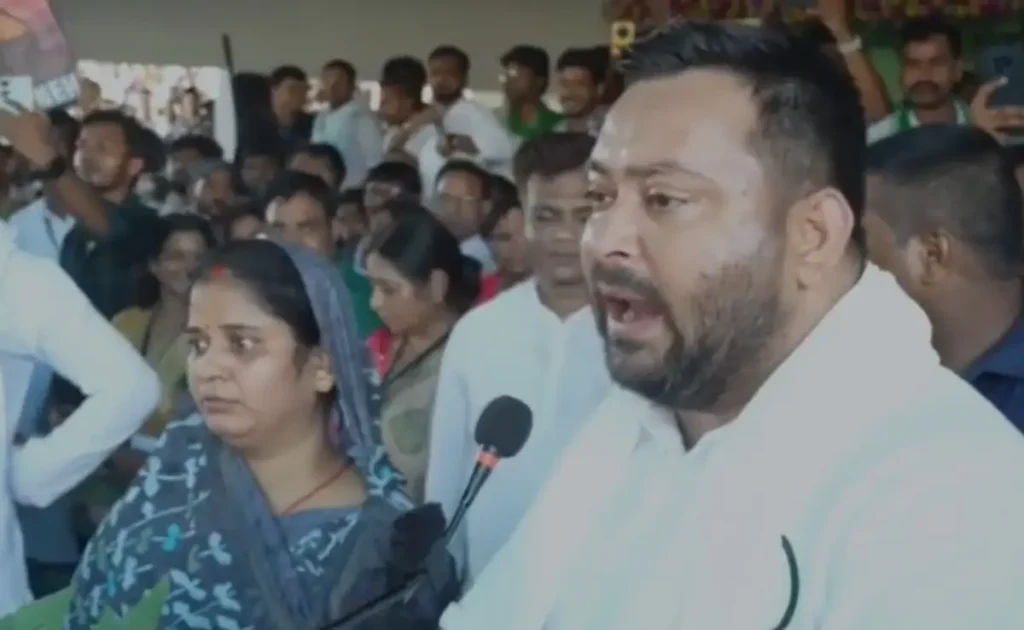
Politics in Bihar has always been charged with emotions, family legacies, and fierce rivalries. At the launch of the Chief Minister’s Women’s Employment Scheme, one such moment played out when Leader of the Opposition Tejashwi Yadav faced questions about his sister Rohini Yadav’s political entry.
In an emotional yet firm response, Tejashwi addressed critics and clarified the circumstances of Rohini’s decision to enter politics. His words—
“She raised us… I donated my kidney to my father but never asked for a ticket. The public wanted her to contest elections.”
—resonated widely, capturing attention both within Bihar and nationally.
This statement is more than a political rebuttal. It reveals the complex dynamics of family responsibility, public demand, and the unique blend of personal sacrifice and political ambition that defines the Yadav family’s journey in Bihar’s political landscape.
The Context: Launch of Women’s Employment Scheme
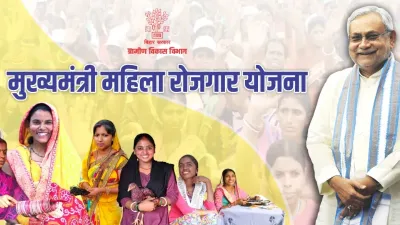
The Chief Minister’s Women’s Employment Scheme was launched as a flagship initiative to promote financial independence among women, especially in rural areas. The scheme promises to create new job opportunities, provide skill development training, and extend financial aid for women-led businesses.
While the focus of the program was on empowering women, the political stage quickly turned towards the Opposition’s views. Questions about Rohini Yadav’s foray into politics became unavoidable, especially because her presence has stirred debates within the ruling and opposition parties alike.
Who is Rohini Yadav?
Rohini Acharya, popularly known as Rohini Yadav, is the daughter of Rashtriya Janata Dal (RJD) supremo Lalu Prasad Yadav and Rabri Devi. Though she has largely remained away from the limelight compared to her brothers Tejashwi and Tej Pratap, she commands respect for her personal sacrifices and strong connect with the Yadav family’s base.
Her public image grew significantly after she donated a kidney to her ailing father Lalu Prasad Yadav in December 2022. That act of selflessness elevated her from a private figure to someone seen as embodying devotion, duty, and sacrifice.
When she eventually chose to contest elections, critics labeled it as dynastic politics, accusing the Yadav family of promoting yet another member. But Tejashwi’s defense—that the public wanted her to contest and that neither she nor he ever demanded a ticket—has added a fresh layer to the debate.
Tejashwi’s Statement: Breaking It Down
1. “She raised us”
Tejashwi highlighted Rohini’s role in their upbringing. With Lalu often in jail or engrossed in politics, and Rabri Devi managing both home and political responsibilities as former Chief Minister, Rohini played a critical part in caring for her siblings. This acknowledgment was not just about family love but also about honoring women’s invisible labor within households.
2. “I donated my kidney to my father but never asked for a ticket”
Tejashwi used his own sacrifice as an example, emphasizing that family service and loyalty should not be confused with political entitlement. His kidney donation was deeply personal, not transactional, thereby rejecting the notion that Rohini’s political entry was a reward for family loyalty.
3. “The public wanted her to contest elections”
This final line underlined the central point: that Rohini’s candidature was born out of popular demand. Tejashwi shifted the narrative from dynastic privilege to democratic will, portraying Rohini as a people’s candidate rather than merely Lalu’s daughter.
Dynasty Politics Debate
The debate over dynasty politics is not new in India. The Nehru-Gandhi family at the national level, the Yadavs in Uttar Pradesh and Bihar, the Abdullahs in Jammu & Kashmir, and the Karunanidhi family in Tamil Nadu have all faced similar criticism.
Tejashwi’s defense, however, cleverly separates family sacrifice from political opportunity. He argues that Rohini’s political role is justified by public demand rather than family privilege, which could help reframe the debate in RJD’s favor.
Public Sentiment Around Rohini Yadav
Since her kidney donation, Rohini has enjoyed significant goodwill among the public. Social media users often call her “the true heir of Lalu’s values.” Her active posts criticizing the ruling BJP-JD(U) government have also positioned her as a vocal and fearless personality.
When news broke that she would be contesting elections, several sections of the RJD base welcomed her candidacy as a natural progression. Tejashwi’s statement reinforces that she was chosen by the people’s voice, not imposed by the family.
Impact on Bihar Politics
1. Strengthening RJD’s Women Connect
With Rohini’s rise and schemes like the Women’s Employment initiative, women are emerging as a central force in Bihar’s politics. RJD hopes Rohini’s identity as a daughter, sister, and caregiver resonates with women voters.
2. Counter to Nitish Kumar’s Image
Nitish Kumar has long branded himself as a champion of women’s rights, through policies like 30-50% reservation for women in panchayats and schemes for girl child education. Rohini’s political debut could challenge this monopoly, offering women a new female figure to rally behind within RJD.
3. Pressure on Tejashwi
While Rohini’s presence strengthens RJD, it also raises the bar for Tejashwi. He must balance defending his family against dynasty accusations while expanding RJD’s vision beyond its traditional voter base.
Media and Political Reactions
The statement has received widespread coverage:
- Ruling Alliance Response: JD(U) and BJP leaders criticized the remarks, calling it an emotional cover-up for dynastic politics. One BJP spokesperson remarked: “This is nothing but glorification of nepotism in the name of sacrifice.”
- RJD Cadre’s Reaction: Party workers cheered Tejashwi’s defense, interpreting it as a sign of unity within the Yadav family and a response to the ruling party’s propaganda.
- Neutral Analysts: Political commentators noted that Tejashwi successfully blended emotion with politics, but cautioned that dynasty arguments still carry weight among urban and young voters.
The Larger Symbolism: Sacrifice in Indian Politics
Sacrifice has always been a recurring theme in Indian politics. From freedom fighters giving their lives for independence to leaders donating wealth and comfort, stories of personal sacrifice resonate deeply with the public.
By highlighting Rohini’s sacrifices and his own, Tejashwi tapped into this cultural narrative. His statement effectively positioned the Yadav family not as power-hungry politicians but as caretakers who put family and people first.
Rohini Yadav’s Political Future
While still relatively new to active politics, Rohini’s future looks promising:
- Grassroots Connect: Her simple persona and family sacrifices have already made her relatable.
- Social Media Presence: Rohini is outspoken online, often targeting the government with sharp commentary.
- Support Base: With Tejashwi’s backing and Lalu’s legacy, she has a ready-made platform to grow.
If she manages to convert goodwill into ground-level mobilization, she could become a central figure in Bihar politics.
Challenges Ahead
Despite the emotional appeal, Rohini and Tejashwi face significant challenges:
- Dynasty Criticism: This tag will continue to haunt them.
- Performance Pressure: Rohini must prove her worth through policy ideas and constituency work, not just family legacy.
- Opposition Attacks: BJP and JD(U) will use every opportunity to highlight contradictions between RJD’s claims and actions.
Conclusion
Tejashwi Yadav’s statement at the launch of the Women’s Employment Scheme was not just an emotional defense of his sister—it was a calculated political move. By combining personal sacrifice, family loyalty, and democratic justification, he reframed Rohini Yadav’s political entry as the people’s choice rather than dynastic privilege.
His words—“She raised us… I donated my kidney to my father but never asked for a ticket. The public wanted her to contest elections.”—will likely echo in Bihar’s political narrative for months to come.
For the Yadav family, this moment is both an opportunity and a test: to prove that Rohini can stand as more than just Lalu’s daughter, and to ensure that the story of sacrifice translates into political strength.
Read more latest news

