
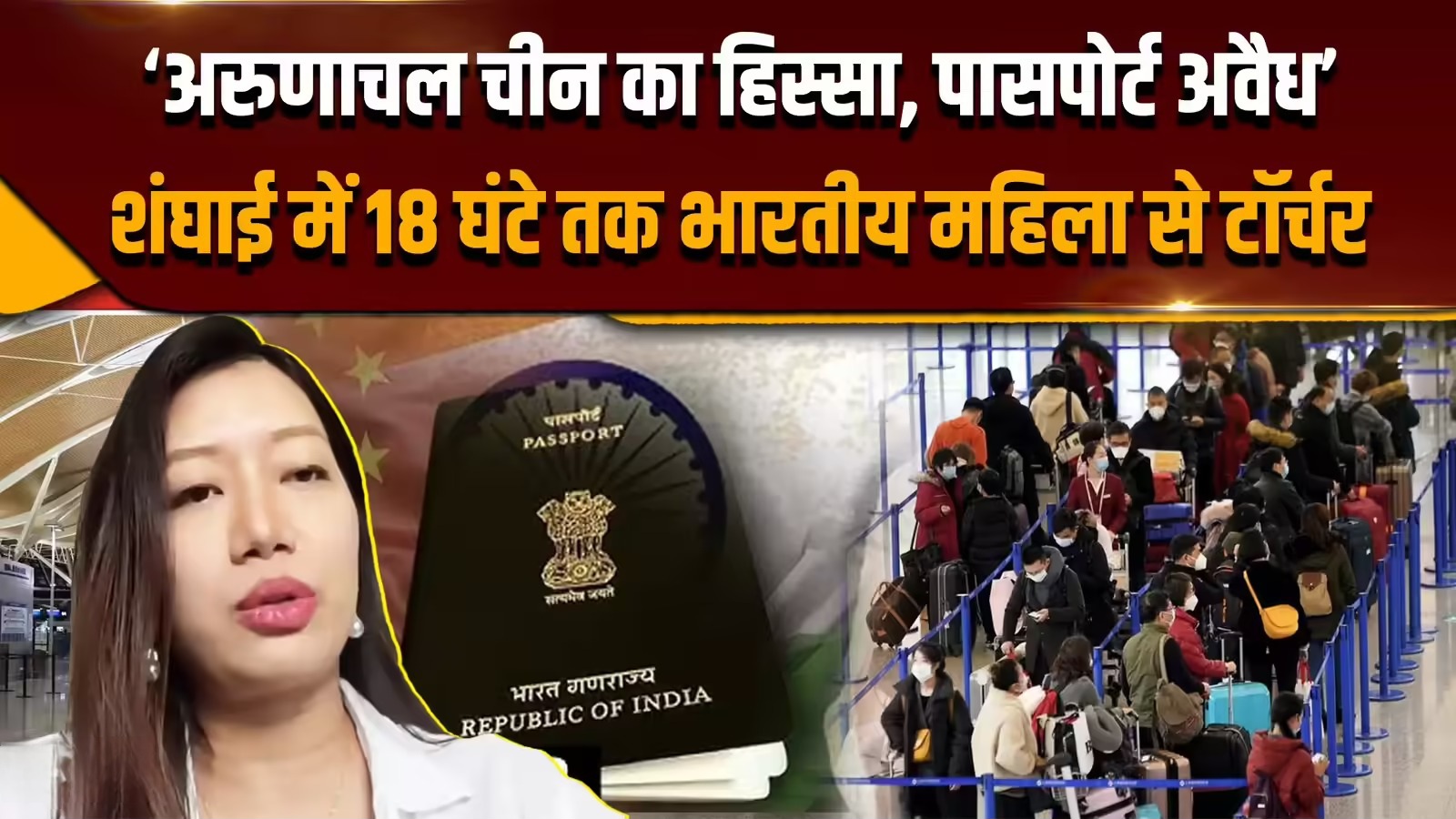
Mistreatment Allegations at Shanghai Airport and China’s Response: A 3000-Word Deep Dive into the Arunachal Pradesh Controversy
An Indian woman from Arunachal Pradesh has complained of alleged mistreatment at Shanghai airport. International travel incidents often become flashpoints for diplomatic tension, especially when they involve regions already entangled in geopolitical disputes. Recently, a case involving an Indian woman from Arunachal Pradesh sparked controversy after she complained of alleged mistreatment at Shanghai Pudong International Airport. The situation escalated when China not only denied the allegations but also used the moment to reiterate its long-standing and disputed claim over Arunachal Pradesh.
What began as a personal travel ordeal quickly evolved into a larger diplomatic narrative. India reacted cautiously but firmly, defending its sovereign position, while China reinforced its political stance. The incident has revived discussions about border disputes, identity, human rights, and the sensitivities surrounding Arunachal Pradesh, a region of immense cultural, strategic, and historical importance to India.
In this 3000-word analysis, we dive deep into the incident, the reactions, the geopolitical undertone, and the broader implications for the people of Arunachal Pradesh, for India–China relations, and for the global diplomatic landscape.
1. The Incident: What Happened at Shanghai Airport?
The controversy began when an Indian woman belonging to Arunachal Pradesh shared her experience of being allegedly mistreated by immigration officials at Shanghai airport during her travel to China. According to her account, she was questioned aggressively about her nationality, her region of origin, and the authenticity of her Indian passport.
She claimed that the officials repeatedly insisted that people from Arunachal Pradesh were not considered Indian citizens by China, causing confusion and discomfort. The prolonged questioning reportedly left her distressed, prompting her to file a formal complaint upon reaching her destination.
Her allegations became public soon after, leading to a wave of reactions online. People from Arunachal Pradesh expressed solidarity, saying such experiences were not new due to China’s political stance. Many Indians condemned the alleged behavior, calling it disrespectful, discriminatory, and unacceptable.
But soon after the incident made headlines, China issued a response that added more layers to the controversy.

2. China’s Denial and the Geopolitical Twist
China categorically denied the allegations raised by the Indian woman from Arunachal Pradesh, stating that immigration officers follow strict protocols and treat all travelers fairly. However, the more controversial part of the response was the Chinese Foreign Ministry’s reiteration of Beijing’s claim over Arunachal Pradesh.
China has long maintained that Arunachal Pradesh is part of what it calls “South Tibet,” a claim India rejects unequivocally. By bringing this territorial claim into its response, China converted a personal travel grievance into a political statement.
The Chinese spokesperson said:
“China has consistent policies regarding residents of the region you call Arunachal Pradesh.”
This statement was widely interpreted as China using the incident to reinforce its geopolitical stance—turning a complaint into an international talking point.
3. India’s Reaction: Defending the Sovereignty of Arunachal Pradesh
India responded strongly, calling China’s comments “unacceptable” and reaffirming that Arunachal Pradesh is, was, and always will be an integral part of India.
Indian officials emphasized that:
- India issues passports to all Indian citizens, including those from Arunachal Pradesh.
- No foreign nation has the right to question their nationality.
- Any harassment of Indian citizens based on their state of origin is a violation of international norms.
India has repeatedly pointed out that Arunachal Pradesh has participated in Indian elections since independence, enjoys full constitutional rights, and contributes actively to India’s socio-cultural fabric. The country views China’s claims as nothing more than baseless assertions aimed at strategic pressure.
The incident, therefore, became a spark that reignited broader diplomatic tensions.
4. Why Arunachal Pradesh Is Always at the Center of Attention
The region of Arunachal Pradesh is not just a geographical space—it is a cultural treasure, a strategic frontier, and a political symbol. Located in India’s northeast, it borders China, Bhutan, and Myanmar. Its unique tribal communities, rich biodiversity, and stunning landscapes make it one of India’s most fascinating states.
But its strategic relevance is equally important:
- It shares a long and sensitive border with China.
- It is crucial for India’s defense structure.
- It is linked deeply with Tibetan culture, a connection China often cites.
China’s claim on Arunachal Pradesh has historical, political, and psychological layers. Every time tensions rise, residents of Arunachal Pradesh find themselves involuntarily pulled into geopolitical discussions.
The recent airport controversy once again placed Arunachal Pradesh at the heart of India-China diplomatic chatter.

5. The Human Side: Impact on the People of Arunachal Pradesh
For residents of Arunachal Pradesh, the controversy is more than an international headline—it affects their identity, dignity, and sense of belonging. Despite being Indian citizens for generations, they often face questions about nationality while traveling abroad, especially in regions sensitive to China’s influence.
Many people from Arunachal Pradesh shared similar experiences online:
- Being questioned about their passports
- Being asked which country they belong to
- Being scrutinized more harshly than other Indian travelers
These encounters often stem from China’s repeated external claims on Arunachal Pradesh, creating confusion among immigration officers elsewhere.
For the woman involved in the Shanghai incident, the emotional trauma reportedly outweighed the logistical inconvenience. She said her identity as an Indian was “challenged,” a sentiment echoed by many in Arunachal Pradesh who felt that their regional identity was again being politicized on a global stage.
6. China’s Perspective: Why the Claim Over Arunachal Pradesh Matters to Beijing
While India considers Arunachal Pradesh an inalienable part of its territory, China’s claim over the region is rooted in several factors:
a. Strategic Interests
Control over Arunachal Pradesh would provide China an advantageous military position across the Himalayan range.
b. Tibetan Cultural Links
China argues that regions of Arunachal Pradesh share historical links with Tibetan monasteries, using this as justification for its claim.
c. Boundary Negotiations
China often uses the topic of Arunachal Pradesh as a bargaining tool in border discussions.
d. Political Signaling
Reasserting claims during international controversies helps China remind the world of its geopolitical stand.
Thus, the Shanghai airport incident provided China an opportunity to amplify its stance.
7. India’s Stand: Clear, Firm, and Non-Negotiable
India’s position on Arunachal Pradesh has always been consistent:
- Its territorial integrity is not up for negotiation.
- Residents of Arunachal Pradesh are full citizens of India.
- Claims made by China hold no historical or legal validity.
India’s strong reaction after the Shanghai airport incident was not merely a diplomatic response—it was also a reassurance to the residents of Arunachal Pradesh, affirming their place within the Indian nation.
8. International Reaction and Media Attention
The story quickly captured international media interest. Global publications highlighted both the mistreatment allegation and China’s political response.
Three issues stood out:
- Human rights — Was the traveler from Arunachal Pradesh subjected to discrimination?
- Border politics — Why did China use a travel complaint to push its claim?
- Identity concerns — How are residents of Arunachal Pradesh impacted internationally?
Diplomats, analysts, and scholars commented on how a simple airport incident turned into a geopolitical narrative.
9. The Broader Context: India–China Relations
Relations between India and China have remained tense for years due to:
- Border standoffs
- Military clashes like Galwan
- Trade imbalances
- Opposing strategic interests in Asia
In this already sensitive environment, any incident involving Arunachal-Pradesh becomes magnified. The Shanghai airport case added another point of friction, even though both countries handled it diplomatically.
10. Voices from Arunachal Pradesh: Dignity, Identity, and Patriotism
People from Arunachal-Pradesh often take pride in their identity as Indian citizens. Their cultural richness is matched by their strong sense of patriotic belonging.
Many residents responded to this incident with a mixture of anger and unity:
- Some demanded India lodge a formal protest.
- Others shared stories of facing similar questioning abroad.
- Many reaffirmed their national identity, saying Arunachal-Pradesh has always been proudly Indian.
The incident acted as a catalyst that brought out strong emotional responses from communities who felt their dignity was questioned.
11. Diplomatic Lessons and the Road Ahead
The Shanghai airport episode highlights several key takeaways:
a. The importance of traveler protection
Countries must ensure their citizens—whether from Delhi or Arunachal-Pradesh—are treated with dignity abroad.
b. Political disputes should not spill into immigration counters
No traveler should be subjected to geopolitical interpretations of their identity.
c. India–China relations remain delicate
Even small incidents escalate quickly due to long-standing tensions.
d. Identity sensitivity
Residents of Arunachal-Pradesh face unique challenges due to international claims.
e. Need for diplomatic caution
Both nations must handle such issues with care to avoid unnecessary escalation.
12. Conclusion: More Than an Airport Incident—A Reminder of Arunachal Pradesh’s Importance
The alleged mistreatment of the Indian woman in Shanghai was not just a travel inconvenience; it became an international conversation about identity, sovereignty, and geopolitical tension. China’s denial and its reiteration of claims on Arunachal-Pradesh turned the incident into a political spotlight.
For India, the episode reaffirmed the need to protect the dignity of citizens from every region, especially those from Arunachal-Pradesh who often face unique scrutiny abroad. For China, the incident became another opportunity to push its stance, even though such actions strain relations further.
Ultimately, this incident demonstrates how the people of Arunachal-Pradesh continue to stand strong in the face of geopolitical narratives. Their identity, belonging, and dignity remain firmly rooted in the Indian nation, despite external claims or diplomatic controversies.
As tensions simmer and discussions continue, one thing remains clear: Arunachal-Pradesh is more than a disputed region—it is home to proud citizens, vibrant cultures, and a deeply rooted Indian heritage that cannot be questioned by airport officials or political statements.
Read More latest news

