

Chaos on the Pakistan Border: US Ambassador Sergio Gor and Indo Pacific Commander Samuel Paparo Western Command Visit Sparks Political Uproar
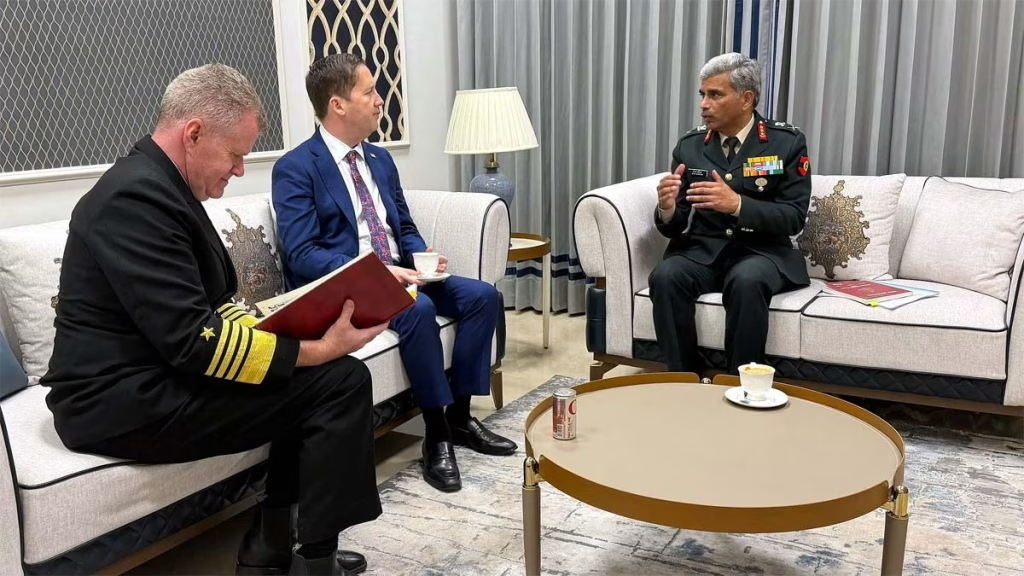
In recent days, Chaos on the Pakistan border has become one of the most discussed phrases in India’s political and strategic circles. The visit of US Ambassador Sergio Gor and Indo-Pacific Commander Samuel Paparo to India’s Western Command has triggered a storm of reactions across political parties, strategic think tanks, and diplomatic corridors.
Why has this high-profile visit near the Pakistani border generated such a heated political atmosphere? Is it merely a routine diplomatic-military engagement, or does it indicate deeper geopolitical shifts in South Asia? Let’s explore how Chaos on the Pakistan border has evolved into a major national debate.
The Western Command: Strategic Importance Near the Pakistan Border
India’s Western Command of the Army, headquartered in Chandimandir, plays a crucial role in securing the international border and the Line of Control (LoC) with Pakistan. Any diplomatic or military movement in this region is highly sensitive.
The Western Command is responsible for operational readiness across sectors that have historically witnessed ceasefire violations, infiltration attempts, and heightened tensions. Against this backdrop, the presence of senior US officials in such a strategic zone naturally fueled speculation.
For many observers, the timing and location of the visit intensified perceptions of Chaos on the Pakistan border, particularly at a time when regional security dynamics remain fragile.

Who Is Sergio Gor and Why His Visit Matters
Sergio Gor, serving as the United States Ambassador to India, represents Washington’s diplomatic interests in one of its most significant global partnerships. His role includes strengthening defense cooperation, economic ties, and strategic dialogue between New Delhi and Washington.
His visit to the Western Command was not merely ceremonial. It signaled close defense coordination and strategic trust between India and the United States.
However, in the context of Chaos on the Pakistan border, political opponents questioned whether such high-level engagement near a volatile frontier sends the wrong diplomatic message to neighboring Pakistan.
Admiral Samuel Paparo: Indo-Pacific Strategy and Its Implications
Indo-Pacific Commander Samuel Paparo oversees US military operations across a vast region that includes South Asia. His strategic purview covers maritime security, counterterrorism cooperation, and defense partnerships.
India is a central pillar in the US Indo-Pacific strategy. The presence of Admiral Paparo near the Pakistani border was therefore interpreted by some as a symbolic assertion of US-India military convergence.
This interpretation fueled debates around Chaos on the Pakistan border, with critics alleging that India risks being drawn into larger geopolitical rivalries.
Why the Visit Sparked Political Tension in India
The uproar stems from multiple overlapping concerns:
1. Sovereignty and Strategic Autonomy
Opposition leaders argued that India’s strategic autonomy must remain uncompromised. They questioned whether foreign military leaders visiting sensitive border commands might create diplomatic complications.
For them, Chaos on the Pakistan border is not just about cross-border tensions—it’s about protecting India’s independent defense posture.
2. Message to Pakistan
The visit’s proximity to Pakistan’s frontier raised eyebrows. Critics asked whether this move might escalate existing friction or provoke retaliatory rhetoric from Islamabad.
Supporters, however, maintained that Chaos on the Pakistan border demands strong international partnerships, not isolation.
3. Domestic Political Optics
Any event involving foreign defense officials near a contentious border becomes a potent political tool. The ruling government framed the visit as a sign of global trust in India’s security apparatus. The opposition described it as provocative symbolism.
Thus, Chaos on the Pakistan border transitioned from a security issue into a domestic political flashpoint.
Pakistan’s Perspective and Regional Sensitivities
From Pakistan’s viewpoint, any increased US-India military engagement near its border can be perceived as strategic pressure.
Islamabad has historically been sensitive to US military ties with India. Given the fluctuating US-Pakistan relationship over the past decade, the optics of this visit were bound to amplify narratives of Chaos on the Pakistan border.
Whether these concerns translate into tangible diplomatic friction remains to be seen.
Historical Context: India-US Defense Cooperation
Over the last two decades, India and the US have signed multiple foundational defense agreements, including logistics and communications pacts. Joint exercises such as Yudh Abhyas and Malabar have strengthened operational coordination.
The Western Command visit should ideally be seen within this broader framework of cooperation. However, in politically charged times, even routine defense diplomacy can trigger narratives of Chaos on the Pakistan border.
The Geopolitical Chessboard
South Asia is not insulated from global power politics. The Indo-Pacific strategy places India at the center of counterbalancing regional threats. Any US military engagement in proximity to Pakistan is inevitably viewed through this lens.
For some analysts, Chaos on the Pakistan border reflects not immediate conflict, but shifting strategic alignments.
Media Amplification and Public Perception
Modern media ecosystems can rapidly transform routine diplomatic visits into perceived crises. Headlines emphasizing military proximity and border sensitivities magnified the sense of Chaos on the Pakistan border.
Social media discussions further polarized opinion, with hashtags trending on both sides of the political spectrum.

Government’s Official Stand
The government clarified that the visit was part of ongoing defense dialogue and did not signal any aggressive posture toward Pakistan.
Officials stressed that Chaos on the Pakistan border is not being fueled by India’s actions but by misinformation and political overreaction.
Opposition’s Criticism
Opposition leaders argued that transparency is crucial when foreign military officials visit sensitive regions. They demanded parliamentary discussions to ensure clarity and accountability.
For them, the phrase Chaos on the Pakistan border encapsulates fears of diplomatic miscalculation.
Strategic Significance Beyond Politics
Beyond the immediate controversy, the visit underscores:
- Deepening India-US defense ties
- Shared concerns over regional security
- Joint counterterrorism coordination
- Technological collaboration in defense systems
Viewed strategically, Chaos on the Pakistan border may simply be a rhetorical outcome of heightened political sensitivities.
Is There Real Escalation?
At present, there are no confirmed reports of increased hostilities directly resulting from the visit. Military channels between India and Pakistan remain operational.
Thus, while political rhetoric speaks of Chaos on the Pakistan border, ground realities suggest measured stability.
The Broader Indo-Pacific Context
The Indo-Pacific framework extends beyond bilateral tensions. It encompasses maritime security, trade routes, and regional alliances.
Admiral Paparo’s presence signals confidence in India’s role as a strategic partner. Interpreting it solely through the lens of Chaos on the Pakistan border may oversimplify the larger strategic narrative.
Conclusion: Political Storm or Strategic Signal?
The visit of Sergio Gor and Samuel Paparo to India’s Western Command has undeniably stirred debate.
But is it truly Chaos on the Pakistan border, or a reflection of India’s growing global stature?
Political narratives may amplify tension, yet the broader strategic reality suggests strengthening partnerships rather than immediate escalation.
In an era where geopolitics intersects with domestic politics, even symbolic gestures carry significant weight. Whether this episode evolves into sustained diplomatic strain or fades into routine strategic cooperation will depend on how stakeholders manage perception and communication in the weeks ahead.
One thing is certain: discussions around Chaos on the Pakistan border have highlighted the delicate balance between diplomacy, defense, and domestic politics in modern South Asia.
Read More Latest news

