
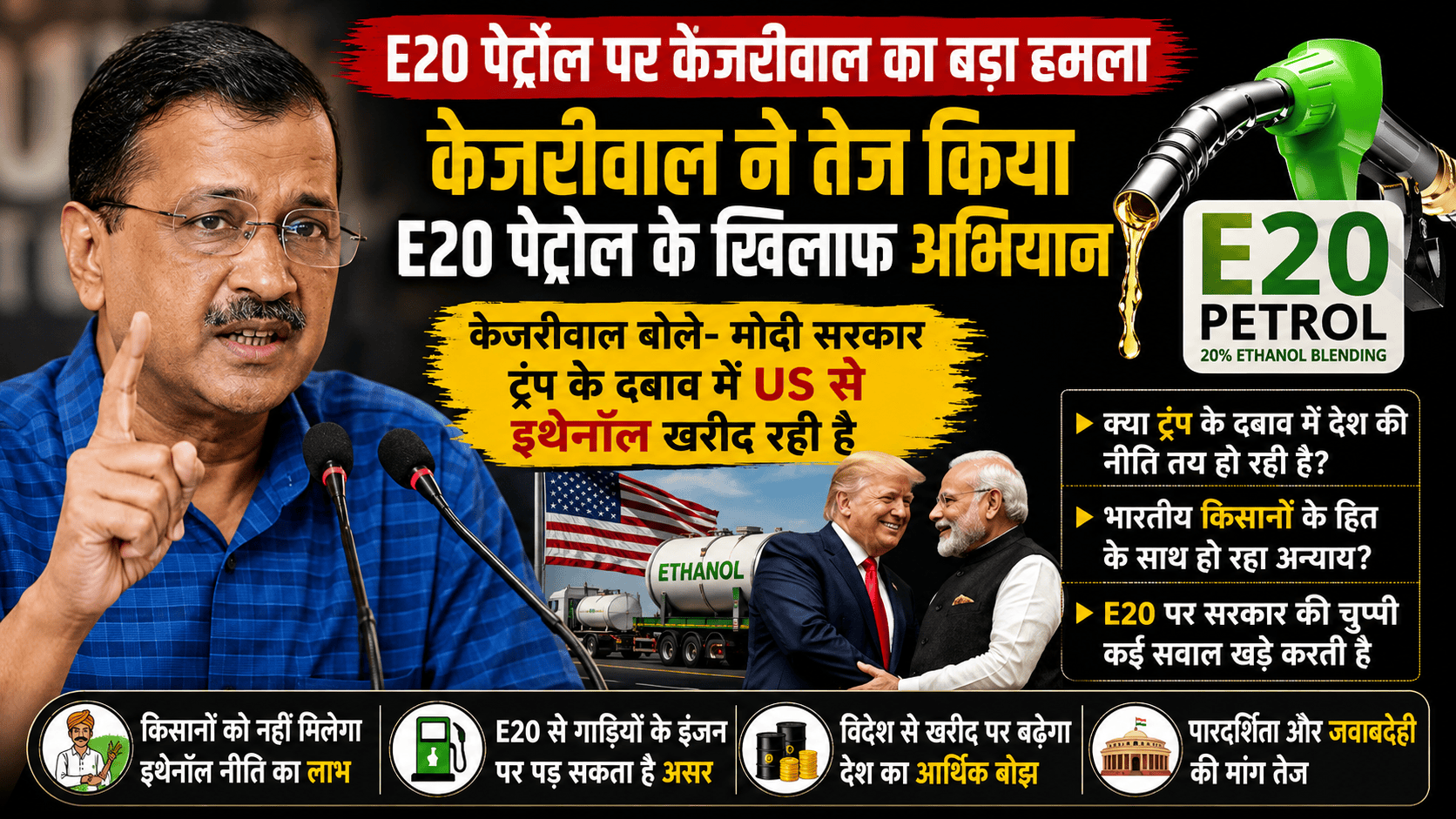
Arvind Kejriwal Intensifies Campaign Against E20 Petrol, Alleges Modi Government Is Buying US Ethanol Under Trump’s Pressure
Arvind Kejriwal Launches Fresh Campaign Against E20 Petrol
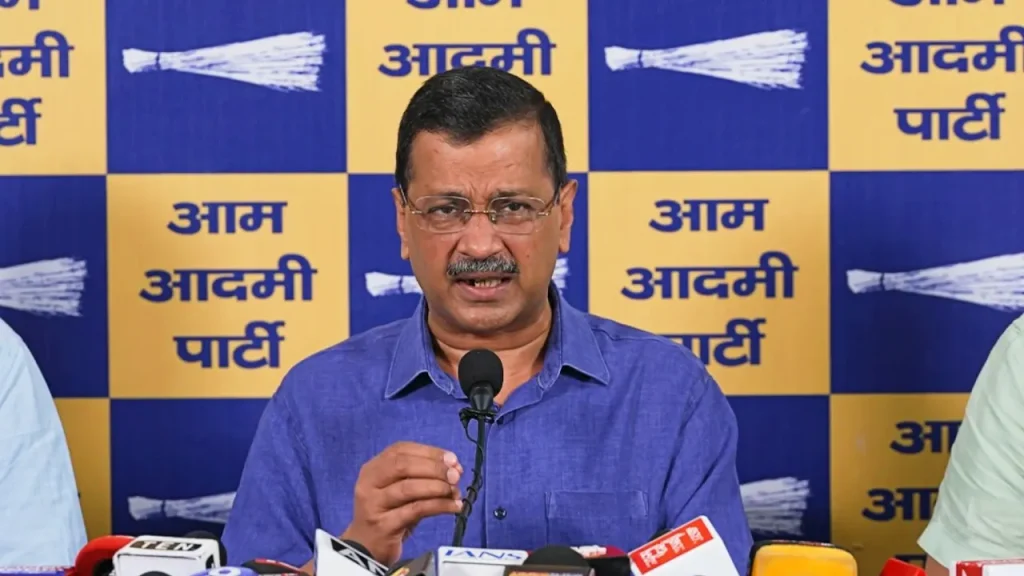
AAP national convener Arvind Kejriwal has intensified his campaign against E20 petrol, raising serious questions about the Centre’s ethanol blending policy. Addressing the media, Kejriwal alleged that the Modi government is purchasing ethanol from the United States under pressure from former US President Donald Trump. His remarks have reignited political debate over India’s fuel policy, energy security, and the future of ethanol blending.
The latest campaign against E20 petrol has brought renewed attention to the government’s efforts to promote cleaner fuel while reducing dependence on imported crude oil. However, Kejriwal argued that importing ethanol contradicts the stated objective of supporting Indian farmers and achieving energy self-reliance.
What Did Arvind Kejriwal Say?
During his press conference, Kejriwal claimed that the government’s ethanol policy was moving away from its original purpose. According to him, if ethanol is being imported from the United States, Indian farmers would not receive the intended economic benefits.
The campaign against E20 petrol gathered momentum after Kejriwal alleged that the decision to import ethanol was being influenced by pressure from Donald Trump. He questioned whether India’s energy policy should be determined by foreign interests instead of domestic priorities.
Understanding the E20 Petrol Policy
The E20 fuel initiative refers to petrol blended with 20 percent ethanol. The Government of India has promoted ethanol blending to reduce dependence on imported crude oil, lower carbon emissions, and provide an additional market for sugarcane and other agricultural produce.
Despite these objectives, the campaign against E20 petrol has focused on concerns regarding implementation, vehicle compatibility, ethanol availability, and its economic impact on consumers and farmers.
Supporters of the policy argue that ethanol blending contributes to cleaner fuel usage and strengthens India’s renewable energy strategy.
Kejriwal Raises Questions on Farmer Interests
One of the central themes of the campaign against E20 petrol is the impact on Indian farmers.
Kejriwal argued that ethanol blending was originally projected as a measure to increase farmers’ income by encouraging domestic ethanol production. If ethanol is instead imported, he questioned how Indian farmers would benefit from the policy.
He maintained that agriculture should remain at the center of India’s biofuel strategy and urged the government to prioritize local producers.

Allegation Regarding US Ethanol Imports
A major point in the campaign against E20 petrol was Kejriwal’s allegation that the Modi government is purchasing ethanol from the United States under pressure from Donald Trump.
The allegation has become a subject of political debate. Government representatives have previously maintained that India’s ethanol blending programme primarily relies on domestic production, though public discussions continue regarding import policies and fuel requirements.
The Centre has not accepted Kejriwal’s allegation, and the issue has become another point of political disagreement between the Aam Aadmi Party and the BJP.
Political Debate Intensifies
The campaign against E20 petrol has added another dimension to the ongoing political contest between the BJP and the Aam Aadmi Party.
AAP leaders have questioned the government’s fuel strategy, while BJP leaders have defended the ethanol blending programme as an important step toward energy independence and environmental sustainability.
Political analysts believe the issue could become significant in future election campaigns as fuel prices and agricultural policies remain important public concerns.
Ethanol Blending and India Energy Strategy
India has been promoting ethanol blending to reduce dependence on imported fossil fuels and improve environmental sustainability.
However, the campaign against E20 petrol has shifted attention toward questions of policy implementation, supply chains, pricing, and imports.
Experts note that ethanol blending has multiple objectives, including reducing greenhouse gas emissions, supporting farmers, and lowering crude oil imports.
Impact on Consumers
The campaign against E20 petrol has also highlighted concerns regarding vehicle compatibility and maintenance costs.
Some automobile manufacturers have introduced vehicles designed to operate efficiently on higher ethanol blends, while others advise consumers to follow manufacturer recommendations regarding fuel compatibility.
The government has consistently encouraged the gradual transition toward E20-compatible vehicles.
Reactions from Political Parties
Following Kejriwal’s statements, the campaign against E20 petrol became a major talking point in political circles.
AAP leaders supported Kejriwal’s criticism, arguing that transparency is needed regarding ethanol procurement.
BJP leaders, on the other hand, have continued defending the ethanol blending programme, stating that it supports India’s energy security goals while reducing dependence on imported petroleum products.
Experts Weigh In
Energy experts suggest that ethanol blending can provide long-term environmental and economic benefits when supported by sufficient domestic production capacity.
The campaign against E20 petrol has encouraged broader discussions regarding balancing environmental objectives with agricultural interests, industrial production, and fuel affordability.
Experts also emphasize that policy decisions should be evaluated using official production, import, and consumption data.
Importance of Domestic Production
One recurring point in the campaign against E20 petrol is the need to strengthen India’s domestic ethanol production.
Industry experts believe expanding domestic production capacity could help ensure stable supplies while maximizing benefits for Indian farmers and reducing import dependence.
They also stress continued investment in biofuel infrastructure and technological improvements.
Political Significance
The campaign against E20 petrol comes at a time when fuel prices, environmental policies, and agricultural issues remain politically significant.
Observers believe debates over ethanol blending are likely to continue as political parties present competing visions for India’s energy future.
Whether the discussion focuses on imports, domestic production, or farmer welfare, ethanol policy is expected to remain an important national issue.
Government’s Position
The Government of India has consistently stated that the ethanol blending programme aims to reduce crude oil imports, improve environmental sustainability, support farmers, and strengthen energy security.
While the campaign against E20 petrol has questioned aspects of implementation, government officials continue to defend the broader objectives of the programme.
Conclusion
Arvind Kejriwal’s latest campaign against E20 petrol has intensified political debate over India’s ethanol blending policy. By alleging that the Modi government is importing ethanol from the United States under pressure from Donald Trump, the AAP chief has raised questions regarding fuel policy, farmer welfare, and energy strategy.
The BJP continues to support ethanol blending as an important national initiative, while the AAP has demanded greater transparency regarding ethanol procurement and implementation. As discussions continue, the debate over E20 petrol is expected to remain a prominent issue in India’s political and policy landscape.
Read more latest news

