
Introduction: The Swadeshi Mela and a Statement That Stirred Discussion trade show in Uttar Pradesh
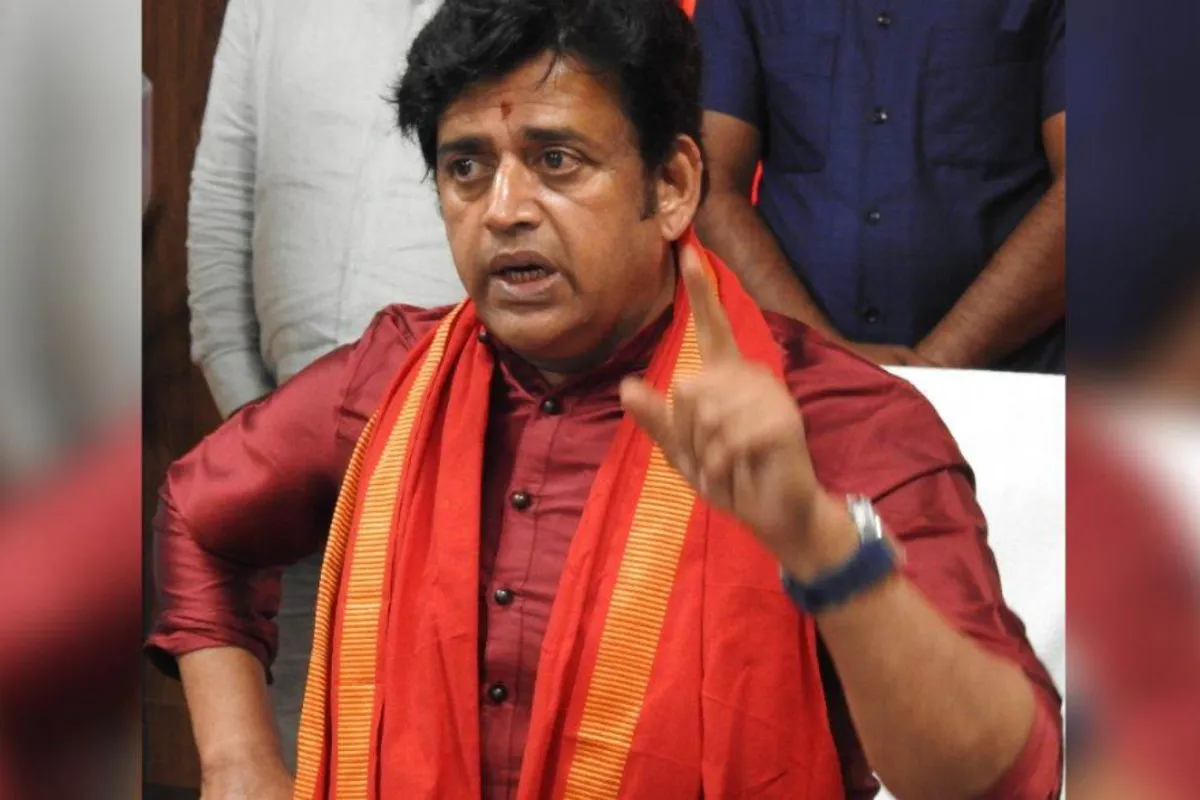
During the Swadeshi Mela organized in Gorakhpur, Uttar Pradesh, BJP MP and popular Bhojpuri actor Ravi Kishan made a statement that quickly spread across social media platforms, igniting intense debates and mixed reactions. Known for his passionate speeches and deep connection with the people of Purvanchal, Ravi Kishan’s remarks this time were centered on the Muslim community and their participation in India’s socio-cultural fabric. What began as a comment made during a local event soon turned into a national-level conversation about communal harmony, cultural pride, and the importance of Swadeshi values in modern India.
As the clip of his speech circulated widely online, some hailed Ravi Kishan’s words as an appeal for unity and self-reliance, while others criticized him for allegedly singling out a community. Let’s take a detailed look at what exactly happened during the event, what Ravi Kishan said, and why it has sparked such a wide range of reactions.
The Setting: Swadeshi Mela and Its Significance
The Swadeshi Mela in Gorakhpur is not just a local fair—it is a symbol of cultural and economic nationalism, promoting the use of Indian-made goods, art, and craftsmanship. The fair attracts people from all walks of life—traders, farmers, artisans, and entrepreneurs—united by the common spirit of promoting indigenous products.
Ravi Kishan, being both a Member of Parliament from Gorakhpur and a public figure with immense popularity in the region, was invited as the chief guest to inaugurate the event and address the gathering. The fair, organized under the vision of “Vocal for Local,” aligns closely with Prime Minister Narendra Modi’s Swadeshi and Atmanirbhar Bharat mission (trade show in Uttar Pradesh).
Crowds gathered in thousands to hear Ravi Kishan speak, expecting his usual blend of emotional storytelling, patriotic fervor, and his trademark Bhojpuri charm. However, amid his motivational address, one particular part of his speech stood out and has since become the center of online debate.
What Ravi Kishan Said About Muslims in Gorakhpur (trade show in Uttar Pradesh)
According to reports and video clips circulating on social media, Ravi Kishan remarked during his speech that the Muslims of Gorakhpur have always lived with love, peace, and harmony. He emphasized that the community in Gorakhpur has never fallen prey to divisive politics and that they actively participate in Swadeshi initiatives, setting an example for the rest of the country.
He was quoted saying:
“Gorakhpur ke Musalman bhaiyon ne hamesha deshbhakti ka saboot diya hai. Yahaan Hindu aur Musalman ke beech kabhi dushmani nahi rahi. Yeh dharti Gorakhnath ki hai, yahan sab ek saath rehte hain.”
(Translation: The Muslim brothers of Gorakhpur have always demonstrated patriotism. There has never been enmity between Hindus and Muslims here. This is the land of Gorakhnath, where everyone lives together in harmony.)
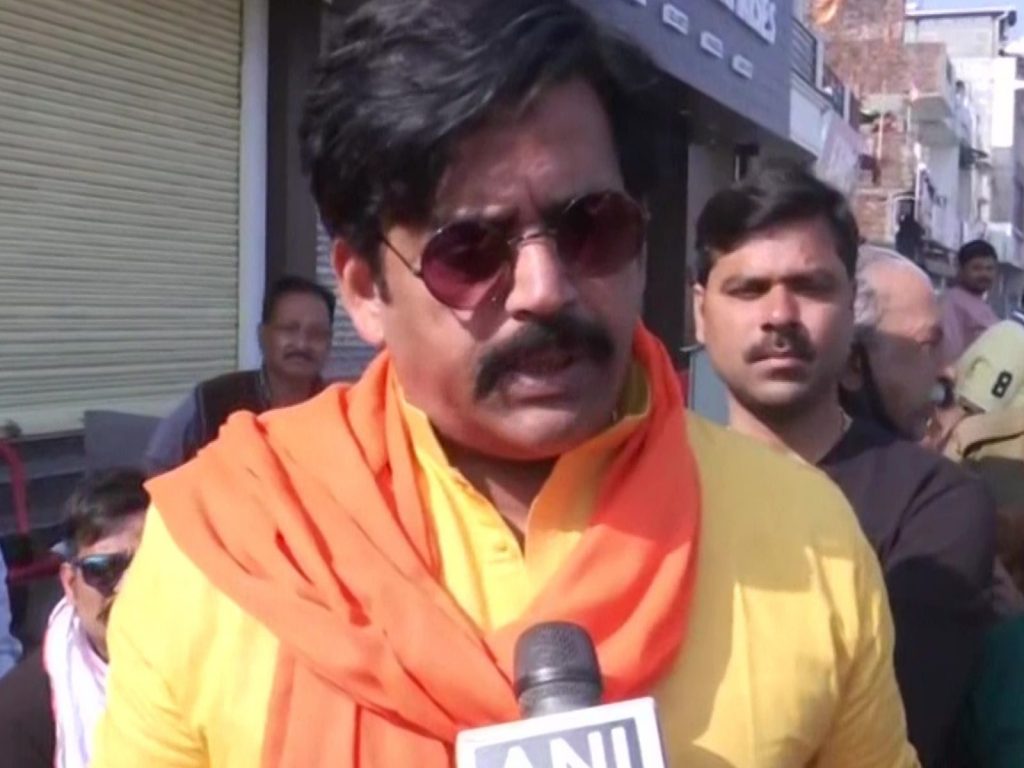
Ravi Kishan further highlighted that Swadeshi is not just a Hindu idea, but an Indian one, and that every citizen—irrespective of religion—has the responsibility to promote local industries, artisans, and Indian-made products.
He said,
“Swadeshi kisi dharm ya jaati se juda hua nahi hai. Yeh hamara rashtradharm hai. Jab Musalman bhai apni dukano mein Made in India saman bech rahe hain, toh yeh desh ki aarthik shakti ko badha raha hai.”
(Translation: Swadeshi is not tied to any religion or caste—it is our national duty. When our Muslim brothers sell Made-in-India products in their shops, they are strengthening the nation’s economy.)
The Message Behind the Statement (trade show in Uttar Pradesh)
At its core, Ravi Kishan’s speech appeared to be an attempt to bridge divides and promote unity through the common thread of nationalism and economic self-reliance. His statement sought to remind citizens that India’s strength lies in its diversity and that the idea of Swadeshi can become a unifying movement beyond religious lines.
He framed Swadeshi not as a political slogan but as an economic and moral philosophy, urging everyone—Hindus, Muslims, Sikhs, and Christians—to contribute collectively toward India’s growth.
By acknowledging the Muslim community’s contribution to Gorakhpur’s peace and development, Ravi Kishan appeared to extend a message of mutual respect and cooperation, resonating with the broader ideals of the Bharatiya Janata Party’s inclusive nationalism—at least as he intended.
Social Media Reaction: Applause, Criticism, and Controversy
Within hours of his statement, multiple clips from Ravi Kishan’s speech were shared across X (Twitter), Instagram, and Facebook.
- Supporters of the BJP and many neutral citizens praised his words, saying that a prominent Hindu leader acknowledging and appreciating the Muslim community’s role in India’s progress sends a powerful message of unity.
- Critics, however, accused him of being “politically cautious” and questioned the timing of his remarks, especially with the upcoming Bihar and Uttar Pradesh elections where communal issues often become political flashpoints.
A trending hashtag #RaviKishanSpeech emerged, with users expressing a wide range of opinions:
- Some hailed it as a rare voice of reason promoting brotherhood in times of rising polarization.
- Others alleged that it was a strategic political statement, meant to soften BJP’s image among minority voters.
- A few extremist voices on both sides tried to twist the message, interpreting it either as appeasement or as tokenism.
This diversity of reactions demonstrates how, in today’s India, even a call for unity can spark division—depending on how people choose to interpret it.
Ravi Kishan’s Political Persona and His Influence (trade show in Uttar Pradesh)
Ravi Kishan Shukla, beyond being a film star, has evolved into a prominent political figure representing the BJP in Uttar Pradesh. Known for his dynamic oratory and emotional connect with the masses, he blends cultural pride, spirituality, and nationalism in his speeches.
Representing Gorakhpur, the traditional bastion of Chief Minister Yogi Adityanath, Ravi Kishan often reflects the region’s spiritual identity intertwined with the Gorakhnath tradition. His statements carry weight, especially because Gorakhpur has long been seen as a symbol of communal peace under the Gorakhnath Peeth’s influence, where Hindus and Muslims coexist and participate in each other’s festivities.
Therefore, when Ravi Kishan spoke about the Muslim community’s role in Gorakhpur’s harmony, it carried not just political significance but also cultural resonance.
Historical Context: Gorakhpur’s Communal Harmony
To understand the importance of Ravi Kishan’s statement, one must look at Gorakhpur’s social history. Despite being a deeply religious city associated with Hindu spirituality, it has not witnessed major communal clashes in decades.
This peace has been credited to the Gorakhnath Math, which, while being a Hindu religious institution, has consistently promoted interfaith respect. Under Yogi Adityanath’s leadership, the Math has often sent messages of social unity during festivals like Eid and Diwali, inviting members of both communities to participate.
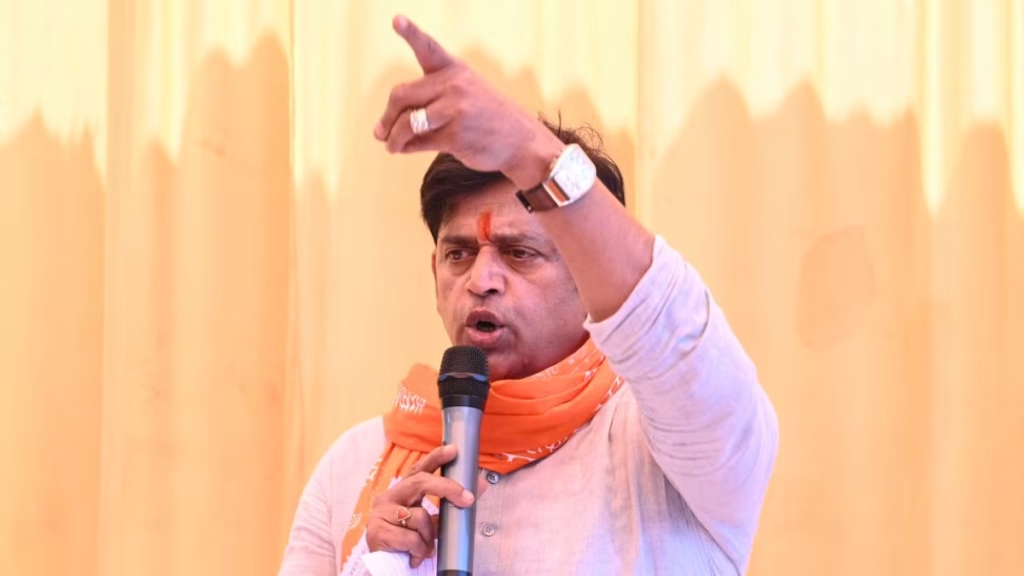
In this light, Ravi Kishan’s comments can be seen as a continuation of that inclusive tradition, reinforcing Gorakhpur’s identity as a land where spirituality transcends religion.
Swadeshi: The Common Ground for All Indians (trade show in Uttar Pradesh)
Another key takeaway from Ravi Kishan’s speech is the revival of the Swadeshi movement’s spirit in the 21st century. The term Swadeshi first gained prominence during India’s freedom struggle, symbolizing resistance against British economic domination through the boycott of foreign goods and the promotion of indigenous industries.
Today, in the context of global competition and digital marketplaces, Swadeshi has taken on a new meaning. It represents self-reliance, economic nationalism, and support for local businesses—values that resonate with citizens across all religions.
Ravi Kishan’s message, therefore, used the emotional and historical power of Swadeshi to highlight that India’s development depends on collective participation, not communal division.
He essentially reminded people that economic unity can heal social fractures—a message deeply relevant in today’s polarized times.
Political Reactions: Silence, Subtle Endorsements, and Speculation (trade show in Uttar Pradesh)
Interestingly, while the video went viral, no major BJP leader openly commented on Ravi Kishan’s statement. Sources within the party suggested that his remarks were seen as positive and non-controversial, aligned with the government’s inclusive vision.
Some political analysts, however, speculated that the speech might also be part of a larger strategy to rebrand the BJP’s image in Uttar Pradesh, presenting it as a party that promotes economic unity rather than religious division—especially before key elections.
Opposition parties, meanwhile, offered mixed responses:
- Samajwadi Party leaders claimed that such statements are “too little, too late,” arguing that BJP’s ground-level politics often contradict its words of unity.
- Congress and BSP chose not to make any direct comments, though several of their supporters on social media used the clip to question BJP’s consistency.
In short, while Ravi Kishan’s intention might have been cultural and spiritual, the political interpretations have been numerous and complex.
Voices from Gorakhpur: Local Reactions
Among the residents of Gorakhpur, reactions were overwhelmingly positive. Many shopkeepers, especially from Urdu Bazaar, Ali Nagar, and Golghar, said that Ravi Kishan’s words reflected the real atmosphere of Gorakhpur, where Hindus and Muslims conduct business side by side without tension.
A local Muslim businessman, Mohammad Aslam, told reporters:
“Ravi Kishan sahib ne sach kaha. Hum yahan sab milke rehte hain. Hamare bachche ek saath school jaate hain. Yeh Gorakhpur hai, yahan nafrat ki jagah nahi hai.”
(Translation: What Ravi Kishan said is true. We all live together here. Our children study together. This is Gorakhpur—there’s no room for hatred here.)
This sentiment captures the essence of what Ravi Kishan perhaps wanted to convey—that India’s real strength lies in the local harmony that exists beyond politics.
Social Media Divide: The Digital Mirror of Modern India
The controversy also reveals how social media amplifies every statement—whether positive or negative. What might have been a simple message of appreciation delivered in a local fair turned into a national talking point, dissected across ideological lines.
Supporters of inclusivity used it as an example of how BJP leaders can speak constructively about minority communities, while critics treated it as a public relations move. The polarization of interpretation once again showed how digital platforms mirror India’s divided political climate.
Ravi Kishan’s Broader Message: Beyond Politics
If one looks past the noise, Ravi Kishan’s speech was a call for collective growth, not a communal statement. His focus on Swadeshi as a shared responsibility across religious lines carries a timeless truth—that economic patriotism can unite where politics often divides.
By acknowledging the Muslim community’s contribution, he indirectly appealed to citizens across India to judge each other by actions, not by religious identity. This kind of message, coming from a popular leader with mass appeal, can have a positive influence in regions where communal narratives often dominate.
Conclusion: Unity Through Swadeshi and Shared Identity
In the end, Ravi Kishan’s words at the Swadeshi Mela reflect a larger story about India itself—a nation constantly balancing faith and fraternity, diversity and unity.
His statement about the Muslim community of Gorakhpur is a reminder that nationalism doesn’t have to mean exclusion. True Swadeshi is about loving one’s country enough to respect every citizen who contributes to it—be they Hindu, Muslim, Sikh, or Christian.
As social media continues to debate his intent, one truth stands firm: the idea of Swadeshi is not limited to products—it is also about the spirit of cooperation among India’s people.
If voices like Ravi Kishan’s continue to promote that message, perhaps the Swadeshi Mela will not just remain a trade fair—it will become a symbol of India’s unity, diversity, and enduring cultural strength.

