
Introduction
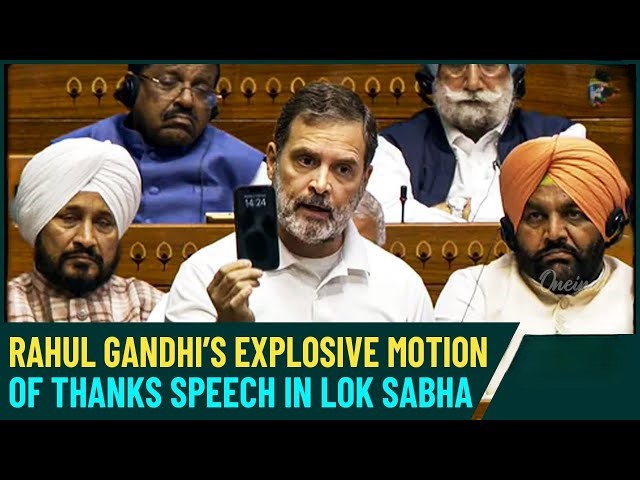
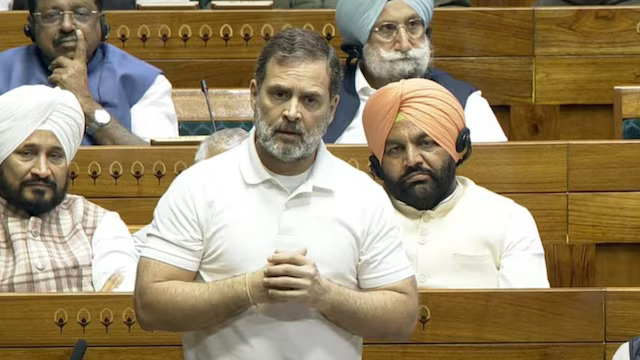
BJP Leaders The political landscape in India witnessed a heated debate as Rahul Gandhi, the Leader of the Opposition (LoP), delivered a much-anticipated speech in Parliament. While his address began on a strong note, drawing attention to key national issues, BJP leaders were quick to criticize what they termed a “LoP-sided” and “partisan” speech. According to them, while Gandhi attempted to present a structured argument, his speech lacked factual depth and failed to offer concrete policy solutions.
In this blog, we analyze the key points of Rahul Gandhi’s speech, the BJP’s critique, and the larger implications for Indian politics.
Key Highlights of Rahul Gandhi’s Speech
Rahul Gandhi’s speech covered various aspects, including economic challenges, social justice, governance, and the role of the opposition. Some of the major themes he touched upon include:
- Economic Concerns
- Criticized the rising unemployment rates and inflation.
- Accused the government of favoring big corporations over small businesses.
- Questioned the lack of policies to support struggling farmers and middle-class families.
- Democratic Values and Governance
- Highlighted concerns over alleged attacks on democracy and press freedom.
- Questioned the impartiality of government agencies in handling political cases.
- Called for more transparency and accountability in governance.
- Social and Welfare Policies
- Criticized the slow implementation of welfare schemes.
- Raised concerns over religious and caste-based violence.
- Called for stronger policies to promote social harmony.
- Foreign Policy and National Security
- Expressed concerns over India’s relations with neighboring countries.
- Questioned the government’s stance on border issues with China.
- Called for a more assertive foreign policy.
While these points resonated with the opposition and some sections of the public, BJP leaders found multiple areas of contention.
BJP’s Criticism: “Well Begun, But Lacked Substance”
Following Rahul Gandhi’s speech, BJP leaders, including prominent ministers and party spokespersons, came down heavily on his address. Their main criticisms were:
1. Lack of Concrete Policy Suggestions
- BJP leaders argued that while Rahul Gandhi was vocal about the problems, he failed to provide viable solutions.
- Union Minister Piyush Goyal remarked, “He spoke well in the beginning, but where are the solutions? Leadership is about offering answers, not just criticisms.”
2. Exaggeration and Misinformation
- BJP accused Gandhi of using outdated or misrepresented data to attack the government.
- Finance Minister Nirmala Sitharaman countered his economic claims, stating that India remains one of the fastest-growing economies despite global challenges.
3. Selective Criticism and Double Standards
- BJP leaders pointed out that many of the issues Gandhi raised were either inherited problems or ones that Congress governments failed to address in the past.
- Home Minister Amit Shah noted, “If he is concerned about unemployment, why did the Congress fail to create jobs during its decades in power?”
4. Divisive Politics
- BJP leaders accused Rahul Gandhi of attempting to create an atmosphere of fear and division.
- Spokesperson Sambit Patra said, “He talks about democracy but remains silent when opposition parties suppress dissent within their ranks.”
Political Implications of the Debate
This heated exchange in Parliament highlights deeper trends in Indian politics:
- Strengthening of the Opposition
- Rahul Gandhi’s assertive speech signals a more aggressive opposition in the coming months.
- Congress aims to reclaim lost ground by positioning itself as the primary challenger to the BJP.
- BJP’s Counterattack Strategy
- BJP leaders are using counterarguments to discredit Gandhi’s speech and reinforce their governance record.
- The ruling party is likely to highlight economic progress and welfare achievements in its campaigns.
- Impact on Public Opinion
- Gandhi’s speech may energize Congress supporters, but BJP’s counterarguments could reinforce its base.
- The debate has sparked discussions on social media, with supporters from both sides engaging in fierce debates.
Conclusion
Rahul Gandhi’s speech in Parliament was a notable moment in Indian politics, drawing both praise and criticism. While he succeeded in raising key concerns, BJP leaders were quick to challenge his assertions and highlight what they saw as weaknesses in his arguments. As India moves toward upcoming elections, such debates will continue to shape the political narrative, influencing both policymakers and voters.
Whether Gandhi’s speech will mark a turning point for the opposition or strengthen BJP’s position remains to be seen, but one thing is certain: the battle of narratives is far from over.
Read more Latest news

