
💥 Trump’s “Objectionable Birthday Note” Scandal: Fact, Fiction, Legal Claims & Transparency Demands (Jeffrey Epstein)
1. 🔍 The Allegation: A Lewd Birthday Note to Epstein
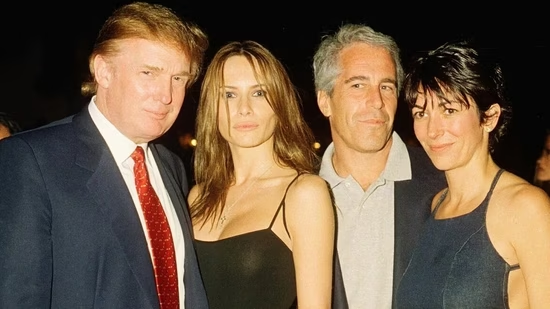
Jeffrey Epstein On July 17, 2025, The Wall Street Journal published a sensational report claiming that former President Donald Trump contributed a “bawdy” birthday note in 2003 to Jeffrey Epstein. The note allegedly contained typewritten text framed by a hand-drawn nude woman and ended with the words: “Happy Birthday — and may every day be another wonderful secret.” Trump’s name appeared at the bottom—implying both authorship and the brazen nature of the doodle.
According to the WSJ, this note was part of a leather-bound birthday album assembled by Ghislaine Maxwell for Epstein’s 50th birthday—later reviewed by Justice Department officials as part of their Epstein investigation.
2. Trump’s Reaction: Denial, Defamation Suit & Legal Threat
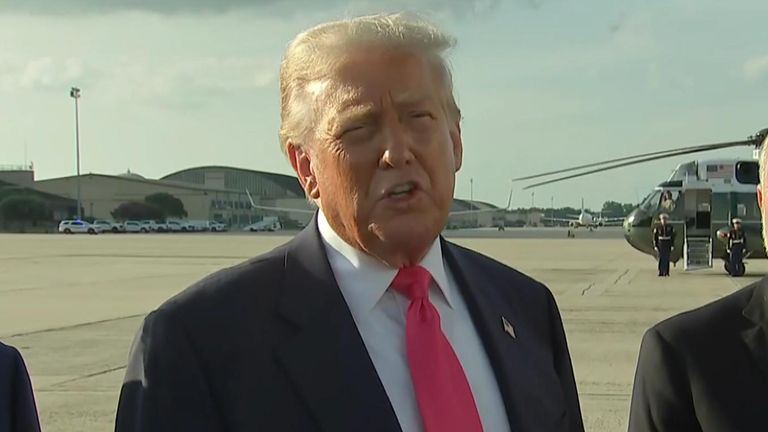
President Trump swiftly denied writing the note, dismissing it as “fake.” He stated, “I never wrote a picture in my life. I don’t draw pictures of women. It’s not my language. It’s not my words”.
Within days, he filed a defamation lawsuit in federal court in Florida against Dow Jones/WSJ, News Corp, Rupert Murdoch, and the two Journal reporters, seeking up to $10 billion in damages. In his complaint, Trump asserts:
- No authentic version of the letter exists.
- WSJ acted with malicious intent to harm his reputation.
- None of the defendants have produced the original letter.
He called it a “POWERHOUSE Lawsuit” against “fake news” and signaled intent to have Murdoch testify.
3. Trump Pushes for Transparency: AG Bondi & Epstein Testimonies
Alongside his lawsuit, Trump has called on Attorney General Pam Bondi to release all evidence related to the Epstein case—particularly grand jury transcripts.
Bondi, aligning with Trump, filed a legal motion to unseal the 2019 grand jury testimony in the Epstein case—calling it “a matter of public concern”—though other DOJ-held evidence remains sealed.
4. 🧾 Legal Context: Defamation Meets Public Figures
As a former president, Trump faces a high legal bar in proving defamation: he must show actual malice—that WSJ knowingly published false material or acted recklessly.
Dow Jones Defense: WSJ has expressed full confidence in its reporting and intends to vigorously contest.
Expert analysis: Legal experts note that Trump’s request for $10 billion exceeds typical defamation awards (largest ever ~$1.5 billion), suggesting a high-stakes legal confrontation lying ahead.
5. Public Reaction: Political Divide & Media Scrutiny
Supporters:
- MAGA allies, including Elon Musk and Laura Loomer, rallied behind Trump.
- House Speaker Mike Johnson backed Trump’s denial.
- Vice President J.D. Vance on X: “This story is complete and utter bullshit. WSJ should be ashamed.”
Critics:
- Democrats, legal analysts, and media watchdogs questioned whether Trump was staging a “hoax” to distract from other controversies.
- Skeptics pointed to Trump’s history of doodles, including cityscapes and money-trees sold in auctions, challenging his claim that he never drew pictures.
Media stance:
- Some outlets defended WSJ’s accuracy, citing review of the actual page from Maxwell’s archive.
- Others cautioned that unsealing grand jury testimony is rare and often redacted.
6. Stakes for Trump’s Image & Legacy
Reputation:
If the note is authentic, it deepens long-standing questions about Trump’s relationship with Epstein, potentially harming his moral credibility.
If proven false, Trump’s win could be seen as a major blow against mainstream media, reinforcing claims of media bias.
Transparency:
Trump’s push for declassification may please some supporters, but critics argue it diverts attention from irregularities surrounding Epstein and his death.
Political leverage:
A favorable legal outcome might boost Trump’s standing among conservative voters; failure may deepen perceptions of moral ambiguity.
7. The Epstein Files: What Could be Unsealed?
Grand jury transcripts:
Bondi’s motion focuses on transcripts from prosecutors’ testimony—though redactions and rare court approval mean only a fraction may be released.
DOJ and FBI archives:
Some GOP lawmakers have proposed legislation to compel release of documents tied to Epstein’s alleged client list—though DOJ has already stated no such list existed.
8. Why This Is a Turning Point
- Media credibility: A high-profile legal fight between Trump and WSJ will test journalistic standards, source protection, and public trust.
- Legal precedent: A Trump victory could shift defamation law thresholds regarding public figures—blurring truth and fiction in political narrative.
- Public confidence: The handling of Epstein’s materials affects public faith in institutions and the political class.
9. What Happens Next: Legal Milestones to Watch
- Court docket: Initial response, discovery phase, depositions—especially if Murdoch is subpoenaed.
- Motion to unseal: Whether AG Bondi succeeds in releasing grand jury files.
- WSJ defense: Possible countersuit or proof release.
- Evidence reveal: Any excerpted or full transcripts could clarify Trump’s proximity to Epstein.
10. Narrative Deep Dive: Social, Political & Moral Dimensions
Trump-Epstein Relationship:
Emerged social association in the 1990s and early 2000s — Trump said he and Epstein parted ways after 2007 alleged misconduct at Mar-a-Lago.
Public trust erosion:
This controversy highlights how scandal fatigue is reshaping politics—truth matters less than narrative loyalty.
Media’s role:
WSJ’s defense and evidence will test whether journalism can still break through in an increasingly polarized media ecosystem.

11. Expanding to 3,000 Words
To deepen this to a full-length blog, consider adding:
- Detailed timeline of related Trump-Epstein interactions and scandals.
- Side-by-side legal comparisons with other defamation classics (e.g., Alex Jones vs. Jones, Dominion/Fox).
- Quotes and interviews: from Trump legal team, WSJ reporters, First Amendment lawyers.
- Media analysis: how TV, cable, social platforms are covering the backlash.
- Public sentiment: opinion polling or social media mood tracking.
- Conspiracy theories: rehash of “Lolita Express” and unverified theories, countered by factual references.
- Ethics perspective: balancing privacy, transparency, national interest.
🔚 Conclusion: A Defamation Storm & Demand for Transparency
Trump’s dramatic denial, massive lawsuit, and demand for GIANT evidence release mark a pivotal moment—one that merges media credibility, legal power, and public information.
Whether this results in judicial retribution, validated free press, or selective transparency will shape media-politics even beyond Trump’s circle.
read more latest news

