
Draupadi Murmu and PM Narendra Modi Visit Prerna Sthal: A Profound Tribute to Bhimrao Ambedkar on His 70th Death Anniversary
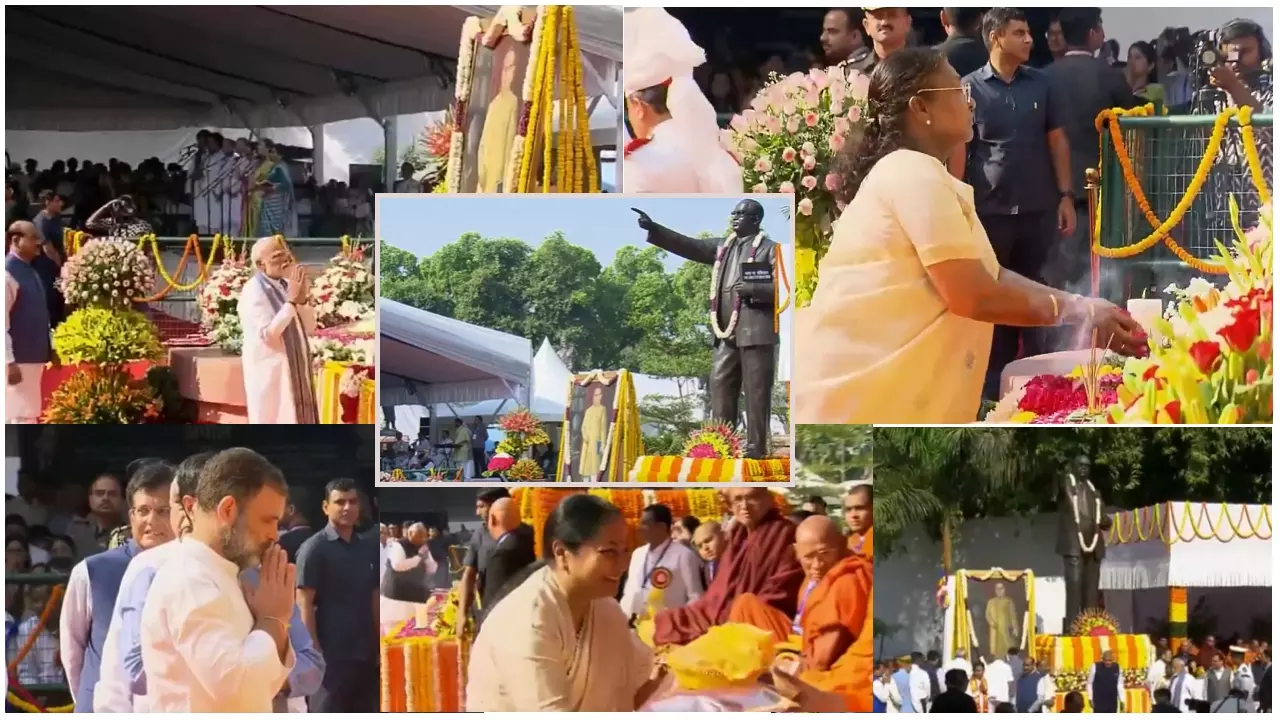
Dr. Bhimrao Ambedkar anniversary, The morning at the Parliament House complex was filled with a deep sense of reverence and national sentiment, as President Draupadi Murmu and Prime Minister Narendra Modi visited Prerna Sthal, the memorial that stands as a testament to India’s greatest visionaries. The occasion was solemn yet historically significant— the 70th death anniversary of Bhimrao-Ambedkar, the principal architect of India’s Constitution and one of the most influential social reformers the nation has ever produced. As leaders, ministers, and members of Parliament gathered to pay their tributes, the air resonated with the life and legacy of Bhimrao Ambedkar, a man whose ideas continue to shape India’s democratic and social landscapes.
This blog explores the event in detail—its political significance, emotional impact, historical roots, and the symbolic importance of honoring Bhimrao Ambedkar at Prerna Sthal. It also reflects on how Draupadi Murmu and Narendra Modi’s presence underscores the enduring relevance of Bhimrao-Ambedkar in India’s national consciousness.
Prerna Sthal: A Space Dedicated to National Inspiration
Prerna Sthal in the Parliament House complex is a unique landmark—an open, serene, green space created to honor the great reformers of India. The idea behind this memorial area is not merely to showcase statues but to provide a contemplative environment where citizens and leaders can reflect on the values that define the Indian republic.
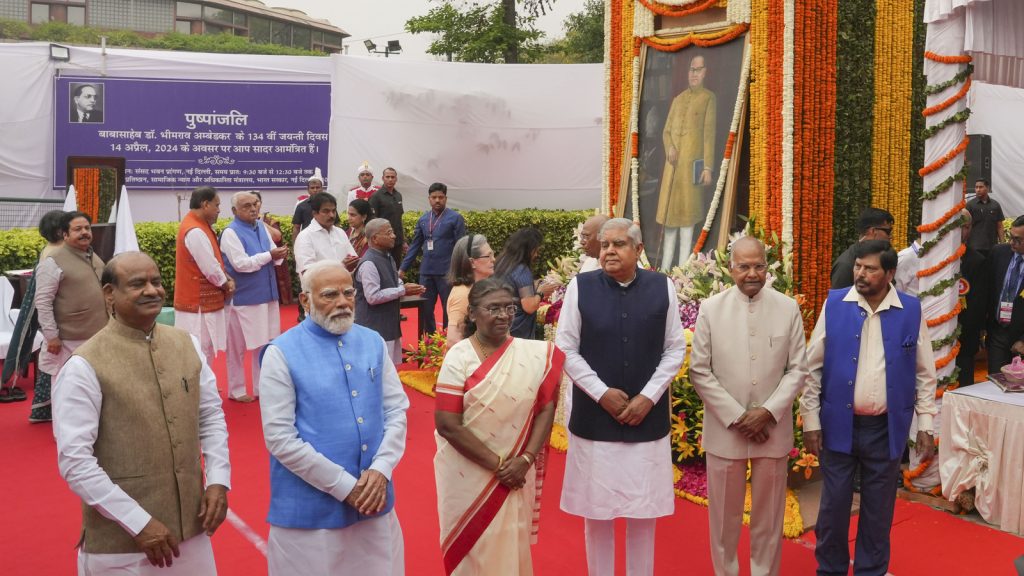
On this special day, the centerpiece of attention was the statue of Bhimrao-Ambedkar, whose towering presence at Prerna Sthal has inspired countless visitors. President Draupadi Murmu and Prime Minister Narendra Modi walked to the memorial with folded hands, symbolizing their respect for Bhimrao Ambedkar. Cabinet ministers, MPs, and other dignitaries joined them, each carrying a wreath to place before Ambedkar’s statue.
Every year, the nation observes December 6 as Mahaparinirvan Diwas, the day Bhimrao-Ambedkar left the world physically but began living eternally through the Constitution and the social awakening he inspired. This year, being the 70th anniversary, added an even deeper emotional and historical dimension.
Draupadi Murmu’s Tribute: A Symbol of Social Justice
President Draupadi Murmu’s visit was symbolic on multiple levels. Belonging to a tribal community, her presence reflected the transformative pathways opened by Bhimrao-Ambedkar’s relentless fight for equality. As she laid the wreath at the statue, the message was clear: the Constitution envisioned by Bhimrao Ambedkar has empowered millions like her to reach positions once considered impossible.
Murmu has often spoken about the importance of Ambedkar’s principles in ensuring equal opportunities for India’s marginalized communities. Today’s tribute reaffirmed her commitment to upholding those values. Her visit also highlighted her personal connection to Bhimrao-Ambedkar’s ideology, particularly social justice, constitutional morality, and equal rights.
Narendra Modi’s Homage: Reiterating Ambedkar’s Vision in Governance
Prime Minister Narendra Modi is known for frequently invoking Bhimrao-Ambedkar’s contributions in his speeches. In fact, his governance narrative often emphasizes Ambedkar’s vision of empowerment, dignity, and equity.
At Prerna Sthal, Modi bowed before the statue of Bhimrao-Ambedkar, offering floral tributes. His gesture reflected not just political respect but a philosophical alignment with Ambedkar’s ideals of nation-building. Under Modi’s leadership, several welfare schemes aimed at social upliftment, digital empowerment, sanitation, and financial inclusion have been framed as extensions of Bhimrao Ambedkar’s dream of a just society.
Furthermore, Modi’s emphasis on constitutional values—public service, accountability, and transparency—traces its ideological roots to Bhimrao-Ambedkar’s original blueprint of modern India. The act of paying tribute on this anniversary was therefore not a ceremonial duty, but a reaffirmation of the government’s commitment to Ambedkar’s mission.
Why Bhimrao Ambedkar’s Legacy Remains Immortal
To write about Bhimrao-Ambedkar is to write about the soul of modern India. His contribution to the nation is not confined to drafting the Constitution; he was a philosopher, economist, jurist, sociologist, and the greatest advocate for social equality.
Champion of Social Justice
Bhimrao Ambedkar dedicated his life to uplifting the oppressed sections of society. He fought against untouchability, caste discrimination, and systemic injustice. His efforts were instrumental in ensuring constitutional safeguards for Dalits, Adivasis, women, and other marginalized groups.
Architect of the Constitution
The Indian Constitution framed under the chairmanship of Bhimrao Ambedkar remains one of the most progressive documents in the world. He envisioned a nation where liberty, equality, and fraternity would not just be theoretical ideals but lived experiences.
Economic Visionary
Not many know that Bhimrao Ambedkar was also a pioneering economist. His ideas on industrialization, labor rights, and fiscal policy were far ahead of his time.
Advocate of Education
“Educate, Agitate, Organize”—this clarion call by Bhimrao Ambedkar continues to inspire generations. For him, education was the only weapon powerful enough to break the chains of social oppression.
No wonder his 70th death anniversary at Prerna Sthal became a moment of national reflection.
The Atmosphere at Prerna Sthal: A Blend of Silence and Respect
The quietness at Prerna Sthal was striking. No political slogans, no crowding—just profound silence as each leader approached the statue of Bhimrao Ambedkar. The massive stone sculpture, carved with Ambedkar holding the Constitution, seemed to watch over everyone. The wreaths laid by Draupadi Murmu, Narendra Modi, and others created a floral carpet of national gratitude.
People from diverse backgrounds visited the site throughout the day—students, activists, government employees, visitors from across the country—all wanting to pay homage to Bhimrao Ambedkar.
This gathering of national leadership at one place symbolized unity. Beyond political differences, every leader acknowledged that Bhimrao Ambedkar was not just a person but an idea—an idea that continues to define India.

Ambedkar’s Message in Today’s India
As India progresses into a new era of technological advancement, economic aspirations, and global diplomacy, the teachings of Bhimrao Ambedkar hold more relevance than ever before.
1. Equality Beyond Caste
Despite many reforms, caste-based discrimination continues in different forms. Bhimrao Ambedkar’s philosophy urges society to move beyond traditional hierarchies and adopt rational, egalitarian thinking.
2. Strengthening Constitutional Institutions
Ambedkar warned that political democracy must be accompanied by social and economic democracy. Strengthening institutions like Parliament, judiciary, and election systems is essential to honor Bhimrao Ambedkar’s vision.
3. Women’s Rights
Bhimrao Ambedkar advocated strongly for women’s equality. His support for the Hindu Code Bill laid the foundation for women’s legal rights in independent India.
4. Economic Empowerment
With unemployment, inflation, and global uncertainties affecting India, Ambedkar’s economic insights—industrialization, labor laws, and skill development—are key areas of policy relevance.
5. Social Harmony
In a world of increasing polarization, Ambedkar’s philosophy reminds us to prioritize fraternity, compassion, and coexistence.
The Political Significance of Murmu and Modi’s Visit
In Indian politics, gestures hold immense symbolic power. The joint presence of Draupadi Murmu and Narendra Modi carried important political messages:
1. Commitment to Constitutional Values
By honoring Bhimrao Ambedkar, both leaders reaffirmed their dedication to constitutional governance.
2. Social Inclusion
Draupadi Murmu’s presence highlight the success of Ambedkar’s advocacy for marginalized communities.
3. National Unity
The event transcended political boundaries, uniting leaders from different parties.
4. Strengthening Ambedkarite Legacy in Public Policy
Over the years, governments have actively promoted schemes related to Ambedkar’s ideology—education, empowerment, housing, and social justice.
Conclusion: Bhimrao Ambedkar—A Legacy That Grows with Time
As Draupadi Murmu and Prime Minister Narendra Modi walked out of Prerna Sthal after paying their respects, it felt as though another chapter was added to Bhimrao Ambedkar’s continuing legacy. India remains indebted to him, not only for the Constitution but for the moral compass he provided.
The 70th death anniversary of Bhimrao Ambedkar serves as a reminder that the fight for equality, justice, and dignity is far from over. His vision continues to inspire policymakers, activists, and ordinary citizens alike.
In honoring Bhimrao Ambedkar today, the nation honors its own democratic foundations. The tributes at Prerna Sthal were not just ceremonies; they were commitments—commitments to safeguard the values of liberty, equality, and fraternity that Bhimrao Ambedkar cherished.
Read More latest news

