

Women Singing Bhajans in Delhi Metro:CISF Intervention and Public Reaction
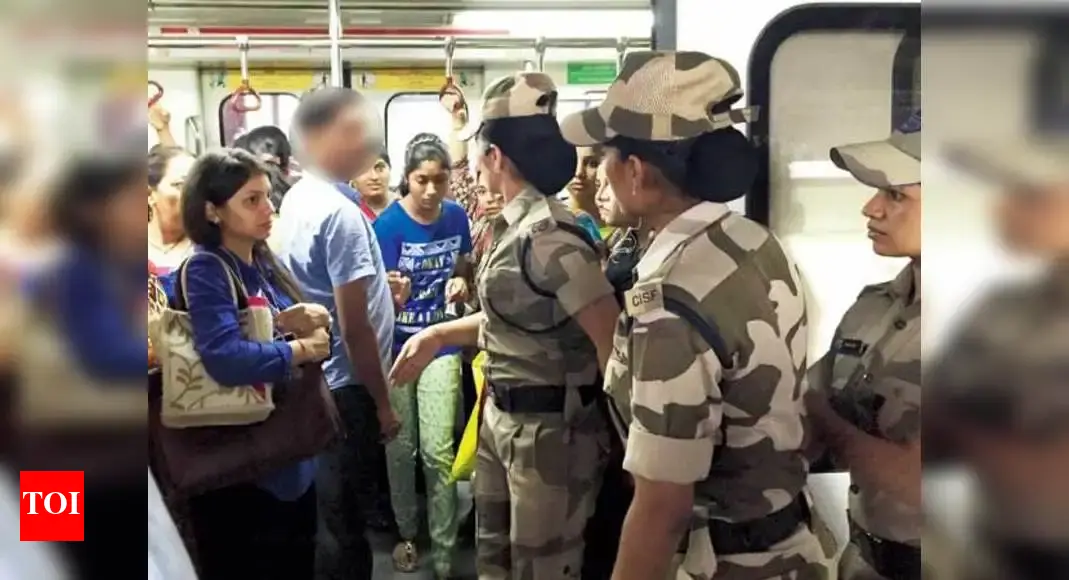
In a recent incident that has captured the attention of netizens and commuters alike, a group of women were seen singing bhajans inside a crowded Delhi Metro coach. The event, which was recorded and shared widely on social media platforms, led to intervention by the Central Industrial Security Force (CISF). The women, upon being reprimanded, apologized by holding their ears—a gesture that has since sparked widespread discussion and debate online.
The Incident Unfolds
On a typical day in the bustling Delhi Metro, passengers were taken by surprise when a group of women began singing devotional songs, or bhajans, inside a packed coach. Dressed in traditional attire and seated on the floor, the women created an impromptu spiritual atmosphere, encouraging fellow passengers to join in. While some commuters appeared amused or indifferent, others expressed discomfort due to the unexpected nature of the performance in a public transport setting.
CISF’s Intervention
The Central Industrial Security Force (CISF), responsible for maintaining security and order within the Delhi Metro premises, was alerted to the situation. Upon arrival, CISF personnel approached the group and informed them that such activities were not permitted within the metro coaches. The women, realizing their mistake, promptly apologized by holding their ears—a traditional Indian gesture signifying remorse.

Social Media Reactions
The video of the incident quickly went viral, eliciting a range of reactions from the public. Some viewers appreciated the spontaneous display of devotion, while others criticized the disruption caused in a public space. Comments ranged from expressions of support for cultural expressions to calls for stricter enforcement of public conduct rules within the metro system.
Delhi Metro’s Code of Conduct
The Delhi Metro Rail Corporation (DMRC) has established clear guidelines for passenger behavior to ensure safety and comfort for all commuters. Activities such as singing, dancing, or any form of performance that may cause inconvenience to others are strictly prohibited. The DMRC emphasizes the importance of adhering to these rules to maintain decorum and prevent disturbances during transit.
Cultural Expressions in Public Spaces
This incident raises broader questions about the place of cultural and religious expressions in shared public spaces. While India is known for its rich tapestry of traditions and communal celebrations, balancing individual expressions with collective comfort remains a delicate task. Public transportation systems, designed for efficient and orderly movement, may not be suitable venues for spontaneous performances, regardless of intent.
The Role of Social Media
The rapid dissemination of the video highlights the power of social media in shaping public discourse. Platforms like Instagram and Twitter serve as amplifiers for such incidents, often leading to viral trends and widespread discussions. While this can bring attention to important societal issues, it also underscores the need for responsible sharing and contextual understanding of events.
Public Space vs. Private Expression: A Fine Line
Public transport, by its very nature, is a shared space. Millions of people use the Delhi Metro every day for commuting to work, schools, colleges, and other commitments. With such high traffic, the environment needs to remain neutral, quiet, and focused on providing safe and efficient travel. While spiritual expression is deeply valued in Indian society, such displays in confined, crowded settings can unintentionally infringe on the rights of others. A key issue raised in this debate is where we draw the line between personal expression and public order.
Some argue that singing bhajans in the metro is harmless and even joyful, while others insist that the rules are necessary to avoid chaos and discomfort. This reflects a wider national conversation around freedom of expression, especially in cultural or religious contexts, versus the need to maintain uniform civic conduct in public infrastructure.
Similar Incidents and Precedents
This is not the first time such an event has taken place in the Delhi Metro. In the past, individuals or groups have attempted to perform music, dance, or even shoot reels inside metro coaches, often attracting disciplinary action or fines. In 2023, a viral video of a young man performing yoga on a moving metro train also sparked similar reactions and prompted an official response from the DMRC and CISF. These incidents highlight an emerging pattern where public transport becomes a stage—often unintentionally—for performances that disrupt the commuting experience.
The DMRC and CISF have maintained a consistent position in such matters: the metro is not a place for such activities, regardless of whether the content is devotional, artistic, or political. Passengers are urged to respect the rules that ensure smooth operations and equal comfort for all.

Final Thoughts
The recent incident involving women singing bhajans in the Delhi Metro serves as both a cultural touchpoint and a civic lesson. While their gesture of apology was graceful and accepted by authorities, it reinforces the importance of respecting shared spaces. The discussion it sparked reflects India’s ongoing negotiation between tradition and modernity, between individual rights and collective order.
As urban life becomes more dynamic and diverse, it is crucial for citizens to engage in such dialogues with empathy and responsibility. While spirituality and devotion have their place in society, so does the need for discipline in public environments. Ultimately, mutual respect—between culture and civility—will help shape the future of India’s evolving metropolitan spaces.
Conclusion
The episode of women singing bhajans in the Delhi Metro serves as a reminder of the diverse ways in which cultural practices intersect with public life. While the intention may have been to share a moment of devotion, the setting and manner of expression led to unintended consequences. As urban spaces continue to evolve, finding respectful and appropriate avenues for cultural expression remains an ongoing conversation.
read more latest news
