
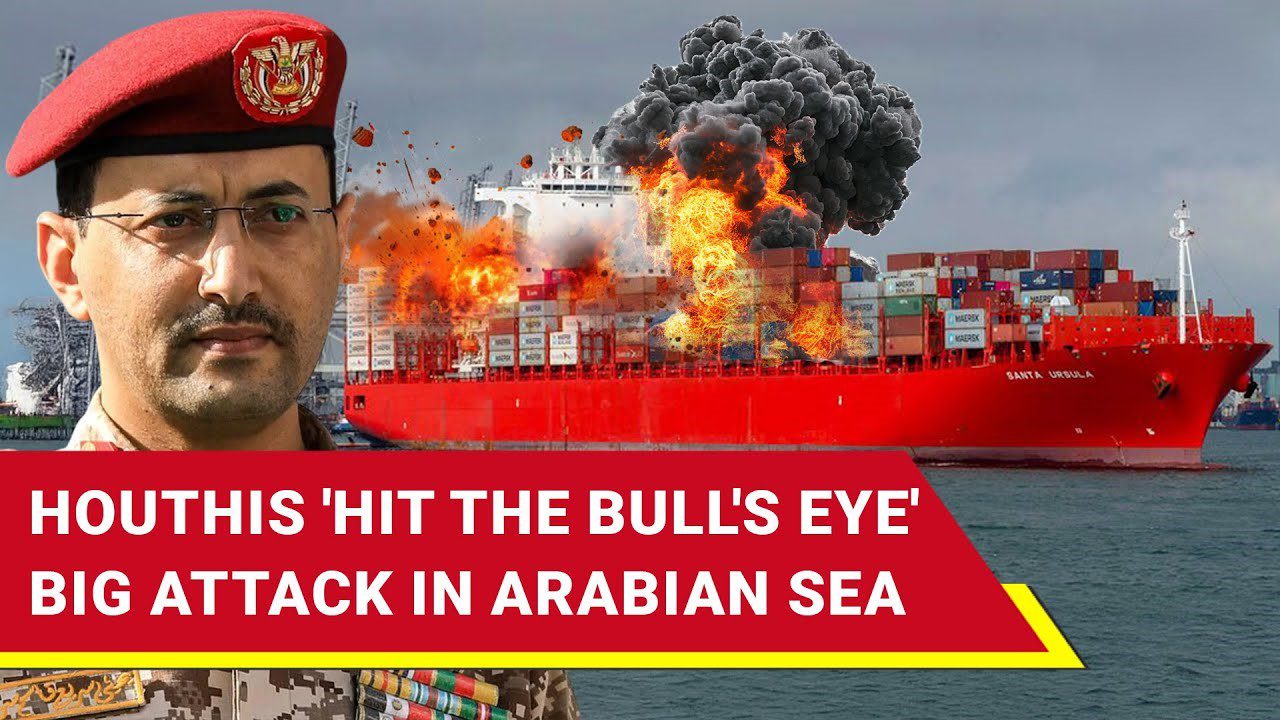
Arabian Sea Houthi Drone Attack in the Arabian Sea: Escalating Tensions in the Region
Arabian Sea In a development that has further heightened tensions in the Middle East, reports indicate that a Houthi drone “directly hit” a ship linked to Israel in the Arabian Sea. This incident comes shortly after reports of heightened drone activities targeting critical infrastructure in the region, including an attempted attack near Tel Aviv Airport. The Houthi rebels, known for their insurgency in Yemen, have increasingly expanded their operational reach, raising concerns about maritime security and regional stability.
This blog explores the background of the Houthi movement, the geopolitical ramifications of such attacks, and their implications for international trade and security in one of the world’s most strategically significant waterways.
The Houthi Movement: A Brief Overview
The Houthi movement, officially known as Ansar Allah, is a political and military group based in Yemen. Originating in the 1990s as a religious revivalist movement, the Houthis gained significant political traction during Yemen’s 2011 Arab Spring uprising.
Roots of the Conflict
- Yemeni Civil War: The Houthis have been engaged in a prolonged civil war against the internationally recognized Yemeni government since 2014.
- Iranian Support: The group is widely believed to receive financial and military backing from Iran, escalating tensions between Iran-aligned entities and U.S.-aligned Gulf states like Saudi Arabia.
Regional Reach
Initially focused on Yemen, the Houthis have extended their reach in recent years, targeting:
- Saudi Arabia: With ballistic missiles and drones aimed at oil infrastructure and civilian areas.
- UAE and Beyond: Launching attacks that threaten international shipping and trade routes.
Details of the Drone Attack
Location and Target
The recent incident occurred in the Arabian Sea, a critical maritime region that links the Gulf of Aden to the Indian Ocean. The ship targeted was reportedly linked to Israel, although details about its ownership and cargo remain sparse.
Drone Warfare
- Advanced Capabilities: The Houthis have increasingly utilized advanced drone technology, capable of traveling significant distances with precision targeting.
- Direct Hit: The reported direct hit on the vessel suggests a significant escalation in the group’s operational capabilities and their willingness to strike high-profile targets.
Geopolitical Ramifications
Heightened Israel-Houthi Tensions
This attack, allegedly involving an Israeli-linked ship, indicates that the Houthis may be broadening their list of adversaries.
- Israel’s Response: Israel, which has previously accused Iran of orchestrating attacks on its interests, is likely to interpret this as an extension of Iran’s influence.
- Regional Implications: The attack could lead to a more assertive Israeli posture in the Red Sea and Arabian Sea regions, potentially involving naval deployments or retaliatory actions.
Impact on Gulf States
- Saudi Arabia and UAE: These Gulf nations already bear the brunt of Houthi attacks and are likely to view this development as a further destabilization of regional security.
- Maritime Security Initiatives: The Gulf Cooperation Council (GCC) may push for enhanced security measures, potentially involving international coalitions.
International Trade Risks
The Arabian Sea is a vital maritime route, with billions of dollars’ worth of goods transported through it annually.
- Insurance Costs: Increased risks could lead to higher insurance premiums for ships operating in the region.
- Global Supply Chains: Disruptions in this region could ripple across global trade networks, particularly for oil and gas shipments.
Houthi Strategy: Expanding Influence Through Asymmetric Warfare
The Houthis’ shift to targeting international interests aligns with their broader strategy:
- Leverage: By attacking high-profile targets, the group seeks to gain leverage in negotiations related to the Yemeni conflict.
- Symbolic Strikes: Such attacks send a message to adversaries about their ability to disrupt global interests.
Iran’s Role
The attack underscores Iran’s influence in the region, with the Houthis acting as a proxy to challenge Western and Gulf-aligned forces.
Global Responses and Countermeasures
United States
The U.S. Navy has a significant presence in the Arabian Sea and may increase patrols to ensure freedom of navigation.
- Sanctions: Washington could impose additional sanctions on the Houthis and their backers.
- Alliances: Strengthening ties with regional allies, including Israel, Saudi Arabia, and the UAE, to counter Houthi aggression.
United Nations
The UN has consistently advocated for a ceasefire in Yemen but may now push for broader maritime security initiatives.
Maritime Coalitions
- Combined Maritime Forces (CMF): This multinational naval partnership may intensify operations in the Arabian Sea to deter attacks.
- Private Sector Initiatives: Shipping companies may also invest in defensive measures, such as onboard counter-drone systems.
Economic and Strategic Implications
Energy Markets
The Arabian Sea is a key conduit for oil exports from the Gulf to global markets. Any sustained disruptions could:
- Spike Prices: Cause fluctuations in global oil prices.
- Supply Chain Diversification: Encourage countries to explore alternative energy routes or sources.
Shipping Industry
- Rerouting Costs: Ships may choose longer but safer routes, increasing operational costs.
- Advanced Security: The industry may invest heavily in technologies to detect and neutralize threats.
Future Outlook
The attack on an Israeli-linked ship marks a dangerous escalation in the Houthis’ asymmetric warfare strategy. As the group continues to expand its operational reach, the region faces a precarious future. Enhanced international collaboration and robust countermeasures will be essential to mitigate the risks posed by such attacks.
In the broader context, resolving the Yemeni conflict remains critical. Without a sustainable political solution, the Houthis—and by extension, their patrons—will continue to exploit instability to further their strategic objectives.
Read More latest News

