
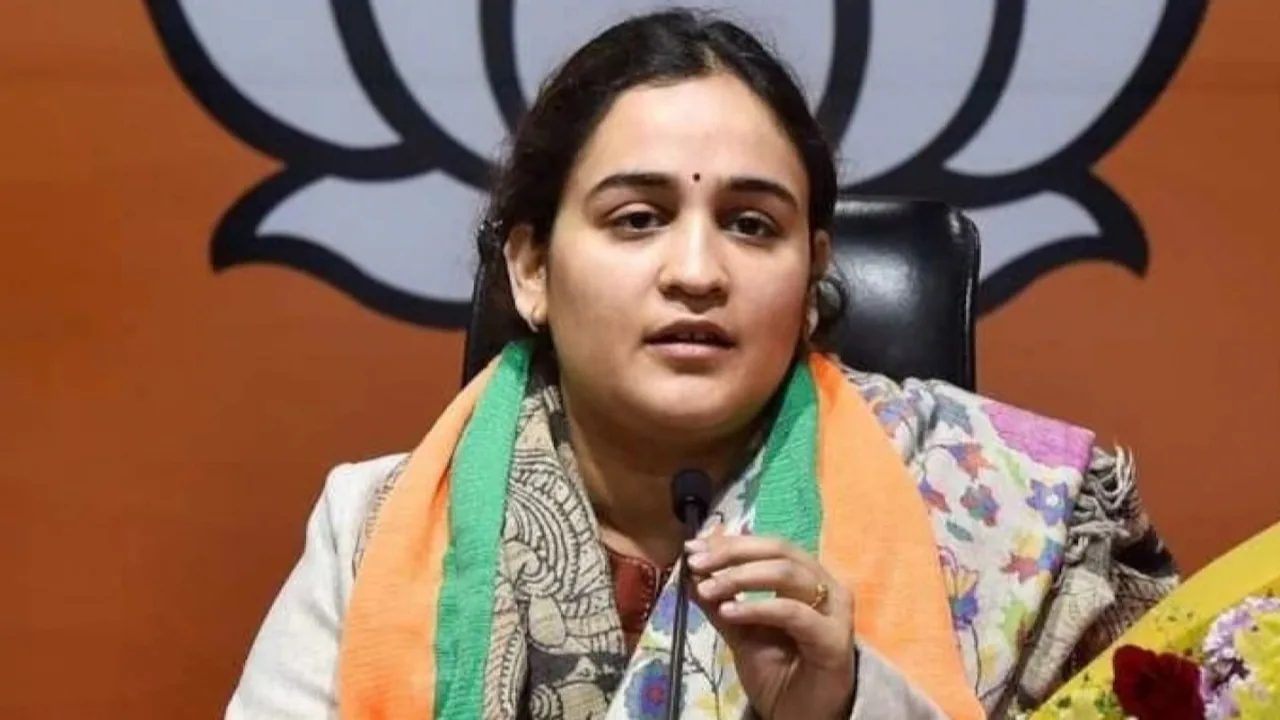
Aparna Bisht Yadav Slams Mehbooba Mufti Over Afzal Guru Remark: A New Storm in Indian Politics
Aparna Bisht Yadav, Indian politics has once again entered a heated zone after PDP chief Mehbooba Mufti made a controversial comment regarding Afzal Guru. Her statement instantly drew strong reactions across the country, but the most powerful and emotionally charged response came from BJP leader Aparna Bisht Yadav. Her words — “We will enter the house from which Afzal emerges and kill him” — triggered a massive national debate.
This blog provides a deep, analytical, 3000-word breakdown of the controversy, the political background, and how Aparna Bisht-Yadav has once again positioned herself as a fierce voice in the national discourse.
1. Background: Why Afzal Guru Still Sparks Political Storms
The Parliament attack of 2001 remains one of India’s darkest memories. Afzal Guru, convicted for his involvement, was executed in 2013. However, his name continues to divide political narratives even today.
In Kashmir, certain political groups feel Afzal Guru’s trial lacked fairness. In the rest of India, he is seen as the mastermind behind an attack on democracy. Because of these two contrasting perceptions, any political leader referring to Afzal Guru enters a sensitive battlefield.
That is exactly what happened when Mehbooba Mufti commented on the issue, prompting Aparna Bisht Yadav to respond with uncompromising aggression.
2. Mehbooba Mufti’s Statement: What Sparked the Fire?
PDP chief Mehbooba Mufti made a remark suggesting that a section of Kashmiris still feels Afzal Guru did not receive a fair trial. She highlighted the disconnect between Delhi’s decisions and Kashmiri sentiments.
This was not the first time she raised the issue; however, the political temperature is very different today. With national elections inching closer and Kashmir politics undergoing major changes post-Article 370 abrogation, her statement immediately became explosive.
Within hours, BJP leaders reacted—yet nobody’s statement went as viral as the one from Aparna Bisht Yadav .
3. Aparna Bisht Yadav’s Controversial Reaction
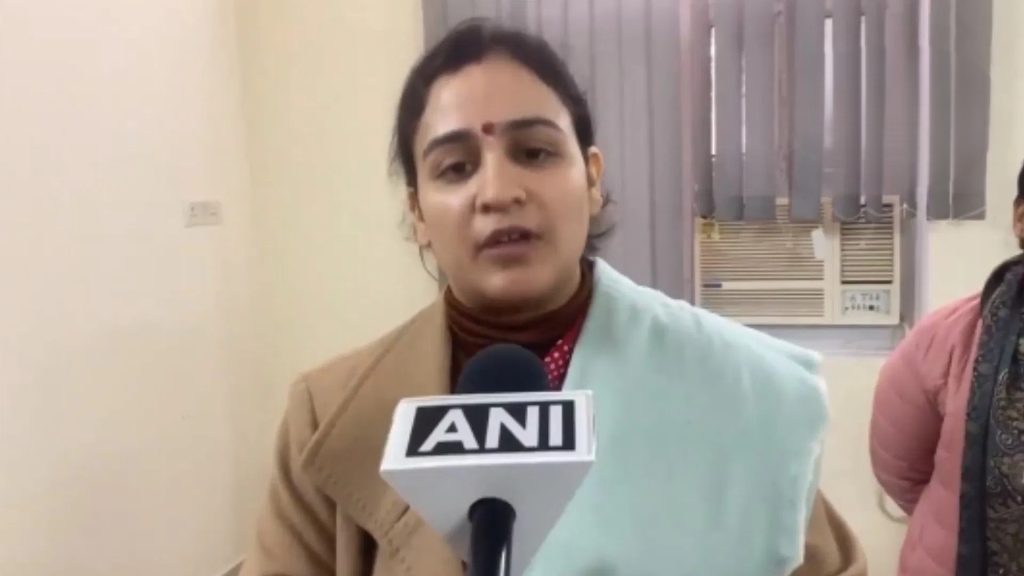
The reaction from Aparna Bisht Yadav captured headlines across major national news platforms. Her strong words were:
“We will enter the house from which Afzal emerges and kill him.”
This one sentence carried:
- a political message
- an ideological position
- an emotional punch
For many BJP supporters, Aparna Bisht Yadav voiced exactly what they believe: zero tolerance for any sympathy towards individuals involved in anti-India activities.
For her critics, Aparna Bisht Yadav crossed the line with a comment too violent for democratic discourse.
But this is not the first time Aparna Bisht Yadav has spoken with such clarity and force. She has built an image of an outspoken leader who does not dilute her nationalism under pressure.
4. Why Aparna Bisht Yadav’s Statement Resonated Nationally
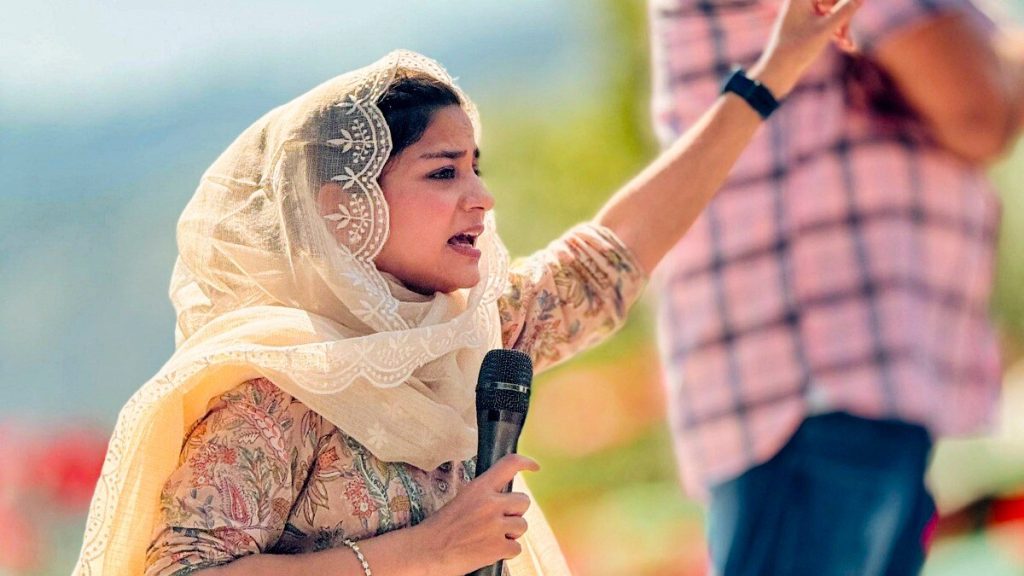
There are several reasons why the comment from Aparna Bisht Yadav dominated discussions:
a. BJP’s Nationalist Identity
For BJP supporters, nationalism is not just a political ideology—it is an emotion. Any comment that questions the legacy of Afzal Guru is seen as a threat to India’s dignity.
Thus, Aparna Bisht Yadav became a symbol of uncompromising nationalism.
b. Kashmir’s Political Sensitivity
Whenever leaders from Kashmir question old terror-related cases, mainland India reacts strongly.
Aparna Bisht Yadav tapped into that emotional reservoir.
c. Election Season Atmosphere
As elections approach, political statements become sharper. Politicians aim to appeal to their base.
The remark from Aparna Bisht Yadav energised BJP’s core supporters.
5. Mehbooba Mufti vs Aparna Bisht Yadav: A Clash of Ideologies
This controversy is not just about a single statement. It is part of a much larger ideological battle.
Mehbooba Mufti’s Position
- Advocates for Kashmiri identity
- Emphasises alleged injustices
- Challenges the government’s narrative
Aparna Bisht Yadav’s Position
- National security first
- Zero sympathy for convicted terrorists
- Hardline stance on separatism
This ideological contrast gives both leaders political relevance.
Aparna Bisht Yadav, through her bold remarks, positions herself as the exact opposite of PDP’s political stance.
6. Media Explodes: How The Controversy Spread
Within minutes of her statement, videos of Aparna Bisht Yadav began circulating across social media. News anchors conducted panel debates titled:
- “Is Mehbooba Mufti provoking separatism?”
- “Is Aparna Bisht Yadav’s statement too extreme?”
- “Afzal Guru politics returns: Who benefits?”
Television debates turned fiery, panelists clashed, and hashtags trended.
Journalists noted that Aparna Bisht Yadav did what many BJP leaders refrain from saying publicly.
7. Social Media Reaction
On X/Twitter, Instagram, and Facebook, reactions were polarizing.
Supporters applauded:
- “Finally someone spoke the truth.”
- “Aparna deserves credit for courage.”
- “Nationalism needs strong voices like Aparna Bisht Yadav”
Critics countered:
- “This is not how democracy works.”
- “Violent rhetoric will hurt Kashmir further.”
- “Politicians must be responsible.”
The polarization helped the issue stay viral for more than 24 hours.
8. Political Implications Across India
The statement from Aparna Bisht Yadav isn’t just a Kashmir issue—it affects national politics:
a. BJP Strengthens Hardline Image
Her statement aligns with the BJP’s toughest stand against terrorism.
b. Opposition Gains a Talking Point
Opposition parties may argue that BJP leaders promote divisive rhetoric.
c. Kashmir Politics Heats Up
Mehbooba Mufti may gain support in sections of the Valley who feel silenced.
d. National Discourse Shifts
Afzal Guru, Article 370, terrorism—these issues return to the forefront.
9. Kashmir’s Political Landscape and the Afzal Symbolism
Afzal Guru is not just a name — he is a symbol. Kashmir sees him through a lens shaped by decades of conflict, while the rest of India sees him through the Parliament attack trauma.
Thus, when Mehbooba spoke, she was addressing:
- emotions of alienation
- historical grievances
- political frustrations
When Aparna Bisht Yadav countered, she was speaking to:
- national security sentiments
- patriotism
- justice for the Parliament attack
This duality is the true root of the controversy.
10. Legal Questions Around Public Statements
Many legal experts discussed whether Aparna Bisht Yadav violated any law with her violent-sounding remark.
Is it illegal to express aggressive political opinions?
Not necessarily. Political speeches often include exaggeration, metaphor, or hyperbole.
Did Mehbooba Mufti violate any law?
No. She did not glorify violence; she only expressed a political view.
Thus, both statements fall within constitutional rights — but they carry political risks.
11. Aparna Bisht Yadav’s Political Rise
The controversy unexpectedly placed Aparna Bisht Yadav in the national spotlight. Over the past few years, she has emerged as a strong BJP figure known for:
- clarity
- confidence
- boldness
- nationalistic tone
This incident amplifies her relevance. Analysts believe Aparna Bisht Yadav may now become a more central figure in the party’s media strategy, especially on sensitive issues like Kashmir and national security.
12. What This Means for the Future of Kashmir Politics
The Kashmir valley is extremely sensitive to mainland political reactions.
Mehbooba’s comments will generate support among sections of Kashmiri youth, while the strong response from Aparna Bisht Yadav will deepen the ideological divide between Kashmir-centric politics and national politics.
This divide may shape:
- voter behavior
- campaign strategies
- regional alignments
- narratives on autonomy and identity
13. National Security Politics Returns to Center Stage
India’s political climate often shifts back to national security. The statement from Aparna Bisht Yadav acts as a catalyst, pushing parties to define their position on:
- terrorism
- separatism
- Kashmir policies
- judicial accountability
In this context, the issue becomes larger than Mehbooba and Aparna — it becomes a question of India’s collective memory and national identity.
14. Public Opinion and Ground-Level Impact
While TV debates and social media dominate the upper layers, the real impact is felt among the masses.
Many ordinary citizens resonate with Aparna Bisht Yadav, believing her words reflect the emotional trauma India faced during the Parliament attack.
Others believe her tone could harm reconciliation efforts in Kashmir.
This split in public opinion shows how deeply the issue is rooted in India’s psyche.
15. Conclusion: A Controversy That Will Not Fade Soon
Controversies involving Kashmir rarely fade quickly, and when they involve emotionally loaded symbols like Afzal Guru, they become permanent points in the political narrative.
Mehbooba Mufti revived an old debate.
Aparna Bisht Yadav responded with fierce conviction.
India reacted passionately.
But the story does not end here.
In the coming weeks, politicians, media houses, and voters will revisit this issue repeatedly — especially as elections approach.
Read More latest news

