
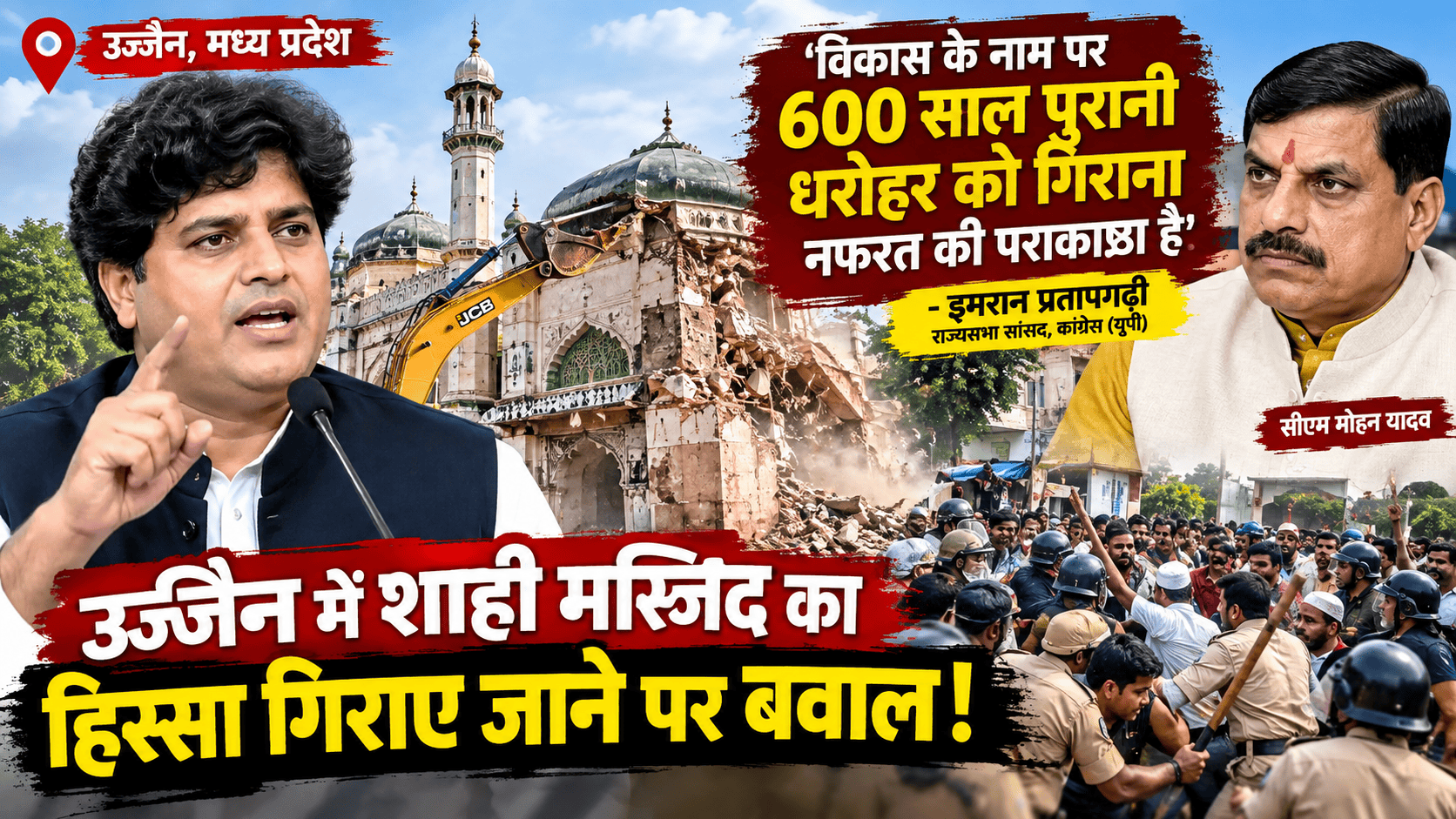
An uproar erupted in Ujjain over Shahi Masjid demolition and road widening
An uproar erupted in Ujjain after the proposed removal of a portion of the historic Shahi Masjid in Madhya Pradesh’s Ujjain became the centre of a major dispute. The issue is connected with a road-widening project being undertaken ahead of Simhastha 2028. Tension increased when people gathered around the mosque to oppose the proposed action, following which a heavy police presence was deployed in the area. Reports on September 28 said clashes took place between police and a crowd, with allegations of stone-pelting and the use of tear gas by police.
Road widening project becomes the centre of controversy
An uproar erupted in Ujjain after the municipal administration moved ahead with plans to widen an important road. According to the Madhya Pradesh High Court proceedings, the Ujjain Municipal Corporation proposed widening the road to 15 metres. The affected stretch is connected with important routes in the old city and is used by large numbers of devotees during religious events.
The administration has linked the road-widening work with preparations for Simhastha 2028. The authorities have argued that improving road capacity is necessary for traffic management, particularly during major religious gatherings when Ujjain receives exceptionally large crowds. The High Court, while considering the petitions filed against the proposed demolition, accepted the administration’s argument that the road-widening project served a larger public purpose.
At the same time, the mosque’s representatives have argued that the religious structure should be protected and that alternative arrangements should be considered for widening the road. Court records show that the proposed action affects a portion of the prayer hall, a 120-foot-high minaret and the Mazhar Chouk Shahi.
Why An uproar erupted in Ujjain
An uproar erupted in Ujjain because the dispute is not simply about construction activity. For local residents and members of the mosque committee, the issue involves a religious and historically significant structure. Mosque representatives have described the site as an ancient structure that has existed for generations.
According to reports, the mosque committee has claimed that the structure dates back around 600 years. Some reports place its construction in 1390, although the precise historical dating has been presented as a claim by mosque representatives rather than an independently established fact in the court order.
The administration, meanwhile, has maintained that the action is part of a wider road-development programme rather than an action directed specifically at a religious community. The High Court order noted that authorities had already taken action involving several religious structures as part of road-widening work in Ujjain. The court therefore did not find that the mosque was being singled out in a manner that violated the petitioners’ constitutional rights.
Police deployment and rising tension
An uproar erupted in Ujjain as opposition to the proposed removal intensified. On Sunday, September 27, large numbers of people gathered near the Shahi Masjid. Police, RAF and STF personnel were deployed, and a flag march was conducted in the area amid concerns about law and order.
The situation became more tense when municipal officials attempted to proceed with the removal of the portion identified for the road project. Reports on September 28 said that clashes occurred between police and members of the crowd. Police used tear gas after stone-pelting was reported during the confrontation.

The administration has also attempted to maintain dialogue with mosque representatives. A report published on September 28 said that officials were trying to persuade members of the mosque committee to cooperate while temporarily holding back from further demolition during the court proceedings.
Imran Pratapgarhi targets the government
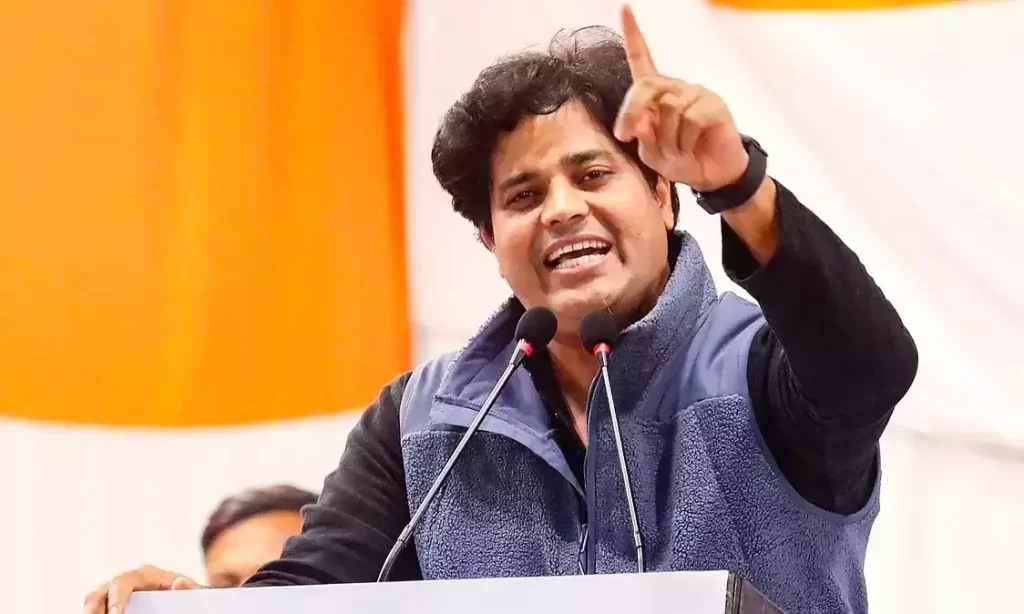
An uproar erupted in Ujjain and the matter soon moved from the local administration to the political arena. Congress Rajya Sabha MP Imran Pratapgarhi criticised the proposed removal and questioned the approach of the Madhya Pradesh government led by Chief Minister Mohan Yadav.
According to reports quoting Pratapgarhi, he argued that greater sensitivity should be shown while dealing with the historic mosque. He described the structure as around 600 years old and said that removing such a heritage site in the name of road widening and development amounted, in his words, to the “height of hatred.” He also questioned the administration’s approach while the legal dispute was being considered.
Pratapgarhi also reportedly appealed to the administration to consider acquiring land from the other side of the road if necessary rather than removing a portion of the mosque. His remarks have added another layer to an already sensitive dispute involving development, heritage, religious concerns and law and order.
These are the Congress MP’s political views on the issue and should be distinguished from the position of the state administration and the findings of the court.
What the High Court said
An uproar erupted in Ujjain despite the fact that the legal battle over the mosque’s partial removal has already gone through an important stage. On September 9, the Madhya Pradesh High Court dismissed petitions challenging the Ujjain Municipal Corporation’s decision to remove part of the structure for road widening.
The court considered arguments from both sides. The mosque’s representatives raised constitutional protections under Articles 14, 25 and 26, while the municipal authorities argued that the road project was required for public convenience and the expected movement of devotees during Simhastha.
The court observed that the proposed 15-metre road was part of a broader development plan and concluded that the action could not, on the material before it, be characterised as unfair or discriminatory.
However, the legal dispute did not end there. Fresh proceedings and appeals have continued, adding uncertainty to the situation on the ground. A report on September 28 said that a petition by mosque authorities was scheduled before the Madhya Pradesh High Court.
Development versus heritage debate
An uproar erupted in Ujjain because the controversy highlights a difficult question faced by rapidly developing heritage and pilgrimage cities: how should infrastructure requirements be balanced with the preservation of historic and religious structures?
The administration’s argument centres on road capacity, public safety and preparations for Simhastha 2028. Ujjain is expected to receive enormous numbers of visitors during the event, making traffic management a major planning concern. The municipal authorities have therefore been carrying out road-widening and other infrastructure works across the city.
On the other hand, opponents argue that historic structures should receive special consideration and that alternative engineering or land-acquisition solutions should be examined before any part of a religious heritage site is removed.
The controversy is therefore likely to remain a significant issue in Ujjain as the city continues preparations for Simhastha.
Political reactions continue
An uproar erupted in Ujjain at a time when development projects linked to Simhastha 2028 are receiving considerable attention. Chief Minister Mohan Yadav has personally inspected road-widening works in Ujjain and has emphasised timely completion of development projects connected with the city’s preparations.
The opposition, however, has used the Shahi Masjid controversy to question the government’s handling of heritage and religious structures. Imran Pratapgarhi’s comments have brought the issue into national political discussion, while the administration’s position remains focused on infrastructure and public movement.
For residents, the immediate concern is maintaining peace while the legal and administrative processes continue. The deployment of large numbers of police personnel reflects the sensitivity of the situation.
What happens next?
An uproar erupted in Ujjain with the latest confrontation, but the final direction of the dispute will depend on the continuing legal process and decisions by the administration. The mosque committee has continued to seek legal relief, while civic authorities maintain that the road-widening project is necessary for public infrastructure and Simhastha preparations.
The episode has brought together several competing concerns: urban development, traffic management, religious sentiment, heritage preservation, constitutional rights and public order. The statements of political leaders have further intensified the debate.
For now, the most important issue is preventing further confrontation and allowing the legal process to proceed. Whatever the eventual outcome, the Ujjain Shahi Masjid controversy demonstrates the sensitivity involved when major infrastructure projects intersect with historic religious structures.
The dispute is therefore likely to remain in focus as Ujjain prepares for Simhastha 2028 and as the courts consider the remaining legal challenges. An uproar erupted in Ujjain has become a major talking point not only in Madhya Pradesh but also in the wider political debate over development and heritage.
An uproar erupted in Ujjain after the Shahi Masjid issue turned into a confrontation between civic authorities, protesters and police. An uproar erupted in Ujjain as questions over road widening, heritage and religious sentiments came together. An uproar erupted in Ujjain has now become closely linked with the city’s preparations for Simhastha 2028.
Read more latest news

