
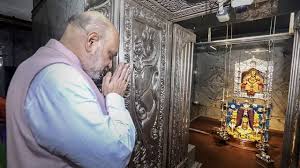
In the realm of Indian politics, few events garner as much attention as the visits made by prominent political figures to places of worship. These visits often transcend religious significance and become a point of reflection for political leaders as they demonstrate solidarity with the people, respect for cultural traditions, and their commitment to the spiritual heritage of the nation. One such visit that captured the public’s imagination was when Amit Shah, the Union Home Minister of India and one of the most influential leaders in the Bharatiya Janata Party (BJP), paid a visit to the Maa Danteshwari Temple in Dantewada, Chhattisgarh, to offer prayers.
The temple, dedicated to Maa Danteshwari, the goddess of power, is one of the oldest and most revered religious sites in the state of Chhattisgarh. The visit by Amit Shah, one of the central figures in Indian politics, was both a spiritual and political milestone, underscoring his connection to the people of the region and the BJP’s emphasis on cultural and religious identity in its political narrative. This blog will explore the significance of this visit in the context of Maa Danteshwari Temple, its historical and cultural importance, and the broader political implications of Shah’s visit to the temple.
Maa Danteshwari Temple: A Cultural and Spiritual Landmark
Before delving into Amit Shah’s visit, it is essential to understand the importance of Maa Danteshwari Temple itself, as the place of worship and the goddess it honors play a pivotal role in the cultural and spiritual life of the people of Chhattisgarh, particularly in the tribal areas of Dantewada.
The History of Maa Danteshwari
The Maa Danteshwari Temple is dedicated to Maa Danteshwari, a form of Durga, who is believed to protect her devotees and grant them strength and power. According to local legends, Maa Danteshwari is the family goddess of the Dandami Munda tribe, and it is said that the goddess herself chose the location of the temple. The name “Danteshwari” is derived from the word “Dante,” meaning tooth, and “Shwari,” meaning goddess. The name signifies that the goddess is said to have possessed a tooth, which was believed to have immense power.
Historically, the temple has been an important site for both spiritual devotion and the community’s identity. The region of Dantewada is rich in history, and the temple was established centuries ago. It continues to attract thousands of devotees every year, especially during the festivals of Navratri and Dussehra, when the temple becomes a hub of religious activities and celebrations. The idol of Maa Danteshwari is adorned with immense reverence, and the rituals followed at the temple are deeply rooted in the local traditions of Chhattisgarh.
The Importance of the Temple to the Local Tribes
The significance of the temple extends far beyond its religious and historical importance. For the indigenous tribal communities in Dantewada, Maa Danteshwari is not just a deity but a symbol of their resilience, courage, and identity. The temple serves as a source of spiritual strength, particularly for the Gond, Abhuj Maria, and other tribal groups, who revere the goddess as a protector.
In a region that has faced challenges such as insurgency and socio-political instability, the temple has stood as a symbol of hope, faith, and continuity. Devotees from remote villages travel long distances to visit the temple, seeking blessings for their families, communities, and well-being.
The Role of the Temple in Chhattisgarh’s Identity
The temple also plays a crucial role in defining the cultural and religious identity of Chhattisgarh. The state, which was formed in 2000, has a rich history of tribal culture, and the worship of Maa Danteshwari is deeply intertwined with its folklore and tradition. The state’s vibrant culture is expressed through various forms of dance, music, and rituals, which come alive during religious festivals, especially in Dantewada, where the temple is located.
As Chhattisgarh continues to develop both economically and politically, the temple remains a powerful symbol of the state’s rich heritage, bridging the gap between tradition and modernity. It is also a place where locals find solace, especially in times of distress or conflict, providing spiritual comfort to those who live in challenging conditions.
Amit Shah’s Visit: Political and Religious Significance
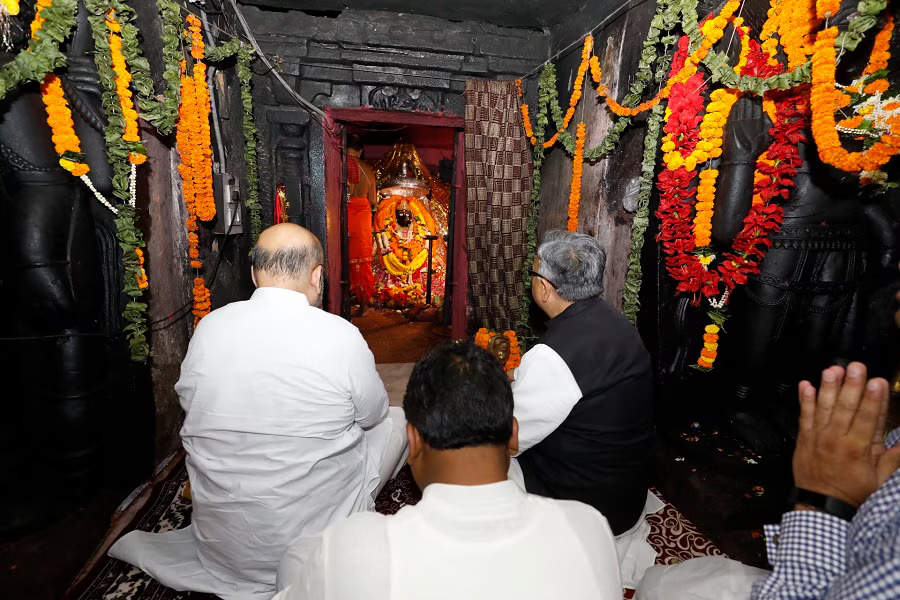
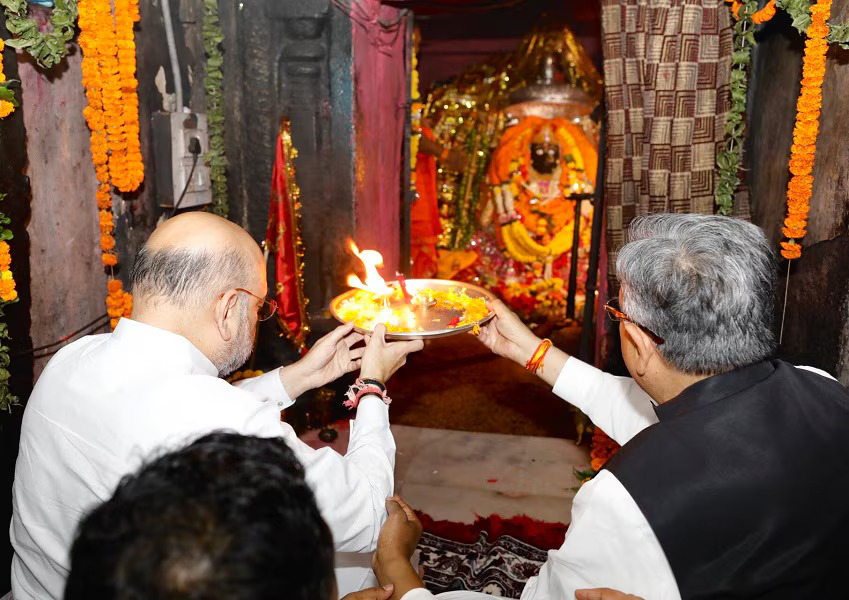
On his visit to Maa Danteshwari Temple, Amit Shah paid his respects, offering prayers to the goddess, and symbolically reinforcing his connection to the people of Chhattisgarh. However, the visit went beyond just a religious gesture; it carried deep political implications that cannot be ignored.
Amit Shah and His Engagement with Tribal Communities
Amit Shah’s visit to Dantewada is reflective of the growing political engagement of the BJP with India’s tribal communities. Chhattisgarh, a state rich in natural resources, has a significant tribal population, and their political and social concerns are often key to shaping the state’s political dynamics.
The BJP has been keen on strengthening its political base among the tribal communities, and the visit to Maa Danteshwari Temple was a direct message to the tribal people that their concerns were being acknowledged by the central government. Shah’s visit can be seen as an attempt to solidify the BJP’s position in a state that has traditionally been a stronghold of Congress. The BJP, under Prime Minister Narendra Modi and Amit Shah, has increasingly emphasized development, security, and cultural identity, seeking to resonate with the rural and tribal electorate.
Religious Outreach and Symbolism
In a country like India, where religion plays a significant role in politics, political leaders often visit religious shrines to convey a message of solidarity and respect for the traditions of the people. For Amit Shah, visiting Maa Danteshwari Temple was a demonstration of his recognition of the spiritual importance of the temple for the people of Chhattisgarh, particularly in the tribal regions.
His visit was timed with an ongoing BJP campaign to reach out to the masses, promote cultural nationalism, and align the party with the religious and cultural symbols of India’s diverse communities. By offering prayers at the temple, Amit Shah made a symbolic gesture of solidarity with the locals and reinforced the party’s connection to the traditional values that many Indians hold dear.
The temple itself, being one of the holiest places in the region, offered Shah a platform to connect with both the spiritual and the political aspects of his visit. The sight of such a high-profile leader engaging with the religious traditions of the area provided a clear message to the locals that the central government was committed to understanding and addressing their concerns.
The Political Context of Chhattisgarh
Chhattisgarh, once a part of Madhya Pradesh, became a separate state in 2000. Over the years, the state has seen political shifts, with the Indian National Congress traditionally holding power, particularly in the tribal areas. In recent years, however, the BJP has made significant inroads into the state, especially after the rise of Raman Singh, the BJP’s leader in the state who served as Chief Minister for three consecutive terms. The BJP’s focus on development, particularly in the areas of infrastructure, healthcare, and education, has resonated with a segment of the electorate.
However, the insurgency problem, particularly in the tribal regions of Dantewada, has posed a significant challenge for the state government. The Maoist insurgency has led to an ongoing conflict in the region, and it is one of the most sensitive and complex issues in Chhattisgarh’s political landscape. In this context, Amit Shah’s visit to the temple can also be seen as a gesture aimed at reinforcing the central government’s commitment to peace and security in the region.
By visiting a significant religious site like the Maa Danteshwari Temple, Shah sent a message of unity and security to the people, emphasizing that the government is dedicated to restoring peace in the region. This, of course, also aligns with the BJP’s broader national agenda of enhancing India’s security, promoting development, and empowering communities through cultural and economic initiatives.
Celebrating Chhattisgarh’s Tribal Identity
Chhattisgarh is home to some of India’s most unique and ancient tribal communities. The BJP, under Shah’s leadership, has been increasingly engaging with these communities, seeking to promote their development while respecting their cultural and spiritual traditions. This outreach strategy is evident in the political messaging and the BJP’s focus on improving the welfare of tribal populations, particularly in regions like Dantewada.
The Maa Danteshwari Temple, as a central part of the region’s identity, was a perfect symbol for Shah to tap into this narrative. By visiting the temple, he not only respected the spiritual heritage of the region but also reinforced the BJP’s commitment to preserving and promoting the unique identity of Chhattisgarh’s tribal people.
Amit Shah’s Interaction with Local Leaders and Tribespeople
During his visit, Amit Shah also met with local leaders and prominent figures from Chhattisgarh’s tribal communities, discussing matters of governance, development, and security. These interactions were crucial, as they allowed Shah to understand the issues faced by the people of Dantewada at a grassroots level. Whether it was infrastructure development, healthcare, or employment, these discussions provided the BJP with a direct insight into the aspirations of the people.
Such interactions are essential for any political leader, especially in a state like Chhattisgarh, where local concerns play a pivotal role in shaping the political narrative. Amit Shah’s ability to connect with the tribal communities at this level demonstrated his understanding of the challenges faced by these groups and reaffirmed the BJP’s commitment to addressing them.
Conclusion: A Gesture of Faith and Politics
Amit Shah’s visit to the Maa Danteshwari Temple in Dantewada, Chhattisgarh, was an event that blended both faith and politics, leaving a lasting impression on the people of the region. His offering of prayers at this revered shrine was not just a personal gesture of respect for the goddess but also a political move that reinforced the BJP’s commitment to the tribal communities of Chhattisgarh.
The significance of this visit cannot be underestimated. It showcased Shah’s political outreach to a region that has witnessed both cultural and political transformations in recent years. The visit also served as a reminder that in
India, politics is intricately intertwined with culture, faith, and community identity. By participating in this important religious ritual, Amit Shah demonstrated his respect for the traditions and spiritual practices that define Chhattisgarh’s tribal culture, while simultaneously advancing the BJP’s political narrative of unity, development, and cultural pride.
In the days and months following this visit, it will be interesting to observe how this gesture impacts the political landscape of Chhattisgarh and whether it leads to greater political support for the BJP in the state, particularly among the tribal communities. The Maa Danteshwari Temple, in all its spiritual grandeur, has once again proven itself to be a place where faith and politics intersect, shaping the future of not just individuals but entire communities and regions.
read more latest news

