
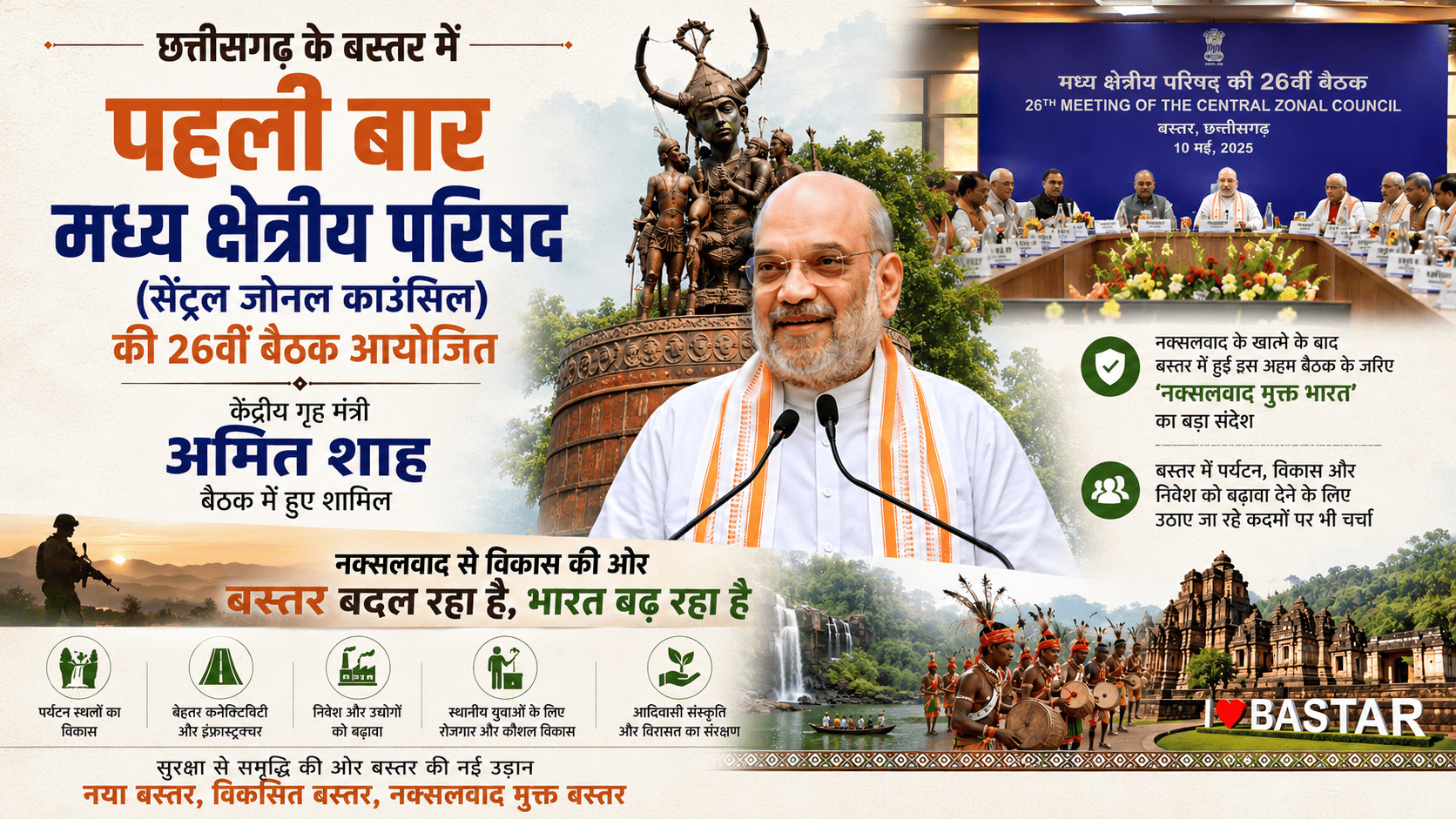
Amit Shah Join Bastar Meeting: A Historic Step Towards a Naxal-Free India
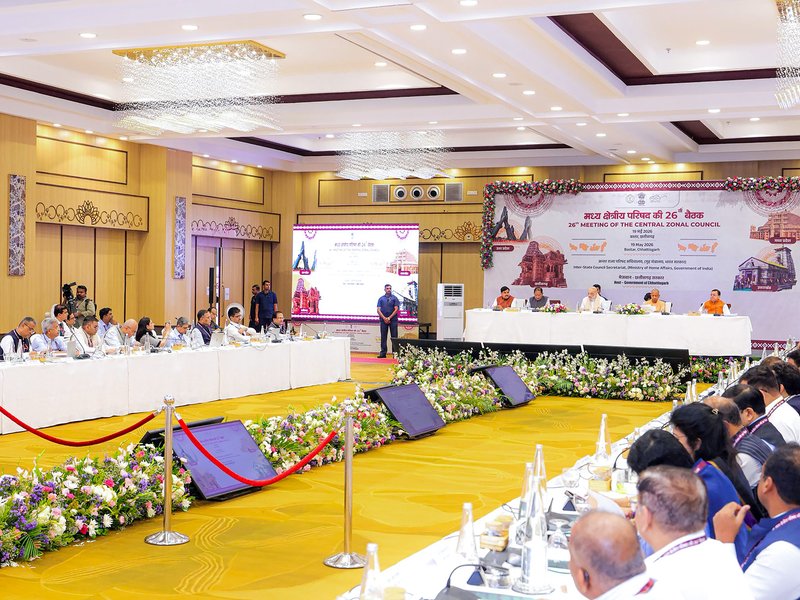
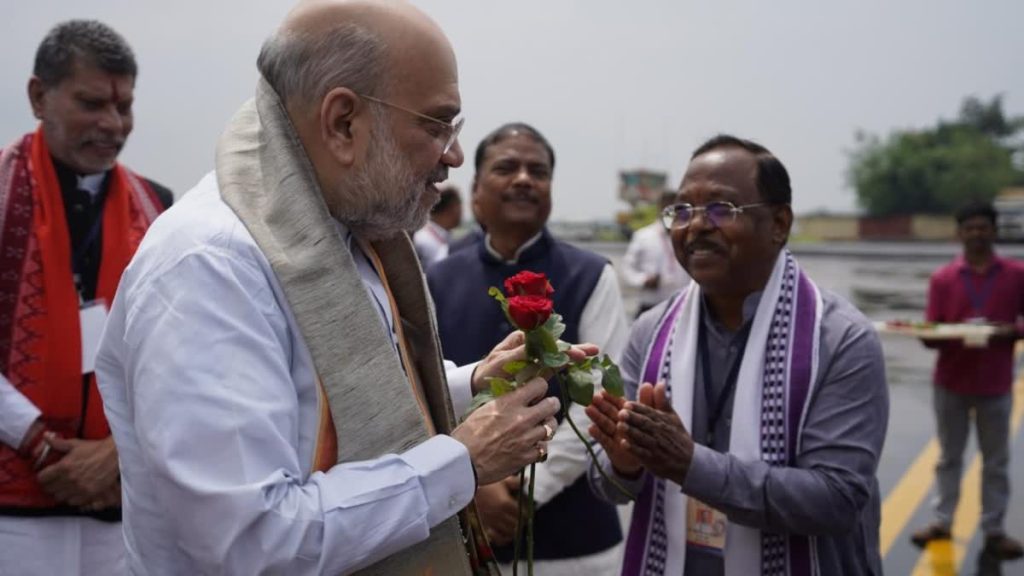
The historic event “Amit Shah join bastar meeting” has become a major milestone in India’s internal security and regional development journey. For the first time ever, the 26th meeting of the Central Zonal Council was organized in Bastar, Chhattisgarh — a region once known for Naxal violence and instability. The presence of Union Home Minister Amit Shah in this meeting sent a strong and symbolic message that Bastar is now moving toward peace, development, tourism, and investment.
The phrase Amit Shah join bastar meeting has gained nationwide attention because it reflects the transformation of Bastar from a conflict-hit area to a region ready for growth and prosperity. Leaders from different states, officials, and policymakers gathered in Bastar to discuss development strategies, security improvements, and economic opportunities in central India.
This meeting was not just a routine administrative event; it was a declaration that India is progressing toward the dream of a “Naxal-free India.” During the discussions, several important issues related to infrastructure, tourism, employment, tribal welfare, education, and investment were highlighted.
Historical Importance of the Bastar Meeting
The event where Amit Shah join bastar meeting holds deep historical significance because Bastar has long been considered one of the most affected regions by Naxal activities. For decades, the region faced violence, fear, underdevelopment, and lack of connectivity. Holding such a high-level government meeting in Bastar indicates a major improvement in security conditions.
The Central Zonal Council meeting traditionally takes place in safer urban administrative centers, but organizing it in Bastar symbolizes confidence in the region’s changing future. It also showcases the government’s commitment to integrating tribal and remote areas into mainstream development.
When Amit Shah join bastar meeting, it became clear that the central government wants to directly engage with local realities and encourage investment and governance reforms in Chhattisgarh and neighboring states.
What is the Central Zonal Council?
The Central Zonal Council is an important platform for coordination among states and the central government. It focuses on interstate cooperation, security, economic development, infrastructure, and governance-related matters.
The 26th meeting included participation from states such as:
- Chhattisgarh
- Madhya Pradesh
- Uttar Pradesh
- Uttarakhand
Officials discussed multiple policy matters, including:
- Law and order
- Border security
- Transport connectivity
- Education initiatives
- Tribal welfare programs
- Economic investments
- Tourism promotion
The fact that Amit Shah join bastar meeting in a region once dominated by insurgency gave the event extraordinary political and symbolic value.
Amit Shah Message on Naxalism
During the meeting, Amit Shah strongly emphasized the government’s commitment to eliminating Naxalism from India. He stated that development and peace must reach every tribal and remote region of the country.
The statement made after Amit Shah join bastar meeting reflected confidence that Naxalism is gradually losing its influence in Bastar and surrounding areas. According to the government, improved security operations, infrastructure projects, and welfare schemes have significantly weakened extremist networks.
The Home Minister highlighted that roads, schools, healthcare centers, and employment opportunities are more powerful tools than violence in transforming society.
The slogan of a “Naxal-free India” became one of the central themes after Amit Shah join bastar meeting.
Transformation of Bastar
Bastar is one of the most culturally rich tribal regions in India. Despite its natural beauty and mineral wealth, the area suffered from underdevelopment because of years of insurgency.
However, after Amit Shah join bastar meeting, discussions focused on how Bastar can become:
- A tourism hub
- A center for tribal art and culture
- An investment destination
- A model of inclusive development
The government believes that peace and connectivity can unlock the enormous potential of Bastar.
Tourism Potential in Bastar
One of the major topics discussed after Amit Shah join bastar meeting was tourism development. Bastar is famous for:
- Chitrakote Waterfalls
- Tirathgarh Falls
- Dense forests
- Tribal culture
- Handicrafts
- Eco-tourism opportunities
The government aims to improve roads, hotels, transport, and tourism infrastructure to attract visitors from across India and abroad.
Officials said that tourism can generate large-scale employment for local youth and reduce economic dependency on unstable activities.
The focus on tourism after Amit Shah join bastar meeting demonstrates a shift from conflict management to economic empowerment.
Boosting Investment in Bastar
Investment promotion was another important agenda item. Bastar possesses abundant natural resources, forest products, minerals, and agricultural potential.
Following Amit Shah join bastar meeting, authorities discussed measures to encourage:
- Industrial investment
- MSME growth
- Tribal entrepreneurship
- Forest-based industries
- Bamboo and handicraft businesses
The government believes that private investment can transform Bastar’s economy while creating jobs for tribal communities.
Special emphasis was placed on sustainable development so that industrial growth does not harm tribal culture and the environment.
Infrastructure Development Plans
Infrastructure development remains critical for Bastar’s transformation. During the event where Amit Shah join bastar meeting, multiple proposals related to connectivity and public services were discussed.
Key focus areas included:
Road Connectivity
Better roads are essential for trade, healthcare, education, and tourism.
Rail Expansion
Improved railway networks can connect Bastar to major economic centers.
Digital Connectivity
Internet and telecom infrastructure are being expanded to improve education and governance.
Healthcare Infrastructure
New hospitals and medical facilities are expected to improve rural healthcare access.
Education Facilities
Schools, colleges, and skill centers are being promoted to empower youth.
The government stressed that development projects must directly benefit local tribal populations.
Tribal Welfare and Inclusion
The Bastar region is home to several tribal communities with rich cultural traditions. During discussions after Amit Shah join bastar meeting, tribal welfare received significant attention.
Important initiatives include:
- Education scholarships
- Skill development programs
- Healthcare access
- Forest rights implementation
- Preservation of tribal traditions
- Employment opportunities
The government stated that tribal youth should become partners in development rather than victims of violence and extremism.
Security Improvements in Bastar
Security improvements have played a major role in making such a meeting possible in Bastar.
The fact that Amit Shah join bastar meeting in Bastar itself shows how much the security situation has improved in recent years. Security forces have conducted multiple operations to weaken Naxal networks.
Better coordination between state police and central agencies has helped restore confidence among local communities.
Officials believe that improved security will encourage:
- Tourism
- Business activities
- Infrastructure projects
- Educational institutions
- Social stability
Economic Opportunities for Youth
One of the strongest messages after Amit Shah join bastar meeting was the need to create opportunities for young people.
The government emphasized:
- Startup support
- Skill training
- Agriculture modernization
- Tourism employment
- Digital education
- Small-scale industries
Providing jobs and economic growth is considered one of the most effective long-term solutions against extremism.
National Significance of the Meeting
The event where Amit Shah join bastar meeting was not only important for Chhattisgarh but also for the entire nation.
It demonstrated:
- Confidence in Bastar’s improving security
- Government commitment to tribal development
- Focus on eliminating Naxalism
- Promotion of regional economic growth
- Strengthening cooperative federalism
The meeting also showed how governance can reach even the most remote regions of India.
Cooperative Federalism in Action
The Central Zonal Council meeting is an example of cooperative federalism, where states and the central government work together to solve problems.
After Amit Shah join bastar meeting, leaders discussed coordinated efforts in areas such as:
- Security operations
- Interstate transport
- Water management
- Border disputes
- Development programs
Such cooperation is essential for balanced regional growth.
Bastar’s Cultural Identity
Apart from development discussions, Bastar’s unique cultural identity also gained attention during the meeting.
The region is known for:
- Bastar Dussehra
- Tribal dances
- Traditional crafts
- Bell metal art
- Wood carvings
- Folk traditions
The government aims to preserve these traditions while promoting tourism and economic growth.
After Amit Shah join bastar meeting, officials suggested integrating local culture into tourism promotion strategies.
Environmental Importance of Bastar
Bastar is rich in forests and biodiversity. Development plans discussed during the meeting also emphasized environmental protection.
Authorities discussed:
- Sustainable tourism
- Forest conservation
- Eco-friendly industries
- Tribal participation in conservation
Balancing economic growth with environmental protection is essential for Bastar’s future.
Why the Meeting Matters Politically
Politically, the event where Amit Shah join bastar meeting carries major significance. Bastar has often been associated with political debates around tribal rights, security, and development.
Holding the meeting there signals:
- Government confidence
- Political commitment
- Focus on neglected regions
- Strong governance presence
The event also strengthens the narrative that peace and development can coexist.
Media and Public Reaction
The meeting received wide media attention across India. Many political analysts described it as a symbolic victory against insurgency.
The phrase Amit Shah join bastar meeting trended because people saw it as a sign of Bastar’s transformation.
Citizens, local leaders, and development experts welcomed discussions about:
- Tourism
- Jobs
- Infrastructure
- Education
- Security
Future Vision for Bastar
The government’s long-term vision after Amit Shah join bastar meeting includes transforming Bastar into a peaceful and prosperous region.
Future goals include:
- Improved connectivity
- Higher investment
- Strong tourism economy
- Better education
- Enhanced healthcare
- Tribal empowerment
- Sustainable development
If these plans are successfully implemented, Bastar could emerge as one of India’s major development success stories.
Challenges Ahead
Despite progress, challenges still remain.
Some key concerns include:
- Remote geography
- Poverty
- Infrastructure gaps
- Employment generation
- Maintaining peace
- Balancing development and ecology
However, the successful organization of the meeting itself indicates positive momentum.
The Symbolism of the Event
The biggest significance of Amit Shah join bastar meeting lies in its symbolism.
For decades, Bastar represented conflict and fear. Today, it is being projected as a destination for peace, investment, and growth.
The meeting sent a message that:
- Democracy is reaching remote areas
- Development is replacing violence
- Tribal communities are central to India’s progress
- National integration is strengthening
Conclusion
The historic event where Amit Shah join bastar meeting in Bastar, Chhattisgarh, marks a turning point in India’s journey toward peace and inclusive development. Hosting the 26th Central Zonal Council meeting in Bastar for the first time demonstrated growing confidence in the region’s improving security environment and future potential.
The discussions on tourism, investment, infrastructure, tribal welfare, and economic growth highlighted the government’s broader vision for transforming Bastar into a model region of progress and stability. Most importantly, the meeting reinforced the message of building a “Naxal-free India” through development, cooperation, and opportunity.
As Bastar moves forward, the success of these initiatives will depend on continued efforts in governance, security, environmental protection, and community participation. The event where Amit Shah join bastar meeting may ultimately be remembered as a defining moment in Bastar’s transformation from a conflict zone into a symbol of hope and development for the entire nation.
read more latest news

