
Indian Air Force Day 2025: Celebrating 93 Glorious Years of Valour, Vigilance, and Victory
A Salute to the Sky Warriors of India
Every year on October 8, India proudly celebrates Indian Air Force (IAF) Day — a tribute to the fearless warriors who rule the skies, safeguard the nation’s borders, and stand ready to strike whenever duty calls. This year marks the 93rd Raising Day of the Indian Air Force, and the celebrations are filled with emotion, reverence, and pride.
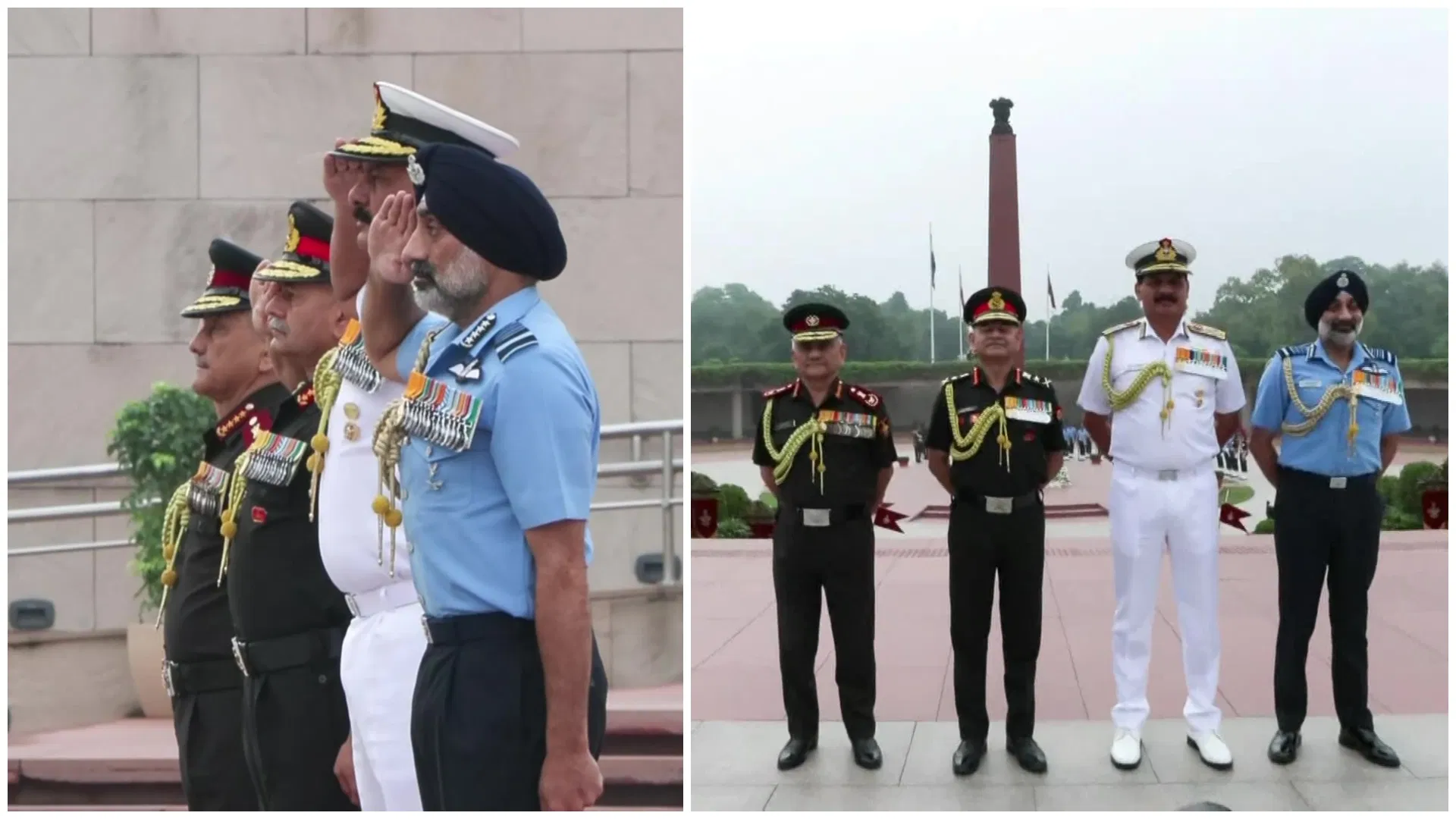
At the National War Memorial in New Delhi, top military leaders — Chief of Defence Staff (CDS) General Anil Chauhan, Air Chief Marshal AP Singh, Army Chief General Upendra Dwivedi, and Navy Chief Admiral Dinesh Tripathi — paid solemn floral tributes to the brave martyrs who made the ultimate sacrifice in the service of the nation. The event symbolized the unbreakable unity of India’s Armed Forces and the spirit of jointness that defines India’s defence vision today.
A Morning of Glory and Gratitude
As dawn broke over the capital, the Amar Jawan Jyoti at the National War Memorial shimmered under the morning sunlight. The rhythmic sound of the ceremonial band, the fluttering of the tricolour, and the sharp, synchronized salutes of the armed forces created a moment of national pride that left everyone spellbound.
The solemn wreath-laying ceremony was not just a ritual but a reaffirmation of the military’s unwavering commitment to the motherland. The Air Chief Marshal bowed his head in silence before the names etched on the memorial — names that remind us that freedom is never free.
General Anil Chauhan, India’s CDS, led the ceremony with deep respect. His presence symbolized the synergy among the three services — Army, Navy, and Air Force — all working in coordination to protect India’s sovereignty in an increasingly complex global environment.
The Legacy of the Indian Air Force
The Indian Air Force was officially established on October 8, 1932, as an auxiliary air force under British rule. What began with just six officers and 19 airmen, equipped with four Westland Wapiti biplanes, has now transformed into one of the most powerful air forces in the world.
Post-independence, the IAF became a crucial pillar of India’s national defence strategy. From its valiant role in the 1947-48 Kashmir conflict, to the 1965 and 1971 wars with Pakistan, and the Kargil operations of 1999, the Air Force has repeatedly demonstrated unmatched courage, discipline, and precision.
Its motto, “Nabhah Sparsham Deeptam” — taken from the Bhagavad Gita — means “Touch the Sky with Glory.” This phrase embodies the IAF’s ethos: courage in the skies, excellence in execution, and unflinching devotion to duty.

93 Years of Sky Dominance: From Propellers to Supersonic Jets
The transformation of the Indian Air Force over the past nine decades is nothing short of extraordinary. From vintage biplanes to advanced multirole fighters, from radar-controlled operations to satellite-guided warfare, the IAF has embraced every technological leap with agility.
The Early Years (1932–1947): Foundations of Air Power
The IAF’s first operational flight took place on April 1, 1933. During World War II, the Indian pilots earned global recognition for their bravery in missions across Burma and the Middle East.
Post-Independence Era (1947–1965): Birth of a Modern Force
After independence, the Air Force faced its baptism by fire during the First Kashmir War in 1947. It was the IAF that airlifted Indian troops to Srinagar in time to defend the Valley from invading forces — a move that changed the course of history.
In the 1950s, the induction of Vampire jets, Canberras, and Gnats marked the entry of the IAF into the jet age.
1965 and 1971: The Wars that Defined Air Power
The 1965 Indo-Pak war was the first large-scale conflict where the IAF played a dominant role in both air defence and ground support. But it was in 1971, during the Bangladesh Liberation War, that the Indian Air Force truly showcased its might.
Within days, it achieved complete air superiority, destroying Pakistani air assets and paving the way for India’s historic victory and the birth of Bangladesh.
Kargil 1999: Operation Safed Sagar
The IAF once again proved its mettle during the Kargil conflict when it launched Operation Safed Sagar, using Mirage-2000 jets to strike enemy positions at high altitudes — a first in global air warfare.
Modernization and the New Era of Air Dominance
Today, the Indian Air Force is among the world’s top four air forces, operating a sophisticated mix of aircraft including Rafale fighters, Su-30 MKI, Tejas Light Combat Aircraft, C-17 Globemaster III, Chinook, and Apache helicopters.
Its focus is now on indigenization, self-reliance, and network-centric warfare. The IAF’s collaboration with DRDO and HAL has led to homegrown innovations like the Tejas Mk-1A, Akash missile systems, and the upcoming Advanced Medium Combat Aircraft (AMCA).
Under the Make in India and Atmanirbhar Bharat missions, the Air Force is not just a user of technology but also a driver of innovation.
Air Chief Marshal AP Singh: Leading with Vision
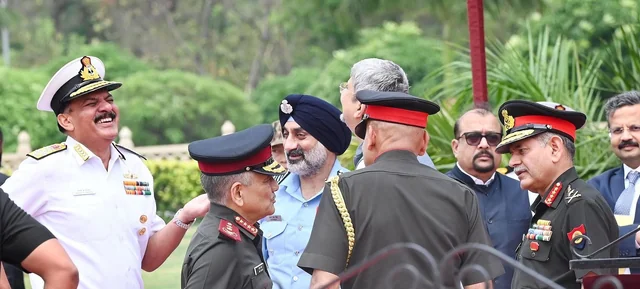
Air Chief Marshal V.R. Chaudhari passed the baton to Air Chief Marshal AP Singh, who now leads the IAF into its 93rd year with renewed strategic focus. His leadership vision revolves around three pillars — Technology, Training, and Transformation.
Addressing personnel on the occasion of the Raising Day, he said:
“Our responsibility is to ensure that India’s skies remain inviolable. As we celebrate our glorious past, we must also prepare for future challenges — from cyber warfare to artificial intelligence in combat systems.”
His message reflects a leadership deeply aware of evolving threats — from drones and hypersonic weapons to electronic warfare — and determined to make the IAF ready for a new era of multi-domain operations.
The 93rd Raising Day Celebrations: A Spectacle in the Sky
While the morning at the National War Memorial was solemn, the day soon transformed into a celebration of might and precision at Hindon Air Base near Ghaziabad, where the annual Air Force Day parade and air show took place.
The parade began with the traditional Guard of Honour, followed by the inspection of the parade by Air Chief Marshal AP Singh. The event was marked by the IAF’s display of its best aerial assets, including:
- Rafale jets showcasing tight turns and high-G maneuvers.
- Sukhoi Su-30 MKI performing the Cobra maneuver — a crowd favorite.
- Tejas LCA highlighting indigenous capabilities.
- Apache and Chinook helicopters displaying coordinated operations.
- Surya Kiran Aerobatic Team (SKAT) painting the sky with the colors of the tricolour.
The air show also included heritage aircraft like the Dakota, symbolizing the Air Force’s historic roots.
Spectators were mesmerized as formations like ‘Arrowhead,’ ‘Delta,’ and ‘Vajra’ sliced through the sky with thunderous roars, symbolizing both discipline and dominance.
Remembering the Martyrs: The Soul of the Celebration
While the parades and aerial displays showcased India’s air power, the emotional core of the day remained the tribute to the martyrs. Each fighter jet that flew past the dais was a salute to the heroes who never returned.
Among those remembered were legends like:
- Flying Officer Nirmaljit Singh Sekhon, the only IAF officer awarded the Param Vir Chakra, for his heroic dogfight against Pakistani Sabres during the 1971 war.
- Squadron Leader Ajay Ahuja, who laid down his life during the Kargil conflict.
- Wing Commander Abhinandan Varthaman, who became the face of modern-day heroism in the 2019 Balakot operation.
Their stories continue to inspire new generations of air warriors to live by the motto: “Service Before Self.”
Women in the Air Force: Breaking Barriers, Touching the Sky
One of the defining changes in the IAF’s history has been the increasing participation of women. From flying fighter jets to commanding squadrons, women officers have shattered the glass ceiling.
Names like Avani Chaturvedi, Bhawana Kanth, and Mohana Singh — India’s first three women fighter pilots — have become symbols of empowerment and equality.
Today, women officers are part of nearly every branch of the IAF, including combat roles, technical fields, and administrative positions.
Jointness and the Future of Warfare
The presence of the Army Chief, Navy Chief, and CDS at the memorial ceremony highlighted India’s growing emphasis on jointness and integration. The future battlefield will not be fought by individual services but through coordinated, network-centric operations.
The creation of Integrated Theatre Commands aims to bring synergy among the three forces for faster decision-making and optimized resource use.
General Anil Chauhan, India’s CDS, emphasized this approach in his statement:
“Modern warfare demands seamless integration across land, air, sea, cyber, and space. The IAF will play a central role in ensuring information dominance and rapid response.”
Technological Advancements: The Future Air Warrior
The Indian Air Force of the future will be defined by technology-driven warfare. Key initiatives include:
- Artificial Intelligence and Machine Learning integration in decision-making.
- Drone and Counter-Drone Operations for surveillance and combat.
- Hypersonic missile development for strategic deterrence.
- Cyber security and space-based monitoring through satellite assets.
- Upgraded radar and early warning systems to detect stealth threats.
The IAF’s vision is clear — to become a fully networked, agile, and autonomous air force capable of dominating multiple domains simultaneously.
Global Recognition and Diplomacy in the Skies
The Indian Air Force is not just a protector of borders; it’s also a symbol of India’s growing stature on the global stage. The IAF frequently participates in joint exercises with major air forces such as those of the United States (Exercise Cope India), France (Garuda), Australia (Pitch Black), and Japan (Veer Guardian).
These collaborations enhance interoperability, strengthen diplomatic relations, and project India’s commitment to peace and global stability.
Disaster Relief and Humanitarian Operations: The IAF’s Human Face
Beyond warfare, the Indian Air Force has always stood at the forefront of humanitarian efforts. From airlifting earthquake victims to delivering relief during floods and cyclones, the IAF has been the first to respond in times of crisis.
Operations like Rahat (2013 Uttarakhand floods), Megh Rahat (J&K floods), and Ganga Prahar (Assam floods) showcased the compassion and efficiency of the Air Force.
During the COVID-19 pandemic, the IAF played a crucial role in transporting medical supplies, oxygen tanks, and vaccines across the nation, reinforcing its motto — service beyond boundaries.
From Ground to Space: The Expanding Frontier
As India advances into the era of space warfare and satellite technology, the IAF is evolving into an aerospace power. The upcoming Defence Space Agency and Network for Space Operations will strengthen India’s strategic reach beyond the atmosphere.
The integration of satellite-based communication, real-time intelligence, and precision-guided systems ensures that the Indian Air Force remains one step ahead in every scenario — from conventional warfare to space-based operations.
Public Spirit and National Pride
Across the country, citizens celebrated Air Force Day with immense pride. Social media flooded with tributes, videos of fighter jets, and patriotic songs. Schools organized essay competitions and air-themed exhibitions. Children looked up at the skies, their eyes filled with awe as jets thundered overhead — a sight that stirs every Indian heart.
Every salute, every cheer, and every fluttering flag was a reminder that the Indian Air Force is not just a military institution — it’s a symbol of national confidence, resilience, and aspiration.
Conclusion: Guardians of the Sky, Pride of the Nation
As India celebrates the 93rd Raising Day of the Indian Air Force, the message from the skies is clear — our defenders are vigilant, our technology is advancing, and our spirit is unbreakable.
From the humble beginnings of 1932 to becoming a global air power in 2025, the journey of the IAF is the story of India’s rise itself — a blend of courage, innovation, and unyielding patriotism.
As the tricolour flutters proudly and the roar of the Rafales echoes across the sky, one thought unites every Indian:
“We sleep peacefully at night because somewhere above, a pilot soars through the darkness, guarding the nation’s dreams.”
Jai Hind. Jai Air Force.
Read More latest News

