
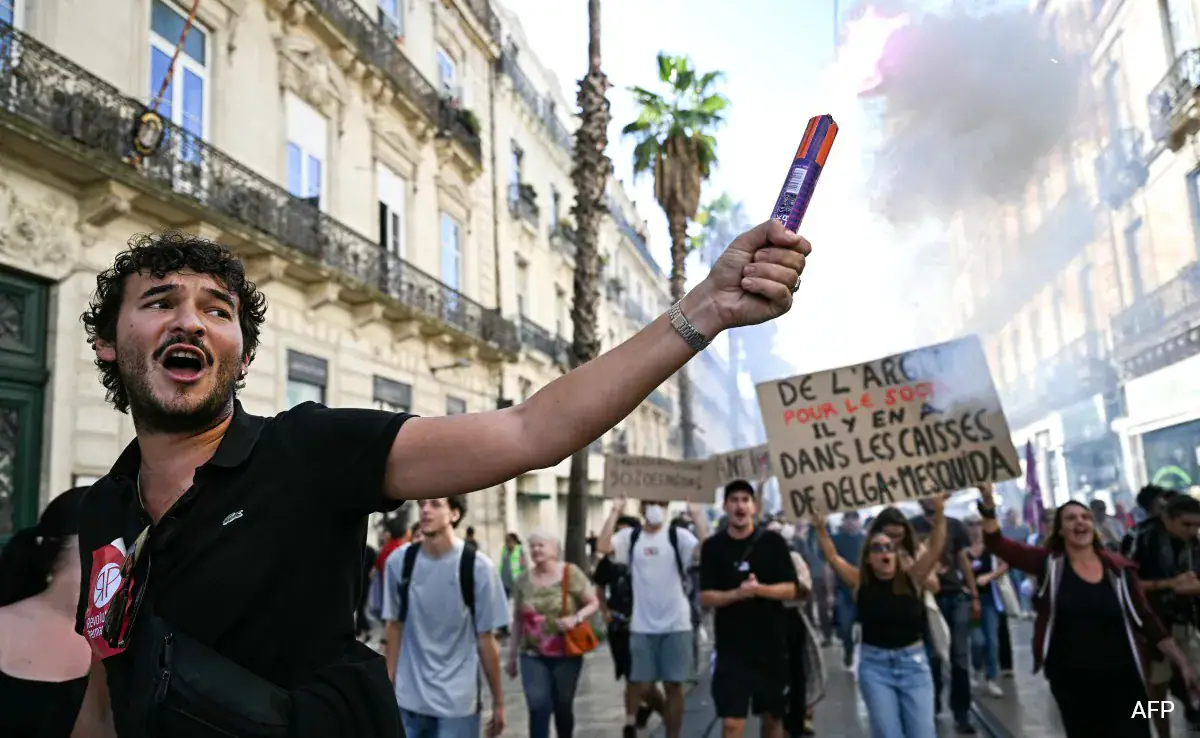
Violent Protests, Arson, and Over 200 Arrests: France Erupts Against Emmanuel Macron’s Government.
Introduction
France protests, a country long celebrated for its revolutionary spirit and democratic ideals, is once again witnessing massive unrest. In recent days, violent protests, acts of arson, and more than 200 arrests have rocked Paris and several other cities across France, as anger against President Emmanuel Macron’s government spirals into open confrontation on the streets.
The demonstrations, initially sparked by economic discontent and political grievances, have escalated into one of the largest challenges Macron has faced in his presidency. This blog will explore the causes behind the protests, the scale of violence, the response by French authorities, and the broader political and social implications for France and Europe.
A History of Protests in France
France has a deep-rooted culture of protest. From the 1789 Revolution that toppled the monarchy to the student uprisings of 1968 and the Yellow Vest (Gilets Jaunes) movement of 2018, French society has never shied away from taking to the streets.
- Revolutionary Legacy: The idea that people must rise against injustice is embedded in French political culture.
- Union Power: French labor unions have historically organized strikes and demonstrations with massive participation.
- Modern Grievances: In the last decade, protests have often been triggered by economic inequality, rising costs of living, immigration, and climate policies.
The current wave of unrest is seen as part of this larger tradition but with new dynamics shaped by inflation, political dissatisfaction, and disillusionment with Macron’s leadership style.
What Sparked the Current Protests?
The immediate cause of the protests can be traced to rising economic hardships and controversial government reforms. Several overlapping factors are fueling the anger:
1. Economic Strain
- Rising inflation and high energy costs have made daily life more difficult.
- Food and fuel prices are at historic highs, squeezing middle- and working-class families.
2. Labor and Pension Reforms
- Macron’s government has been pushing reforms to extend the retirement age and restructure pensions, sparking resentment among workers.
- Labor unions claim the reforms disproportionately affect lower-income groups.
3. Police Actions
- Instances of alleged police brutality during earlier demonstrations and minority rights protests have intensified distrust between citizens and law enforcement.
4. Discontent with Macron’s Leadership
- Critics argue Macron is increasingly authoritarian, often bypassing parliamentary debate by invoking constitutional powers to push laws.
- His approval ratings have dipped, with many seeing him as disconnected from ordinary citizens.
The Scale of Violence
Over the past week, protests that began as peaceful marches have spiraled into widespread violence across Paris and other cities:
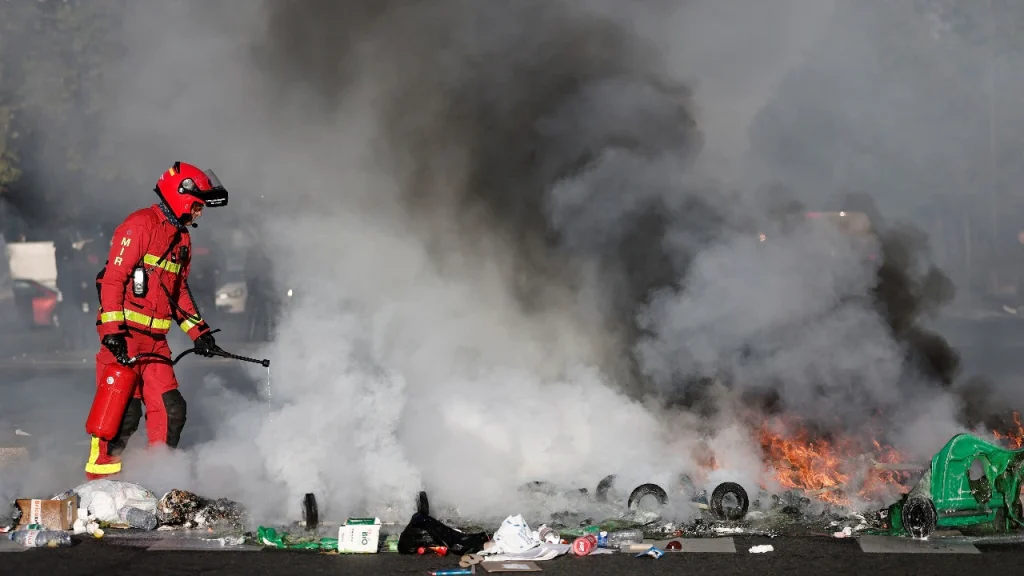
- Arson Attacks: Cars have been set on fire, trash bins torched, and several public buildings damaged.
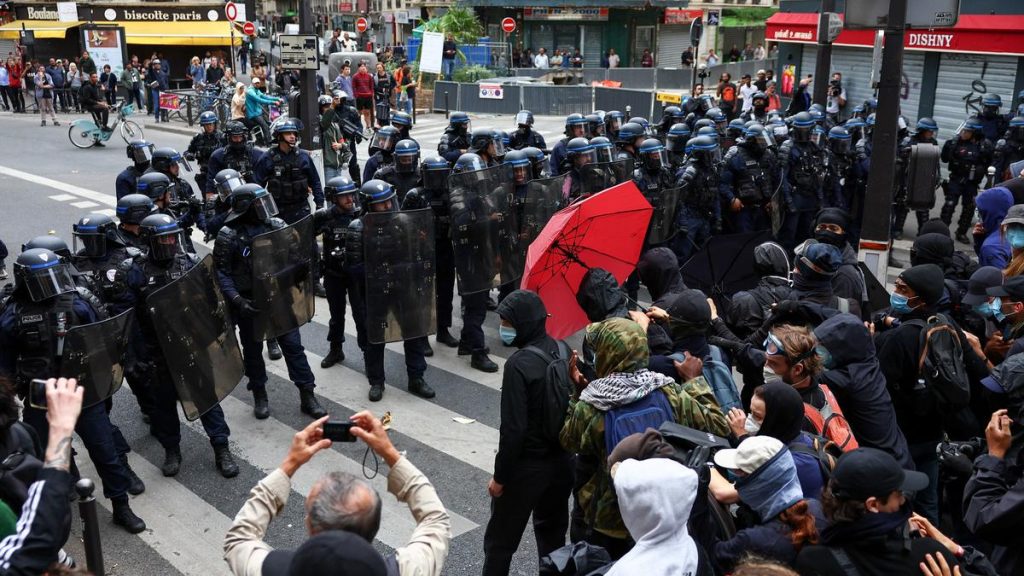
- Clashes with Police: Protesters hurled stones, bottles, and fireworks at riot police, who responded with tear gas, stun grenades, and water cannons.
- Looting Incidents: Some commercial districts reported looting, prompting shop owners to shutter businesses early.
- Blockades: Major roads, railways, and metro stations were blocked, disrupting daily life and transport.
According to official figures, more than 200 people have been arrested nationwide, though unions claim the numbers of detained protesters are even higher.
Paris at the Epicenter
Paris, the symbolic heart of French politics, has borne the brunt of the protests.
- Champs-Élysées: Fires lit along the iconic avenue made global headlines.
- Place de la République: Tens of thousands gathered for rallies that later descended into clashes.
- Metro Disruptions: Several metro stations were closed for safety reasons, causing chaos for commuters.
Images of burning vehicles, police barricades, and angry crowds chanting against Macron have dominated global media, fueling comparisons with past large-scale unrest in the city.
Government Response
The Macron government has attempted a mix of firmness and appeals for calm.
1. Law Enforcement Measures
- Deployment of thousands of riot police and gendarmes across major cities.
- Use of drones for surveillance of protest gatherings.
- Over 200 arrests made, including alleged “violent agitators.”
2. Political Messaging
- Macron condemned the violence, calling it “unacceptable” but defended the government’s reform agenda.
- French Interior Minister Gérald Darmanin accused “radical leftist groups” of hijacking peaceful protests.
3. Dialogue Efforts
- The government has invited labor unions and civil society groups for talks, though many unions have refused until reforms are rolled back.
Voices of the Protesters
The protests have drawn a diverse mix of participants—from union workers and students to pensioners and activists.
- A factory worker in Lyon: “We work all our lives and now they want us to work even longer. This is not reform, it’s robbery.”
- A university student in Paris: “The government doesn’t listen. Protesting is the only way we can make our voices heard.”
- An activist from Marseille: “It’s not just about pensions. It’s about dignity, respect, and a government that refuses to listen to its people.”
These testimonies highlight how the unrest is fueled not only by specific policies but also by a deeper sense of alienation and mistrust toward Macron’s administration.
Role of Labor Unions
French labor unions have been central in mobilizing the protests. Unions representing transport workers, teachers, and public sector employees have organized strikes alongside demonstrations.
- Nationwide Strikes: Trains, flights, and public transport services were severely disrupted.
- Solidarity from Multiple Sectors: Doctors, lawyers, and even cultural workers joined in solidarity marches.
- Union Leadership: Leaders accuse Macron of bypassing parliamentary debate and “governing by decree,” which they see as undemocratic.
International Reactions
The scale of protests in France has drawn reactions worldwide:
- European Union (EU): Expressed concern but termed it France’s internal matter.
- United Nations Human Rights Office: Urged France to respect the right to peaceful protest and avoid excessive use of force.
- Neighboring Countries: Germany and Belgium issued travel advisories for citizens visiting Paris and other hotspots.
Global media coverage has compared the unrest to earlier movements like the Yellow Vest protests, portraying it as another crisis of governance under Macron.
Macron’s Political Challenges
The protests underscore the fragile political position of Emmanuel Macron:
- Weakened Majority: Macron’s party no longer holds a clear majority in parliament, making reforms harder to pass.
- Public Image: Often seen as elitist, Macron struggles to connect with working-class voters.
- 2027 Succession Debate: As Macron is in his second term and cannot run again, political rivals are already leveraging the unrest to position themselves.
Comparison with the Yellow Vest Movement
The current protests bear striking similarities with the Yellow Vest (Gilets Jaunes) movement of 2018–2019:
- Both triggered by economic grievances (fuel prices then, pensions and inflation now).
- Both involved widespread violence, arson, and clashes with police.
- Both saw Macron criticized as out of touch with ordinary citizens.
However, unlike the Yellow Vest movement, which was more spontaneous, the current unrest is more organized, with unions playing a central role.
Impact on French Economy
The unrest is already taking a toll on the French economy:
- Tourism: Paris hotels and businesses report cancellations from foreign visitors.
- Transport Losses: Strikes in aviation and rail sectors are costing millions daily.
- Investor Sentiment: Concerns over instability have rattled financial markets, with the French stock exchange showing volatility.
If prolonged, the unrest could further weaken France’s economic recovery from the COVID-19 pandemic.
Public Opinion
Surveys suggest a divided French public:
- Around 60% oppose Macron’s pension reforms.
- A majority sympathize with protesters but disapprove of violent methods like arson and looting.
- Trust in government institutions is at a historic low, fueling fears of deeper democratic discontent.
Potential Outcomes
Several scenarios could unfold in the coming weeks:
- Government Concession: Macron may soften or delay reforms to ease tensions.
- Prolonged Unrest: If no compromise is reached, protests could drag on for months, like the Yellow Vest movement.
- Political Realignment: Opposition parties, including far-right Marine Le Pen’s National Rally and left-wing coalitions, could gain ground.
- Institutional Crisis: Continued reliance on constitutional decrees may erode faith in French democracy.
Broader Implications for Europe
The unrest in France has wider European implications:
- Political Populism: Rising discontent may fuel populist movements across Europe.
- Economic Impact: Prolonged instability in France, the EU’s second-largest economy, could affect regional growth.
- Migration & Security: Tensions between police and minority groups could influence debates on immigration and integration across Europe.
Conclusion
The violent protests sweeping across Paris and other French cities, marked by arson, strikes, and over 200 arrests, have plunged Emmanuel Macron’s government into one of its deepest crises yet.
At its core, the unrest reflects not just opposition to pension reforms or economic policies but a deeper disconnect between the French state and its citizens. Macron’s challenge now is not only to restore order but also to restore faith in democratic governance.
France stands at a crossroads—whether it will move toward reconciliation and reform, or spiral further into unrest, will depend on the choices made in the coming weeks.
For now, the flames of Paris—both literal and metaphorical—symbolize the enduring spirit of a nation that refuses to remain silent in the face of perceived injustice.
read more latest news

