
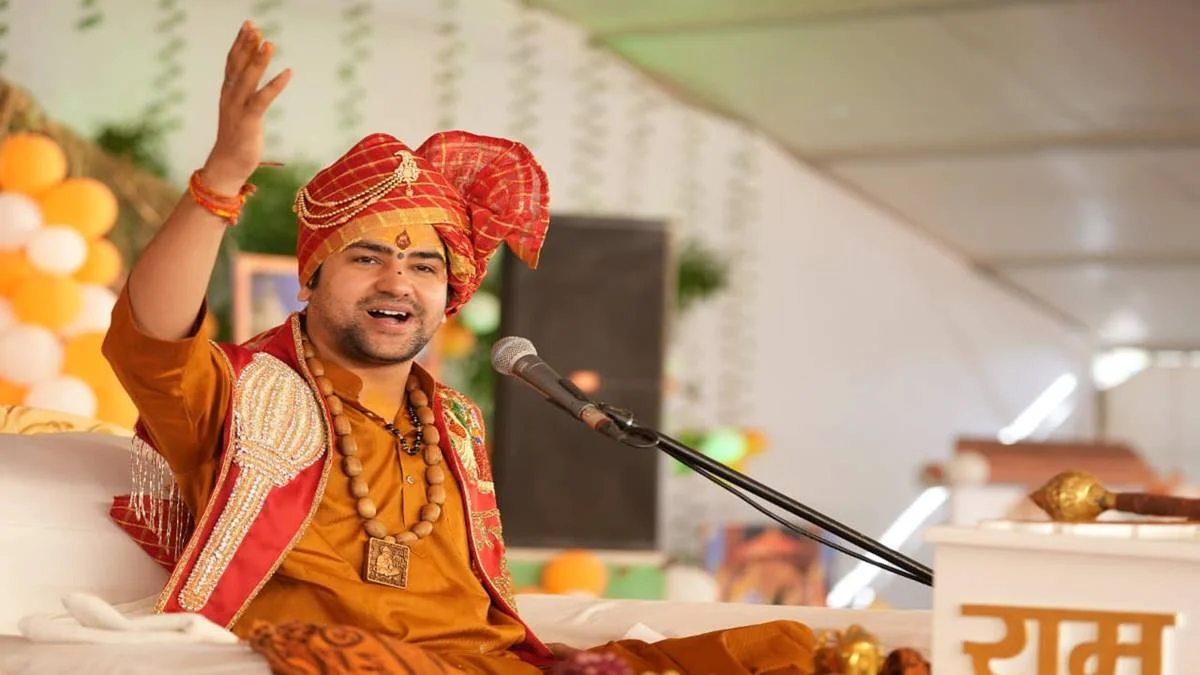
Acharya Dhirendra Krishna Shastri’s Powerful Message in Raipur: “We Will Soon Recover…”
Raipur, Chhattisgarh: The spiritual leader and head of Bageshwar Dham, Acharya Dhirendra Krishna Shastri, once again found himself at the center of national attention after his latest public address in Raipur. Speaking before thousands of followers, he gave a stirring message filled with faith, optimism, and a call for moral recovery — saying, “We will soon recover…”
But what exactly did Acharya Shastri mean by this? Was he referring to the nation’s spiritual health, the loss of traditional values, or the growing divide in modern society? To understand his words fully, we must explore not only the speech itself but also the context behind it — and why millions of people across India listen to every word he speaks.
Who Is Acharya Dhirendra Krishna Shastri?
Before diving into the Raipur event, it’s worth understanding who Acharya Shastri is, and why his words hold such influence.
Known popularly as the Peethadhishwar of Bageshwar Dham Sarkar in Chhatarpur, Madhya Pradesh, Acharya Dhirendra Krishna Shastri is one of India’s most-followed spiritual figures. His live discourses, bhajan sessions, and public “divya darbars” attract lakhs of devotees across the country.
He rose to fame for his distinctive ability to read people’s minds — or as his followers call it, divya shakti (divine power). His gatherings often blend religious preaching, moral advice, social commentary, and calls for Hindu unity.
For many, he represents a modern-day spiritual nationalist, blending faith with contemporary social consciousness.
The Raipur Event: A Sea of Devotees
The event in Raipur was no different. Thousands of devotees from Chhattisgarh, Madhya Pradesh, Odisha, and even Maharashtra had gathered to listen to Acharya Shastri. The atmosphere was electric — filled with chants of “Jai Shri Ram” and “Bageshwar Dham Sarkar ki Jai.”
The large pandal, beautifully decorated with saffron flags and garlands, symbolized the festive spirit that often accompanies Shastri’s events.
As he took the stage, dressed in his signature saffron robe, the crowd erupted in applause. People waved flags, blew conches, and recorded the moment on their phones.
It was more than just a sermon — it was a celebration of faith and identity.
The Message: “We Will Soon Recover…”
During his speech, Acharya Dhirendra Krishna Shastri said something that caught everyone’s attention:
“We will soon recover… Our society is wounded, but not defeated. Our faith has been tested, but not broken. The time has come for every Sanatani to rise again with devotion and discipline.”
These lines received thunderous applause from the crowd. Many saw it as a message of revival — a call for spiritual and cultural renewal in a time when society is distracted by materialism and division.
While he didn’t name any specific group or issue, his emphasis on “recovery” seemed to point toward restoring moral strength, unity, and dharmic values in India.

Interpreting the Message: Spiritual, Social, and Symbolic
1. A Spiritual Recovery
For followers, Acharya Shastri’s statement was about reviving one’s faith. In recent years, many people have felt spiritually disconnected, drawn into fast-paced modern life. His message served as a reminder that reconnecting with dharma is essential for balance and inner peace.
2. A Social Recovery
On a broader scale, his remarks can be understood as a commentary on social and cultural disintegration. In a society struggling with rising intolerance, youth frustration, and loss of moral compass, Acharya’s words were seen as a call for unity — to recover the values of compassion, respect, and collective responsibility.
3. A Nationalistic Undertone
While Acharya Shastri avoids political alignment, his message often resonates with nationalist sentiment — the idea that India’s spiritual revival is linked to national pride and strength. His statement could be interpreted as an appeal to strengthen the cultural and moral backbone of the nation.
The Crowd’s Response
As his words echoed through the pandal, devotees responded with chants and tears. Many said they felt “energized” and “spiritually awakened.”
A young man from Durg said:
“When Acharya Shastri says we will recover, he means we will find our lost faith. I came here after losing my job and confidence, but I’m going back with hope.”
A woman from Bilaspur shared:
“He’s not just talking about religion. He’s telling us to become better people — to stand up for what’s right.”
Clearly, his followers saw the message not as anger or defiance, but as hope and healing.
The Broader Context: Why His Words Matter
India today is at a crossroads of tradition and modernity. Rapid urbanization, digital lifestyles, and economic pressures have changed the way people live and think.
In such times, figures like Acharya Dhirendra Krishna Shastri serve as anchors for those who seek meaning and direction.
When he says “We will soon recover,” he’s not just talking about religion — he’s talking about the soul of society. His message resonates because it addresses an emotional truth: that people feel morally and spiritually tired, and are looking for renewal.
The Political Reactions
As with most of his speeches, political circles reacted swiftly.
Supporters Say:
Several leaders from right-wing and Hindu nationalist groups praised Acharya Shastri’s comments, calling them “timely and inspiring.”
A BJP spokesperson from Chhattisgarh said:
“Bageshwar Dham Sarkar’s message reflects the cultural awakening taking place across India. He inspires youth to connect with Sanatan values.”
Critics Respond:
Opposition leaders, however, accused Shastri of “mixing religion with social commentary.”
A Congress MLA said:
“Spiritual leaders should preach peace and unity, not division. India’s recovery should be for everyone — beyond religion.”
Despite differences, everyone agreed on one point — his influence cannot be ignored.

Media Coverage: Between Reverence and Critique
National and regional media covered the Raipur event extensively. While some TV channels praised his motivational tone, others raised concerns about the growing political undertone of spiritual events.
Social media, as always, was flooded with clips and quotes.
- Supporters posted inspirational snippets with hashtags like #BageshwarDham, #AcharyaShastri, and #SpiritualRevival.
- Critics debated the interpretation of his message.
In just a few hours, his video from Raipur had over 2 million views across platforms — showing the sheer scale of his digital following.
The Philosophy Behind His Message
To understand Acharya Shastri, one must understand his philosophy — a blend of devotion (bhakti), karma (action), and national consciousness.
He often quotes from the Bhagavad Gita, emphasizing that every person must do their duty without fear or laziness.
In his words:
“The real bhakt is not the one who only prays, but the one who protects dharma through his conduct and courage.”
This ideology has made him especially popular among the youth, who see in him a modern saint with a fearless voice.
His Growing Influence in Central India
Raipur’s event also symbolized how Acharya Shastri’s influence is spreading rapidly across central India. From Madhya Pradesh to Chhattisgarh, Maharashtra to Uttar Pradesh — his sermons attract huge crowds.
Local organizers in Raipur said they had to increase seating capacity twice to accommodate devotees. Thousands more listened from outside through loudspeakers.
In an age when digital attention spans are short, his ability to hold people’s focus for hours speaks volumes about his connect with the masses.
Critics Call for Restraint
While supporters celebrate him as a reformer, critics argue that Acharya Shastri should be more cautious in his phrasing — since millions listen to him as gospel truth.
Some intellectuals worry that such statements, even if symbolic, could be misinterpreted or used politically.
A columnist in a Raipur daily wrote:
“Acharya Shastri’s charisma is unquestionable, but words carry power. In a diverse country like India, even spiritual leaders must promote inclusion while preserving faith.”
The Emotional Power of His Speeches
Beyond politics and interpretation, one cannot deny that Acharya Dhirendra Krishna Shastri’s speeches have emotional intensity.
When he says, “We will soon recover,” it feels personal — as if he’s addressing every listener’s pain. That’s why his message resonates even among people who may not be deeply religious.
He uses simple language, storytelling, and humor to convey profound truths — making spirituality accessible to all.
What Lies Ahead for Acharya Dhirendra Krishna Shastri
Following the Raipur event, his next schedule includes visits to Delhi, Nagpur, and Varanasi, where similar discourses are planned.
Reports suggest that his team is also working on expanding digital outreach through YouTube, podcasts, and short reels to connect with younger audiences.
Meanwhile, his “Bageshwar Dham Seva Samiti” continues charitable work — including free food distribution, temple restoration projects, and educational assistance for underprivileged children.
For him, spiritual awakening and social service go hand in hand.
Voices from Raipur
As we spoke to people after the event, the emotions were raw and real.
- Ramesh Tiwari, a shopkeeper from Raipur, said: “I had stopped attending satsangs, but after listening to him, I feel proud again of my roots.”
- Neha Verma, a college student, said: “He speaks about issues no one else dares to — about values, culture, and our duty as youth.”
- Local priest, Pandit Hariram, added: “His words ignite faith. Raipur has never seen such a massive spiritual gathering.”
Beyond Religion — A Call for Renewal
Ultimately, Acharya Dhirendra Krishna Shastri’s “We will soon recover” isn’t just about one religion or one event. It’s about hope, faith, and resilience — values that cut across boundaries.
In a world shaken by negativity, economic uncertainty, and moral fatigue, his message acts as a spiritual detox. It encourages people to return to basics — family, compassion, discipline, and self-belief.
Conclusion: A Message for a Tired Society
The Raipur discourse will be remembered as one of Acharya Dhirendra Krishna Shastri’s most powerful sermons — not for controversy, but for its emotional depth.
When he said “We will soon recover,” he wasn’t just offering prophecy — he was offering reassurance.
Reassurance that society can heal. That people can rediscover faith. That India’s cultural heart still beats strong.
In his words lies a reminder for everyone — that recovery begins within us.
🔑 Key Takeaways:
- Acharya Dhirendra Krishna Shastri addressed thousands in Raipur, Chhattisgarh.
- His message, “We will soon recover,” was seen as a call for spiritual and social revival.
- The event drew reactions from political circles and religious commentators alike.
- Supporters viewed it as hopeful; critics urged more inclusive messaging.
- His growing influence shows the deep hunger for faith and moral guidance in society.
Read More Latest news

