

Is Trump Eyeing Iran’s Oil, Like Venezuela? What’s the Real Game Behind the War Plan?
The question on many geopolitical analysts’ minds in 2026 is blunt: Is Trump eyeing Iran oil in the same way he targeted Venezuela’s hydrocarbon wealth? We see echoes of past policy and emerging patterns that suggest the answer may be more complex and strategic than simple resource grabbing — but there are undeniably strong signals that Trump eyeing Iran oil is a factor in broader U.S. pressure strategies.
In this blog, we’ll explore why Trump eyeing Iran oil has become a central narrative in international discourse, how it connects to U.S. sanctions, military posturing, global energy markets, great-power competition, and whether we’re witnessing a repeat of the Venezuela playbook, or something principled and distinct.
1. A Historical Context: From Maximum Pressure to Modern Tensions
The idea that Trump eyeing Iran oil has roots going back to his first presidency. In 2018, President Trump withdrew the United States from the Joint Comprehensive Plan of Action (JCPOA), the nuclear deal negotiated under Barack Obama. He reimposed sanctions designed to cripple Tehran’s economy and choke off revenues from oil — the lifeblood of Iran’s budget. This doctrine became known as the “maximum pressure campaign.”
Under that policy, Iranian oil exports plunged dramatically — at some points from several million barrels per day to barely a fraction of that — increasing leverage on Tehran and reshaping global supply patterns. Chinese and other buyers found ways to circumvent sanctions, but the overarching aim was clear: cut Iran’s oil revenue significantly.
Therefore, when analysts ask whether Trump eyeing Iran oil is a new phenomenon, the real answer is that it’s an ongoing thread in U.S. foreign policy that has recently intensified again.
2. The Venezuela Comparison: Similar Strategy or False Analogy?
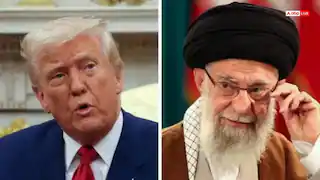
Without question, Donald Trump’s actions toward Venezuela over oil resources have been bold: U.S. forces supported opposition elements, negotiated leadership changes, and facilitated access for American energy companies to historically state-controlled reserves — the largest in the world.
That has naturally led many to wonder if Trump eyeing Iran oil signals a repeat playbook. But Iran differs from Venezuela in crucial ways:
- Iran is militarily stronger and possesses significant defensive and offensive capabilities.
- Iran’s oil infrastructure is deeply integrated into the global market, particularly via the Strait of Hormuz — a chokepoint for nearly a fifth of the world’s seaborne energy trade.
- Iran is geopolitically more significant due to its alliances and proxy networks across the Middle East.
Still, commentators and media reports increasingly highlight that Trump eyeing Iran oil is not merely about raw petroleum resources — it’s tied to broader regional dominance and economic leverage.
3. Sanctions and Tariffs: Economic Pressure as Strategic Leverage
One of the clearest signs that Trump eyeing Iran oil is not just rhetorical comes from recent U.S. sanctions and trade maneuvers. In 2025, the administration slapped a 25% tariff on countries doing business with Iran, especially those importing Iranian oil, making such trade much more expensive and unattractive.
The strategy was explicit: if Iran cannot sell its oil easily, its government loses revenue, weakening its ability to fund regional proxies and sustain domestic stability. That economic squeeze is a hallmark of Trump eyeing Iran oil, but in an indirect way — rather than direct seizure or invasion.
These sanctions also affected global partners. Several Indian companies, for example, were sanctioned for trading Iranian petroleum products, showing that Trump eyeing Iran oil has ripple effects beyond Tehran and Washington alone.
4. The Geopolitics of Great Power Competition
Another element of why observers say Trump eyeing Iran oil is strategic lies in the U.S.–China rivalry. Iran’s largest single oil buyer has been China, which relies on discounted crude to fuel its industrial growth. U.S. pressure on Iranian oil sales, including threats of secondary sanctions against countries that continue to buy it, directly challenges China’s energy security.
Whether or not one accepts that Trump eyeing Iran oil is purely about resources, it’s hard to deny that energy exports give Tehran geopolitical leverage. Cutting that leverage arguably benefits American strategic interests in the Indo-Pacific — particularly in countering China’s influence.
5. Iran’s Response: Resilience or Retaliation?
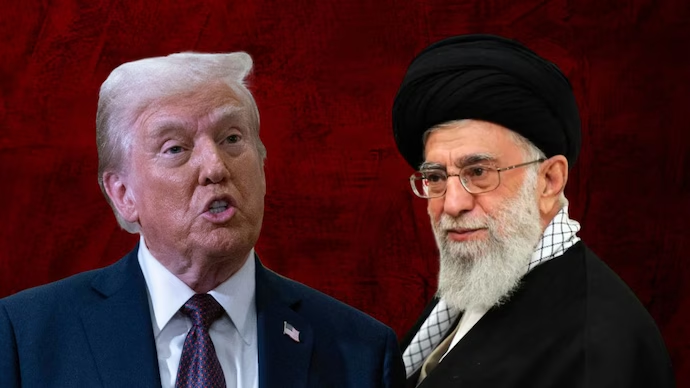
Tehran has not taken these pressures lying down. Iran’s oil officials have publicly dismissed American threats and emphasized that production continues despite sanctions.
That’s critical: if Trump eyeing Iran oil were merely about extraction or seizure, Iran might choose rapid de-escalation or concessions. Instead, Iranian leadership remains defiant, suggesting any U.S. approach that is simply transactional may underestimate Tehran’s resolve.
6. Domestic Politics: Messaging and Voter Appeal
Another angle on why Trump eyeing Iran oil persists in media and political discourse is domestic politics in the U.S. Pressure on Iran’s economy, including oil sanctions, allows Trump to project a strong leadership image to segments of his voter base that view American strength as key to global influence.
In that way, Trump eyeing Iran oil is as much about perception and messaging as it is about actual petroleum supply.
7. Energy Markets and Global Oil Security
From an economic standpoint, any disruption to Iranian oil — whether through sanctions or conflict — has broader ramifications. Iran historically ranks among the top oil producers globally, and instability there can lead to price spikes and supply chain volatility. This makes Trump eyeing Iran oil not simply an American or Iranian matter but a global concern.
Energy analysts point out that if Iranian exports drop significantly, other producers — including Saudi Arabia, the U.S. itself, and Russia — would need to fill the gap. That helps explain why markets react to any escalation involving Iranian oil, even when the moves appear political or tactical rather than product-focused.
8. Military Considerations: Threat or Reality?
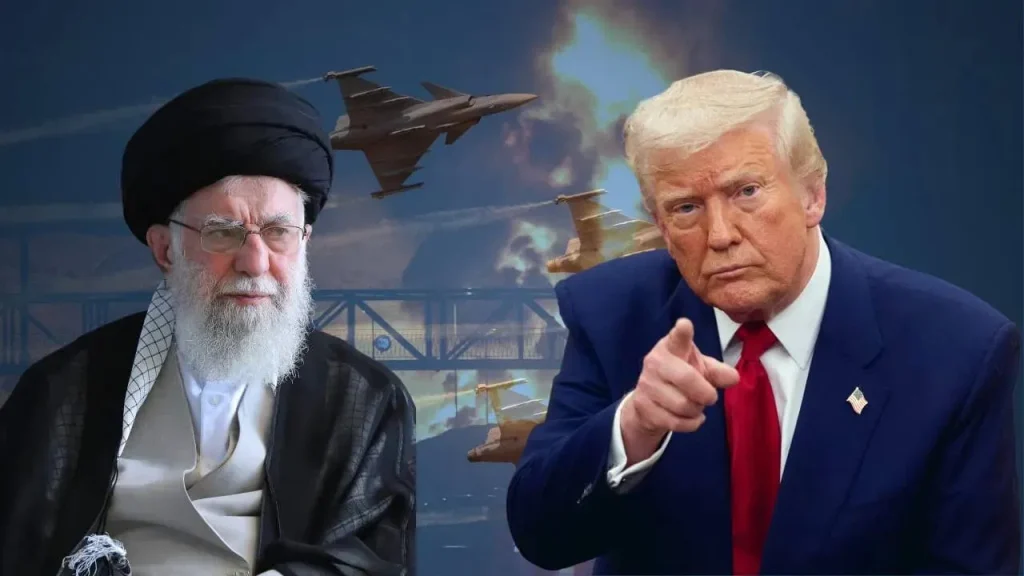
While much discussion about Trump eyeing Iran oil revolves around economics and diplomacy, military decisions also play a role. Trump has suggested the U.S. may intervene if Tehran escalates violence or threatens regional stability — such as interfering with oil transit routes.
However, many experts argue the U.S. is unlikely to mount a full-scale invasion simply to seize oil fields. Modern warfare is expensive, and direct conflict with Iran could cause massive disruptions in energy markets — harming global economies, including American ones. This tension — military warning without open invasion — is part of the complex calculus where Trump eyeing Iran oil means pressuring the Iranian regime rather than physically capturing oil infrastructure.
9. Proxy Conflicts and Regional Rivalries
The Middle East is riddled with proxy conflicts — Yemen, Lebanon, Iraq — in which Iran plays a significant role. Cutting off oil revenue weakens Iran’s ability to fund groups like Hezbollah and the Houthis, which in turn impacts broader Middle Eastern stability. Some analysts see elements of Trump eyeing Iran oil tied to weakening Tehran’s regional influence, not merely its energy sector.
This approach is part of a multifaceted strategy: economic pressure, diplomatic isolation, military readiness, and regional alliances converge in a web that makes any simplistic interpretation of Trump eyeing Iran oil incomplete.
10. So, Is Trump Really Eyeing Iran Oil Like Venezuela?
After weighing history, policy, strategy, and geopolitical dynamics, the cautious conclusion isn’t just a yes or no, but nuanced:
- There are clear patterns where Trump eyeing Iran oil plays a role in U.S. pressure tactics.
- The focus is far less about immediate resource theft and more about economic leverage, diminishing Tehran’s strategic power, and shaping regional alliances.
- Unlike Venezuela, where new leadership opened doors for U.S. companies, Iran’s response remains defiance rather than capitulation.
- The U.S. is leveraging sanctions, tariffs, and military posturing to reduce Iran’s oil influence rather than seize its assets outright.
Thus, Trump eyeing Iran oil signifies pressure and strategy more than simple resource acquisition.
Conclusion: Beyond Oil — What’s at Stake?
In 2026, the world watches as tensions over Iran’s economy and energy markets persist. Trump eyeing Iran oil has become shorthand for broader U.S. goals: pressure Iran into concessions on nuclear and regional policies, reshape alliances, and curb rivals like China.
But oil remains central to Iran’s identity and to global energy security. Any disruption reverberates worldwide. Whether through sanctions, trade wars, or diplomacy, Trump eyeing Iran oil reflects a multifaceted geopolitical game where energy resources are both a tool and a target.
In the end, the real game behind the war plan is not just oil — it is influence, power, and the future shape of global order.
Read More Latest news

