
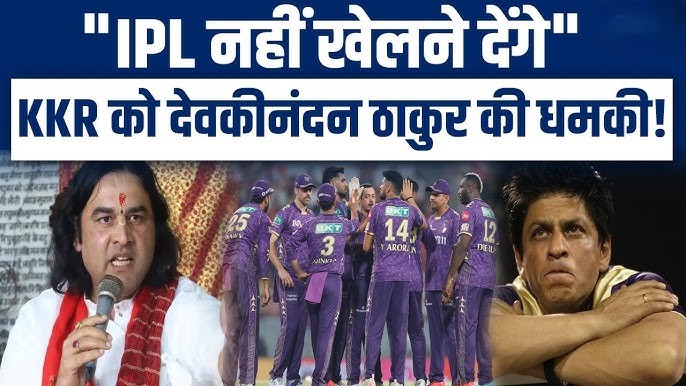
“IPL Was Created to Promote Sanatanis, Not to Give Money to Foreigners”: Devkinandan Thakur Sparks Debate on Bangladeshi Players in IPL.
Devkinandan Thakur said a major controversy erupted after his remarks linking the Indian Premier League with Sanatan Dharma, igniting a nationwide debate that cuts across sports, religion, nationalism, and geopolitics. His statement questioning the participation of Bangladeshi players in the IPL has drawn strong reactions from political parties, cricket experts, and social media users alike.
Devkinandan Thakur said the IPL was never meant to become merely a commercial platform for foreign players to earn money, but was envisioned as a stage to showcase Indian talent and cultural values. According to him, the league should align with India’s civilizational ethos and national interests.
Statement That Triggered the Storm
Devkinandan Thakur said his objection was not personal against any individual player but rooted in what he described as ideological and national concerns. He argued that allowing players from countries where “anti-India sentiment” allegedly exists goes against the spirit of Indian institutions.
Devkinandan Thakur said that recent incidents involving attacks on Hindu temples and Sanatani traditions in neighboring countries have made it necessary to reassess India’s cultural and sporting engagement at global platforms like the IPL.

IPL: Cricket or Cultural Identity?
Devkinandan Thakur said cricket in India is not just a sport but a cultural movement that influences millions of young minds. He asserted that IPL franchises, players, and sponsors must be conscious of the cultural message they are spreading.
Devkinandan Thakur said the IPL was created in India, funded by Indian audiences, and fueled by Indian emotions, and therefore should prioritize Indian values and sentiments before global commercial interests.
Demand to Bar Bangladeshi Players
Devkinandan Thakur his demand to bar Bangladeshi players stems from what he called repeated instances of hostility towards Hindus in Bangladesh. He questioned why Indian platforms should financially benefit players from a country where Sanatan symbols are allegedly under threat.
Devkinandan Thakur sports cannot be isolated from geopolitics and social realities, especially when religious communities feel insecure beyond India’s borders.
Political Reactions Begin
Devkinandan Thakur said his remarks were immediately politicized, with opposition leaders accusing him of communalizing sports. Critics argued that cricket diplomacy has historically helped reduce tensions rather than increase them.
Devkinandan Thakur said supporters of his view, however, believe that India has been overly tolerant and that cultural self-respect must now take precedence over symbolic sporting unity.
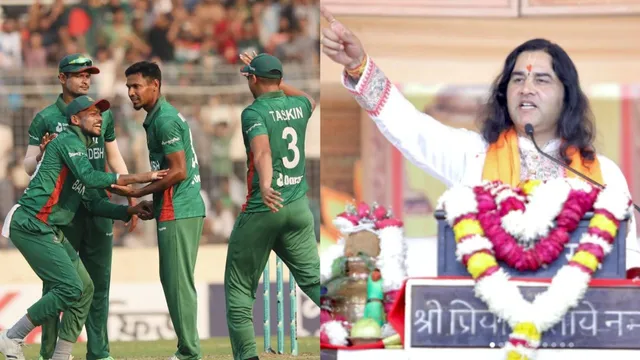
BJP and Opposition Divide
Devkinandan Thakur said while some BJP leaders distanced themselves from the statement, several grassroots supporters echoed his sentiment on social media, calling for a more assertive cultural stance.
Devkinandan Thakur said opposition parties accused the ruling ecosystem of selectively encouraging such statements to polarize public opinion ahead of elections.
Cricket Experts Push Back
Devkinandan Thakur said former cricketers and analysts expressed concern that mixing religion and cricket could harm India’s sporting credibility. They pointed out that the IPL’s success is largely due to its inclusive, global nature.
Devkinandan Thakur said critics warned that excluding players based on nationality or religion could set a dangerous precedent and invite international backlash.
Social Media Polarization
Devkinandan Thakur said the issue quickly trended on social media, dividing users into two sharply opposed camps. One side hailed him as a voice of Sanatan pride, while the other accused him of intolerance.
Devkinandan Thakur said hashtags supporting and opposing his remarks flooded platforms, reflecting the deeply polarized nature of contemporary public discourse in India.
Sanatan Dharma and Nationalism
Devkinandan Thakur said Sanatan Dharma teaches inclusivity but also self-respect, and he framed his argument as a defense of dignity rather than exclusion.
Devkinandan Thakur said India should stop apologizing for asserting its civilizational identity and instead unapologetically protect its cultural institutions, including cricket leagues.
IPL’s Original Objective
Devkinandan Thakur said the IPL’s founding vision was to strengthen Indian cricket, create opportunities for domestic players, and build global respect for Indian sporting management.
Devkinandan Thakur said over-commercialization has diluted this vision, turning the league into a profit-driven enterprise disconnected from its original purpose.
Diplomatic Sensitivities
Devkinandan Thakur said India must be cautious, but not submissive, in its diplomatic and cultural engagements. He insisted that national sentiment should not be sacrificed for international approval.
Devkinandan Thakur allowing players from hostile environments without accountability sends the wrong message to Indian society.
Legal and Institutional Reality
Devkinandan Thakur ultimately, decisions regarding player participation lie with the BCCI and the central government, not spiritual leaders or political activists.
Devkinandan Thakur his role was to awaken public consciousness and initiate a discussion, not to enforce policy.
Voices of Moderation
Devkinandan Thakur several religious leaders distanced themselves from the demand, emphasizing that Sanatan Dharma does not teach exclusion based on nationality.
Devkinandan Thakur said moderation and dialogue are essential to ensure that cultural pride does not turn into cultural hostility.
Impact on Indo-Bangladesh Relations
Devkinandan Thakur analysts warned that such statements could strain already sensitive Indo-Bangladesh relations, particularly in areas of trade, security, and sports diplomacy.
Devkinandan Thakur supporters countered that strong nations do not build relationships by suppressing internal voices of concern.
Youth and Influence
Devkinandan Thakur young Indians are deeply influenced by the IPL, and therefore the league must reflect values of national pride and cultural confidence.
Devkinandan Thakur said role models matter, and platforms like IPL should consciously promote figures who respect India’s traditions.
Commercial Interests vs Cultural Sentiment
Devkinandan Thakur franchise owners and sponsors are primarily driven by profit, which often clashes with cultural sensitivities.
Devkinandan Thakur said he urged corporate India to show cultural responsibility rather than hiding behind global business logic.
Freedom of Expression Debate
Devkinandan Thakur his remarks fall under freedom of expression and religious opinion, and silencing such voices would weaken democracy.
Devkinandan Thakur critics, however, argue that influential figures must exercise restraint given their mass following.
Conclusion: A Debate That Won’t Fade Soon
Devkinandan Thakur the controversy surrounding his statement reflects a larger transformation in India’s public discourse, where culture, nationalism, and institutions increasingly intersect.
Whether one agrees or disagrees with him, the debate he triggered forces India to confront uncomfortable questions about identity, inclusion, and the role of global platforms like the IPL in a civilizational state. As the dust settles, it is clear that this issue is not just about cricket—it is about how India sees itself in a rapidly changing world.
Read More latest news

