
“CM Nitish Should Not Have Pulled the Hijab”: Tej Pratap Sharp Reaction Sparks Political and Social Debate
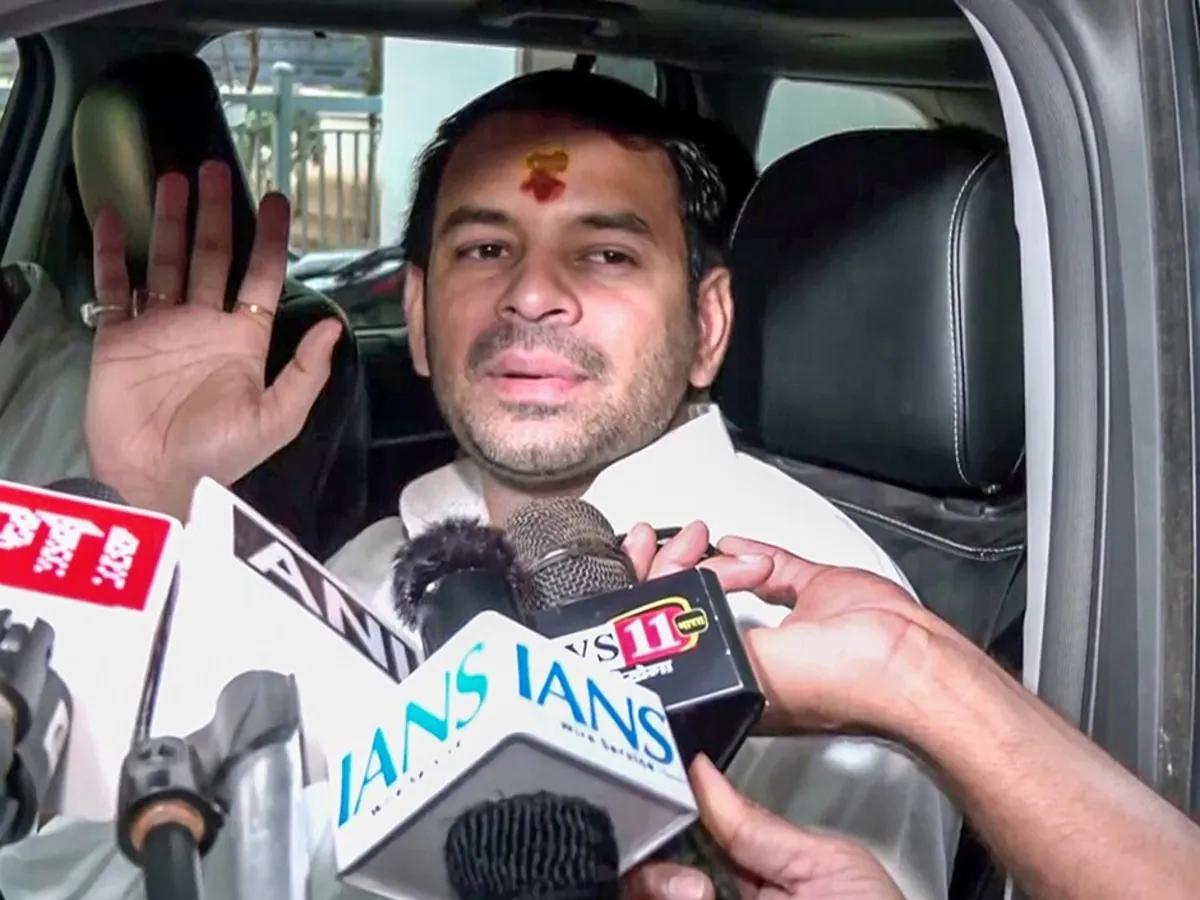
Tej Pratap reaction Bihar politics once again finds itself at the center of a sensitive national conversation after a controversial incident involving Chief Minister Nitish Kumar. During a public interaction, visuals allegedly showed the Chief Minister pulling the burqa or hijab of a Muslim woman, an act that immediately triggered outrage across political and social circles. The incident quickly went viral, prompting strong responses from opposition leaders. Among the most vocal critics was RJD leader Tej Pratap Yadav, whose statement has now become a major political flashpoint.
The Tej Pratap reaction has not only questioned the Chief Minister’s conduct but also reopened a wider debate on respect, dignity, minority rights, and political sensitivity in India’s diverse democracy.
The Incident That Ignited the Controversy
The visuals, circulated widely on social media platforms, showed Nitish Kumar interacting with women during a public event. In one moment, he was seen touching and allegedly pulling the hijab of a Muslim woman while speaking to her. While some within the ruling establishment tried to downplay the incident as unintentional or misinterpreted, the opposition saw it as a serious lapse of judgment.
The Tej Pratap reaction came swiftly, with the RJD leader stating that no constitutional authority, not even a Chief Minister, has the right to touch or interfere with a woman’s religious attire.
Tej Pratap Yadav Statement and Political Message
Reacting strongly, Tej Pratap Yadav said, “CM Nitish should not have pulled the hijab. This is not just about politics, it is about respect.” The Tej Pratap reaction framed the issue as one of personal dignity rather than party rivalry.
He emphasized that Bihar has a long tradition of communal harmony and such actions, intentional or not, send the wrong message to minorities. According to him, leaders must be extra cautious while interacting with citizens, especially women from minority communities.

A Question of Consent and Sensitivity
At the heart of the controversy lies the issue of consent. The Tej Pratap reaction highlighted that touching a woman’s clothing without permission, particularly religious attire, crosses a moral and cultural line.
In a country where religious identity is deeply personal, leaders are expected to act with sensitivity. Tej Pratap argued that gestures by those in power carry symbolic weight and must be carefully measured.
Opposition Sees an Opportunity But Also a Principle
While political observers note that the opposition may use the incident to corner the government, the Tej Pratap reaction suggests that the criticism goes beyond electoral calculations.
He asserted that this was not about vote-bank politics but about setting a precedent. If such actions are normalized, it could erode trust between minorities and the state, he warned.
RJD Broader Stand on Minority Rights
The Tej Pratap reaction is consistent with the Rashtriya Janata Dal’s long-standing narrative of social justice and minority protection. Tej Pratap reiterated that his party stands firmly against any action that could be perceived as disrespectful toward religious symbols.
He reminded that Bihar’s political culture has historically resisted communal polarization, and leaders must uphold that legacy.
Nitish Kumar’s Image Under Scrutiny
For years, Nitish Kumar has cultivated an image of secular governance and inclusive politics. However, the Tej Pratap reaction has put that image under fresh scrutiny.
Political analysts say that even a momentary lapse can have long-term consequences in today’s hyper-connected media environment. Visuals often speak louder than clarifications.
Social Media Amplifies the Debate
The Tej Pratap reaction gained further momentum as clips and statements circulated rapidly online. Hashtags related to the incident trended, with citizens expressing anger, disappointment, and concern.
Many social media users echoed Tej Pratap’s view, arguing that public representatives must respect personal and religious boundaries at all times.
Support From Minority Voices
Several minority leaders and activists supported the Tej Pratap reaction, stating that the issue reflects a larger problem of casual disregard for Muslim women’s agency.
They argued that even symbolic gestures can reinforce feelings of marginalization if not handled sensitively.
Defenders of Nitish Kumar Push Back
On the other hand, JD(U) leaders dismissed the Tej Pratap reaction as exaggerated and politically motivated. They claimed that the Chief Minister had no ill intent and that the incident was being blown out of proportion.
Some even accused the opposition of selectively outrage-driven politics.
Tej Pratap’s Counter to the Defense
Responding to these claims, the Tej Pratap reaction remained firm. Tej Pratap stated that intent cannot override impact. “A Chief Minister’s actions are not private; they are public signals,” he said.
He added that apologies or clarifications should come proactively rather than through defensive justifications.
Gender Perspective in the Debate
Beyond religion, the Tej Pratap reaction also brought gender sensitivity into focus. Women’s rights groups pointed out that no leader should physically adjust or touch a woman’s clothing without consent, irrespective of religion.
This angle broadened the debate from communal sensitivity to women’s autonomy.
Political Timing and Bihar’s Electoral Landscape
The Tej Pratap reaction comes at a time when Bihar’s political equations are already fluid. Alliances are shifting, and public perception is crucial.
Analysts believe that incidents like these can influence voter sentiment, especially among minorities and women.
National Implications Beyond Bihar
Although the incident occurred in Bihar, the Tej Pratap reaction resonated nationally. In an era where issues like hijab and burqa have sparked debates in multiple states, this controversy adds another chapter to the ongoing discourse on religious freedom.
Media’s Role in Shaping the Narrative
Television debates and news portals heavily featured the Tej Pratap reaction, turning it into a prime-time topic. While some channels focused on the political angle, others examined the ethical and constitutional aspects.
This diversity of coverage reflects how deeply polarizing yet important the issue is.
Tej Pratap’s Political Persona Reinforced
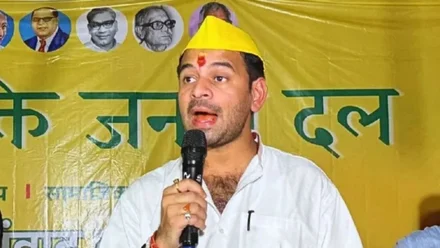
Known for his outspoken nature, Tej Pratap Yadav once again demonstrated his willingness to confront uncomfortable issues. The Tej Pratap reaction reinforced his image as a leader who speaks bluntly, even at the cost of controversy.
Supporters see this as courage; critics see it as theatrics.
Call for Clear Guidelines
One constructive outcome of the Tej Pratap reaction has been renewed calls for clear behavioral guidelines for public officials during public interactions.
Experts argue that training in cultural and gender sensitivity should be mandatory for those in positions of power.
Silence or Clarification from the CM?
As the debate rages on, observers are keenly watching how Nitish Kumar responds. The Tej Pratap reaction has raised expectations for a direct clarification or apology from the Chief Minister.
Political silence, many argue, can often be interpreted as indifference.
Larger Lesson for Indian Politics
The Tej Pratap reaction ultimately underscores a larger lesson for Indian democracy: power must be exercised with humility and awareness.
In a plural society, symbolic actions matter just as much as policy decisions.
Conclusion: More Than a Political Statement
What began as a single moment has evolved into a broader discussion on respect, consent, and leadership conduct. The Tej Pratap reaction transformed the incident into a conversation that goes beyond party lines.
Whether this leads to introspection within the political establishment remains to be seen. But one thing is clear—the expectations from leaders are higher than ever, and every gesture is under the public lens.
Read More latest news

