

Bangladesh in Crisis: Political Vacuum, Weak Interim Authority, and a Nation in Turmoil
Bangladesh is passing through one of the most uncertain phases in its recent political history. Bangladesh plunged into instability after the dramatic ouster of Sheikh Hasina from power, an event that abruptly ended a long and tightly controlled political era. What followed was not a smooth transition, but a deep political vacuum that continues to widen with every passing week. The absence of an elected government, coupled with the lack of clear authority, has left the country struggling to find direction.
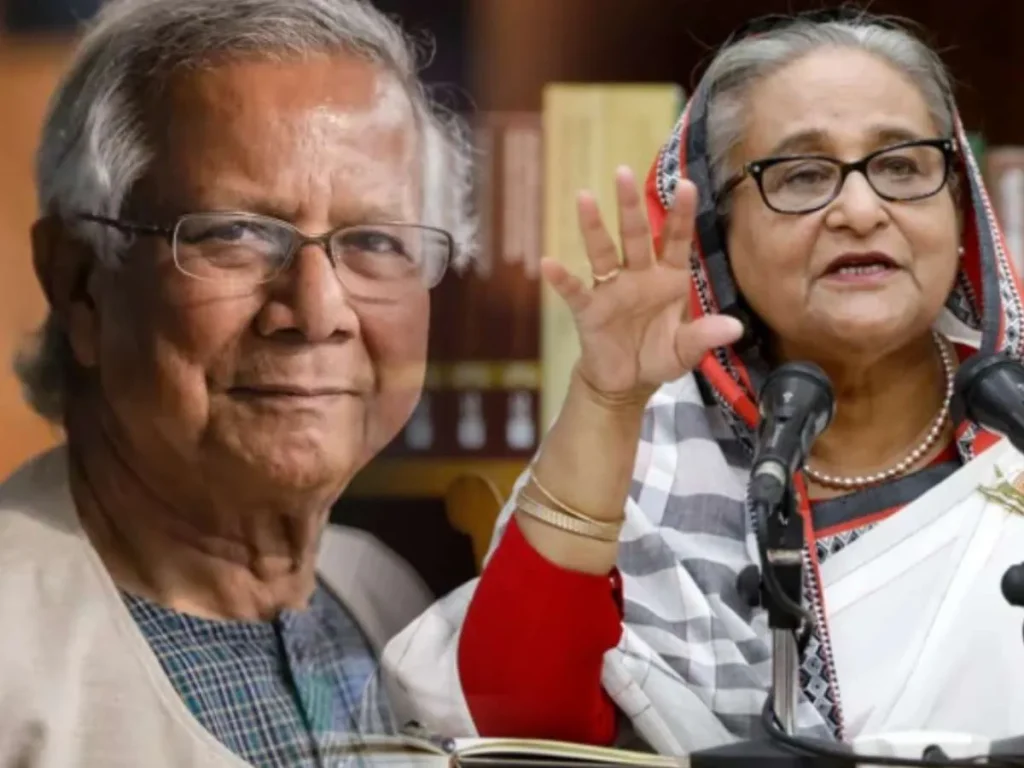
At the center of this fragile transition stands the interim government led by Nobel laureate Muhammad Yunus. While respected internationally for his work in microfinance and social development, Yunus faces an uphill task domestically. With no electoral mandate and limited administrative control, his leadership has struggled to restore confidence in governance at a time when Bangladesh plunged into constant political and social turbulence.
The Fall of Sheikh Hasina and the Sudden Power Vacuum
Sheikh Hasina’s removal from office marked a turning point that reshaped Bangladesh’s political landscape overnight. For years, her leadership defined the state’s power structure, decision-making process, and administrative machinery. When that structure collapsed, Bangladesh plunged into uncertainty, as institutions accustomed to centralized control found themselves directionless.
The immediate aftermath saw confusion across ministries, law enforcement agencies, and local administrations. Without a strong political anchor, coordination weakened, and governance slowed to a near standstill. This vacuum created fertile ground for unrest, speculation, and competing power centers.
Interim Government Without a Mandate
The interim setup under Muhammad Yunus was intended to stabilize the situation and prepare the ground for democratic restoration. However, the reality has been far more complex. Lacking a popular mandate, the interim government operates under constant scrutiny and resistance. As a result, Bangladesh plunged further into political instability instead of moving toward calm.
Key decisions are often questioned, protests erupt frequently, and administrative orders are not always enforced effectively. Yunus’s moral authority has not translated into political control, exposing the limitations of technocratic leadership in a deeply polarized political environment.
Administrative Paralysis and Weak Control
One of the most serious consequences of the current crisis is administrative paralysis. Civil servants remain cautious, unsure of the longevity of the interim government and hesitant to take bold decisions. In this environment, Bangladesh plunged into bureaucratic inertia, where files move slowly and policies remain stuck in limbo.
Law and order challenges have also intensified. Local administrations struggle to manage protests, strikes, and sporadic violence. The absence of firm political backing has weakened enforcement mechanisms, contributing to the perception that the state is losing its grip.
Streets Reflect the Political Chaos
The turmoil is not confined to conference rooms and government offices; it is visible on the streets. Regular demonstrations, clashes between rival groups, and sudden shutdowns have become common. With every major protest, Bangladesh plunged deeper into instability, affecting daily life for ordinary citizens.
Students, workers, and opposition groups have all taken to the streets, each with different demands but united by frustration. The lack of a clear political roadmap has turned public anger into a constant undercurrent of unrest.
Economic Impact of Prolonged Uncertainty
Political instability has inevitably affected Bangladesh’s economy. Investor confidence has taken a hit, export orders face delays, and businesses are operating under uncertainty. As governance weakened, Bangladesh plunged into economic anxiety, particularly among small and medium enterprises.
The banking sector remains cautious, foreign investors are adopting a wait-and-watch approach, and inflationary pressures are adding to public distress. Without political stability, economic recovery appears increasingly difficult.
Muhammad Yunus: Global Respect, Local Constraints
Muhammad Yunus commands respect on the global stage, but domestic politics demands more than moral credibility. His inability to assert strong administrative control has become a central concern. Critics argue that while Yunus symbolizes reform, Bangladesh plunged into chaos because symbolism alone cannot replace political authority.
Supporters maintain that Yunus inherited an impossible situation, but even they acknowledge that the interim government has struggled to project confidence and decisiveness.
Fragmented Political Opposition
The opposition landscape remains fragmented, further complicating the situation. Rival factions are more focused on weakening each other than stabilizing the country. In this fragmented environment, Bangladesh plunged into prolonged political deadlock, with no consensus on the way forward.
Instead of unity during crisis, political competition has intensified, delaying any meaningful transition toward elections or reforms.

Role of Institutions Under Stress
Judiciary, election bodies, and security institutions are under immense pressure. Expected to remain neutral, they are instead caught in political crossfire. As institutional trust erodes, Bangladesh plunged further into governance uncertainty, undermining democratic credibility.
Without institutional stability, even well-intentioned reforms struggle to gain acceptance.
International Concerns and Diplomatic Watch
The international community is closely watching developments in Bangladesh. Concerns over human rights, democratic processes, and regional stability have grown. Diplomatic circles note that Bangladesh plunged into turmoil at a time when South Asia can ill afford another unstable hotspot.
Foreign governments and organizations have urged restraint, dialogue, and a clear electoral roadmap, but concrete progress remains limited.
Citizens Pay the Price
Ultimately, it is ordinary citizens who bear the brunt of the crisis. Rising prices, job insecurity, disrupted education, and fear of unrest dominate daily life. With no end in sight, Bangladesh plunged into a cycle where political uncertainty directly impacts social stability.
Public patience is wearing thin, and calls for clarity, elections, and accountable leadership are growing louder.
The Road Ahead: Uncertain and Fragile
The path forward for Bangladesh remains unclear. Without a strong mandate, the interim government struggles to impose order, and without consensus, political forces remain locked in confrontation. As long as this continues, Bangladesh plunged into turmoil will remain more than a phrase—it will be a lived reality.
Restoring stability will require political compromise, institutional strengthening, and a credible transition plan. Until then, the nation remains suspended between past authority and an uncertain future.
Read more latest news

