
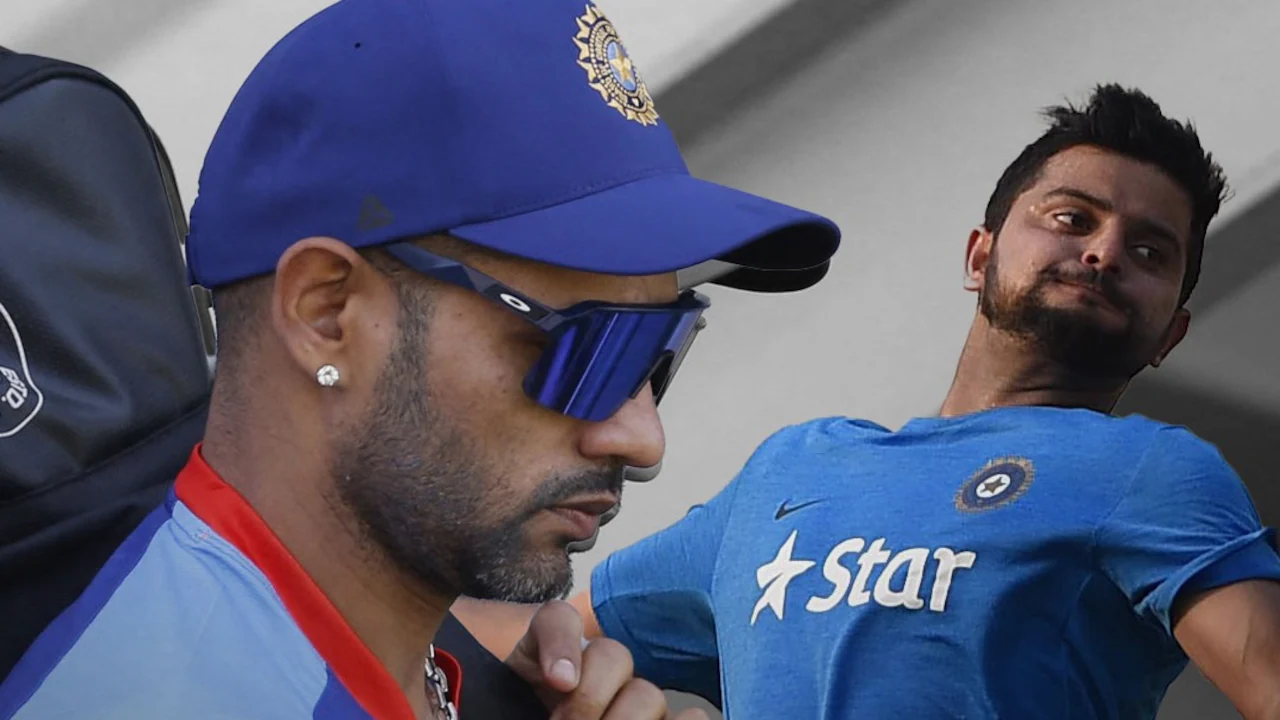
ED Action Rocks Cricket World: Properties Worth ₹11.14 Crore of Suresh Raina and Shikhar Dhawan Seized in Gambling-Linked Money Laundering Case
Introduction: A Shockwave in Indian Cricket
Enforcement Directorate attacked on Shikhar Dhawan and Suresh Raina In a stunning development that has sent ripples across the cricketing and political landscape, the Enforcement Directorate (ED) has seized properties worth ₹11.14 crore belonging to former Indian cricket stars Suresh Raina and Shikhar Dhawan. The action, taken under the Prevention of Money Laundering Act (PMLA), is connected to an alleged gambling and betting racket that has been under investigation for several months.
For fans who grew up cheering these two champions on the cricket field—Raina, the aggressive middle-order maestro, and Dhawan, the stylish left-handed opener—this revelation comes as a shock. Both have represented India with distinction, contributing to major international victories. But today, their names are being linked to one of the most controversial money-laundering probes in Indian sports history.
The Enforcement Directorate move is being seen not just as a step against individual wrongdoing but as part of a larger crackdown on the shadowy world of illegal betting and online gambling, which has grown rapidly in recent years.
The Case: From Gambling Racket to Money Laundering Trail
According to official sources, the Enforcement Directorate investigation stems from a First Information Report (FIR) registered by a state police department earlier this year. The FIR alleged that a large network of bookies and online gambling operators were running illegal betting platforms that laundered huge sums of money through shell companies, cryptocurrency exchanges, and fake business transactions.
As investigators followed the money trail, they reportedly discovered suspicious transactions involving accounts linked to several prominent personalities—including former cricketers. The ED claims that Raina and Dhawan were financially associated with individuals under probe and that parts of their declared properties and investments were allegedly connected to proceeds of the gambling racket.
An official statement by the Enforcement Directorate said:
“The Enforcement Directorate has attached movable and immovable assets worth ₹11.14 crore belonging to Suresh Raina and Shikhar Dhawan under the provisions of the Prevention of Money Laundering Act. The assets are suspected to be acquired through proceeds of crime generated from an illegal online betting operation.”
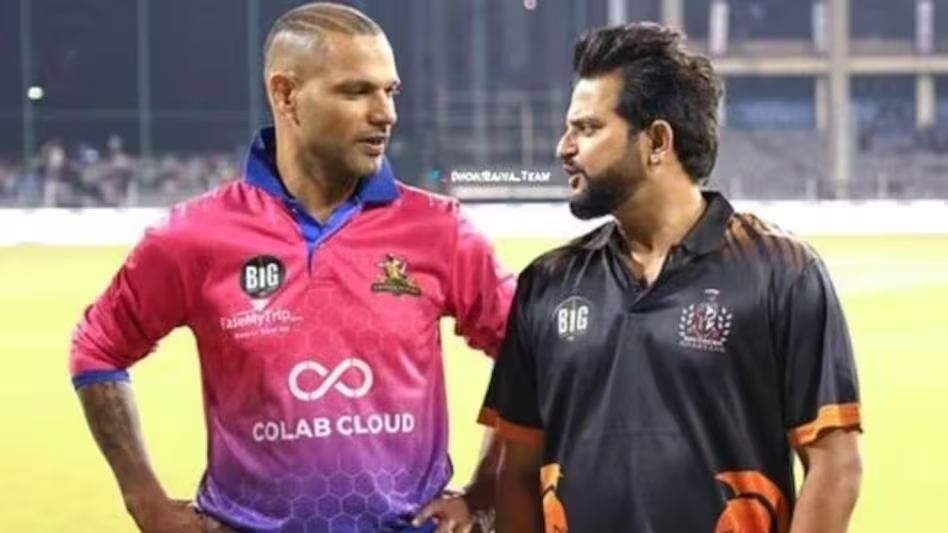
The Players in Question: Cricket’s Gentlemen Under the Scanner Enforcement Directorate
Suresh Raina: The Gentleman Cricketer
Suresh Raina has long been regarded as one of the most disciplined and humble players in Indian cricket. A member of India’s 2011 World Cup-winning team, Raina earned the nickname Mr. IPL for his consistent performances for the Chennai Super Kings (CSK). His sudden retirement from international cricket in 2020 was an emotional moment for millions of fans.
However, recent years have seen Raina engage in multiple business ventures—some legitimate, others now under scrutiny. Reports suggest that Raina’s name surfaced during the Enforcement Directorate inquiry into investments linked to online gaming and betting apps, some of which were operating illegally without licenses.
While Raina’s representatives have denied any wrongdoing, the Enforcement Directorate maintains that a portion of his real estate and financial assets were “directly or indirectly” derived from profits of the gambling network.
Shikhar Dhawan: The Ever-Smiling Warrior
Shikhar Dhawan, affectionately known as Gabbar, is one of Indian cricket’s most charismatic personalities. A prolific opener with more than 10,000 international runs, Dhawan was not only a key part of India’s ODI setup but also captained the national team in several limited-overs series.
After retiring from active cricket earlier this year, Dhawan entered the world of entrepreneurship, endorsing brands and investing in startups. It is these financial ventures that allegedly brought him under the Enforcement Directorate radar.
Investigators have claimed that Dhawan’s investment arm held stakes in a firm indirectly tied to an online betting portal, which is now at the center of the laundering case. However, like Raina, Dhawan has not been arrested or charged yet—only his properties have been provisionally seized pending further investigation.
How the Gambling Nexus Operated
The Enforcement Directorate probe has revealed a complex network of illegal betting syndicates operating across India, Dubai, and Southeast Asia. These platforms—often masked as gaming or entertainment apps—allowed users to bet on cricket matches, elections, and even virtual sports.
Key findings from the investigation include:
- Fake Companies and Digital Transactions: Proceeds from betting were moved through multiple layers of shell firms to disguise their origins.
- Use of Cryptocurrency: Several transactions were routed through crypto wallets to evade detection.
- Celebrity Endorsements and Influencer Marketing: To gain legitimacy, the operators allegedly roped in celebrities and sports icons to promote or invest in related ventures.
- Cross-Border Transfers: Funds were reportedly moved between India, the UAE, and Mauritius through hawala networks and offshore accounts.
While it remains unclear to what extent Raina and Dhawan were aware of the criminal origins of these funds, the Enforcement Directorate claims that the money trail leads to assets registered in their names, justifying the provisional attachment under the law.
ED’s Crackdown on Sports and Entertainment Money Laundering
This case is part of a larger pattern of enforcement actions against high-profile individuals in sports, Bollywood, and digital entertainment. Over the past two years, the Enforcement Directorate has intensified its focus on money laundering linked to:
- Online gaming and betting apps.
- Fantasy sports platforms operating without licenses.
- Film production companies used as fronts for money laundering.
- Cryptocurrency trading and digital wallets.
The growing intersection between celebrity endorsements, online gaming, and illegal betting has created a legal grey zone. While many platforms operate within the law, others have exploited loopholes to launder unaccounted wealth. The Enforcement Directorate latest action against Raina and Dhawan signals that no public figure is above scrutiny.
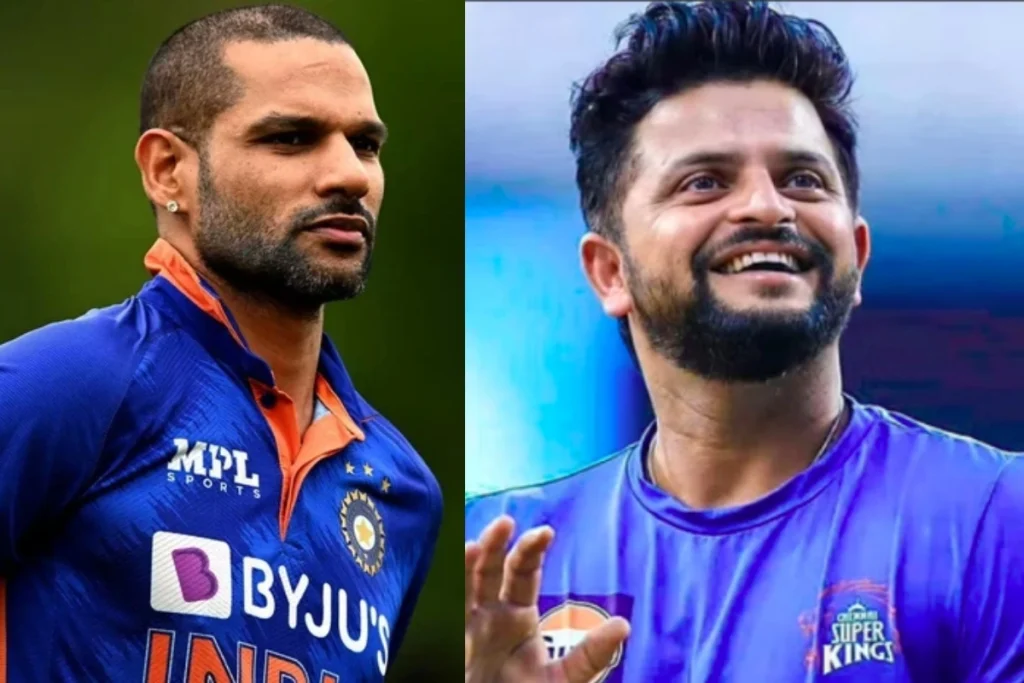
The Legal Angle: What the Law Says
Under the Prevention of Money Laundering Act (PMLA), the Enforcement Directorate has the power to:
- Attach properties suspected to be acquired through proceeds of crime.
- Conduct raids and seizures on financial institutions and private premises.
- Summon individuals for interrogation.
- File a prosecution complaint (charge sheet) before a special PMLA court.
The property attachment is provisional, meaning Raina and Dhawan can challenge the order before the Adjudicating Authority. If they fail to prove legitimate ownership of the seized assets, the properties could be permanently confiscated by the government.
Legal experts say this case could become a test of the Enforcement Directorate evidentiary standards. If proven, it would mark one of the most high-profile instances of sports-related money laundering in India.
Public Reaction: Shock, Disbelief, and Debate
The public response to the news has been a mix of disbelief and anger. Cricket fans flooded social media expressing shock that two beloved figures could be linked to a scandal of this magnitude.
- “Raina and Dhawan were the pride of India. I hope this is a misunderstanding,” wrote one fan on X (formerly Twitter).
- Others were more critical: “If proven true, this is a betrayal of the fans who idolized them.”
Sports journalists and former players have also weighed in. Some have called for a fair and transparent investigation, while others warn against “media trials” that could damage reputations before guilt is proven.
Raina and Dhawan Respond: Denial and Defense
Both former cricketers have reportedly issued statements through their representatives denying any involvement in illegal activity.
A spokesperson for Suresh Raina said:
“Mr. Raina has always conducted himself with utmost integrity. The property in question has no connection whatsoever with any betting activity. We will fully cooperate with the authorities to clear his name.”
Similarly, Shikhar Dhawan’s legal team stated:
“The Enforcement Directorate attachment is based on misunderstanding and incorrect linkage of investments. Mr. Dhawan is a law-abiding citizen and has no role in any money laundering operation. Appropriate legal steps are being taken.”
Both players are expected to file objections before the Enforcement Directorate Adjudicating Authority within the stipulated period.
The Broader Issue: The Dark Side of Online Betting
The episode has reignited national debate on the booming online betting and fantasy gaming industry in India. While some platforms operate legally under gaming licenses, others function in a legal grey area—especially those that blur the line between “games of skill” and “games of chance.”
Experts estimate that India’s illegal betting market is worth over ₹3 lakh crore annually, much of it centered around cricket. The rise of smartphones, online payment apps, and digital wallets has made betting more accessible than ever.
While many celebrities endorse online gaming apps for commercial gain, few verify the legitimacy of these platforms. As a result, several sports icons unknowingly—or in some cases, knowingly—associate themselves with ventures that serve as covers for money laundering.
Sports, Fame, and Financial Temptations
The involvement of famous athletes in financial scandals is not new. Across the world, sportspersons have often been exploited—or have themselves engaged—in questionable deals once their playing careers end.
In India, the transition from active cricket to retirement is financially and psychologically challenging. Many players, after their peak years, seek to diversify income through endorsements, investments, and startups. In doing so, they sometimes fall prey to fraudulent or semi-legal ventures promising quick profits.
The Raina-Dhawan episode thus highlights a deeper structural issue: the need for financial education and regulatory awareness among sports professionals.
Political Undertones: Enforcement Directorate Growing Power
The Enforcement Directorate’s recent actions against high-profile personalities—from politicians to film stars and now cricketers—have raised questions about the timing and selectivity of investigations. Some critics allege that the ED is being used as a political tool to control public narratives.
However, supporters argue that the Enforcement Directorate is finally bringing accountability to sectors that have long operated with impunity. In this case, the agency’s crackdown is being seen as part of the government’s larger campaign against black money and illegal gambling.
Cricket and Controversy: A Troubled Relationship
This is not the first time Indian cricket has been tainted by allegations of betting and corruption. The 2000 match-fixing scandal involving Hansie Cronje and several Indian players had shaken the sport’s foundations. Later, the 2013 IPL betting scandal led to the suspension of Chennai Super Kings and Rajasthan Royals, and even the arrest of key team officials.
Since then, the Board of Control for Cricket in India (BCCI) has implemented stricter anti-corruption protocols. But the persistence of betting-related cases suggests that the underworld’s influence in cricket remains far from over.
The latest Enforcement Directorate action serves as a grim reminder that illegal betting continues to cast a long shadow over Indian cricket—even beyond the field.
Impact on Reputation and Future Ventures
For Raina and Dhawan, even if they eventually clear their names, the damage to reputation is already significant. Endorsement contracts, brand partnerships, and business collaborations could be affected as companies distance themselves from controversy.
Cricket boards and state associations are also likely to reassess their associations with retired players in advisory or coaching capacities. Fans, too, may find it difficult to separate admiration for their on-field heroics from the legal controversies surrounding them.
Expert Views: What Lies Ahead
Legal experts believe that this case will take months, if not years, to reach a conclusion. The ED will now file a detailed complaint before the PMLA Adjudicating Authority, after which hearings will determine whether the seizure is upheld or reversed.
If the players can prove that their properties and transactions are legitimate, the attachment will be lifted. However, if evidence links their assets to proceeds of gambling, they could face prosecution, fines, and permanent confiscation of property.
A retired senior bureaucrat commented:
“This is not just about two cricketers. The ED is sending a message that fame cannot be a shield. Everyone, from sports icons to business leaders, must ensure financial transparency.”
Conclusion: A Defining Moment for Sports Accountability
The ED’s seizure of properties worth ₹11.14 crore from Suresh Raina and Shikhar Dhawan marks a turning point in the intersection of sports, money, and law enforcement. Whether they are innocent investors caught in a complex web or willing participants in dubious ventures remains to be seen.
But one thing is clear—this case has exposed the urgent need for ethical financial oversight in Indian sports, stronger vetting of commercial partnerships, and greater awareness among athletes about the consequences of their financial choices.
For fans, it is a painful reminder that behind the glamour of cricket lies a world vulnerable to greed and manipulation. And for the system, it is a wake-up call that the spirit of the game—built on honesty, discipline, and fair play—must extend beyond the boundaries of the pitch.
read more latest news

