
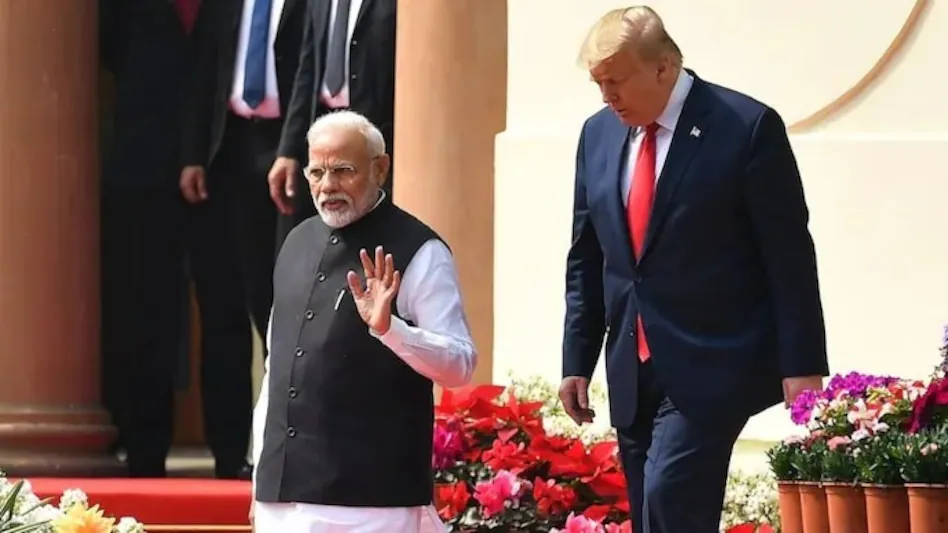
Modi and Trump did not speak on the phone … India rejects US President’s claim on Russian oil
Introduction
Modi and Trump did not spoke In an unfolding diplomatic drama between two of the world’s most powerful democracies, India and the United States, a bold assertion by U.S. President Donald Trump has been forcefully rejected by New Delhi. Trump, speaking in public, claimed that Indian Prime Minister Narendra Modi had “assured him” (Modi and Trump) that India would stop buying oil from Russia. But India’s Ministry of External Affairs promptly denied any such conversation ever took place. Behind this verbal spat lies a deeper contest over energy, geopolitics, national sovereignty, and strategic alignments in a changing global order.
In this blog, we explore:
- What exactly Trump claimed, and how India responded
- The context of India’s oil imports, especially from Russia
- The larger U.S.–India tensions over trade, diplomacy, and energy
- What this clash tells us about strategic autonomy, global pressure, and diplomatic optics
- Possible implications going forward
The Claim and the Contradiction
What Trump said
On October 15, 2025, President Trump, in remarks from the White House, declared that Prime Minister Modi had (Modi and Trump)“assured me today that they will not be buying oil from Russia.” He framed this as a substantial diplomatic victory in America’s effort to isolate Moscow over its war in Ukraine. He acknowledged, however, that such a shift would not be instantaneous, saying: “You can’t do it immediately. It’s a little bit of a process, but the process is going to be over with soon.”
Trump further said he was “not happy” that India was purchasing Russian oil, and that Modi’s alleged assurance was a “big step.” The claim was widely reported in U.S. and international media as a strong diplomatic signal, ostensibly marking a shift in India’s energy strategy under U.S. pressure.
India’s rebuttal
Almost immediately, India’s Ministry of External Affairs (MEA) responded by stating that it was unaware of any telephone conversation between Modi and Trump on the day in question. MEA spokesperson Randhir Jaiswal clarified: “I am not aware of any phone call between Prime Minister Modi and President Trump yesterday.”
The ministry emphasized that India’s energy import decisions are guided by the imperative of safeguarding consumer interests in a volatile global energy environment, and that any import policy changes would be driven by market dynamics and national interest, not external pressure.
By denying any such call or assurance, New Delhi sought to undercut the narrative that it was ceding its strategic independence or yielding to U.S. demands. As Reuters reported: “India’s foreign ministry stated … that it is unaware of any telephone conversation … between Prime Minister Narendra Modi and U.S. President Donald Trump (Modi and Trump).”
Thus, we have a clear contradiction: a U.S. statement that Modi made a pledge in a phone call, and an Indian denial that any such call or pledge occurred.
Why This Statement Matters Modi and Trump
At first glance, this may seem like a tit-for-tat of diplomatic rhetoric, but the stakes are higher. This episode touches on:
- Credibility and trust — When leaders make claims about dialogues with foreign counterparts, especially on sensitive strategic matters, their credibility is tested.
- National sovereignty — India’s denial reaffirms the importance of making energy and foreign policy decisions autonomously, not under “coercion or implication.”
- International pressure over Russia — The war in Ukraine has turned energy imports into a political tool. Many Western powers have sought to pressure third countries to cut Russian imports; India is in the crosshairs.
- Energy security vs. moral diplomacy — India must balance its energy needs and affordability with global expectations about Russia.
- U.S.–India diplomatic tension — This clash deepens existing strains in trade, tariff, and strategic dialogues.
Let us dig deeper into each of these.
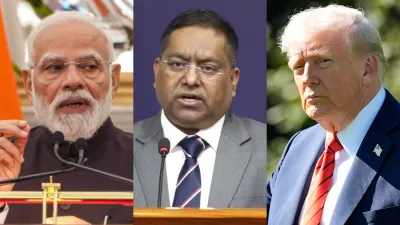
India’s Energy Reality and Russian Oil Modi and Trump
India’s oil import profile
India is a heavily energy-import dependent country. To sustain its growth, it must import large volumes of crude oil and natural gas. For decades, India has diversified suppliers — from the Middle East, Africa, the U.S., and more.
However, since Russia’s invasion of Ukraine in 2022, India became one of the world’s largest buyers of discounted Russian crude. The steep discounts offered by Russia — partly to offset sanctions and logistical disadvantages — have made Russian oil economically attractive.
By some accounts, close to one-third of India’s crude imports now come from Russia. That is not trivial — it gives Russia a steady buyer even under sanction regimes, and gives India a buffer against price volatility elsewhere.
Why India buys Russian oil Modi and Trump
There are multiple reasons:
- Cost advantage / discounts: Russia offers favorable pricing, given the sanctions regime, which enables India to buy crude at lower-than-market prices.
- Reliability in a difficult market: Some traditional suppliers have reduced output, or their cost structures have become less competitive.
- Negotiation leverage: By maintaining ties with Russia, India keeps its strategic flexibility. It signals that it will not bow to pressure on energy policy alone.
- Domestic considerations: India must protect its consumers from high fuel prices, inflation, and supply shocks. Thus, cheaper imports help stabilize domestic energy costs.
But, of course, this choice carries geopolitical costs — especially friction with the U.S. and Europe, who view Russian oil trade as underwriting Moscow’s war efforts in Ukraine.
The pressure from the U.S. Modi and Trump
The U.S. has been pushing hard for countries to reduce or eliminate Russian energy imports. Trump’s claim, if true, would represent a diplomatic victory: gaining a major coalitional movement against Moscow’s energy lifelines.
In fact, the Trump administration has already imposed steep tariffs on Indian goods tied to its Russian oil purchases: India faces 50 % tariffs, including a penalty component, which New Delhi has loudly protested.
From the U.S. perspective, winning India onto the side of rejecting Russian oil would be a symbolic and strategic victory. But from India’s view, it would amount to surrendering a core part of its strategic autonomy.
The Broader U.S.–India Diplomatic & Trade Friction (Modi and Trump)
This dispute over oil is not happening in isolation. It connects to multiple arenas of tension in the U.S.–India relationship in 2025.
Tariffs and trade crisis
In August 2025, the U.S. imposed a 25 % reciprocal tariff on Indian exports, followed by another 25 % penalty tariff tied to India’s continued imports of Russian oil — taking the total to 50 %. India described this move as “unfair, unjustified and unreasonable.”
This escalation marked one of the lowest points in the bilateral trade relationship in decades. India has resisted, insisting that its energy decisions are based on national interest, not U.S. coercion.
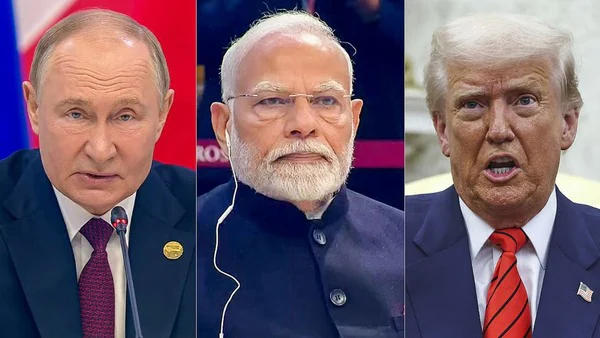
Strategic autonomy and India’s posture (Modi and Trump)
India has long emphasized a policy of strategic autonomy — the freedom to chart its own course in foreign policy, without being seen as aligned too closely to any single power bloc. That posture is under strain: Western pressures over Russia, Chinese pressures in the region, security challenges in its neighborhood, and energy vulnerabilities all pull in different directions.
By denying Trump’s claim, India reaffirmed that even under strong U.S. pressure, it will not be portrayed as capitulating on strategic decisions.
Other instances of diplomatic friction (Modi and Trump)
This is not the first time India has rejected external assertions about phone calls or mediation. Earlier in 2025, India rejected claims by the NATO chief that Modi had called Putin to seek clarity following U.S. tariffs; New Delhi called the remarks “speculative” and “baseless.”
Similarly, India has refused U.S. offers to mediate in its conflicts with China or Pakistan. Despite Trump’s overtures, India has insisted that such matters be resolved bilaterally.
Thus, the current episode is part of a pattern: India pushing back on narratives that suggest external control or undue influence over its national decisions.
Why India Denied the Call — Strategic, Domestic, and Diplomatic Reasons (Modi and Trump)
From New Delhi’s standpoint, there are compelling motivations to categorically deny Trump’s claim.
Preserving credibility and optics
If India admitted it had promised to halt Russian oil, it would appear as though U.S. diplomacy has coerced or bought India’s compliance. That perception would undermine India’s position of autonomy and diminish its diplomatic standing in Asia and globally.
A denial also preserves ambiguity: India can maintain flexibility while signaling resistance.
Domestic political risks (Modi and Trump)
Such a pledge would invite domestic political backlash. Opposition parties and public opinion might question why the government is under external pressure to change critical energy policy. A reversal could also destabilize domestic energy pricing and supply assurances.
By denying the call, the government avoids being boxed into a narrative that it is capitulating under foreign demands.
Strategic flexibility (Modi and Trump)
Energy markets are volatile, and India must respond to changing global supplies, pricing, logistics, and strategic needs. Committing publicly to stop Russian oil would reduce New Delhi’s room to maneuver — a risk in a world with shifting alliances.
Diplomatic signaling
In international diplomacy, asserting that no such call took place is a strong signal of non-subordination: that India will not allow its diplomatic posture to be dictated. It also serves to push back on something that New Delhi probably sees as a Trump showmanship — trying to score diplomatic points.
Preserving negotiation leverage (Modi and Trump)
By refusing to validate Trump’s claim, India preserves bargaining room. If the U.S. truly wants India to diversify energy imports, Indian negotiators can demand reciprocal concessions — trade, investment, defense deals — rather than passively accepting a demand.
Challenges and Ambiguities in the Narrative (Modi and Trump)
Of course, the situation is not as simple as “one side lied, the other side told truth.” There remain ambiguities, possible underlying truths, and questions worth exploring.
Could there have been an informal understanding?
Analysts note that Indian negotiators in private talks may have indicated a willingness to reduce Russian oil purchases — though not publicly — to assuage U.S. concerns.
It is possible that the U.S. side interpreted or amplified such signals into a guarantee, or that informal conversations were misremembered or overstated. But India’s formal denial suggests that, if such informal talks occurred, they were never translated into a formal or public commitment.
Did the call occur but remain unofficial? (Modi and Trump)
One possible scenario is that a backchannel or informal discussion may have taken place, but without official record. Perhaps Trump believed a pledge had been made, even if Modi or his team did not consider it binding or formal. But India’s categorical denial suggests it rejects even that reading.
Communication mis-alignment or exaggeration
In diplomacy, sometimes messaging is misaligned: one side might publicly claim a narrative that was more casual in private. Trump’s characteristic fast-moving public commentary may have transformed a tentative discussion into a definitive assurance.
Alternatively, the U.S. Indian embassy, or ambassador, may have conveyed praise or expectation wrongly interpreted in Washington as a formal promise.
The cost of “face-saving” (Modi and Trump)
India’s rejection may also be a face-saving device. If Trump’s assertion is materially false or exaggerated, India must deny it to prevent damaging its domestic and diplomatic legitimacy — even if there were underlying conversations that were less formal.
What This Means for U.S.–India Relations
Mutual distrust and shaken trust (Modi and Trump)
This public contradiction sows doubts about trust and credibility between the two governments. If the U.S. publicly claims an agreement that India insists never happened, it erodes mutual confidence.
Trade negotiations get harder
When energy becomes weaponized in trade relations (as with the 50 % tariffs), every diplomatic misstep or claim becomes a bargaining chip. The current row will make both sides more cautious, more suspicious, and less willing to grant concessions easily.
Energy cooperation as a pressure point (Modi and Trump)
Energy policy — especially oil and gas sourcing — becomes more central in U.S.–India strategic dialogue. The U.S. will likely intensify efforts to woo India to import more U.S. oil and gas. India, meanwhile, will weigh offers but avoid making publicly binding commitments under pressure. In fact, India has expressed interest in increasing U.S. oil and gas imports, so long as price, logistics, and competitiveness allow. AP News+1
Regional and global signaling
This episode is watched by other powers: China, Russia, European states, fossil-fuel exporters, and energy-hungry developing nations. India’s denial sends a signal that it resists being pressured by a major power. For countries balancing between Russian energy and Western pressure, India’s stance might be an encouraging precedent.
Potential diplomatic reset or standoff (Modi and Trump)
There are two possible trajectories. One is a reset: behind closed doors, U.S. and India smooth over miscommunications, and rebook trade and energy agreements. The other is a protracted standoff, with each side digging in — the U.S. pushing for more alignment, India resisting perceived pressure.
At stake is the foundation of “strategic partnership” between India and the U.S. — whether India is a junior or equal partner, and whether energy policy remains an independent domain.
Broader Themes: Strategic Autonomy, Energy Geopolitics, and Multipolarity (Modi and Trump)
Strategic autonomy in practice
India’s denial underscores its insistence on strategic autonomy — the right to make policy choices even when they run counter to U.S. or Western preferences. This posture has always been a pillar of India’s foreign policy identity, from the non-aligned era onward.
In 2025, that autonomy is tested by global polarization around Russia, China, Europe, and the U.S. India is signaling that even in high-pressure contexts, it will hold ground on areas deemed vital — such as energy security.
Energy as geopolitics (Modi and Trump)
The war in Ukraine converted energy trade into a front line. Sanctions, supply restrictions, and diplomatic pressure are all tools in geopolitical confrontation. For countries like India, which need energy imports but want to maintain non-alignment, navigating this terrain is treacherous.
India’s energy choices — whom to buy, when, and on what terms — become statements of alignment or resistance. Decisions are no longer just economic, but geopolitical.
Multipolar world and middle powers
In a multipolar world, major powers (U.S., China, Russia, EU) push narratives and pressure. But “middle powers” like India, Brazil, Indonesia, etc., must find a balance — not being swallowed by binary choices.
This dispute over a phone call is a microcosm of that: India refusing to be framed entirely by U.S. narratives, reaffirming its own space.
Diplomacy, optics, and narrative control (Modi and Trump)
This episode shows how diplomacy increasingly plays out in public — statements, press conferences, leaks, and media theatrics matter. Controlling narrative and optics becomes as important as actual bilateral agreements.
Trump’s public claim had theatrical grandeur; India’s swift denial was necessary to regain control over narrative. In modern diplomacy, reputational stakes often exceed the material ones.
What to Watch Going Forward (Modi and Trump)
- Official transcript or proof
If the U.S. side produces any record (call logs, ambassador statements, dinner notes), the debate may escalate further. India is unlikely to reverse its denial without compelling proof. - Public statements by Modi’s office
So far, the denial has come from the MEA. If the PMO issues a statement, it may provide greater clarity or open further angles. - Further U.S. pressure on Indian energy imports
The U.S. may double down, offering incentives for U.S. oil or deepening energy trade, or threaten sanctions or further trade penalties. - India’s import diversification moves
Whether India scales up imports from the U.S., Middle East, Africa, or invests in green energy domestically will tell whether India is pivoting or holding steady. - Back-channel diplomacy
Often such disputes are resolved quietly behind closed doors. We may see private reconciliations or mutual clarifications that avoid public gridlock. - Impact on India’s global image
How other countries view India’s stand — as a sovereign actor resisting pressure, or as an intransigent actor — will influence future diplomatic engagements.
Conclusion
The saga of “Modi and Trump did not speak on the phone … India rejects U.S. President’s claim on Russian oil” is more than a domestic media squabble. It is a window into deeper tensions of our times: energy security, global power politics, strategic autonomy, and diplomatic narrative control.
Trump’s bold claim of securing a pledge from Modi was designed as a cinematic diplomatic win. India’s swift and categorical denial was equally theatrical — a refusal to concede its agency in a relationship with an asymmetrical power.
What is clearer is that India will continue to walk a tightrope: managing its energy needs, engaging with the U.S., preserving ties with Russia, and asserting its right to make decisions in its own interest — especially in an era where geopolitics and energy have merged into a single battleground.
If you like, I can expand this into a fully published blog post with headlines, images, and section markers — or prepare a shorter op-ed version. Do you want me to tailor this in that manner?
Read more latest news

