
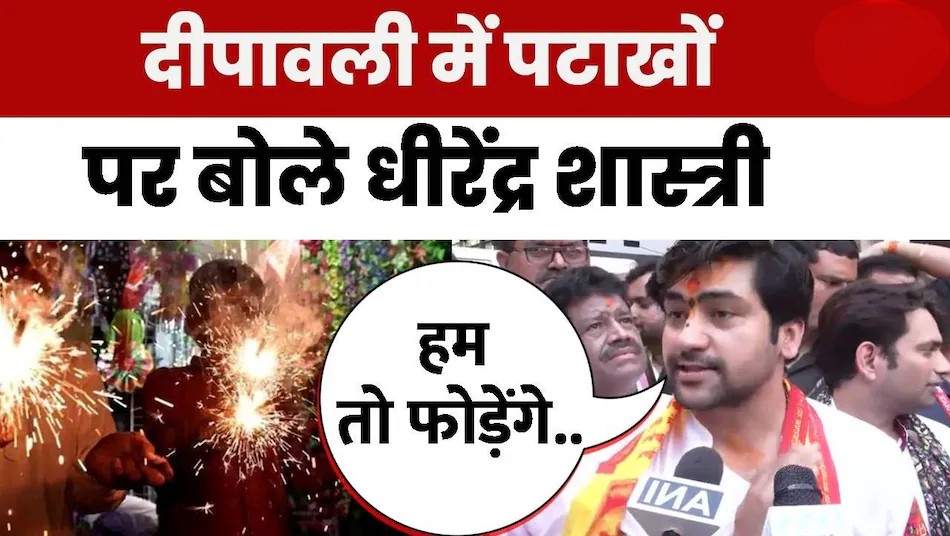
Pandit Dhirendra Krishna Shastri Announces “Delhi to Vrindavan March”: A Call to Establish India as a Hindu Nation and Defend Diwali Traditions
In a fiery declaration that has already sparked nationwide discussion, Pandit Dhirendra Krishna Shastri of Bageshwar Dham has announced a grand religious march—from Delhi to Vrindavan between November 7th and 16th. The purpose of this yatra, he said, is not merely symbolic but part of a larger spiritual and cultural movement — a mission to “establish India as a Hindu Rashtra” (Hindu nation). Alongside this, Shastri issued a stern rebuke to those who “lecture” people on avoiding firecrackers during Diwali, asserting that the festival of lights must be celebrated with devotion, enthusiasm, and complete cultural pride.
This announcement, made during a public discourse at Bageshwar Dham, has reignited the debate around religion, cultural identity, and modern-day secularism in India. For millions of followers, Dhirendra Shastri’s yatra represents a revival of dharmic consciousness. For critics, it raises questions about the line between faith and political ideology.
Let’s explore this development in detail — the background, the purpose, the political implications, and what it signifies for India’s evolving cultural narrative.
1. The Announcement: “Delhi to Vrindavan” – A March for Dharma Dhirendra Krishna Shastri
In his address, Pandit Dhirendra Krishna Shastri declared:
“From November 7 to November 16, we will march from Delhi to Vrindavan. This is not just a march; it is a movement to awaken Sanatan Dharma, to declare proudly that India is and has always been a Hindu nation.”
According to his team, thousands of devotees from across India are expected to participate in this spiritual journey, which will span nearly 150 kilometers. The yatra will pass through several towns in Uttar Pradesh, including Mathura and Govardhan, before culminating in Vrindavan, the holy city associated with Lord Krishna.
The theme of the yatra, as per Shastri’s statement, is “Hindu Rashtra Sankalp Yatra” — a march of resolve, devotion, and awakening.
The route itself is deeply symbolic. Delhi, representing India’s political power, to Vrindavan, the center of bhakti (devotion), symbolizes the union of governance and spirituality — a call for dharma to guide power.
2. Dhirendra Krishna Shastri Vision of a Hindu Nation
Pandit Dhirendra Krishna Shastri has long been known for his unapologetic stand on Sanatan Dharma and his belief that India should constitutionally recognize its Hindu civilizational roots. In his recent address, he stated:
“Our ancestors dreamed of a nation where dharma leads politics, where culture and devotion are not mocked but celebrated. India is not just a piece of land; it is a temple of Sanatan values. The time has come to proclaim what we have always known — Bharat is a Hindu Rashtra.”
This statement was met with thunderous applause from devotees.
For Shastri and his followers, “Hindu Rashtra” doesn’t necessarily mean theocratic rule but rather a return to dharmic ethics — a society guided by spiritual wisdom, compassion, and national unity rooted in Sanatan culture. He envisions a nation where Hindu festivals, traditions, and scriptures are respected rather than restricted under the guise of modernity or secularism.
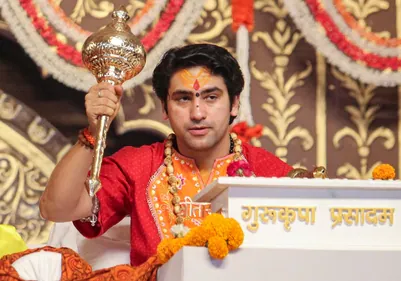
3. The Target: “Stop Preaching Against Firecrackers” Dhirendra Krishna Shastri
One of the most talked-about parts of Dhirendra Shastri’s speech was his sharp criticism of people and organizations that campaign against firecrackers during Diwali. He said:
“Those who preach about pollution only when Hindus celebrate Diwali — where are they during New Year fireworks, Christmas lights, and political rallies that waste electricity and burst crackers? This hypocrisy must end.”
He argued that Diwali is a festival of joy and divine light, not merely an environmental concern. While acknowledging the need for environmental consciousness, Shastri urged people to celebrate Diwali with pride and devotion, rather than guilt or hesitation.
He added:
“If bursting a few crackers for Lord Ram’s homecoming offends anyone, then they should introspect, not us. Diwali is our heritage, and no one should shame Hindus for celebrating their festival.”
This remark resonated with many who feel that Hindu traditions are increasingly being “policed” under the pretext of modern reforms or environmental activism. Social media platforms were soon flooded with posts supporting his statement, with hashtags like #SanatanPride, #HinduRashtraYatra, and #CelebrateDiwaliWithFaith trending.
4. The Broader Symbolism: Dharma as the Foundation of Governance
The planned march from Delhi to Vrindavan carries a strong spiritual and political symbolism.
In Sanatan philosophy, Vrindavan is not just a geographical location but a spiritual space representing love, purity, and devotion. Delhi, on the other hand, represents authority, power, and administration.
By connecting these two, Dhirendra Shastri seems to be proposing that the soul of governance should be guided by the spirit of dharma.
This echoes the age-old Indian ideal of Ram Rajya — a just, moral, and compassionate form of governance envisioned in the Ramayana.
He said in his speech:
“We don’t want politics that divides. We want dharmic politics — where every decision is taken in the interest of the nation and humanity. Dharma is not against democracy; dharma is the soul of democracy.”
This philosophical blending of faith and governance reflects a rising sentiment in parts of Indian society that believe modern India must reclaim its cultural spine while moving forward technologically and economically.
5. Public and Political Reactions
Dhirendra Shastri’s announcement has drawn mixed responses across the political and social spectrum.
- Supporters of Sanatan Dharma hailed it as a bold step toward spiritual revival. Many spiritual leaders, including some from Ayodhya, Ujjain, and Kashi, have extended support, calling it “a march of awakening.”
- Critics, however, argue that this kind of rhetoric blurs the line between religion and politics. Some opposition leaders have accused Shastri of using faith for political mobilization ahead of upcoming elections.
- On social media, the reactions have been polarized. While many users expressed pride in the idea of the Hindu Rashtra Yatra, others questioned whether such movements are inclusive in a multi-religious democracy.
Despite the debate, one thing is clear: Dhirendra Shastri’s words have reignited the national conversation about India’s identity — whether it should remain a secular republic as envisioned in the Constitution or evolve into something closer to its ancient dharmic ethos.
6. The Cultural Context: Reviving Forgotten Pride
Dhirendra Shastri has often said that his mission is to restore pride in Hindu identity. He believes that centuries of foreign rule, coupled with modern intellectual colonialism, have made Indians hesitant to express their religious and cultural beliefs freely.
“For too long, Hindus have been told to hide their faith — to light diyas quietly, to avoid saying ‘Jai Shri Ram’ in public, to not wear tilak at work. That ends now,” he declared.
The Delhi to Vrindavan march, therefore, is not just a journey of feet but of faith.
Each step, according to him, represents resistance against cultural erasure and revival of the eternal values of Sanatan Dharma — compassion, truth, non-violence, and devotion.

7. The Role of Youth and Women in the Yatra
Interestingly, Shastri’s team has emphasized that the youth and women will play a central role in the upcoming march. The idea, he said, is to engage the next generation — those who are growing up in a world dominated by Western media and modern distractions.
“We need youth who wear jeans but chant Jai Shri Ram, who use technology but remember Hanuman Chalisa. Our women are the protectors of dharma; without them, no revolution is complete.”
Preparations for the march are reportedly underway in several states, with local committees arranging accommodation, food, and safety for participants. Organizers say that special bhajan evenings, satsangs, and mass prayer sessions will take place each night during the journey.
8. Vrindavan: The Sacred Destination
Vrindavan, the destination of this yatra, holds a special place in Hinduism. It is the land of Lord Krishna’s leelas, where divine love and devotion manifest in their purest form.
Ending the march there is symbolic — it signifies returning to the heart of India’s spiritual identity.
At Vrindavan, the Bageshwar Dham team plans to hold a “Rashtra Sankalp Sabha” — a mass pledge ceremony where participants will take an oath to live by dharmic principles, protect Hindu culture, and spread the message of unity.
Shastri has said that the event will not be about confrontation but about collective consciousness.
“We are not against anyone. We are for Bharat. We are for truth. We are for dharma.”
9. Critics vs. Devotees: The Debate Over Modern Secularism
As expected, the announcement has sparked a flurry of debates. Critics argue that linking religion with governance contradicts India’s secular framework. They warn that such rhetoric could marginalize minorities and polarize society.
However, Dhirendra Shastri’s followers counter this by pointing out that Sanatan Dharma is inherently inclusive — a system that respects all paths to divinity. They argue that calling India a “Hindu Rashtra” does not mean excluding others but acknowledging the cultural majority that defines its civilization.
Supporters often quote the famous line:
“Hindu is not a religion — it is a way of life.”
In their view, Dhirendra Shastri’s march is about cultural reaffirmation, not political domination.
10. The Larger Message: Pride, Unity, and Revival
Beyond all controversy, the message behind the march is clear — it’s a call for spiritual reawakening.
Pandit Dhirendra Krishna Shastri’s initiative comes at a time when India stands at a crossroads — juggling economic growth, modern identity, and ancient wisdom. His emphasis on pride, unity, and devotion resonates deeply with those who fear that India’s dharmic fabric is fading in the noise of modernity.
If successful, the Delhi to Vrindavan Yatra could become a symbolic movement of cultural renaissance, reminding people that dharma and modern progress can coexist — that faith and freedom are not enemies but companions.
Conclusion: A Yatra Beyond Politics
Pandit Dhirendra Krishna Shastri’s announcement of the “Delhi to Vrindavan March” has stirred emotions, inspired faith, and provoked debate. Whether one agrees with his vision or not, there’s no denying that it has reignited a vital national conversation about India’s civilizational identity.
As thousands prepare to walk alongside him this November, the roads from Delhi to Vrindavan will echo with chants of “Jai Shri Ram” and “Bharat Mata Ki Jai.”
The question that remains is — will this march simply be a religious procession, or will it mark the beginning of a broader cultural and spiritual transformation in India’s history?
Only time will tell. But one thing is certain — Pandit Dhirendra Krishna Shastri has once again succeeded in reminding the nation of its roots, its pride, and its eternal dharma.
Read more latest news

