
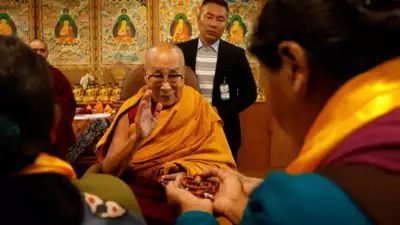
The question of whether the 14th Dalai Lama will name his successor has been a topic of significant global speculation, particularly as his birthday approaches. At 89 years old, the Dalai Lama remains a spiritual leader of immense influence, revered by millions worldwide. However, his succession is fraught with complexities that intertwine religion, politics, and international relations.
This blog examines the historical context of Tibetan Buddhism, the Dalai Lama’s succession process, the challenges posed by China’s influence, and the broader implications of his decision.
Understanding the Role of the Dalai Lama
The Dalai Lama is not just a spiritual leader but also a symbol of Tibetan identity and resistance. Here’s why his role is so crucial:
1. Spiritual Significance
- The Dalai Lama is considered the reincarnation of Avalokiteshvara, the Bodhisattva of Compassion, making him a central figure in Tibetan Buddhism.
- He serves as a guide for millions of followers, offering teachings on compassion, peace, and mindfulness.
2. Political Symbolism
- The Dalai Lama has been the face of Tibetan resistance against Chinese rule since the annexation of Tibet in 1950.
- His leadership in exile has galvanized global support for Tibet’s cultural and religious autonomy.
3. Cultural Custodian
- As the spiritual head, the Dalai Lama ensures the continuity of Tibetan traditions, particularly in the face of cultural erosion under Chinese policies in Tibet.
The Succession Process: Tradition vs. Modern Challenges
1. Traditional Reincarnation Process
- Tibetan Buddhism follows a unique tradition where high lamas, including the Dalai Lama, are believed to reincarnate after their death.
- A committee of senior monks, using divination and spiritual signs, identifies the child who is the Dalai Lama’s reincarnation.
- The process involves sacred rituals and is deeply rooted in Tibetan cultural and spiritual beliefs.
2. Challenges in Modern Times
- China’s control over Tibet complicates the traditional process, as any search within Tibet would be under Beijing’s influence.
- The Dalai Lama has expressed concerns about the potential for political interference, leading to the possibility of two rival successors—one endorsed by Tibetans in exile and the other by China.
Speculation on the Dalai Lama’s Successor
As his birthday approaches, rumors abound that the Dalai Lama might announce a successor during the celebrations. Here are the key factors fueling these speculations:
1. The Need for Clarity
- Naming a successor could preempt China’s attempts to control the reincarnation process.
- It would provide spiritual guidance and stability to Tibetan Buddhists worldwide.
2. International Attention
- An announcement on his birthday would attract global media coverage, amplifying the Tibetan cause.
3. Past Statements
- The Dalai Lama has hinted that he may choose his reincarnation during his lifetime or even declare the end of the Dalai Lama institution, depending on its relevance in the modern era.
China’s Role in the Succession Debate
1. China’s Position
- China has stated that the next Dalai Lama must be born within its borders and chosen by the Chinese government.
- Beijing’s control over the succession process aims to legitimize its authority in Tibet and weaken the exile movement.
2. The Panchen Lama Parallel
- The Panchen Lama, another high-ranking lama in Tibetan Buddhism, serves as a cautionary tale. The Chinese government appointed a Panchen Lama in 1995, while the boy recognized by the Dalai Lama disappeared, allegedly detained by Chinese authorities.
3. Potential for Two Dalai Lamas
- If the Dalai Lama names a successor outside Tibet, it could lead to two rival Dalai Lamas, one backed by China and another by the Tibetan diaspora.
- This scenario could create division within the Tibetan community and complicate international support.
Global Implications of the Dalai Lama’s Decision
The Dalai Lama’s decision on succession carries profound implications for global politics, religion, and human rights.
1. Impact on Tibet-China Relations
- An exiled successor would bolster the Tibetan resistance but could escalate tensions with Beijing.
- China’s efforts to control the narrative may lead to further crackdowns in Tibet.
2. International Relations
- Countries that support the Dalai Lama and his successor could face diplomatic backlash from China.
- The U.S., EU, and India have consistently expressed support for Tibetan autonomy, but the succession issue could test these relationships.
3. Preservation of Tibetan Culture
- A clear succession plan would ensure the continuity of Tibetan Buddhism and its traditions, countering China’s attempts at cultural assimilation.
Possible Scenarios for Succession
1. Naming a Successor During His Lifetime
- The Dalai Lama could identify his reincarnation outside Tibet, ensuring the process remains free from Chinese interference.
- This approach aligns with his past statements about modernizing Tibetan Buddhism.
2. Ending the Institution
- The Dalai Lama has suggested that the institution of the Lama might not be necessary in the modern era.
- This decision would shift focus to collective leadership within the Tibetan Buddhist community.
3. Posthumous Selection
- Allowing the traditional process to proceed after his death risks Chinese manipulation but maintains adherence to Tibetan customs.
Challenges and Criticisms
1. Division Within the Tibetan Community
- Not all Tibetans support the idea of naming a successor during the Lama’s lifetime, as it deviates from tradition.
- Disagreement over the successor could weaken the exile movement.
2. Potential for Geopolitical Tensions
- The Lama’s decision could strain relations between China and countries hosting Tibetan refugees, particularly India.
3. Risks of Delegitimization
- A successor chosen outside traditional norms may struggle to gain widespread acceptance, especially among Tibetans in Tibet.
What to Expect on His Birthday
The Lama’s birthday celebrations are likely to feature:
- Spiritual teachings and public addresses.
- Messages emphasizing peace, compassion, and the preservation of Tibetan culture.
- Speculations about succession but no definitive announcement, as the Lama has often defied expectations.
Conclusion: A Legacy Beyond Succession
The Lama’s legacy extends far beyond the question of succession. As a spiritual leader, he has championed universal values of compassion and non-violence. As a political figure, he has kept the Tibetan cause alive on the global stage.
While the world awaits his decision on succession, the larger challenge remains ensuring the preservation of Tibetan identity, culture, and autonomy in the face of adversity. Whether he names a successor on his birthday or leaves the decision to his followers, the Lama’s impact on the world will endure for generations to come.
Read more latest News

