
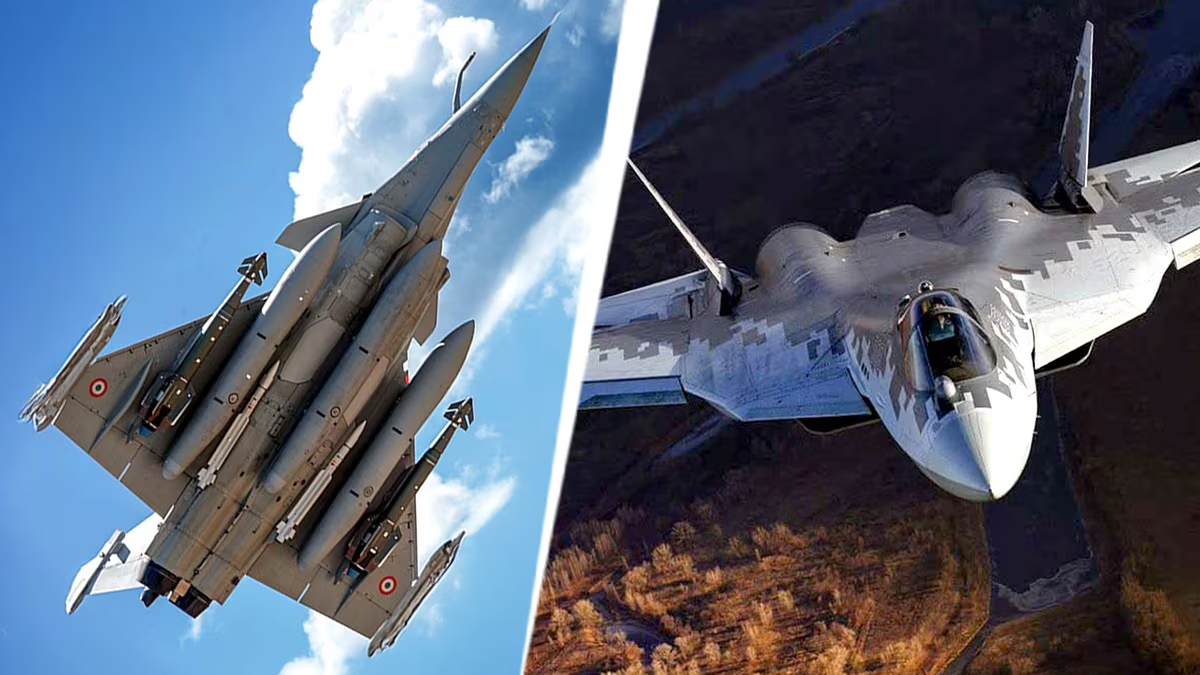
Su-57E vs Rafale F4: Which Fighter Jet Offer Best Serves India’s Strategic Needs?
Introduction
Russia offered Su-57E jets with technology transfer for ₹6.7 billion, India stands at a critical juncture in its military modernization drive. With tensions along the Line of Actual Control (LAC) with China and continued hostilities with Pakistan, strengthening the Indian Air Force (IAF) is not just a matter of pride, but a national security necessity.
In 2025, two major proposals landed on India’s table. Russia offered its Su-57E fifth-generation fighter jets with technology transfer at an estimated cost of ₹6.7 billion, while France pitched the Rafale F4 variant along with Safran’s M88-4 engine package.
At first glance, the Russian Su-57E appears cheaper and technologically advanced on paper, but the French Rafale F4 has the advantage of being combat-proven, reliable, and already integrated into IAF’s fleet.
This raises the big question: Should India go for the cheaper Russian Su-57E with a promise of tech transfer, or stick with the proven French Rafale platform?
Let’s explore this in detail.
Background: India’s Fighter Jet Needs
The IAF currently operates a mixed fleet:
- Russian origin jets like Su-30MKI, MiG-29, MiG-21 Bison (phasing out).
- French jets like Mirage 2000 and the new Rafale F3R.
- Indigenous fighter LCA Tejas Mk1A entering service.
But India still falls short of the required 42 fighter squadrons. With China fielding J-20 stealth fighters and Pakistan relying on JF-17 Block III with Chinese support, India urgently needs advanced fighters for air superiority and deterrence.
The Russian Offer: Su-57E with Technology Transfer
Key Features of Su-57E
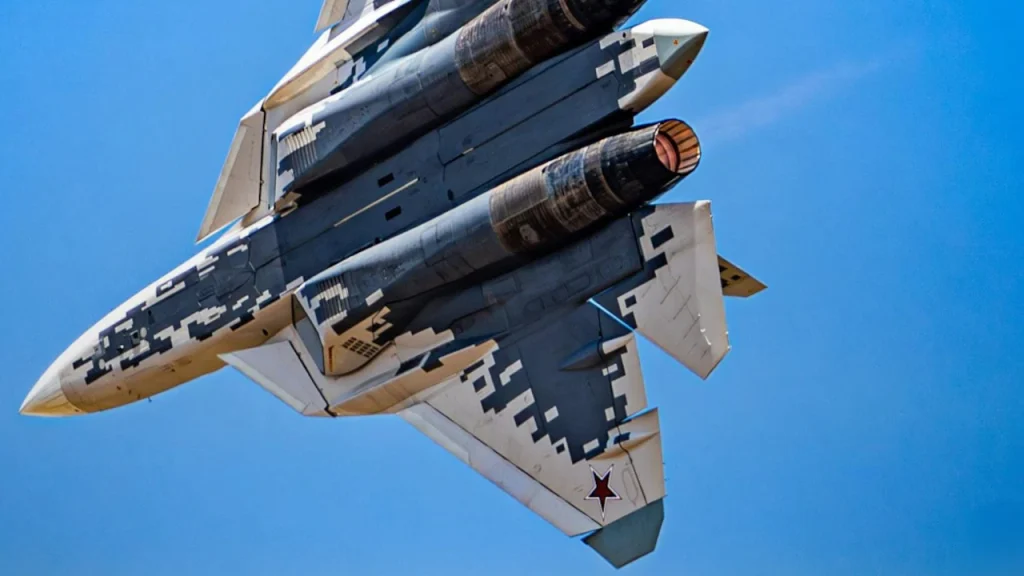
The Su-57 is Russia’s first fifth-generation stealth fighter, designed to rival America’s F-22 Raptor and F-35. The export version Su-57E is being pitched to India with technology transfer.
- Stealth: Radar cross-section (RCS) reduction features, internal weapons bay.
- Supermaneuverability: 3D thrust vectoring engines.
- Supersonic cruise (supercruise) capability.
- Multirole capability: Air-to-air, air-to-ground, electronic warfare.
- Weaponry: R-77M beyond-visual-range (BVR) missiles, Kh-59MK2 cruise missiles.
- Avionics: Advanced AESA radar, sensor fusion.
Cost Factor
Russia’s deal offers Su-57E with technology transfer at ₹6.7 billion, which seems comparatively low, especially since Western jets cost far more.
Potential Advantages for India
- Technology Transfer (ToT): India could gain access to stealth design, avionics, and engine technology.
- Strategic Autonomy: Russia has historically been flexible on sharing military tech.
- Fifth-Gen Edge: Would allow India to counter China’s J-20 with its own stealth fighters.
Potential Concerns
- Engine Reliability: The Su-57 still relies on upgraded AL-41F1 engines. The second-stage Izdeliye 30 engine is not fully operational.
- Production Delays: Russia has only inducted a limited number due to sanctions and funding issues.
- Export Readiness: Su-57E is relatively untested in combat.
- CAATSA Sanctions: India risks U.S. sanctions if it buys advanced Russian defense systems.
The French Offer: Rafale F4 + Safran M88-4 Engine
Key Features of Rafale F4
The Dassault Rafale F4 is an upgraded version of the F3R, already in service with IAF.
- Combat Proven: Used in Libya, Mali, Syria, and India’s own Balakot strikes.
- Avionics Upgrade: Enhanced radar, improved helmet-mounted display, AI-assisted diagnostics.
- Network-Centric Warfare: Advanced data link integration.
- Long-Range Missiles: Meteor BVR missile, SCALP cruise missile.
- Survivability: Excellent electronic warfare suite (SPECTRA).
Safran M88-4 Engine Package
France has also offered India collaboration on the M88-4 engine, which could be integrated into future Indian fighters like Tejas Mk2 and AMCA (Advanced Medium Combat Aircraft). This is critical because India has long struggled with jet engine technology.
Cost Factor
The Rafale is more expensive than Su-57. The 36 Rafales previously purchased cost about ₹59,000 crore (~€7.8 billion). Any new deal for Rafale F4s plus engine collaboration would be costly, but offer long-term benefits.
Potential Advantages for India
- Seamless Integration: Rafale F4 builds on India’s existing fleet.
- High Reliability: Proven in diverse combat situations.
- Engine Collaboration: M88-4 package could give India a foothold in jet engine development.
- Western Ecosystem: Access to NATO-grade weapons and systems.
Potential Concerns
- Cost: Rafale jets are among the most expensive in the world.
- Limited ToT: France may not share deep stealth or engine tech to the extent Russia promises.
- Dependence on the West: Too much reliance on French systems could limit strategic independence.
Comparative Analysis: Su-57E vs Rafale F4
| Factor | Su-57E (Russia) | Rafale F4 (France) |
|---|---|---|
| Generation | 5th Gen (stealth, but immature) | 4.5 Gen (proven, upgraded) |
| Stealth | Yes (limited, not F-35 level) | Partial (reduced RCS, not full stealth) |
| Engine | AL-41F1 / Izdeliye 30 (still developing) | Safran M88-4 (proven, future co-development) |
| Combat Proven | Limited (Syria, Ukraine trials) | Extensive (Middle East, Balakot, Mali) |
| Technology Transfer | High (Russia more willing) | Limited (engine co-development possible) |
| Cost | ₹6.7 billion (lower) | Higher (₹59,000 cr for 36 jets earlier) |
| Delivery Reliability | Questionable (Russia under sanctions) | Reliable (France has delivered on time) |
| Geopolitical Risk | CAATSA Sanctions risk | Minimal, strengthens ties with West |
| Fleet Integration | New platform, high learning curve | Already in IAF service, smooth integration |
| Future Growth | Su-57E still evolving, uncertain future | Rafale F4 roadmap secure, Rafale F5 under development |
Geopolitical Context
Russia-India Relations
Russia remains India’s long-time defense partner. However, Moscow’s increasing dependence on China due to Western sanctions complicates matters. India risks being sidelined if China exerts pressure.
France-India Relations
France has emerged as a strong strategic partner for India, supporting New Delhi in the UN Security Council, Indo-Pacific strategy, and defense manufacturing. Unlike the U.S., France does not impose restrictive conditions.
U.S. Factor
The U.S. is unlikely to approve India’s purchase of Su-57 due to CAATSA sanctions. But buying Rafale F4 aligns India with Western defense architecture, without antagonizing Washington.
Expert Opinions
- Pro-Russia Analysts argue that Su-57 gives India true fifth-gen capability and technology transfer opportunities, something Western nations rarely share.
- Pro-France Analysts highlight that Rafale F4 is combat-proven, reliable, and politically safe, and the engine collaboration could boost India’s indigenous programs.
- Neutral Analysts suggest India could adopt a hybrid strategy: expand Rafale fleet for immediate needs while pursuing joint engine development with France and exploring stealth programs with domestic AMCA.
Which Offer is Better for India?
If we judge purely on paper specifications, the Su-57E seems tempting due to stealth and lower cost. But India must look beyond numbers.
- Short-Term Needs: India needs fighters that can be delivered quickly, integrated smoothly, and used reliably in combat — this favors Rafale F4.
- Long-Term Needs: India needs stealth and engine tech for AMCA and 6th-gen projects — this makes the Su-57E tech transfer attractive.
- Geopolitical Risks: CAATSA sanctions, Russia’s instability, and China-Russia ties make Su-57 risky. Rafale F4 offers geopolitical stability.
Verdict:
For immediate operational capability, Rafale F4 with M88-4 engine package is the safer and smarter choice. However, India must negotiate hard for deeper technology transfer in engines and avionics. The Su-57E deal should not be dismissed, but treated cautiously as a possible long-term supplement, not a replacement.

Conclusion
India’s choice between the Russian Su-57E and the French Rafale F4 + M88-4 is not just about buying aircraft — it’s about shaping India’s future airpower doctrine.
- The Su-57E represents ambition, stealth, and tech transfer — but comes with reliability and geopolitical risks.
- The Rafale F4 represents stability, proven performance, and secure partnerships — but comes with higher costs and limited tech sharing.
Ultimately, India must balance short-term combat readiness with long-term self-reliance. A twin-track approach — buying more Rafales for operational needs while investing in indigenous AMCA with technology inputs from partners — may be the best strategy.
Read More latest news

