
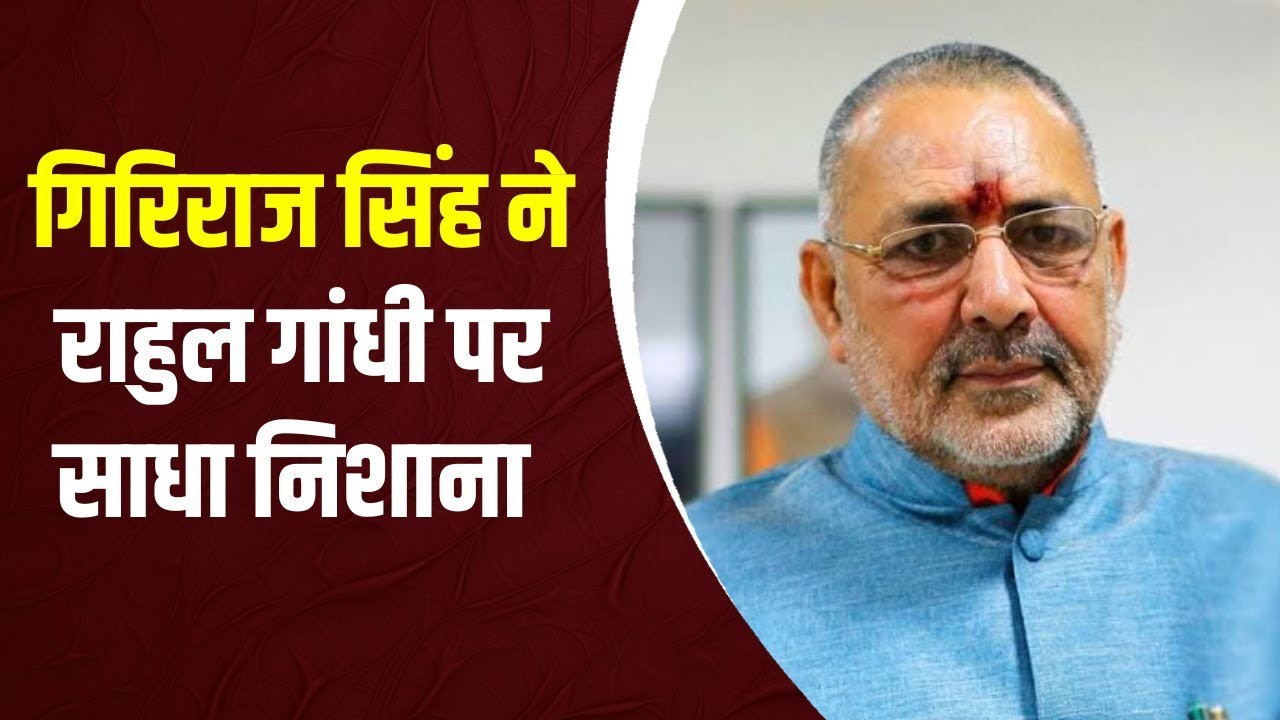
Giriraj Singh’s Sharp Attack on Rahul Gandhi: “Rahul Gandhi is Frustrated, Sometimes Imitates Modi, Sometimes Talks About Gen-Z, Wants to Become an Urban Naxal”
Introduction
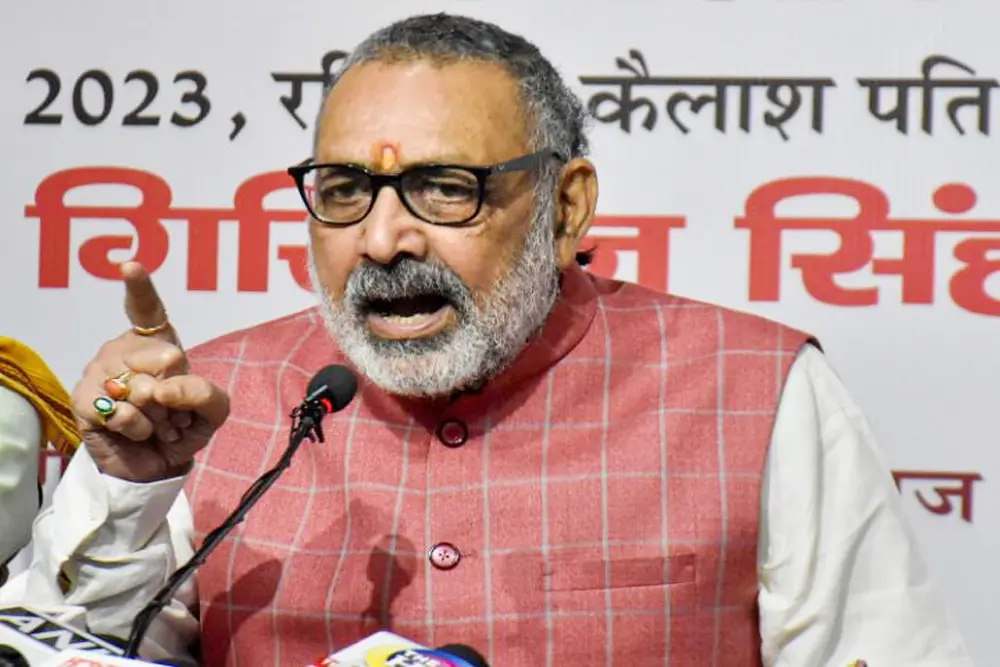
Indian politics Giriraj is never short of fiery debates, sharp accusations, and intense face-offs between leaders of the ruling party and the opposition. In the latest political storm, Union Minister Giriraj Singh, known for his blunt and controversial remarks, targeted Congress leader Rahul Gandhi with a scathing statement. Singh alleged that Rahul Gandhi is “frustrated,” pointing out how he sometimes imitates Prime Minister Narendra Modi, sometimes tries to sound like the Gen-Z youth, and ultimately, in his desperation, is “on the path of becoming an urban Naxal.”
This comment has not only ignited a war of words between the Bharatiya Janata Party (BJP) and the Congress, but has also opened up a larger conversation about Rahul Gandhi’s political style, his strategies to connect with the youth, and the perception of his leadership in India’s political landscape.
In this detailed blog, we will explore:
- The background of Giriraj Singh’s statement.
- Rahul Gandhi’s political approach in recent years.
- The concept of “urban Naxal” and why it has become a political buzzword.
- The BJP vs. Congress rivalry and its impact on upcoming elections.
- The broader implications of this war of words on Indian democracy.
Who is Giriraj Singh?
Giriraj Singh is a senior BJP leader and currently a Union Minister. Representing the Begusarai constituency of Bihar, Singh has built his political image as a staunch nationalist and a hardliner within the BJP. He is known for his straightforward, often controversial statements, which frequently make headlines.
For years, Singh has been one of the BJP’s most vocal critics of Rahul Gandhi and the Congress party. His political rhetoric usually revolves around nationalism, Hindu identity, development policies of the BJP, and criticism of dynastic politics. His latest attack on Rahul Gandhi follows the same pattern of sharp words and pointed allegations.
The Context of Giriraj Singh’s Statement
Giriraj Singh’s comment came at a time when Rahul Gandhi has been actively trying to reposition himself in Indian politics. With the INDIA alliance gearing up for elections and the Congress party seeking revival, Rahul Gandhi has been experimenting with new communication styles—whether by using Gen-Z-friendly language, taking digs at Modi in a satirical way, or trying to project himself as a youth icon.
Singh’s remark suggests that the BJP interprets these moves as signs of frustration. According to him, Rahul Gandhi is unable to establish his identity, oscillating between trying to imitate PM Modi’s oratory style and adopting youth-friendly jargon to connect with young voters.
By calling him an “urban Naxal,” Singh added a heavy ideological charge to his attack, linking Rahul Gandhi to a term that in Indian politics often refers to left-wing intellectuals accused of sympathizing with Maoist insurgents.
Rahul Gandhi’s Changing Political Persona
Rahul Gandhi’s political journey has always been a subject of national debate. Over the past two decades, he has tried to evolve from being seen as a reluctant politician into a serious leader. Let’s break down the phases of his political persona that Giriraj Singh indirectly mocked.
1. Rahul Gandhi as the “Reluctant Prince”
In his early political career, Rahul Gandhi was seen as someone hesitant to take on leadership responsibilities. Critics often called him a “reluctant prince” who lacked vision.
2. Rahul Gandhi as Modi’s Challenger
Over the last few years, Rahul Gandhi has sharpened his attacks on Prime Minister Narendra Modi. From speeches in Parliament to his social media posts, Rahul frequently accuses Modi of favoring crony capitalism, undermining democratic institutions, and silencing dissent. In doing so, he often tries to replicate Modi’s style of direct connect with people through catchy phrases and simple communication.
3. Rahul Gandhi and Gen-Z Language
Rahul Gandhi has increasingly adopted Gen-Z terms, memes, and youth-centric issues to connect with India’s young voters. Whether it’s talking about “jobs crisis,” “start-up culture,” or using simplified slogans, his strategy is to appear modern, relatable, and digitally savvy.
4. Rahul Gandhi as a Global Figure
With speeches abroad and interviews with foreign media, Rahul has tried to position himself as a global statesman. This too has often been criticized by the BJP, which accuses him of tarnishing India’s image on international platforms.
The “Urban Naxal” Tag – A Loaded Term
Giriraj Singh’s use of the term “urban Naxal” is not accidental. In Indian political discourse, this phrase has gained momentum over the last decade.
What Does “Urban Naxal” Mean?
- The term was popularized by filmmaker Vivek Agnihotri, who used it to describe intellectuals, activists, and academics accused of supporting or justifying Maoist insurgency.
- In political usage, it refers to those who are allegedly working against the state, indirectly supporting anti-national elements under the garb of activism.
Why Call Rahul Gandhi an Urban Naxal?
By associating Rahul Gandhi with this label, Giriraj Singh is suggesting that the Congress leader is aligning with forces opposed to India’s development and national unity. It also helps the BJP paint Rahul Gandhi as not just an ineffective leader but also someone ideologically dangerous.
BJP vs. Congress: The Never-Ending Political Battlefield
BJP’s Stand
The BJP has consistently projected Rahul Gandhi as inexperienced, inconsistent, and disconnected from the realities of India. For them, mocking Rahul’s style is a way of discrediting the Congress party’s leadership.
Congress’s Counter
The Congress, on the other hand, sees Rahul Gandhi as a leader who speaks truth to power. They argue that he is the only national figure consistently questioning Modi on issues like unemployment, inequality, electoral bonds, and the erosion of institutions.
The Election Angle
Giriraj Singh’s attack is not isolated—it is part of the BJP’s broader election strategy to weaken Rahul Gandhi’s credibility before voters, especially the youth, who form a crucial electoral base.
Public Reaction to Giriraj Singh’s Remark
- Supporters of BJP: Many applauded Singh for “exposing” Rahul Gandhi’s alleged political confusion and desperation.
- Congress Loyalists: They criticized Singh for indulging in personal attacks instead of addressing real issues like unemployment, inflation, and farmers’ distress.
- Neutral Observers: Some analysts argue that such remarks divert attention from policy debates and reduce political discourse to name-calling.
Social media exploded with memes and debates. Hashtags like #UrbanNaxal, #RahulGandhi, and #GirirajSingh trended for hours.
Rahul Gandhi’s Silence or Response?
Interestingly, Rahul Gandhi often avoids directly responding to such personal jibes. Instead, he uses the opportunity to redirect attention toward policy failures of the BJP government. If he responds, he is likely to frame Singh’s remarks as another example of the BJP’s “distraction politics.”
Larger Implications of Such Attacks
- Declining Quality of Debate
Indian politics is increasingly witnessing personal barbs rather than constructive policy discussions. Singh’s remark is part of that trend. - Polarization of Voters
Such comments are aimed at reinforcing ideological divides, forcing voters to take sides based on emotions rather than logic. - Media Attention
By making provocative remarks, leaders like Giriraj Singh ensure that the BJP remains in the headlines, keeping the opposition on the defensive.
Conclusion
Giriraj Singh’s statement that “Rahul Gandhi is frustrated, sometimes imitates Modi, sometimes talks about Gen-Z, and wants to become an urban Naxal” is a classic example of India’s fiery political rhetoric.
Whether one agrees with Singh or not, his remarks highlight the central role Rahul Gandhi continues to play in BJP’s political narrative. For the Congress, this is both a challenge and an opportunity: a challenge because constant ridicule damages Rahul’s image, but an opportunity because it shows that Rahul remains a threat significant enough to warrant continuous attacks.
As India gears up for upcoming elections, such verbal duels will only intensify. Ultimately, the real question for voters will be: Do they want fiery rhetoric, or do they want concrete solutions to their everyday problems?
Read more latest news

