
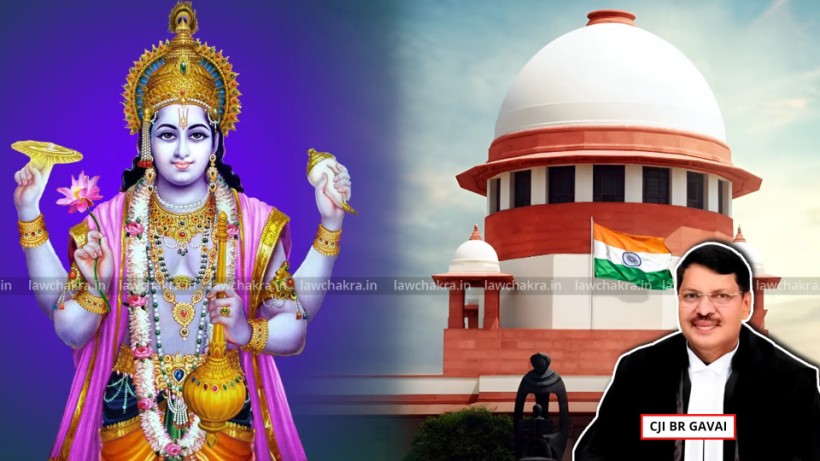
Controversy Erupts Over CJI Gavai’s Comment on Lord Vishnu’s Idol.
Introduction
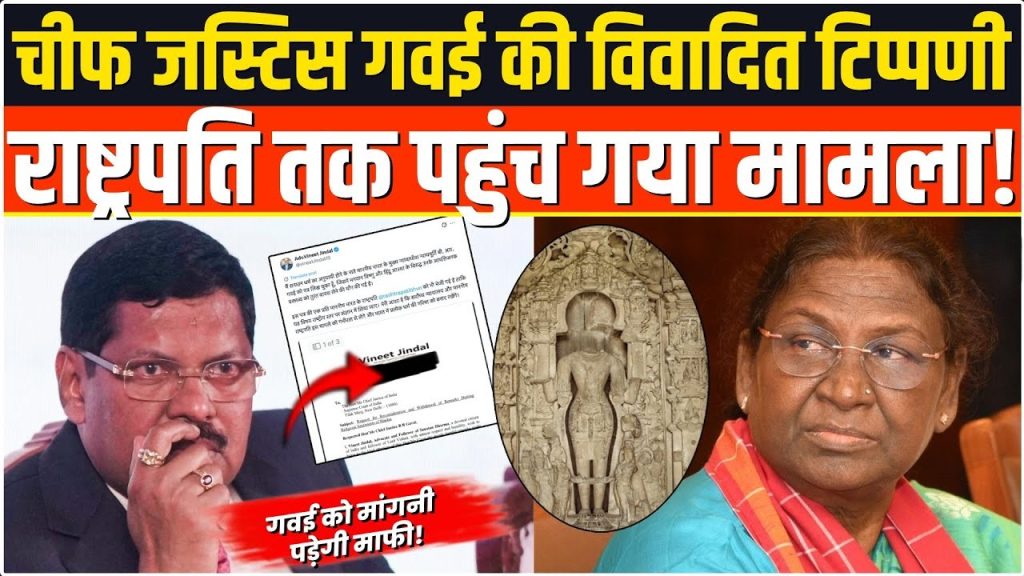
In Indian democracy, the judiciary holds a position of utmost sanctity and neutrality. When a sitting Chief Justice of India (CJI) makes any statement, it naturally draws attention. But when that statement touches upon religion or revered deities, the impact becomes manifold. Recently, CJI D.Y. Chandrachud’s colleague, CJI Gavai, found himself in the eye of a storm after his comment regarding a Lord Vishnu idol sparked nationwide controversy.
The remark, made during a hearing, was interpreted by many as insensitive, while others defended it as a contextual observation. Political parties, religious leaders, and legal experts have since engaged in heated debate, making the issue not just about an individual statement but also about the relationship between the judiciary, faith, and public sentiment.
This blog explores the controversy in depth — what exactly was said, why it caused such an uproar, how political circles reacted, what it means for the judiciary, and the broader debate it has triggered on freedom of expression versus respect for faith.
The Remark That Sparked Controversy
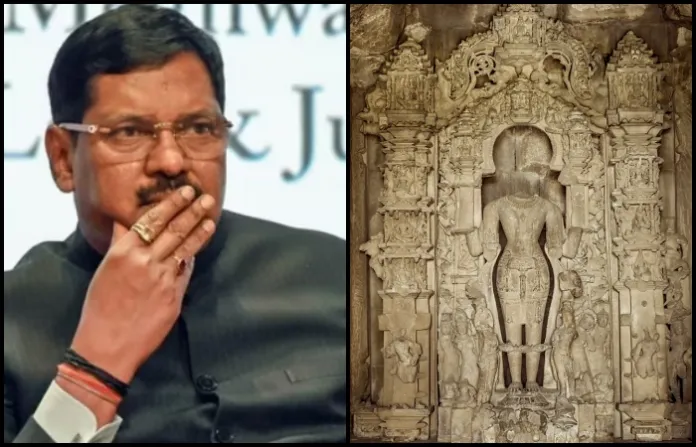
During a courtroom discussion, CJI Gavai reportedly made a remark involving Lord Vishnu’s idol. Though meant as an illustrative or metaphorical reference in a legal context, it did not sit well with a section of the public.
Religious sentiments in India are deeply rooted, and deities like Lord Vishnu hold profound spiritual significance for millions of Hindus. Any perceived trivialization or comparison can be seen as offensive. The controversy escalated as the comment spread quickly across social media platforms, amplified by political leaders and religious groups who demanded clarification and even apology.
Immediate Public Reaction
Social media platforms like X (formerly Twitter), Facebook, and Instagram witnessed an outpouring of reactions. Hashtags like #CJIGavai, #LordVishnu, and #RespectFaith began trending.
- Some users accused the judiciary of “hurting Hindu sentiments.”
- Others defended the comment, emphasizing the importance of judicial independence and the need to interpret statements contextually rather than emotionally.
- Memes, edited videos, and selective quotes also contributed to misinformation, worsening the controversy.
This sharp division showcased once again how sensitive religious issues remain in India’s public discourse.
Political Fallout
No controversy in India remains untouched by politics. Opposition parties quickly seized the opportunity to attack the ruling BJP, accusing them of selective outrage. They argued that BJP leaders often make controversial remarks about religion, yet react aggressively when others do so.
On the other hand, several BJP leaders and affiliated organizations condemned the statement and demanded accountability. Some leaders even staged symbolic protests, claiming that Lord Vishnu’s dignity had been insulted.
The Congress party and other opposition voices largely defended CJI Gavai, stating that dragging the judiciary into religious politics weakens democratic institutions.
Religious Groups’ Stand
Hindu religious organizations, particularly those linked with temples and cultural forums, expressed disappointment. Some called for CJI Gavai to retract his words, while others urged restraint, emphasizing that one statement should not be allowed to undermine the judiciary’s credibility.
Spiritual leaders in Varanasi, Ayodhya, and Gujarat voiced concerns about judicial figures making references to gods in legal debates. They insisted that the judiciary must remain neutral not only in law but also in perception.
Legal Fraternity Divided
The legal community itself appeared divided. Senior advocates and constitutional experts defended CJI Gavai, suggesting that the remark was being taken out of context and that judicial statements often use metaphors. They warned against allowing “mob sentiment” to influence judicial functioning.
Others, however, argued that judges must be extra cautious, given their position and the sensitivity of religion in India. They pointed out that even unintended remarks could be weaponized in political battles, affecting both faith and trust in justice.
Media Coverage and Amplification
Mainstream television debates, online news portals, and newspapers gave extensive coverage to the controversy. Some headlines sensationalized the issue, while others attempted balanced reporting.
Prime-time debates often turned into shouting matches between political representatives, religious leaders, and legal experts. News anchors framed the controversy as a clash between “faith versus freedom of speech” and “religion versus judiciary.”
In many ways, media amplification escalated the situation far beyond its original context.
Larger Debate: Religion, Judiciary, and Democracy
This controversy is not an isolated incident. India has a long history of public uproar whenever judges, politicians, or celebrities make remarks involving religion. The key question is: should judges completely avoid religious references, even as illustrations, in court?
The judiciary operates in a secular framework under the Constitution. However, India’s society is deeply religious, and the lines often blur in public perception. For the judiciary to retain its dignity, caution is essential. At the same time, freedom of expression — even for judges — cannot be dismissed.
This balance remains delicate and contested.
Opposition’s Strategy
Opposition parties, particularly the Congress, Samajwadi Party, and Trinamool Congress, accused the BJP of politicizing the issue. They alleged that the ruling party uses religion selectively to create outrage while ignoring larger governance failures like unemployment, inflation, and farmers’ distress.
By defending CJI Gavai, the opposition positioned itself as the protector of constitutional values and judicial independence. This strategy may resonate with educated, urban voters who see through politicized religious outrage.
BJP’s Dilemma
For the BJP, the controversy presented both opportunity and risk. On one hand, defending religious sentiments aligned with its core Hindutva ideology. On the other, directly attacking the judiciary could backfire, given the importance of judicial cooperation for the government.
Therefore, BJP leaders calibrated their response — condemning the remark but avoiding direct confrontation with the CJI. Instead, they allowed affiliated organizations and religious groups to lead the protests.
Public Sentiment on the Ground
In states like Uttar Pradesh, Madhya Pradesh, and Rajasthan, where Hindu sentiment is politically powerful, the issue gained significant traction. People discussed it in tea shops, markets, and religious gatherings.
In contrast, urban centers like Delhi, Mumbai, and Bengaluru showed more skepticism, with many blaming media exaggeration. This divide reflects India’s complex social fabric, where the same issue resonates differently across regions.
Historical Parallels
This controversy echoes past incidents where judges or public figures faced backlash over religious references:
- Justice Katju’s remarks on mythology once drew criticism.
- Politicians like Rahul Gandhi, Yogi Adityanath, and Sadhvi Pragya have all courted controversy by invoking deities in speeches.
- Bollywood movies and literature have repeatedly faced bans and protests for depicting Hindu gods in unconventional ways.
The pattern suggests that religious sensitivity in India often collides with freedom of speech, creating recurring flashpoints.
Social Media as a Catalyst
Unlike earlier times, social media now plays a decisive role in amplifying controversies. A remark in court that may have passed unnoticed in the 1980s or 1990s becomes a national debate within minutes in today’s digital era.
Clipped videos, memes, and viral posts often strip statements of their original context. Once outrage begins, it spreads rapidly, leaving little space for clarification. This phenomenon has turned every public figure’s words into potential flashpoints.
Calls for Judicial Restraint
Several former judges and legal commentators stressed the importance of judicial restraint in language. They argued that metaphors or analogies involving religion should be avoided to prevent misinterpretation.
The Supreme Court has always emphasized the principle of “judicial dignity.” Words spoken by judges carry weight not just legally but socially. Even unintended comments can shape public perception of the judiciary’s impartiality.
The Demand for Apology
Religious groups and political leaders demanded an apology from CJI Gavai. While the judiciary traditionally avoids responding to public controversies, the pressure mounted with each passing day.
Some voices within the legal fraternity cautioned that issuing an apology could set a dangerous precedent, emboldening groups to target judges for every word. Others felt that a simple clarification could defuse tensions without undermining judicial authority.
International Perspective
Interestingly, international media also picked up the controversy, framing it as an example of the challenges India faces in balancing democracy, religion, and free speech.
Global human rights organizations noted that judicial independence must be safeguarded, but sensitivity to faith is equally important in a diverse society like India.
Way Forward
The controversy underscores the urgent need for:
- Judicial Training in Communication: Judges could benefit from communication workshops to ensure their metaphors or examples are socially sensitive.
- Media Responsibility: Journalists must contextualize judicial remarks rather than sensationalize them.
- Public Awareness: Citizens should learn to differentiate between intentional insult and legal metaphor.
- Political Maturity: Parties must refrain from exploiting every controversy for short-term gains.
Conclusion
The uproar over CJI Gavai’s comment on Lord Vishnu’s idol reveals once again the fragility of India’s balance between religion, law, and politics. While the judiciary must remain above reproach, the public must also recognize the importance of context.
Ultimately, this controversy is not just about one comment. It reflects the larger tension between faith and freedom, between reverence and reason, and between political opportunism and constitutional values.
As India moves forward, the judiciary’s dignity and the public’s faith must walk hand in hand. Only then can democracy thrive in a nation where gods and laws coexist in complex harmony.
Read more latest news

