

After Much Tussle in Nepal, Sushila Karki Becomes the Head of the Interim Government: Gen Z Protesters’ 5 Conditions Shape the New Political Order
Introduction
In a historic turn of events, Nepal has witnessed the formation of an interim government under the leadership of Sushila Karki, the country’s first woman Chief Justice and now its interim head of government. This dramatic development came after weeks of political deadlock, street protests, and intense negotiations between political parties, civil society, and an emerging force that no one could ignore anymore—the Gen Z protesters.
The younger generation of Nepal, disillusioned with corruption, inefficiency, and old-style politics, took to the streets demanding radical change. They didn’t just protest; they laid down five concrete conditions for the formation of the interim government. Surprisingly, political elites, once reluctant to listen, were forced to bow to the new power of mass mobilization.
This blog explores the journey that led to this moment, the role of Sushila Karki, the five demands of the Gen Z protesters, the structure of the interim government, and what this means for Nepal’s democracy and the South Asian region at large.
Background: Nepal’s Political Deadlock
Nepal’s politics has been in constant flux since the abolition of the monarchy in 2008. The transition to federalism, frequent government changes, corruption scandals, and infighting between political parties have left the people frustrated.
In the months leading up to the interim government, Nepal was trapped in:
- A fractured Parliament – with no single party able to secure a stable majority.
- Mounting corruption allegations against ruling and opposition leaders alike.
- Public dissatisfaction over unemployment, inflation, and lack of services.
- Youth frustration – with younger generations feeling unrepresented in the traditional party system.
It was this environment that fueled a nationwide movement led by Gen Z activists—students, young professionals, and social media influencers—who demanded not just elections, but structural reforms before elections.
The Rise of Gen Z Protesters
What makes the Gen Z protests different from past uprisings is their organization and clarity of demands.
- They didn’t just chant slogans; they used Twitter, TikTok, Instagram, and Facebook Live to mobilize.
- They coordinated protest sites in Kathmandu, Pokhara, Biratnagar, and even remote towns.
- They demanded accountability in a language that resonated with ordinary citizens: transparency, employment, digital reforms, and anti-corruption mechanisms.
The scale and persistence of these protests shook the political establishment. For the first time, the traditional parties—Nepali Congress, CPN-UML, and Maoist Center—had to sit at the negotiating table with protest representatives.
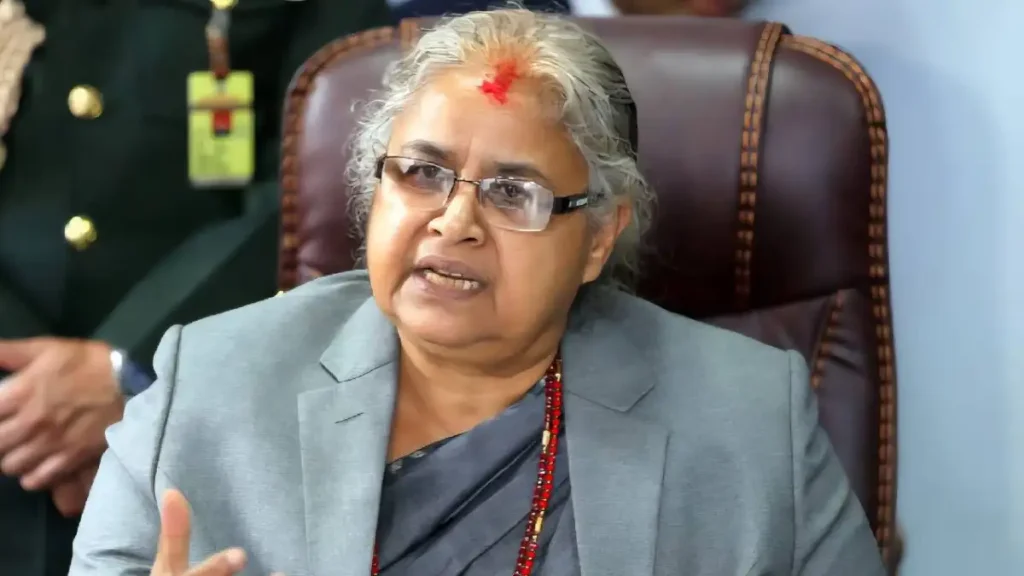
Why Sushila Karki?
Sushila Karki’s appointment as the head of the interim government surprised many, but in hindsight, it was almost inevitable.
- Credibility: As Nepal’s first woman Chief Justice, she earned respect for her integrity and independent judgments.
- Neutrality: Unlike political leaders entangled in power struggles, Karki is seen as an impartial figure.
- Symbolism: Her selection reflects a break from patriarchal and corrupt politics.
- Acceptance by Gen Z: Protesters respected her as someone who stood for rule of law and democratic principles.
In effect, Sushila Karki emerged as a consensus candidate—acceptable to both the protesters and the political class.
The Five Conditions of Gen Z Protesters
The interim government rests on five core conditions laid down by the protesters. These conditions mark a watershed moment in Nepali politics:
1. Mandatory Transparency in Governance
- All government contracts, budgets, and tenders must be made public online.
- Ministers and bureaucrats must declare assets before assuming office.
2. Youth Quota in Political Decision-Making
- At least 30% of the interim cabinet and all transitional committees must include representatives under the age of 35.
- This ensures direct participation of youth in shaping policy.
3. Independent Anti-Corruption Commission
- A new independent body, free from party interference, must investigate corruption.
- Cases against political leaders cannot be stalled under political pressure.
4. Education and Employment Reforms
- Immediate reforms in higher education policies to curb brain drain.
- Launch of an emergency employment program for graduates, funded by reallocating luxury expenses from the government.
5. Roadmap for Constitutional Stability
- The interim government must prepare a clear roadmap for fair elections within 18 months.
- Electoral reforms, including limits on campaign financing, must be implemented before polls.
These five conditions are not just short-term goals; they are structural reforms that could reshape Nepal’s political culture.

Structure of the Interim Government
Under Karki’s leadership, the interim government is designed as a coalition of parties, civil society, and youth representatives.
- Prime Minister: Sushila Karki (Independent, Consensus Figure)
- Deputy Prime Ministers: Representatives from Nepali Congress, UML, Maoist Center
- Youth Ministers: Seats allocated for protest leaders, including student union representatives
- Advisory Council: Composed of academics, activists, and legal experts to ensure reforms remain on track
This hybrid structure reflects Nepal’s attempt at creating a transitional democracy 2.0, where power is not monopolized by traditional politicians.
Immediate Challenges Before Karki
While the appointment of Sushila Karki has been celebrated, the road ahead is anything but smooth.
- Balancing Expectations – Gen Z protesters expect quick results, while political parties want to protect their interests.
- Economic Crisis – Inflation, unemployment, and falling remittances require urgent policy interventions.
- Geopolitical Pressure – Nepal is caught between India and China, both of whom will watch the interim government closely.
- Ensuring Neutrality – Karki must remain above party politics, or risk losing her credibility.
Public Reaction: Hope and Caution
Across Nepal, the mood is mixed:
- Youth: Jubilant, celebrating their first major victory in forcing systemic change.
- Middle Class: Hopeful that transparency and employment reforms will finally ease frustrations.
- Political Elites: Resentful but resigned, fearing loss of influence.
- International Community: Cautiously optimistic, seeing Nepal as a test case for youth-driven democratic reform.
The Regional Implications
Nepal’s experiment with a Gen Z-driven interim government could have ripple effects across South Asia.
- India: Watching closely, since political instability in Nepal often impacts border regions. Youth-driven reforms could inspire Indian student movements.
- China: Concerned about instability, but may attempt to adapt by engaging with new leadership.
- Bangladesh and Sri Lanka: Both countries face youth unrest due to unemployment and corruption; Nepal’s model could inspire similar demands.
This isn’t just about Nepal—it’s about the future of democratic reform in South Asia.
Symbolism of a Woman Leader
Sushila Karki’s appointment also carries profound symbolic value.
- Nepal, still struggling with patriarchal norms, now has a woman leading the government.
- This could inspire greater participation of women in politics.
- For Gen Z, Karki represents the values of fairness, transparency, and courage.
Her rise is not just a political compromise; it’s a historic milestone for gender equality in Nepal.
Possible Scenarios Going Forward
- Successful Transition
- The interim government implements reforms.
- Elections are held within 18 months.
- A more balanced, youth-inclusive democracy emerges.
- Partial Success
- Some reforms implemented, but political resistance slows down the process.
- Elections are delayed, but the framework for change survives.
- Failure and Collapse
- Political parties sabotage the process.
- Youth feel betrayed, leading to another wave of protests.
- Instability deepens, risking authoritarian tendencies.
The outcome depends largely on how Sushila Karki navigates the balance between protesters’ aspirations and political parties’ resistance.
The Voice of Gen Z: Beyond the Streets
Gen Z’s five demands symbolize a larger global trend: the impatience of young people with slow, corrupt democracies.
- In Chile, young protesters pushed for constitutional reforms.
- In Sri Lanka, youth played a decisive role in ousting the Rajapaksa government.
- In Hong Kong, Gen Z fought for democratic space.
Nepal now joins this global narrative, showing how social media, street protests, and civic engagement can transform governance.
Conclusion
The appointment of Sushila Karki as the head of Nepal’s interim government marks a turning point in the country’s democratic journey. What makes this moment historic is not just the leader chosen, but the power shift towards Gen Z protesters, whose five conditions have become the foundation of the interim regime.
While challenges remain immense—from economic instability to political resistance—Nepal has taken a bold step toward reimagining democracy in the 21st century. If successful, this experiment could redefine not only Nepali politics but also inspire movements across South Asia.
For now, the streets of Kathmandu echo with a sense of cautious hope: that this time, the young voices of Nepal will not be silenced, and that the interim government led by Sushila Karki will pave the way for a more transparent, inclusive, and accountable political order.

