
Arvind Kejriwal Meets People in Delhi Relief Camps: “Flood-like Situation Forcing Citizens Out of Homes”
Kejriwal in relief camps Natural calamities often test not only the resilience of common people but also the responsiveness of governments and leaders. Delhi, the heart of India, has been grappling with a flood-like situation that has disrupted lives across several low-lying areas. The swollen Yamuna River, coupled with heavy rains and waterlogging, has left thousands of people displaced and forced into relief camps.
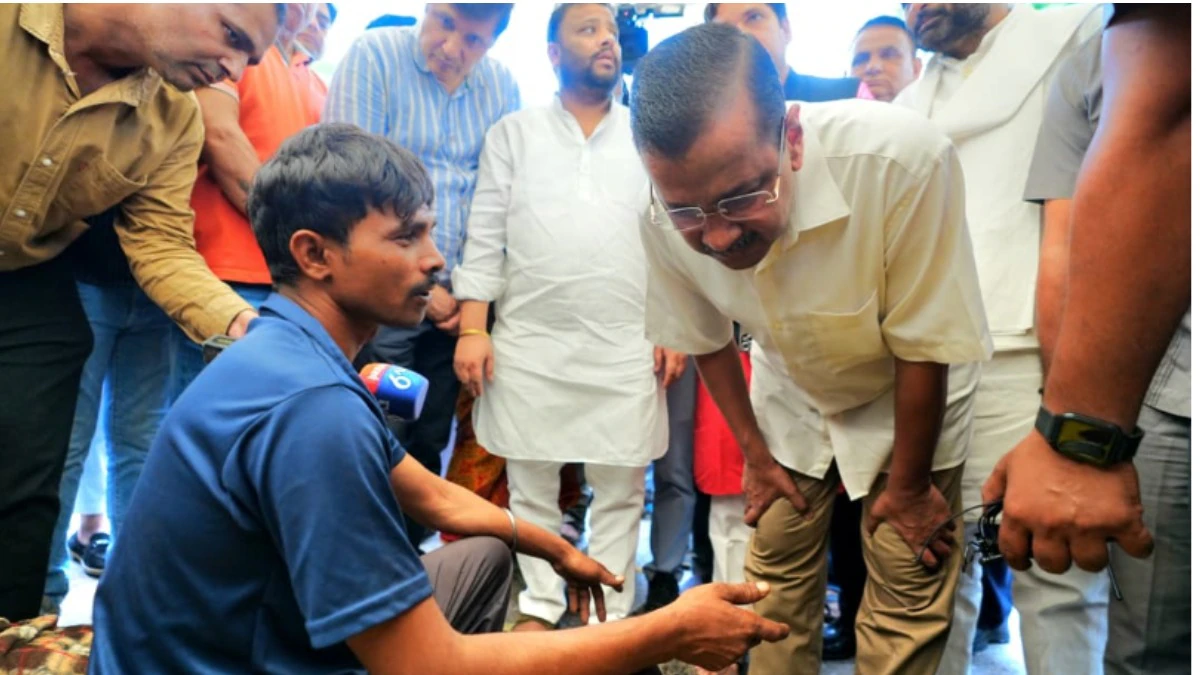
In this backdrop, AAP’s National Convenor and Delhi Chief Minister, Arvind Kejriwal, visited relief camps set up for flood-affected citizens. During his interaction with displaced families, he made an emotional statement:
“There is a flood-like situation in Delhi and many areas are flooded. People are forced to leave their homes and live in relief camps.”
This visit holds both humanitarian and political significance. It underscores the urgency of disaster response in Delhi while also reflecting on the state’s preparedness, governance, and the challenges of urban planning in a megacity like Delhi.
This 3000-word blog will take you through the ground reality of Delhi’s flood crisis, the relief measures announced by the AAP government, Kejriwal’s direct interactions with people, and the political narratives shaping around this natural disaster.
Delhi’s Flood-Like Situation: A City in Distress
Every year, Delhi faces waterlogging during monsoons, but this year the crisis has been far worse. Key contributing factors include:
- Yamuna Overflow – Excess rainfall in upstream states like Haryana and Himachal Pradesh caused the Yamuna to flow above the danger mark.
- Encroachments and Drain Blockage – Unauthorized constructions near riverbanks and clogged drains worsened the flooding.
- Urbanization Pressure – With rapid urban growth, Delhi’s natural water drainage systems have been severely disrupted.
- Climate Change Factor – Irregular rainfall patterns, cloudbursts, and unseasonal heavy showers have become more common.
The result: areas like Yamuna Bazar, Kashmere Gate, Majnu ka Tila, and parts of East Delhi saw severe waterlogging. Thousands of homes were submerged, forcing residents to seek shelter in temporary camps.
Kejriwal’s Relief Camp Visit: Connecting with People
Arvind Kejriwal personally visited relief camps, where flood-affected families were provided shelter. His visit wasn’t just symbolic—it highlighted both the human cost of the disaster and the government’s relief efforts.
- He interacted with families who had lost their belongings.
- He assured children that their education and healthcare needs would be looked after.
- He directed camp officials to ensure 24×7 medical support, sanitation, and food supply.
- He stressed that no Delhi resident should feel abandoned in this crisis.
Kejriwal’s statement reflects the gravity of the crisis:
“The government is with the people. We are ensuring food, medicines, and essential services at every camp. We know this is a tough time, but together we will overcome it.”
Relief Measures Announced by AAP Government
The Delhi government rolled out a multi-step relief plan to tackle the crisis:
- Relief Camps Setup – Dozens of relief camps were set up across East Delhi and Central Delhi to accommodate displaced citizens.
- Free Ration & Food Supply – Community kitchens (langars) were organized to provide three meals a day.
- Medical Facilities – Mobile clinics and health camps were stationed at relief centers to prevent waterborne diseases.
- Cash Assistance – Discussions were initiated on providing financial relief packages to affected families.
- Education Continuity – Temporary learning centers were announced so that children in camps don’t lose touch with studies.
- Animal Rescue Operations – Efforts were made to rescue cattle and livestock, as many families in Delhi’s flood-prone zones depend on dairy for livelihood.
Voices from the Camps: Stories of Struggle
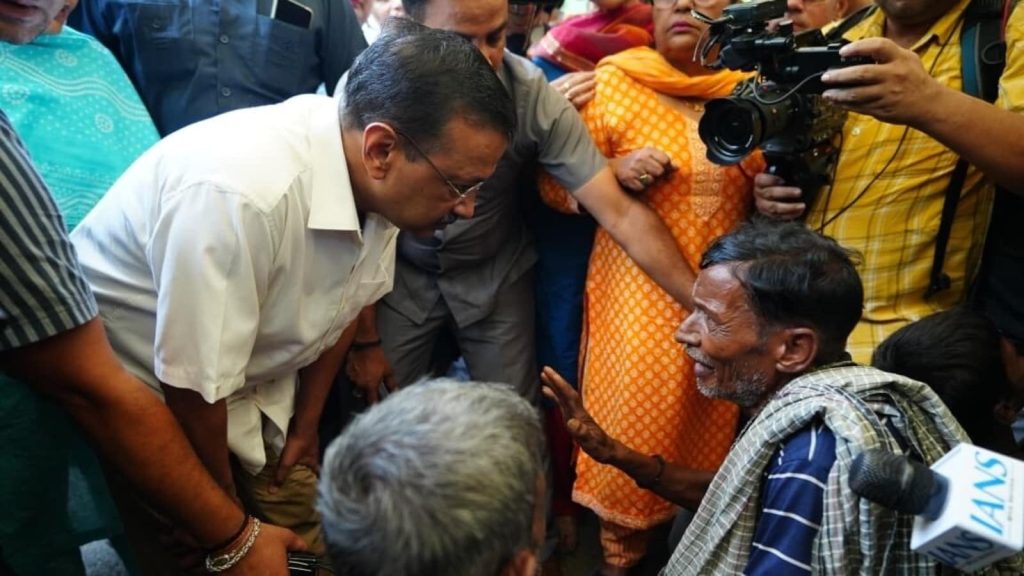
During Kejriwal’s visit, many people shared their experiences:
- Ramesh, a rickshaw puller from Yamuna Bazar, said: “My house is underwater. I had to leave everything behind. But at least here in the camp, my children are getting food.”
- Shabnam, a homemaker from East Delhi, expressed worry about diseases: “Mosquitoes and dirty water are everywhere. We are scared of dengue and malaria. The government must give us proper medicines.”
- Children in camps showed resilience, playing with each other despite displacement. Some NGOs stepped in to provide books and recreational activities.
Such voices show that while relief is reaching people, the emotional trauma and uncertainty remain high.
Political Angle: Governance Under the Spotlight
Whenever natural disasters strike, governance comes under sharp scrutiny. The flood situation in Delhi is no exception.
- AAP Government’s Claim – Kejriwal emphasized that his administration is working tirelessly to ensure relief. He also appealed for cooperation from central agencies like NDRF (National Disaster Response Force).
- Opposition’s Criticism – BJP and Congress accused the AAP government of poor planning and inadequate drainage systems. They claimed the situation could have been avoided with better urban management.
- Centre vs. State Debate – Once again, the recurring question of “who controls Delhi” surfaced, as coordination between Delhi government, MCD, and LG’s office often becomes contentious.
Thus, the floods have become a political flashpoint alongside being a humanitarian crisis.
Expert Opinion: Why Delhi Floods Recur Every Year
Urban planners and environmentalists have repeatedly warned about Delhi’s vulnerability to floods. According to experts:
- Encroachment on Yamuna Floodplains is one of the biggest reasons for recurring floods.
- Stormwater Drains are Not De-silted Regularly, reducing their capacity.
- Unregulated Construction reduces green cover and increases surface run-off.
- Climate Variability makes rainfall more unpredictable and intense.
Kejriwal himself acknowledged these challenges, but critics say long-term planning is missing.
Kejriwal’s Political Messaging
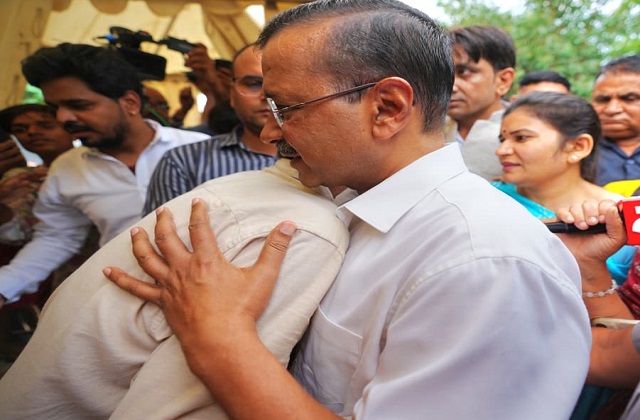
Kejriwal’s visit to the relief camps wasn’t just about disaster management—it also carried political messaging.
- It showcased him as a “people’s leader”, directly connecting with affected families.
- It reinforced AAP’s image of being a grassroots party that prioritizes citizens’ welfare.
- It was also a reminder to the opposition and central government that AAP is actively working despite limited administrative powers in Delhi.
In essence, the visit strengthened Kejriwal’s pro-poor and pro-people image, a factor that resonates strongly in Delhi’s political culture.
Relief Work Beyond Camps: NGOs and Volunteers
The Delhi floods saw a wave of solidarity from civil society:
- NGOs distributed food packets, medicines, and clothes.
- Religious organizations set up free community kitchens.
- Student volunteers helped in rescue and documentation work.
This cooperative effort highlighted the resilience of Delhiites in times of crisis.
The Larger Question: Is Delhi Prepared for Climate Disasters?
The Delhi floods are not just an immediate problem—they raise larger questions:
- Is Delhi prepared for climate-driven disasters?
- Are disaster management protocols strong enough?
- How will Delhi balance development with sustainability?
Experts say unless long-term flood mitigation measures are taken, Delhi will face similar crises every year.
Conclusion: A Call for Long-Term Solutions
Arvind Kejriwal’s relief camp visit has drawn attention to both the immediate humanitarian need and the long-term governance challenge. While his assurance brought hope to displaced families, the recurring nature of Delhi’s flood crisis demands structural reforms.
Delhi needs:
- Better drainage systems
- Strict regulation of floodplains
- Investment in disaster-resilient infrastructure
- Collaboration between Centre, State, and civic bodies
Until then, temporary relief measures may provide comfort, but not a permanent solution.
Kejriwal’s words—“The people of Delhi are not alone, the government stands with them”—reflect compassion. But going forward, action will speak louder than words.
Read more lates news

