
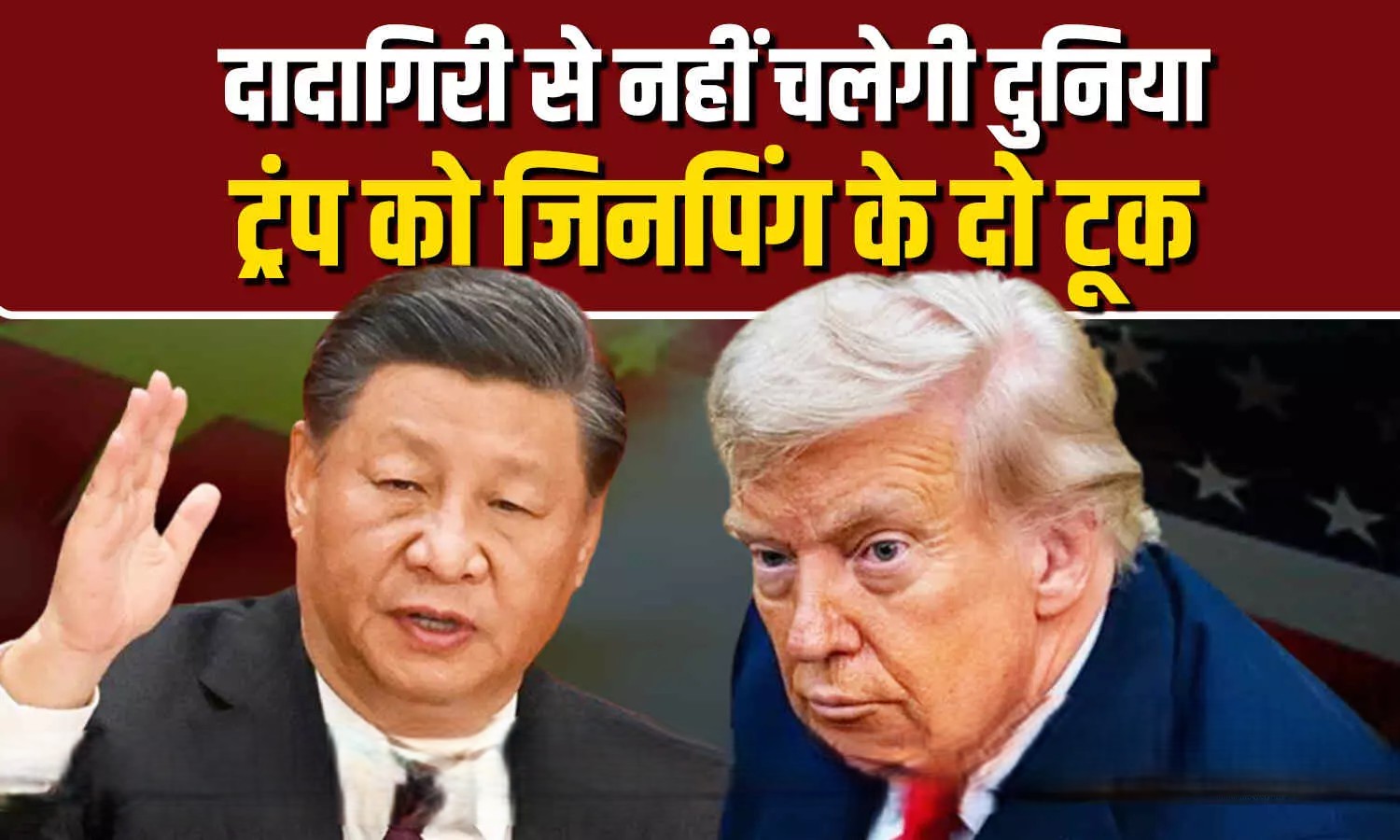
Jinping’s Clear Message for Trump: China’s Stern Stand in Global Geopolitics
Introduction: A Power Play Between Two Giants
Trump The rivalry between the United States and China has shaped global politics for the past decade. While Washington has tried to maintain its global leadership, Beijing has steadily risen as a challenger. The Trump era saw this rivalry reach its most visible and heated form.
Recently, Chinese President Xi Jinping sent a strong and uncompromising message to former US President Donald Trump, making it clear that Beijing will not bow down to external pressure—whether it is in the form of trade wars, diplomatic isolation, or strategic confrontation.
This “clear message” is not just about personal politics between two leaders. It is a symbol of China’s assertive foreign policy and a sign of shifting power balances in the 21st century.
Background: Trump vs China – A Relationship Defined by Conflict
1. The Trade War
- In 2018, Donald Trump imposed massive tariffs on Chinese imports, starting a full-fledged US-China trade war.
- The US accused China of unfair trade practices, intellectual property theft, and currency manipulation.
- Beijing retaliated with tariffs on American goods, affecting industries from agriculture to technology.
2. Technology and Security
- Trump banned Huawei and ZTE from accessing American technology, citing national security concerns.
- The US pushed allies to cut China off from 5G networks.
- Tensions over semiconductors and AI escalated, with Washington trying to limit China’s technological rise.
3. Taiwan and Military Presence
- Trump’s administration approved major arms sales to Taiwan, angering Beijing.
- The US increased its military presence in the South China Sea.
- China responded with aggressive military drills and naval expansion.
4. COVID-19 Blame Game
- During the pandemic, Trump repeatedly called COVID-19 the “China Virus,” further straining relations.
This backdrop makes Xi Jinping’s stern message even more significant.
Jinping’s Clear Message: What Did He Mean?
Xi Jinping’s message to Trump—and indirectly to Washington—was built around three core themes:
1. China Will Not Be Intimidated
Xi made it clear that tariffs, sanctions, and diplomatic pressure will not force China into submission. Instead, Beijing will retaliate proportionately and stand firm.
2. China’s Core Interests Are Non-Negotiable
- Taiwan: Beijing views Taiwan as part of its territory and considers any US interference as a red line.
- South China Sea: China will continue to assert its sovereignty, even in the face of US naval patrols.
- One-China Policy: Xi reiterated that no external power can challenge China’s territorial integrity.
3. Multipolar World Vision
Xi emphasized that the era of US unipolar dominance is over. China will build alliances through BRICS, SCO, and Belt & Road Initiative (BRI) to create a new world order.
In essence, Xi’s message was not just for Trump—it was for the entire West: China has arrived, and it will play by its own rules.

Why Now? The Timing of Jinping’s Message
Timing in geopolitics is as important as the message itself. Xi’s statement comes when:
- The US is grappling with domestic political polarization.
- The global economy is under stress due to tariffs, inflation, and supply chain disruptions.
- China has consolidated power internally, with Xi securing a historic third term.
- The Russia–Ukraine war has given Beijing more leverage as Moscow’s key partner.
By sending a strong message to Trump, Xi is also signaling to the world that China is ready to challenge the US-led order head-on.
Impact on Global Geopolitics
1. On the US-China Rivalry
Xi’s warning makes it clear that tensions will not ease soon. Even if Trump or another Republican returns to power, relations will remain confrontational.
2. On Global Trade
Tariffs and retaliations between the world’s two largest economies impact global supply chains. Countries dependent on Chinese exports or American technology are caught in the middle.
3. On Allies and Partners
- Europe is forced to balance trade with China and security ties with the US.
- ASEAN nations face increasing pressure to choose sides in the South China Sea conflict.
4. On India
India’s position is unique:
- As a democracy, India aligns more closely with the West.
- But India also shares a complex border with China.
- The rivalry opens opportunities for India to attract global manufacturing (China+1 strategy) and strengthen strategic ties with the US.
Expert Opinions
Economists
- Many believe a prolonged US-China trade war could slow global growth.
- Some argue that tariffs hurt American consumers more than China.
Defence Analysts
- Experts warn of a potential military flashpoint in Taiwan or the South China Sea.
- China’s military modernization, coupled with US presence, increases risks of accidental conflict.
Diplomats
- Diplomats see Xi’s message as a clear declaration of multipolarity.
- The UN and global institutions may witness more gridlock as US-China tensions rise.

How Trump Might Respond
Donald Trump is known for his aggressive and unpredictable style. If he interprets Xi’s message as a challenge, possible responses could include:
- Higher tariffs on Chinese goods.
- Stronger military cooperation with Taiwan and Japan.
- Sanctions on Chinese companies.
- Aggressive rhetoric in campaign speeches, using China as a rallying point.
This cycle of action and reaction could further destabilize global relations.
The Bigger Picture: Decline of US Dominance?
For decades, the US set the rules of global trade, finance, and security. Now, China is openly questioning that dominance.
- With initiatives like BRI, China is creating its own global economic network.
- With BRICS expansion, Beijing is trying to create a counterbalance to the G7.
- With technological advancements, China aims to dominate AI, 5G, and green energy sectors.
Xi’s clear message to Trump is symbolic of a larger transition—from a US-led world to a multipolar order.
Challenges for China
Despite its confidence, China faces its own set of challenges:
- Economic slowdown due to property crisis and declining exports.
- Global distrust, with countries wary of overdependence on Beijing.
- Domestic discontent due to unemployment and censorship.
Thus, while Xi’s message is strong, sustaining China’s rise will require managing these internal weaknesses.
Possible Future Scenarios
Scenario 1: Escalation
- Trump doubles down with tariffs and sanctions.
- China retaliates by restricting rare earth exports.
- Trade war expands into a tech war and possibly a military standoff.
Scenario 2: Negotiated Truce
- Both sides agree to limited cooperation in trade.
- Focus shifts to managing competition rather than open confrontation.
Scenario 3: Multipolar Alignment
- China strengthens ties with Russia, Africa, and Global South.
- The US reinforces alliances with India, Japan, and Europe.
- The world divides into blocs reminiscent of the Cold War.
Conclusion: A Defining Moment in 21st Century Politics
Xi Jinping’s clear message for Donald Trump is more than a personal warning—it is a declaration of China’s new world vision. It signals that Beijing will not back down on its core interests, whether in trade, territory, or global leadership.
For Trump and the US, this message is a reminder that China is no longer a rising power—it is already a superpower willing to confront Washington head-on.
The outcome of this rivalry will shape not just US-China relations but the entire global order—from trade and technology to security and diplomacy.
As history unfolds, one thing is certain: the 21st century will be defined by how Washington and Beijing manage their rivalry. And Xi’s latest message to Trump ensures that the battle lines are clearly drawn.
Read more latest news

